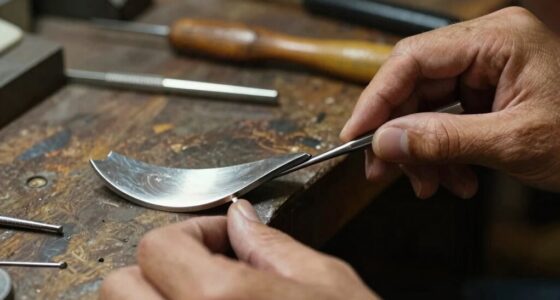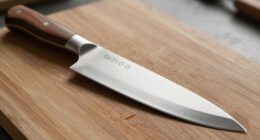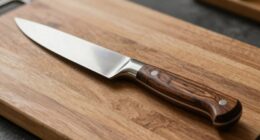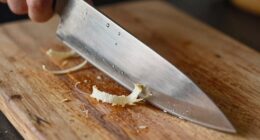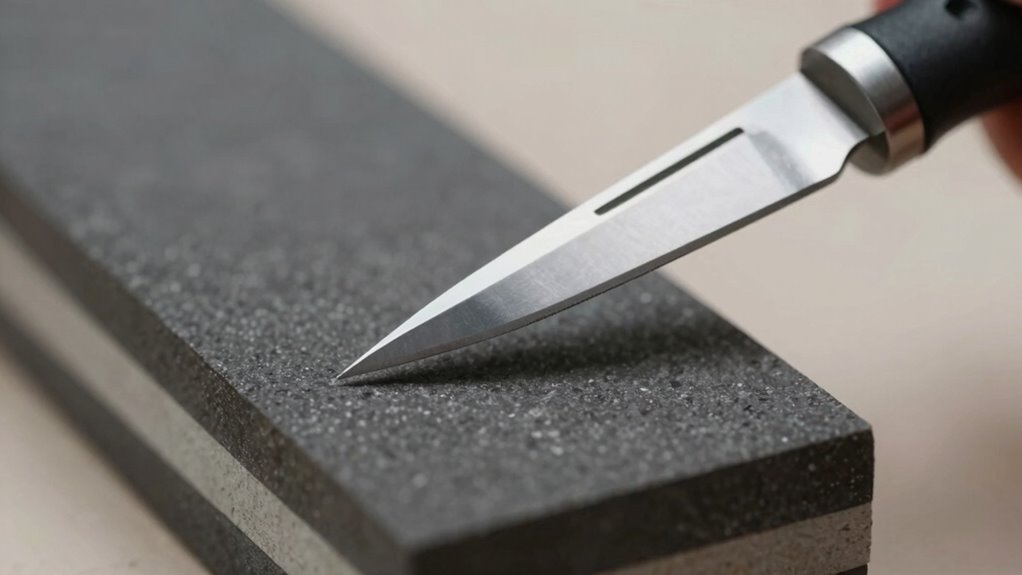
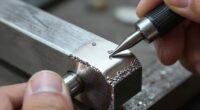
To sharpen the tip without creating a weird point, you should maintain a consistent angle and apply gentle, even pressure throughout the process. Regularly check your progress to make certain the tip remains balanced and smooth. Use long, controlled strokes and turn or adjust your tool often to avoid uneven wear. Patience is key—rushing can lead to an uneven or overly pointed tip. Keep these tips in mind to get a clean, well-shaped point every time. Learn more to perfect your technique.
Key Takeaways
- Maintain a consistent sharpening angle and avoid changing it mid-process.
- Use gentle, even strokes to prevent uneven or overly pointed tips.
- Regularly check the tip’s shape to ensure it remains balanced and smooth.
- Alternate sides during sharpening to promote a symmetrical, even point.
- Stop sharpening once the tip is fine, sharp, and correctly shaped to avoid a weird point.
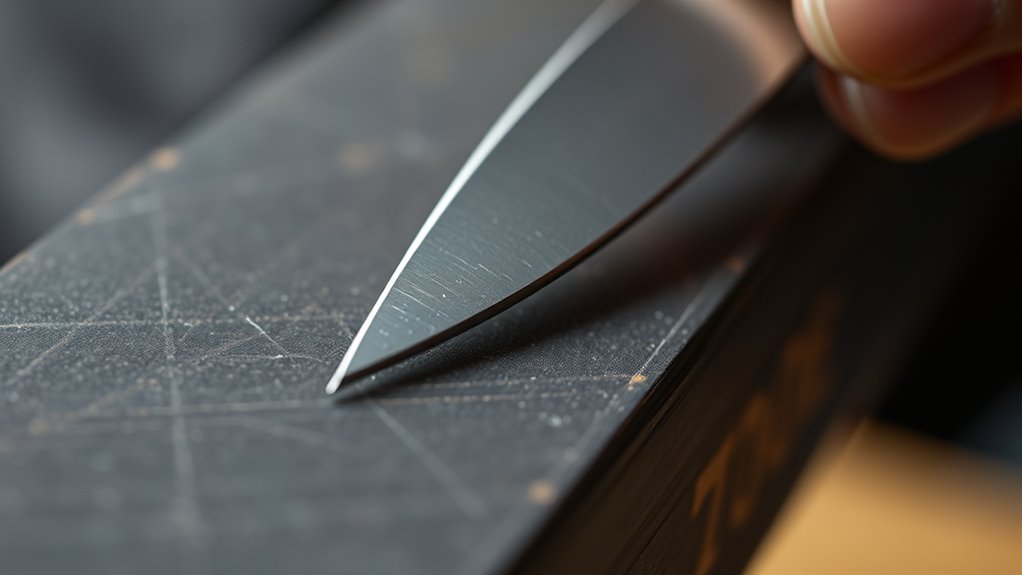
Have you ever struggled with a dull tip that hampers your work or creative projects? If so, you’re not alone. Dull tips can make even simple tasks frustrating, whether you’re working with pencils, knives, or other tools. To get back to peak performance, you need to master the right techniques for sharpening. But it’s equally important to be aware of common mistakes to avoid, so you don’t end up creating a weird point or damaging your tool.
Dull tips hinder work; master sharpening techniques and avoid common mistakes for optimal performance.
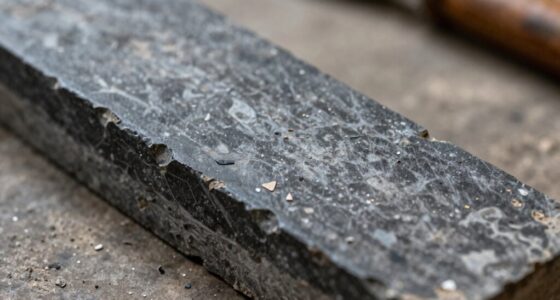
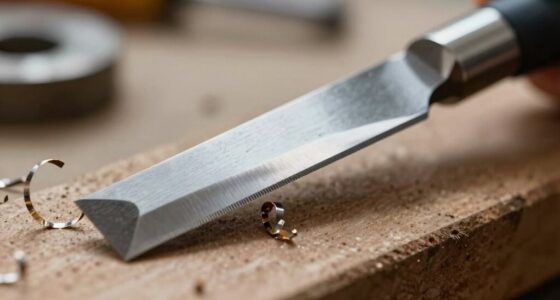
When sharpening, start with a clean, stable surface and a good quality sharpening stone or tool. The key is to apply consistent pressure and maintain the original angle of the tip. If you’re working with a pencil, for example, hold it at the same angle throughout the process. For knives or blades, find the manufacturer’s recommended angle, usually between 15 to 20 degrees, and stick to it. Using the correct technique for sharpening ensures you remove just enough material to create a sharp edge without overdoing it.
One common mistake to avoid is applying uneven pressure. Pressing too hard can create an uneven or flaky edge, which dulls quickly and looks weird. Conversely, too little pressure may not remove enough material, leaving you with a blunt tip. Another mistake is sharpening at inconsistent angles; this results in a crooked or uneven point that can compromise precision and safety. Also, avoid excessive sharpening on one side; this can cause the tip to become asymmetrical or overly pointed, which is difficult to control.
To prevent these issues, focus on maintaining a steady, controlled motion. Use long, smooth strokes, and regularly check your progress. For tools like knives, alternate sides to keep the edge balanced. If you’re sharpening a pencil, gently rotate to ensure uniform wear. Additionally, paying attention to the blade geometry during sharpening helps ensure the tip remains balanced and functional. Always inspect your work frequently to see if the tip is forming a fine, even point. If you notice it leaning to one side or forming an odd shape, stop and adjust your technique.
Finally, after sharpening, wipe the tool clean to remove any debris or metal shavings. For blades, a quick rinse and dry help prevent rust and further improve performance. Remember, patience is key. Rushing can result in a weird point or damage that may require more extensive repair later. With the right techniques for sharpening and a mindful approach to avoid common mistakes, you’ll be able to restore your tools to their prime form—sharp, balanced, and ready for precise work.

ALI Industries 6050 Pocket Sharpening Stone, 3-Inch x 7/8-Inch, Pack of 1
Country of Origin: CHINA
As an affiliate, we earn on qualifying purchases.
As an affiliate, we earn on qualifying purchases.
Frequently Asked Questions
Can I Use Household Items to Sharpen the Tip?
Yes, you can use household items like a fine nail file or a sharpening stone to sharpen the tip, but always follow safety precautions. Make sure to hold the tool steady, work slowly, and avoid excessive force to prevent damage. Use protective gloves if needed, and work in a well-lit area. Remember, patience and caution help you achieve a sharp tip without creating a weird point or risking injury.
How Often Should I Sharpen the Tip?
A stitch in time saves nine, so sharpen your tip regularly to maintain precision. You should sharpen it after every few uses or when you notice it becoming dull. Incorporate precise techniques and consistent maintenance routines, like checking the sharpness regularly, to keep the tip in top shape. Doing this prevents unnecessary wear and tear, ensuring your tool performs at its best and lasts longer.
Is There a Risk of Damaging the Tip?
Yes, there’s a risk of damaging the tip if you’re not careful. To guarantee tip safety and prevent damage, use gentle strokes and appropriate sharpening tools. Avoid applying too much pressure, which can cause uneven wear or chips. Always sharpen in a controlled manner and check frequently. This approach helps maintain a sharp, well-shaped tip while minimizing the risk of accidental damage.
What Materials Are Best for Sharpening?
Imagine you’re in a medieval workshop, but today, you’re sharpening a fine tip. Use metal rods for gentle, precise honing, and diamond files for tough, stubborn edges. Diamond files are especially effective because they cut through metal smoothly without damaging the tip’s shape. Avoid overly coarse materials, which can cause dents. With patience and the right tools, like metal rods and diamond files, you’ll keep your tip sharp and well-defined.
Can I Sharpen the Tip Without Special Tools?
Yes, you can sharpen the tip without special tools using DIY hacks like a fine nail file or a piece of sandpaper. Just be gentle and work slowly to maintain the shape. Always follow safety precautions—wear gloves, keep your fingers away from the blade, and sharpen in a well-lit area. This way, you avoid accidents and get a smooth, sharp tip without needing professional tools.

SHARPAL 196N ANGLE PYRAMID Whetstone Knife Blade Sharpener Sharpening Stone Angle Guide 2-Pack, 4 Universal Angles-14°, 17°, 20°, 25°
It makes sharpening blade edge like a pro!
As an affiliate, we earn on qualifying purchases.
As an affiliate, we earn on qualifying purchases.
Conclusion
Now that you know how to sharpen the tip without creating a weird point, you’ll turn your tool into a precision instrument that feels like an extension of your own hand. With patience and the right technique, you’ll avoid unnecessary damage and keep your tool performing like it’s brand new—almost like magic. Remember, a well-sharpened tip isn’t just about looks; it transforms your work from good to extraordinary. Keep practicing, and watch your skills sharpen along with your tools.

Work Sharp Precision Adjust Elite Knife Sharpener – Adjustable Knife Sharpening System – For Hunting, Serrated & Kitchen Knives
INCLUDES 7 ABRASIVES: The seven abrasive grits (220, 320, 400, 600, and 800) diamond, fine ceramic, and leather…
As an affiliate, we earn on qualifying purchases.
As an affiliate, we earn on qualifying purchases.

Intelitopia Complete Knife Sharpening Stone Set – Dual Grit Whetstone 400/1000 3000/8000 Knife Sharpener with Leather Strop, Flattening Stone, Bamboo Base, 3 Non-slip Rubber Bases & Angle Guide
【Complete Knife Sharpening Stone Kit】You don't need to be a Pro to sharpen your blades, all you need…
As an affiliate, we earn on qualifying purchases.
As an affiliate, we earn on qualifying purchases.