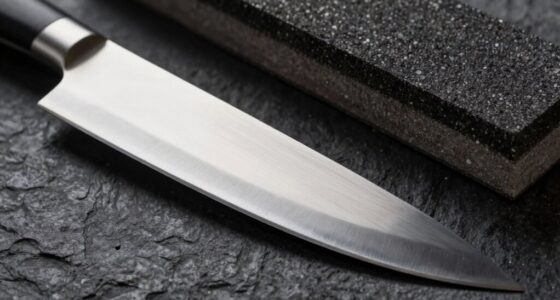
You can tell if your knife needs honing instead of sharpening by noticing if it still looks sharp but feels rough or catches during slicing. If you notice increased effort, tearing, or uneven cuts, your edge might be misaligned, which honing can fix. Regular honing maintains the microscopic edge and keeps your knife performing well without removing metal. To stay on top of proper maintenance and avoid unnecessary sharpening, learn to assess your blade’s condition carefully.

Get kitchen gear delivered free — and shop member deals
- Fast, free delivery on millions of items
- Access to Prime Big Deal Days deals on October 6–7
- Prime Video, Amazon Music and more included
Key Takeaways
- The knife feels rough or catching during slicing, indicating the need for honing.
- You notice increased effort or resistance when cutting, despite the blade looking fine visually.
- The knife’s edge appears misaligned or bent, which honing can correct without removing metal.
- Regular use shows decreased performance, but the edge looks sharp; honing restores microscopic alignment.
- Visual sharpness is intact, yet tactile feedback suggests the microscopic edge requires realignment.

Knowing when to hone your knife instead of sharpening it can save you time and preserve the blade’s longevity. While both honing and sharpening are vital parts of proper blade maintenance, they serve different purposes. Honing realigns the microscopic edge of your knife, keeping it straight and sharp without removing metal. Sharpening, on the other hand, involves grinding away material to restore a dull or damaged edge. Recognizing the right moment for each process guarantees your knife maintains peak cutting performance and prevents unnecessary wear.
Honing realigns your knife’s edge, maintaining sharpness without removing metal, unlike sharpening which restores a dull edge.
One of the clearest signs your knife needs honing is when you notice a slight decrease in cutting performance. If your knife still looks visually fine but struggles to cut through vegetables or meat smoothly, it’s likely just misaligned. You might find yourself exerting more pressure than usual or experiencing tearing instead of clean slices. These are indications that the edge has become bent or rolled over, which honing can correct without removing significant metal. Regular honing keeps your blade in top shape, making sure you don’t have to sharpen as frequently and extending the overall life of your knife. Proper maintenance also involves understanding the blade’s microscopic edge, which can become dulled over time even if the knife appears fine to the naked eye. Additionally, proper technique during honing can significantly affect the results and should be performed carefully to avoid damaging the edge. It’s also helpful to learn how to assess the sharpness level of your knife to determine the appropriate maintenance step.
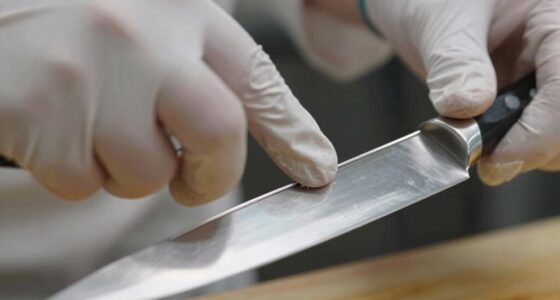
Another key indicator is the tactile feedback you get while using the knife. When slicing, if you feel a rough or uneven sensation, it’s a sign that the edge is no longer perfectly aligned. This roughness often manifests as resistance or a “catching” feeling on the food, which can be remedied with honing. Additionally, if your knife still looks sharp visually but isn’t performing as well, it’s time to hone it. Visual cues alone aren’t reliable, so paying attention to how the knife feels during use is essential. Understanding the microscopic edge and how it affects overall performance can help you decide whether honing or sharpening is necessary.
As an affiliate, we earn on qualifying purchases.
Frequently Asked Questions
Can Honing Be Done Daily Without Damaging the Blade?
Yes, you can hone your knife daily without damaging the blade. Regular honing is part of good blade maintenance and helps keep your edge aligned. Just use proper honing techniques, like gentle strokes on a quality honing steel, and avoid excessive pressure. Daily honing maintains sharpness and prolongs the time between sharpenings, ensuring your knife stays effective and safe to use without risking damage to the blade.
How Often Should I Hone My Kitchen Knife?
Think of blade maintenance like tuning a fine instrument—your knife needs regular attention to stay sharp. You should hone your kitchen knife every 1-3 weeks, depending on how often you cook and your cutting techniques. Frequent honing keeps the edge aligned, making slicing smoother and safer. If you notice a duller cut or more effort, it’s time to hone. Remember, consistent honing prolongs your blade’s sharpness and performance.
Does Honing Reduce the Risk of Knife Accidents?
Yes, honing your knife can reduce the risk of accidents by maintaining blade flexibility and ensuring a clean cut. When you use proper honing techniques regularly, it keeps the edge aligned, making the knife safer to handle. A well-honed blade is less likely to slip or cause slips during cutting, preventing injuries. So, consistent honing not only preserves your knife’s performance but also helps keep you safer in the kitchen.
Can Honing Fix a Dull, Chipped, or Bent Knife?
You can’t fix a dull, chipped, or bent knife with honing; that’s like trying to straighten a crooked picture with a magnifying glass. Blade maintenance involves honing for realigning the edge and sharpening for restoring a dull blade. Honing keeps your knife sharp and aligned, but for chips or bends, you need to sharpen or repair the blade. Honing is routine upkeep, not a fix for serious damage.
Is Honing Suitable for All Types of Knives?
Honing works well for most knives, including stainless steel blades, to realign the edge and keep them sharp. However, it’s not suitable for ceramic blades, which can chip or break when honed. For stainless steel knives, honing regularly maintains their edge, but for ceramic blades, you’ll need to sharpen or replace them instead. Always check your knife’s material to determine if honing is the right choice.
As an affiliate, we earn on qualifying purchases.
Conclusion
So, next time your knife feels a bit off, remember that honing might be all it needs—like a quick tune-up to keep it slicing smoothly. Sometimes, a gentle pass on the honing rod is enough to restore its edge, just as a quick brush can refresh your mood. But if it’s truly dull or damaged, sharpening will do the trick. Coincidentally, knowing the difference keeps your kitchen safer and your cuts cleaner, making cooking a little more effortless.
As an affiliate, we earn on qualifying purchases.
As an affiliate, we earn on qualifying purchases.
Fall Picks
fall essentials
As an affiliate, we earn on qualifying purchases.