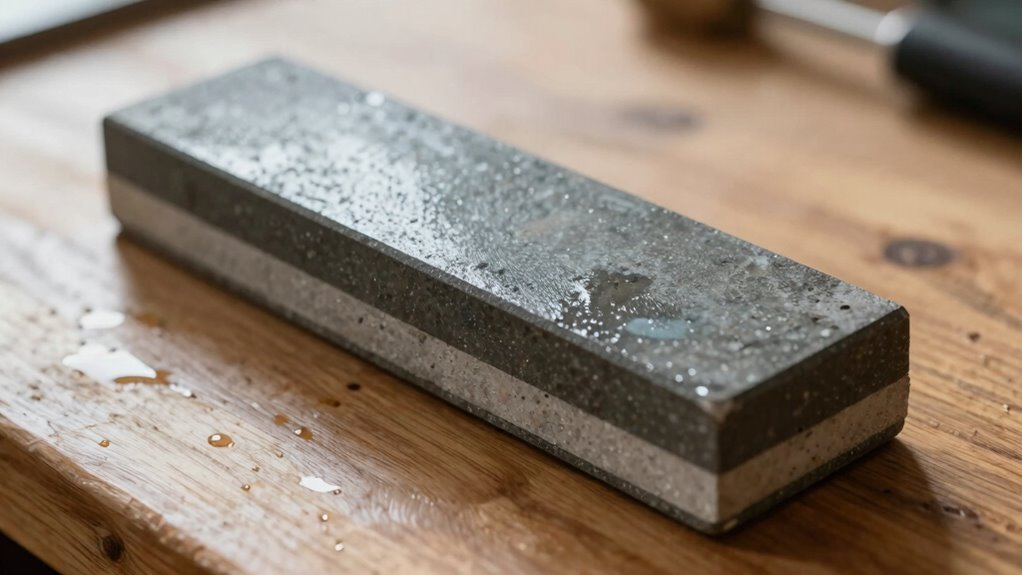

To flatten a whetstone, start by soaking it in water for 10-15 minutes, then place it on a stable, non-slip surface. Use a diamond lapping plate or wet/dry sandpaper to grind the surface evenly, applying consistent pressure and moving in circles or figure-eights. Check flatness regularly with a straightedge, reapplying as needed. Keep your stone maintained to guarantee your edges stay true—continue exploring for detailed tips and techniques.
Key Takeaways
- Soak the whetstone in water for 10-15 minutes before flattening to ensure proper moisture absorption.
- Use a flat, stable surface and appropriate flattening tool like a lapping plate or coarse sandpaper.
- Move the stone in circular or figure-eight motions while applying even pressure to maintain flatness.
- Regularly check flatness with a straightedge and mark high spots for targeted flattening.
- Flatten the stone periodically based on usage type to prevent uneven edges and maintain sharpening effectiveness.

HOSHANHO Kitchen Knife in Japanese High Carbon Steel, Professional High-Class Chef's Knife 8 inch, Non-slip Ultra Sharp Cooking Knives with Ergonomic Handle
【High-End Japanese Steel Chef's Knife】 HOSHANHO chef's knife is made of Japanese high carbon steel 10Cr15CoMoV, 2x of...
As an affiliate, we earn on qualifying purchases.
Understanding the Importance of a Flat Whetstone
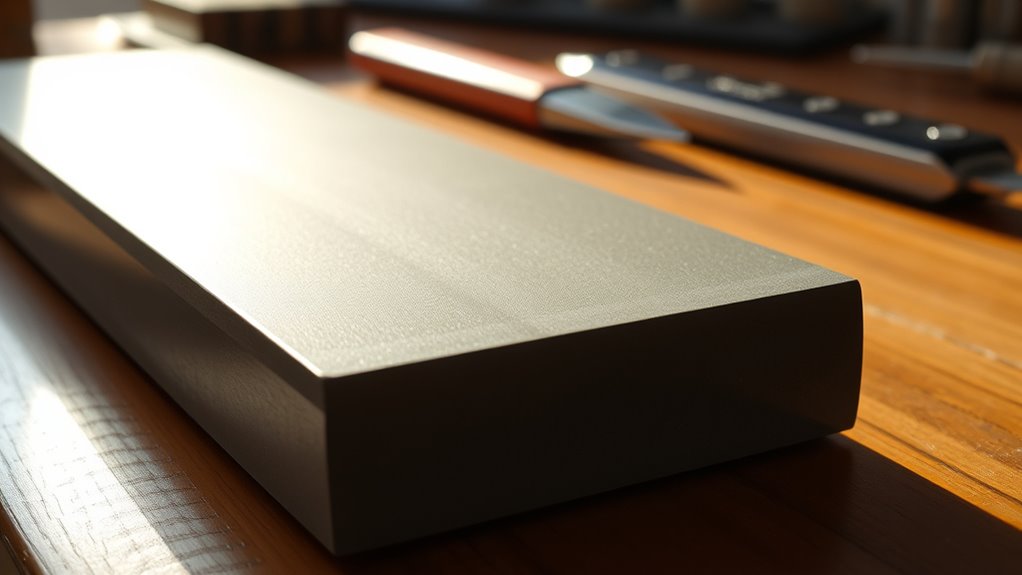
A flat whetstone is vital for achieving a sharp, effective edge on your blades. Historically, these stones have been used for centuries, with different cultures developing unique materials and techniques. Understanding the material composition helps you grasp why a flat surface matters—many whetstones are made from natural or synthetic abrasive materials like Novaculite, Silicon Carbide, or Aluminum Oxide. Over time, use causes the surface to develop uneven spots, reducing sharpening efficiency. A flat whetstone guarantees consistent contact between the blade and the abrasive surface, resulting in a smoother, sharper edge. Maintaining flatness preserves your stone’s integrity and extends its lifespan. Recognizing the historical importance and material makeup emphasizes why keeping your whetstone flat is vital for optimal sharpening performance. Proper maintenance of your whetstone is essential to ensure it remains flat and effective for a longer period. Additionally, regularly checking for surface irregularities helps prevent uneven wear and ensures consistent sharpening results. Being aware of the material composition can help you select the best cleaning and flattening methods to keep your stone in top condition. Incorporating regular flattening techniques can further prolong the life of your whetstone and maintain its performance over time. To achieve this, understanding how material properties influence the flattening process can lead to more effective care routines.

HENCKELS Statement Razor-Sharp 8-inch Chef Knife, German Engineered Informed by 100+ Years of Mastery, Black/Stainless Steel
ULTRA-SHARP BLADES: Superior professional-level sharpness that ensures precision cutting.
As an affiliate, we earn on qualifying purchases.
Identifying When Your Whetstone Needs Flattening
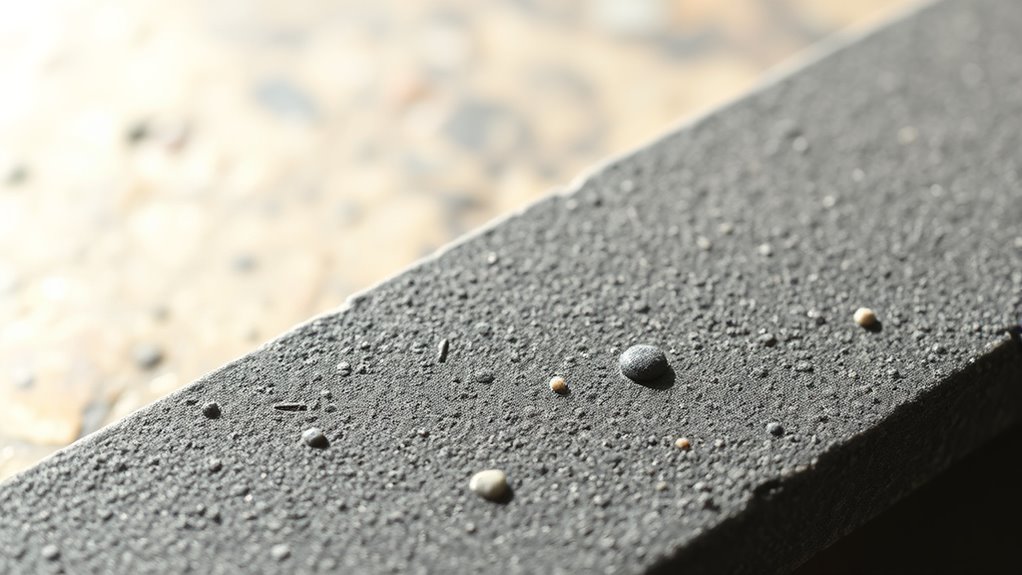
If your whetstone feels uneven or develops ridges, it’s a sign it needs flattening. You might also notice your blades dull faster or require more effort to sharpen. Paying attention to these cues helps keep your whetstone in top shape for effective sharpening. Regularly sound vibrations can also aid in maintaining the stone’s surface quality and performance. Incorporating auditory feedback into your maintenance routine can help identify when the surface is no longer even. Additionally, using a natural stone for flattening can help preserve its integrity and ensure consistent sharpening results. Proper surface assessment is essential for sharpness retention and overall tool effectiveness.
Uneven Surface Buildup
Uneven surface buildup is a clear sign that your whetstone needs flattening. When the surface develops high spots or grooves, it hampers honing consistency, making your edges less effective. Recognizing this buildup helps maintain a smooth, even honing surface. To gauge if flattening is needed, consider these points:
- Visible ridges or grooves on the stone.
- Difficulty maintaining a consistent edge angle.
- Increased effort during sharpening.
- Noticeable unevenness when checking the surface with a straight edge.
Addressing surface buildup restores flatness, ensuring your whetstone provides even contact. Regular flattening prevents uneven wear, keeps honing consistent, and prolongs the stone’s life. Staying vigilant about surface buildup helps you sharpen more effectively and avoid wobbly edges.
Dulling Edge Signs
Ever notice that your knives no longer feel as sharp after sharpening on your whetstone? That’s a sign of dulling edge signs, which often indicate your whetstone needs flattening. When the surface becomes uneven or develops ridges, it hampers effective surface polishing, leading to inefficient sharpening. If you notice inconsistent edges or the knife isn’t honing smoothly, it’s time to check your stone’s condition. Edge deterioration can occur if the surface isn’t flat, causing uneven contact and dulling the blade faster. Regularly inspecting your whetstone helps maintain ideal surface polishing. Flattening it restores a smooth, even surface, ensuring your sharpening remains precise and effective. Don’t wait until your knives are dull—address dulling edge signs early to keep your tools sharp and your sharpening routine seamless.
WÜSTHOF 8" Gourmet Chef's Knife, Black
WÜSTHOF GOURMET SERIES – 8" Chef's Knife with synthetic polypropylene handles that resist fading, discoloration, heat and impact....
As an affiliate, we earn on qualifying purchases.
Choosing the Right Tools for Flattening

Choosing tools aligned with your stone’s material and history enhances overall effectiveness and guarantees a more precise, lasting flattening process. For optimal results, understanding historical sharpening techniques can guide your choice of tools and methods. Additionally, selecting tools that respect the material composition of your whetstone helps prevent damage and ensures longevity. Being aware of proper piercing aftercare routines can also help maintain the integrity of your tools and prevent infections that might compromise their effectiveness.

Babish 8-Inch Chef Knife – High-Carbon German 1.4116 Steel Kitchen Knife – Professional Cutlery for Precise Slicing and Chopping
Forged from a single piece of high-carbon 1.4116 German steel
As an affiliate, we earn on qualifying purchases.
Preparing Your Whetstone for Flattening
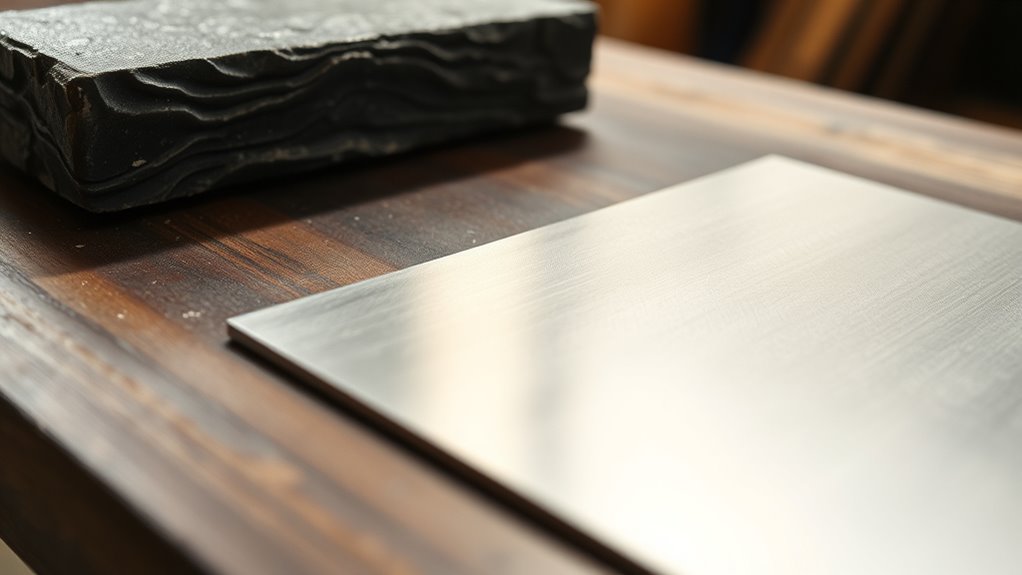
Before you start flattening, make sure to soak your whetstone properly so it’s ready for even abrasion. Secure it firmly on a stable surface to prevent slipping during the process. Also, inspect the stone carefully for any damage that could affect the flattening or safety. For optimal results, familiarize yourself with the proper safe installation practices to ensure your workspace remains secure during sharpening. Additionally, performing a simple safety check can help identify potential hazards before you begin. Ensuring that your home environment is safe and well-organized can further prevent accidents and promote efficient sharpening. Maintaining the air purifier can also contribute to a cleaner workspace, reducing dust and allergens that might interfere with your sharpening process.
Soak the Whetstone Properly
To make certain your whetstone is ready for flattening, you should start by soaking it properly. Proper soaking ensures ideal water retention, making the surface softer and easier to grind. The soaking duration varies depending on the stone’s porosity; typically, 10-15 minutes suffices. Keep in mind that over-soaking can cause water to seep into the stone, affecting its integrity.
Here are four key points to remember:
- Use clean, cold water for soaking.
- Submerge the stone fully to promote even water absorption.
- Check for excess water before starting to prevent drips.
- Adjust soaking time based on the stone’s porosity and size.
Following these steps guarantees your stone is adequately prepared for effective flattening.
Secure a Stable Surface
Ensuring your work surface is stable is essential for safe and effective flattening. Whether you’re honing a tool for your hobby collection or prepping knives in the kitchen, a steady surface prevents slips and uneven flattening. Use a damp towel or non-slip mat under the whetstone to keep it from moving. If you’re working on a large, heavy stone, consider placing it on a sturdy workbench or counter with good grip. For smaller stones, a damp cloth or a silicone mat works well. Securing your whetstone minimizes accidents and guarantees consistent pressure during the flattening process. A stable setup helps you achieve a smooth, even surface, critical for maintaining your tools and kitchen prep blades. A stable work surface is also important for protecting your tools from damage during the process. Additionally, incorporating proper workspace organization can further enhance safety and efficiency, especially when working with sophisticated sharpening tools like waterstones or diamond plates. Using the right supportive accessories can make the flattening task easier and more precise, and understanding the importance of tool stability can lead to better results and increased safety.
Inspect for Damage
How can you tell if your whetstone needs repair before flattening? Look for signs of damage that could affect sharpening. Cracks, chips, or deep gouges indicate uneven wear or flaws in the stone’s composition. These imperfections can worsen if ignored, leading to an uneven edge. Also, consider your storage habits—storing the stone improperly can cause damage over time. Proper storage can prevent modern kitchen damage and preserve your equipment’s integrity. To assess damage: 1. Examine the surface closely for cracks or chips. 2. Check for uneven or gouged areas. 3. Feel for rough patches that might indicate deep wear. 4. Review how you store your stone to prevent moisture-related damage. Regularly inspecting your whetstone for wear and tear can help maintain its effectiveness and extend its lifespan. Inspecting these factors guarantees your stone’s integrity, making flattening more effective and prolonging its lifespan.
Techniques for Flattening With a Diamond Lapping Plate
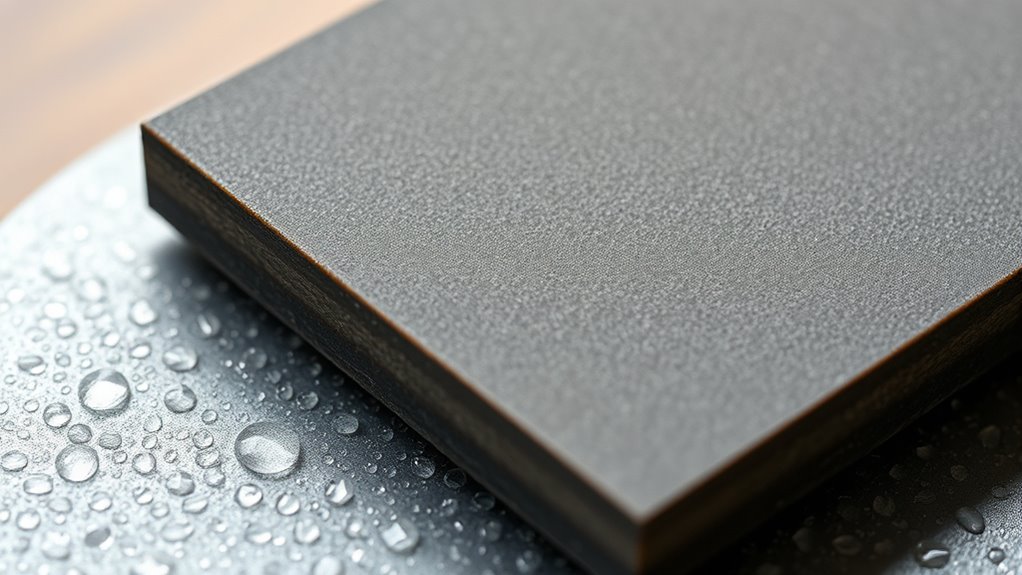
Using a diamond lapping plate is one of the most effective methods for flattening a whetstone because it provides a fast and precise surface correction. To start, apply a small amount of abrasive slurry onto the plate to enhance cutting efficiency. Hold your stone firmly and move it in circular or figure-eight motions across the diamond surface, ensuring even contact. The diamond’s hardness quickly wears down high spots, revealing a flat surface. Regularly check your progress by inspecting the stone’s surface and comparing it to a straightedge. Keep the abrasive slurry fresh as needed to maintain cutting power. This method offers excellent control and speed, making it ideal for maintaining your whetstone’s flatness and ensuring *superior* sharpening results.
Using a Coarse Grit or Flattening Stone Effectively

Choosing the right grit is key to effective flattening, so pick a coarse stone that matches your needs. Keep your technique consistent by applying even pressure and moving the stone in a uniform pattern. This approach guarantees a flat surface and prevents uneven wear.
Proper Grit Selection
Selecting the right grit for your flattening stone is essential to achieve a smooth, even surface that effectively restores your whetstone’s flatness. You need to contemplate grit compatibility to ensure the abrasive material works well with your stone without causing unnecessary wear. Surface durability matters too; a durable grit can withstand repeated use without breaking down quickly.
Here are four key points:
- Match grit size to your whetstone’s condition—coarser for deep dents, finer for minor flattening.
- Opt for a grit that complements your whetstone’s material for better compatibility.
- Choose a flattening stone with robust surface durability to resist rapid degradation.
- Select a grit that allows efficient material removal without damaging the stone’s surface.
Consistent Flattening Technique
To achieve consistent results when flattening your whetstone, it’s important to develop a steady technique that applies even pressure and movement. Using a coarse grit or flattening stone effectively depends on maintaining uniform contact across the whetstone materials and keeping your sharpening angles consistent. Focus on gentle, controlled strokes, ensuring you cover the entire surface evenly. Regularly check your progress to avoid over-flattening one area. To help, follow this simple guide:
| Step | Tip |
|---|---|
| 1 | Use light but firm pressure |
| 2 | Keep your sharpening angles steady |
| 3 | Move in consistent, overlapping strokes |
| 4 | Regularly inspect the surface |
| 5 | Flip the stone to avoid uneven wear |
Employing a Wet/Dry Sandpaper Method for Flatness
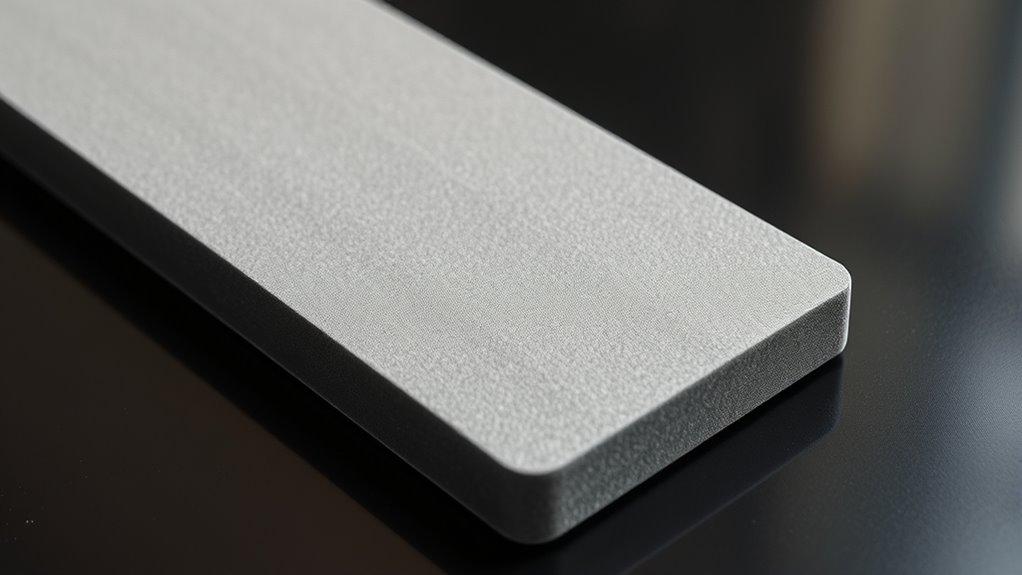
Using a wet/dry sandpaper method is an effective way to achieve a flat, smooth surface on your whetstone. Start by soaking the sandpaper in water to guarantee proper lubrication, which reduces heat and prevents scratching. Choose abrasives with a medium grit for initial flattening and switch to finer grits for polishing. Here are four key steps:
- Wet the sandpaper thoroughly before use.
- Place the sandpaper on a flat, stable surface.
- Move your whetstone in circular or figure-eight motions.
- Regularly check for flatness and adjust pressure as needed.
This method emphasizes water lubrication and abrasive selection, helping you maintain a level surface without damaging the stone. Consistent, careful sanding prevents uneven edges and prolongs your whetstone’s life.
Ensuring Even Pressure During Flattening
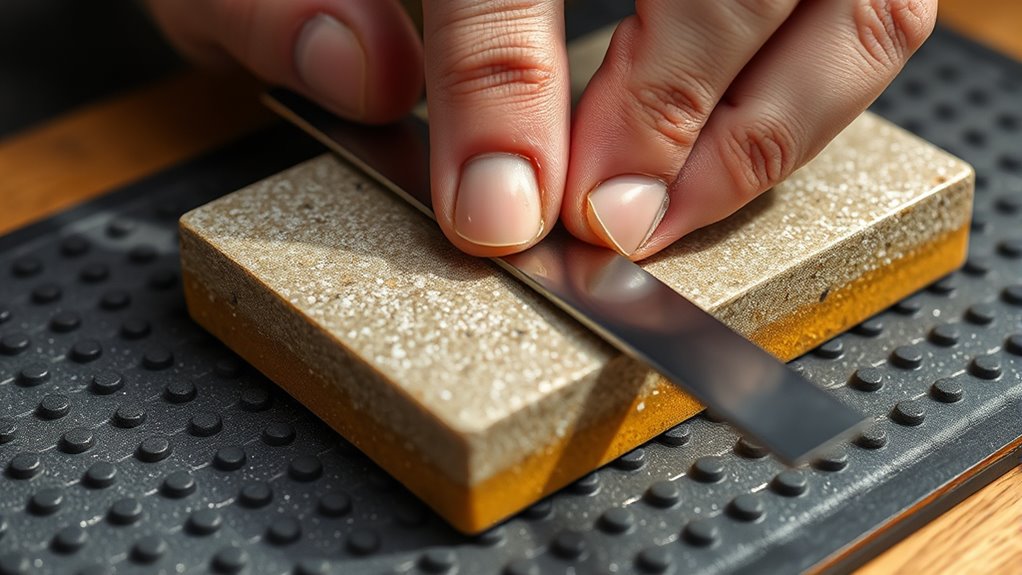
Maintaining even pressure across the whetstone is essential for achieving a uniformly flat surface. Proper pressure application ensures consistent contact, preventing dips or uneven spots. Your hand positioning should be firm yet controlled, distributing force evenly as you move the stone. Focus on applying gentle, steady pressure rather than pressing too hard, which can cause uneven flattening. To help understand the importance of pressure, consider this table:
| Pressure Level | Hand Positioning | Result |
|---|---|---|
| Light | Loose grip, minimal force | Slow, even flattening |
| Moderate | Firm grip, steady force | Consistent surface |
| Heavy | Excessive force, rigid grip | Uneven wear, dips |
| Variable | Changing pressure during use | Irregular flatness |
| Consistent | Same pressure throughout | Perfect flatness |
Focus on consistent pressure and hand positioning for best results.
Checking the Flatness of Your Whetstone After Flattening
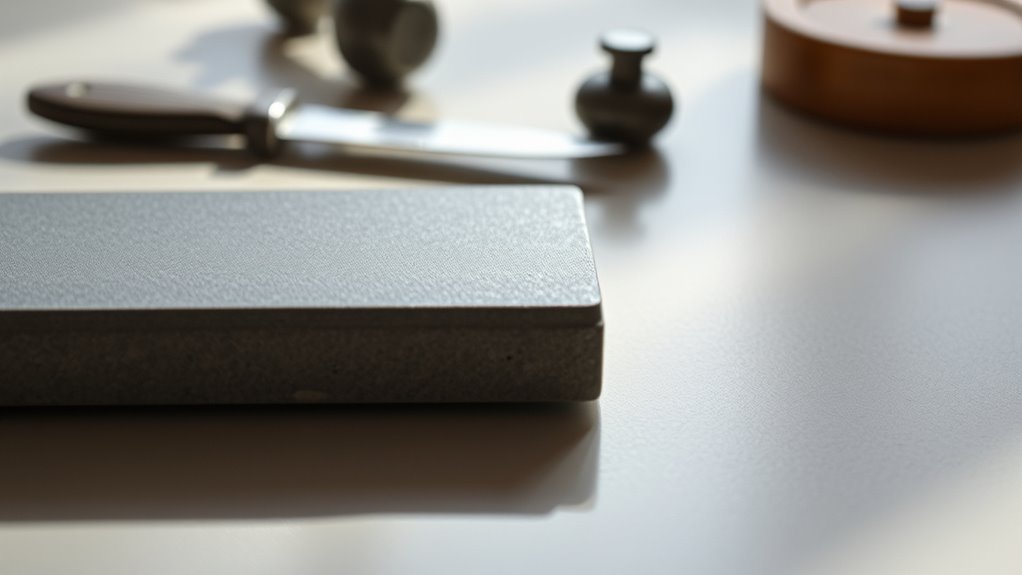
After you finish flattening your whetstone, it’s important to check its flatness to guarantee ideal sharpening performance. Surface testing helps you identify uneven spots that could hinder your edge. Use calibration techniques like placing a straightedge or a piece of glass on the stone to reveal high or low areas. Here are key steps:
- Conduct surface testing with a ruler or straightedge to spot irregularities.
- Use a feeler gauge or thin paper to detect inconsistencies in flatness.
- Mark high spots with a pencil for targeted flattening.
- Re-test after additional flattening to confirm evenness.
These methods ensure your whetstone maintains proper flatness, ultimately improving sharpening results and prolonging your stone’s lifespan.
Maintaining Your Whetstone’s Flat Surface Over Time
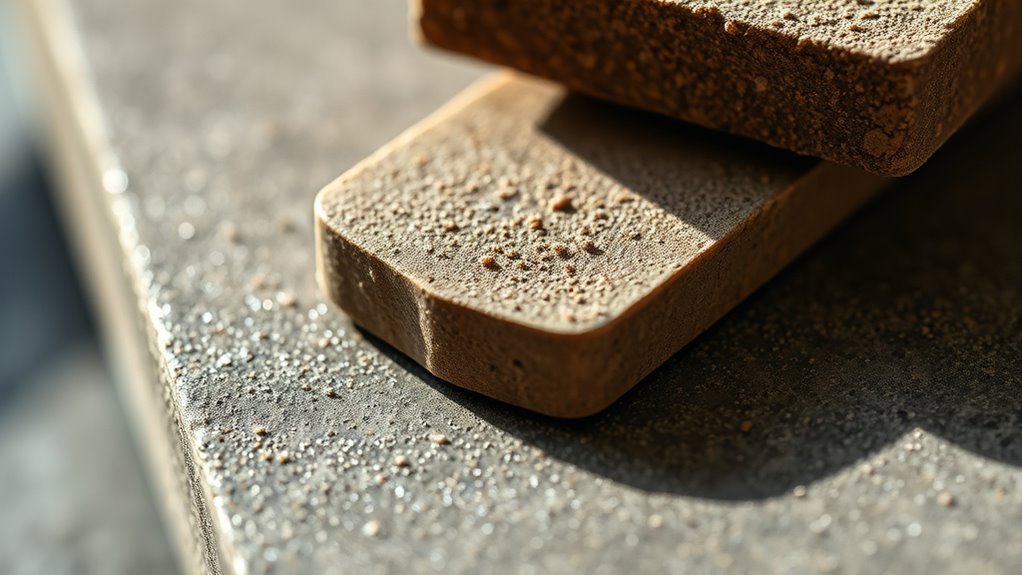
To keep your whetstone performing at its best, it’s essential to regularly maintain its flat surface. Over time, stones—whether they’re oil stones, water stones, or diamond plates—can develop uneven spots that affect sharpening angles. To prevent this, check the flatness often and re-flatten as needed. Use a lapping plate or coarse grit to restore evenness, ensuring consistent sharpening angles. When maintaining different stone types, remember that softer stones wear faster, so they may need flattening more frequently. A flat surface guarantees your edge stays true and sharp. Keep this table handy to understand which tools suit your stone type:
| Stone Type | Flattening Method | Frequency |
|---|---|---|
| Oil stones | Lapping plate, abrasive | Every few uses |
| Water stones | Flattening stone, slurry | Weekly or after heavy use |
| Diamond plates | Light lapping, honing | Monthly |
| Ceramic | Coarse grit, lapping plate | As needed |
Frequently Asked Questions
How Often Should I Flatten My Whetstone?
You should flatten your whetstone every 2 to 4 uses or when you notice a dip in sharpening performance. Regular flattening extends your whetstone’s lifespan and maintains effective sharpening. If you sharpen frequently, more frequent flattening is necessary to keep the surface even. Keep an eye on the grit surface, and don’t wait too long — a flat whetstone guarantees consistent, precise edges every time you sharpen.
Can I Use Household Items to Flatten My Whetstone?
Yes, you can use household items as home remedies to flatten your whetstone. Natural abrasives like a piece of fine-grit sandpaper, a ceramic plate, or even a concrete surface work well. Gently rub the stone against these surfaces, maintaining a consistent angle. Just guarantee the abrasive is suitable, and clean your stone afterward. This method is effective, affordable, and convenient for keeping your whetstone flat and your edges sharp.
What Signs Indicate My Whetstone Is Uneven?
Did you know that about 60% of users notice uneven sharpening due to an uneven stone? You’ll see signs like discoloration on certain areas or uneven slurry formation when your whetstone isn’t flat. These indicators mean your blade isn’t being sharpened evenly, risking damage or a dull edge. To fix this, regularly check for these signs and level your stone to ensure consistent, effective sharpening every time.
Is Flattening Necessary for All Types of Whetstones?
Yes, flattening is necessary for all types of whetstones, regardless of material. Over time, they develop uneven surfaces that affect sharpening performance. You should regularly use flattening techniques like rubbing the stone against a flattening stone or a lapping plate. Different whetstone materials, such as ceramic, natural, or synthetic, benefit from proper flattening to maintain their shape and guarantee consistent, effective sharpening.
How Do I Prevent My Whetstone From Becoming Uneven Again?
To prevent your whetstone from becoming uneven again, regularly perform stone maintenance by flattening it when you notice uneven surfaces. Incorporate proper honing techniques, ensuring consistent pressure and angle during sharpening. Store the stone in a dry, stable place to avoid warping. Consistent use and maintenance keep the surface flat, so your edges stay sharp and even longer. Regular checkups will help maintain ideal performance.
Conclusion
By regularly flattening your whetstone, you keep your edges true and your blades sharp—like a master sculptor tending to their masterpiece. Think of your stone as a mirror reflecting your craftsmanship; neglect it, and your edges will distort. With simple tools and consistent care, you guarantee your whetstone remains perfectly flat, turning every honing session into a symphony of precision. After all, a sharp edge isn’t just a tool—it’s an extension of your skill.