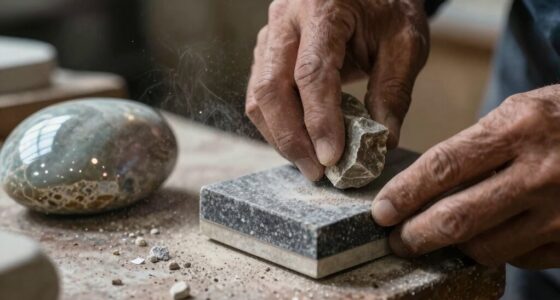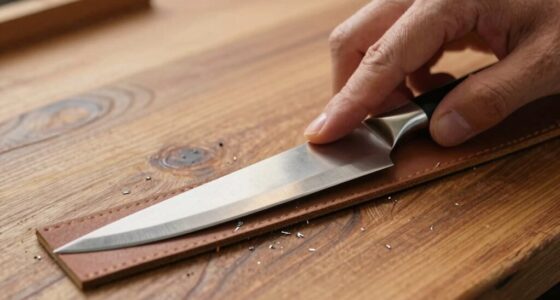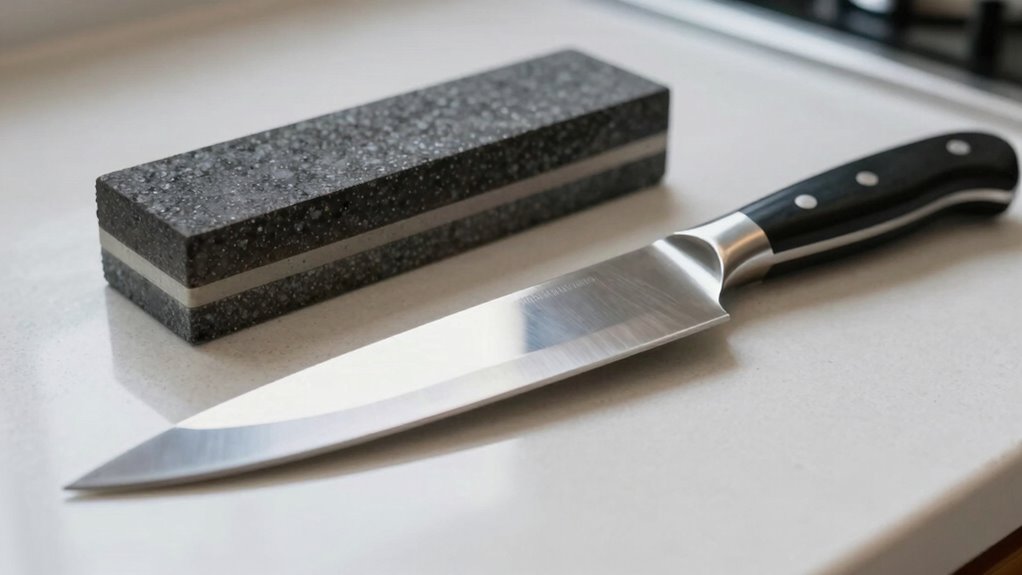
Honing and sharpening are two different processes that keep your knives performing well. Honing straightens the microscopic teeth along the edge, realigning it so your knife cuts smoothly. Sharpening, on the other hand, removes metal to create a new, sharp edge when the blade has become dull or damaged. Understanding these differences helps you maintain your knives properly. Keep going to discover more about when and how to use each method effectively.
Key Takeaways
- Honing realigns the blade’s microscopic teeth, maintaining sharpness, while sharpening removes metal to create a new edge.
- Honing is a routine maintenance process; sharpening is a more aggressive repair that restores dull blades.
- Signs of dullness include food slipping and increased cutting effort; honing can fix minor misalignments.
- Proper technique and tools in honing prevent damage and extend blade life; sharpening involves controlled metal removal.
- Regular honing keeps blades performing well; sharpening is needed only when significant dullness or damage occurs.

Utopia Kitchen Knife Sharpener Rod 12 Inch, Professional Honing Rod for Knife Sharpening with Hanging Hook, Black
Premium Steel Construction – The steel rod is made of carbon steel and plated with nickel-chrome; the fine…
As an affiliate, we earn on qualifying purchases.
As an affiliate, we earn on qualifying purchases.
Understanding the Purpose of Honing and Sharpening
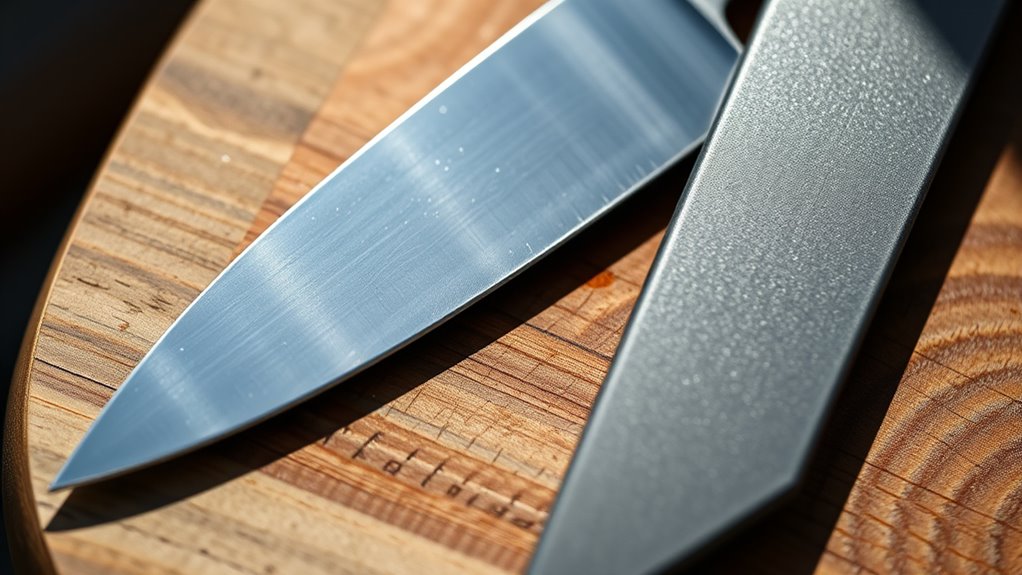
Although honing and sharpening both improve your tools, they serve different purposes. Honing aligns the blade’s edge through a series of micro-corrections, maintaining your knife’s sharpness during regular use. It’s a crucial part of your culinary techniques, helping you keep knives effective without removing much metal. Sharpening, on the other hand, actually removes metal to create a new, fine edge, restoring a dull blade’s cutting power. Understanding this difference is fundamental for kitchen safety, as a dull knife increases the risk of slips and accidents. Regular honing keeps your knives in top shape for daily tasks, while sharpening is reserved for when blades become noticeably dull. Mastering both ensures your tools perform well, making cooking safer and more efficient. Additionally, proper maintenance practices include energy-efficient techniques, aligning with sustainable approaches to tool care and usage.

Kimura Professional Ceramic Honing Rod, 10 inch Honing Steel, Ceramic Knife Sharpener, 1200 Grit Finish, Ergonomic & Balanced Polypropylene Handle, Ideal for All Chef Knives, Japanese Gift Box
[ PREMIUM MATERIALS ] – The 10 inch honing rod is made from pure white ceramic using Kimura's…
As an affiliate, we earn on qualifying purchases.
As an affiliate, we earn on qualifying purchases.
The Tools Used for Honing and Sharpening
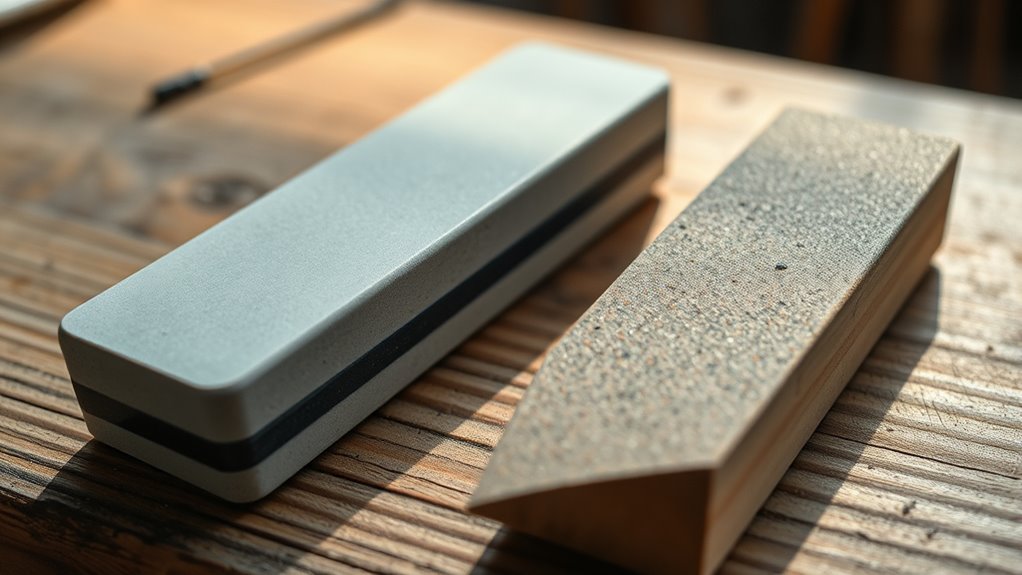
To effectively hone and sharpen your knives, you need the right tools designed for each task. For honing, honing rods are essential; they realign the edge without removing material. Honing rods come in various materials like steel, ceramic, and diamond, each suited for different knives. Steel rods are durable and common, perfect for routine maintenance. Ceramic rods are gentler, ideal for fine-tuning edges. Diamond rods are aggressive, removing more material quickly. For sharpening, stone types vary widely, including Arkansas, water stones, and synthetic options. Water stones are popular for their fast cutting and ease of use, while Arkansas stones offer fine polishing. Selecting the right combination of honing rods and stones guarantees your knives stay sharp and precise, making your kitchen tasks safer and more efficient. Regular maintenance with the proper tools can also help prevent damage to piercing jewelry, ensuring comfort and safety. Proper technique in edge maintenance can extend the life of your blades and improve performance over time.

Intelitopia Complete Knife Sharpening Stone Set – Dual Grit Whetstone 400/1000 3000/8000 Knife Sharpener with Leather Strop, Flattening Stone, Bamboo Base, 3 Non-slip Rubber Bases & Angle Guide
【Complete Knife Sharpening Stone Kit】You don't need to be a Pro to sharpen your blades, all you need…
As an affiliate, we earn on qualifying purchases.
As an affiliate, we earn on qualifying purchases.
How Honing Realigns Your Knife’s Edge
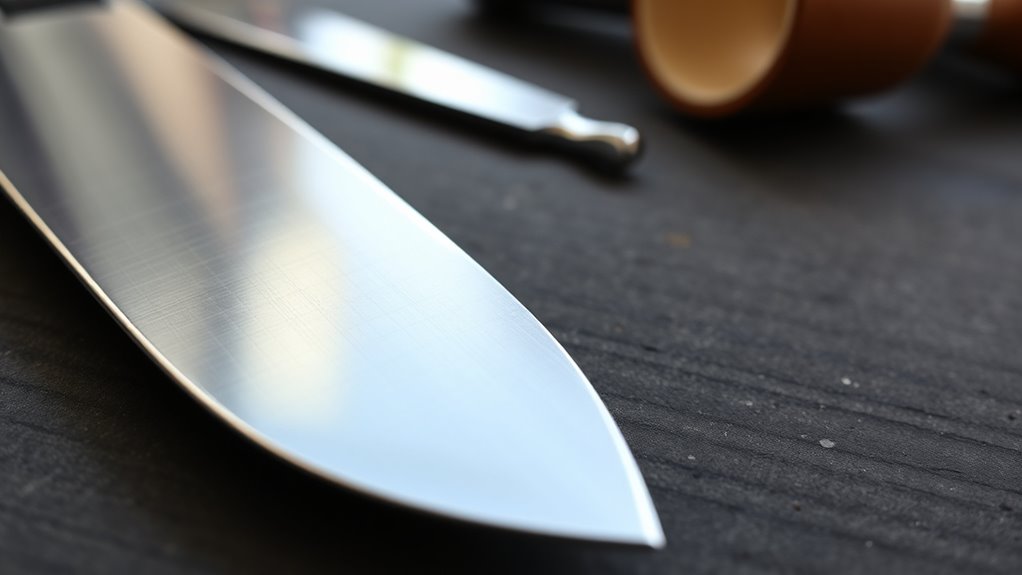
When you hone your knife, you’re gently realigning its edge to maintain sharpness. This process involves a subtle edge realignment rather than removing material, unlike sharpening. Choosing between a gentle or abrasive honing method depends on how much your edge needs realigning. Incorporating Free Floating techniques in your honing routine can help preserve the natural balance of your blade. Additionally, selecting the right honing tool, such as a honing steel or ceramic rod, can influence the effectiveness of your edge maintenance efforts.
Edge Realignment Process
Honing works by realigning the microscopic teeth along your knife’s edge, restoring its straightness and cutting efficiency. Over time, metal fatigue causes tiny bends and misalignments that weaken the edge and reduce durability. Honing gently pushes these bent metal fibers back into place, maintaining the edge’s integrity. Proper air purifier maintenance can help ensure your kitchen environment remains optimal for food safety and cleanliness. Additionally, regular honing supports the spiritual concept of maintaining balance and alignment in both physical tools and personal energies. This process is similar to the way Christian Yelich’s ethnicity reflects a diverse heritage that contributes to his unique identity. Understanding the mechanics of metal fatigue can enhance your appreciation of how honing restores a blade’s performance. Visualize this process with the following imagery:
| Before Honing | After Honing |
|---|---|
| Bent, misaligned teeth | Straightened, realigned teeth |
| Irregular edge shape | Smooth, uniform edge |
| Reduced cutting power | Restored edge durability |
Gentle vs. Abrasive
While honing can be performed with both gentle and abrasive techniques, the key difference lies in how they realign your knife’s edge. Gentle polishing uses a smooth, fine abrasive to carefully straighten and refine the edge without removing much material, making it ideal for minor realignment. Abrasive grinding, on the other hand, employs a coarser abrasive to aggressively reshape and restore a dull or damaged edge. If your goal is to maintain a sharp edge with minimal material removal, gentle polishing is your best choice. Conversely, if your knife is considerably dull or bent, abrasive grinding can quickly restore its functionality. Understanding this distinction helps you choose the right honing method based on your knife’s condition and your desired results. Proper honing techniques are essential for preserving your knife’s longevity and performance.

SHARPAL 162N Double-sided Diamond Sharpening Stone Whetstone Knife Sharpener |Coarse 325 / Extra Fine 1200 Grit | Storage Case with NonSlip Base & Angle Guide (8 in. x 3 in.)
FAST, Durable and Heavy-Duty: Industrial monocrystalline diamonds are electroplated onto a stainless steel base of 0.35 inch thickness….
As an affiliate, we earn on qualifying purchases.
As an affiliate, we earn on qualifying purchases.
The Role of Sharpening in Removing Material
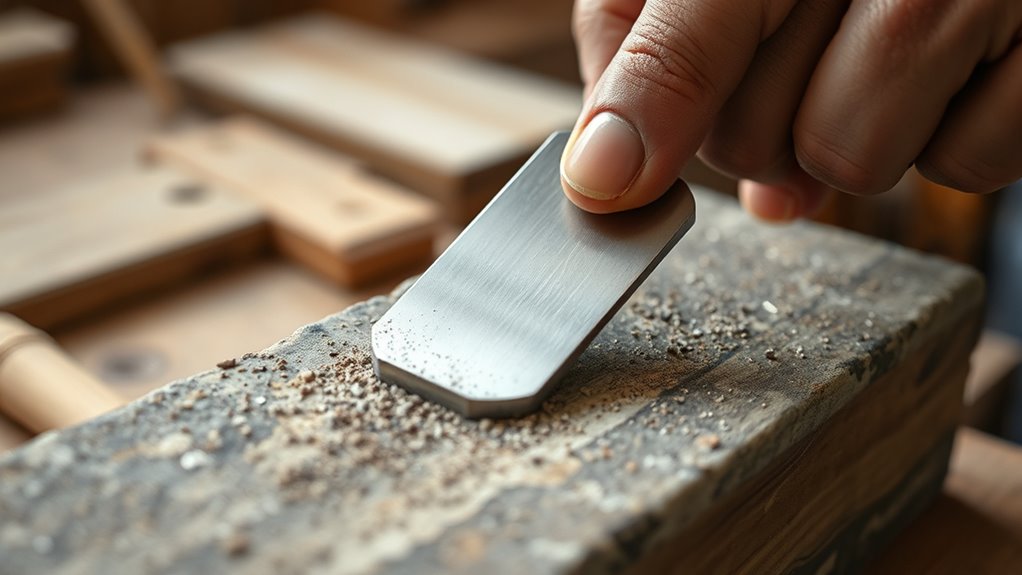
Sharpening plays a crucial role in removing material from your blade to restore its edge. By carefully grinding away tiny amounts of metal, you reshape the blade’s geometry, ensuring a sharper, more effective cutting surface. This process exposes fresh steel, which enhances the edge’s durability over time. Removing material through sharpening also corrects imperfections, such as nicks or dull spots, maintaining ideal blade performance. It’s important to control how much material you remove to preserve the blade’s overall integrity. Proper sharpening balances material removal with maintaining the correct blade angle, ensuring that your knife stays functional and long-lasting. Ultimately, sharpening not only sharpens your edge but also sustains its structural strength, making it essential for keeping your tools in prime condition.
When to Hone Your Knives
Knowing when to hone your knives helps maintain their cutting performance between sharpening sessions. Regular honing keeps the edge aligned, making cutting easier and safer. You should hone your knife when:
- You notice your cuts are less precise or require more force.
- Food starts to stick or tear instead of slice cleanly.
- Your knife feels dull but not completely blunt.
- You hear a slight burr or roughness when running the blade over a honing rod.
- Using a honing rod regularly can extend the time between professional sharpenings.
- You observe a deviation in edge alignment, indicating the blade has gone off its true cutting path.
- Proper technique and knife maintenance practices ensure your tools stay in optimal condition, prolonging their lifespan.
- Additionally, routine inspection helps catch early signs of dullness or misalignment before they impact your cutting efficiency.
- Incorporating metal composition knowledge can help you select the appropriate honing tools for your specific knives.
Honing enhances knife safety by improving control and reducing slips. It also reinforces proper cutting techniques by encouraging more deliberate, controlled movements. Incorporate honing into your routine every few uses or when you notice these signs, ensuring your knife stays sharp and safe for every task.
When to Sharpen Your Knives
You’ll know it’s time to sharpen your knives when they start to cut less easily or leave ragged edges. If you use your knives frequently, they’ll need sharpening more often, especially if you notice increased effort or slipping. Paying attention to these signs helps keep your blades performing at their best. Additionally, maintaining a sharp edge is essential for safety and efficiency in your kitchen sharpness maintenance. Regularly inspecting your blades and understanding the importance of blade edge quality can help prevent accidents and ensure optimal performance. Recognizing the cutting performance of your knives is key to knowing when to sharpen them. Being aware of blade deterioration can further aid in maintaining your knives’ effectiveness. Proper blade care can extend the lifespan of your knives and keep them in top condition.
Signs of Dullness
A dull knife doesn’t just make cooking more difficult; it can also be dangerous. You’ll notice it when your cuts require more effort or your slices are uneven. Here are signs it’s time to sharpen:
- Food slips or tears instead of slicing cleanly.
- You need excessive force to cut through ingredients.
- The knife no longer glides smoothly over the surface.
- You see visible dullness or a lack of reflection on the blade’s edge.
Many believe honing techniques can fix dullness, but they’re really meant to realign the edge, not sharpen it. Knowing these signs helps you avoid sharpening myths and keeps your knives performing best. Sharpen when you notice these indicators to maintain safety and efficiency in your kitchen.
Frequency of Use
How often you should sharpen your knives depends largely on how frequently you use them. In a frequency comparison, if you cook daily or prepare tough ingredients regularly, you’ll need to sharpen more often—perhaps every few weeks. For occasional use, such as weekly or monthly, sharpening can be spaced out accordingly. Usage scenarios also matter: slicing hard vegetables or meats dulls blades faster, requiring more frequent attention. Conversely, if you mainly use your knives for light tasks like slicing bread or herbs, less frequent sharpening suffices. A good rule of thumb is to assess your cutting performance regularly—if the knife struggles or tears food, it’s time to hone. Adjust your sharpening schedule based on your specific usage patterns to maintain ideal performance.
The Risks of Improper Honing and Sharpening
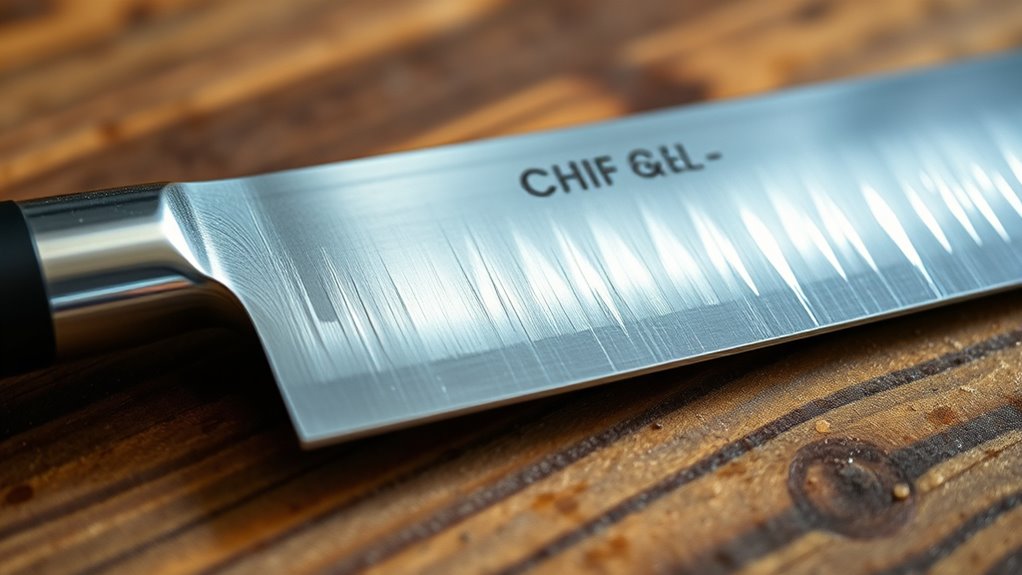
Improper honing and sharpening can markedly compromise a blade’s performance and safety. When done incorrectly, you risk damaging the blade, reducing its durability, and creating dangerous sharp edges. Poor technique can lead to uneven edges, which makes cutting less precise and increases the chance of slips. Ignoring safety precautions during sharpening can result in injuries, especially if the blade slips. Additionally, over-sharpening or honing at the wrong angle can weaken the blade’s structure, shortening its lifespan. To avoid these risks, always follow proper safety protocols and use the correct tools. Remember, a poorly maintained blade not only performs poorly but also poses safety hazards. Proper honing and sharpening protect your investment and ensure safer, more effective use.
Tips for Maintaining a Razor-Sharp Edge
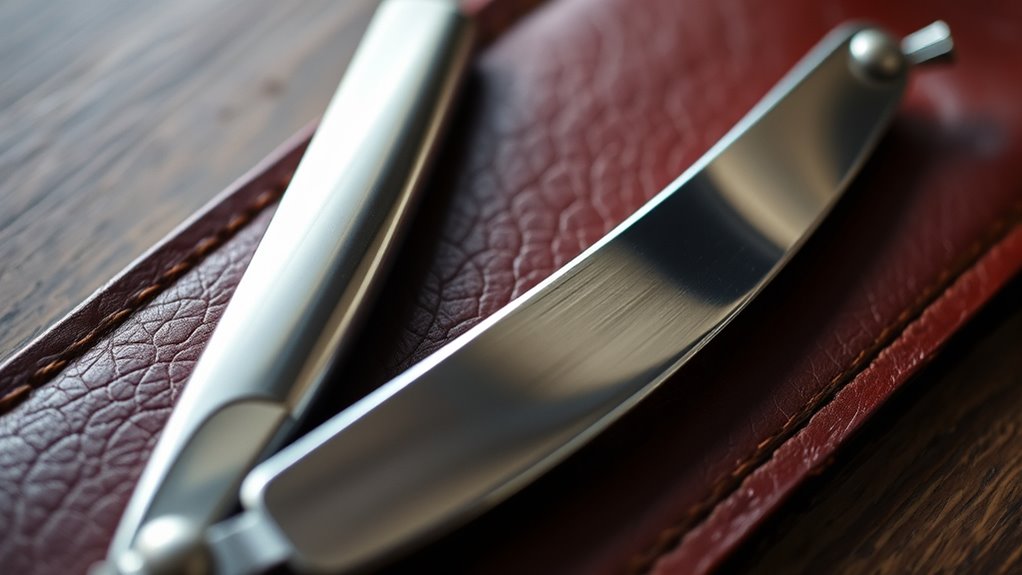
Maintaining a razor-sharp edge requires consistent care and proper techniques. Regular honing with a whetstone or honing rod keeps your Japanese knives in top shape, reducing the need for frequent sharpening. Always use a stable surface and follow correct angles to avoid damaging the blade. When handling sharp knives, prioritize kitchen safety by keeping your fingers clear and cutting away from your body. Clean and dry your knives after each use to prevent corrosion, and store them properly, preferably in a knife block or on a magnetic strip. Avoid dishwasher cleaning, which can dull edges. By incorporating these tips, you guarantee your knives stay sharp longer, making food prep safer and more efficient while protecting yourself from accidents caused by dull blades.
Frequently Asked Questions
Can Honing Damage a Knife if Done Improperly?
Yes, you can damage your knife if you hone it improperly. If you don’t maintain correct blade alignment or apply too much pressure, honing can cause micro-damage or uneven edges, which weaken the blade over time. To preserve edge durability, use gentle, consistent strokes and make sure your honing rod is properly aligned with the blade’s edge. This way, you keep your knife sharp without risking unnecessary damage.
How Often Should I Hone Versus Sharpen My Kitchen Knives?
You should hone your kitchen knives every 1-2 weeks to maintain their edge, while sharpening is needed roughly every 6-12 months. Did you know that dull knives cause 67% more accidents? Regular blade maintenance keeps your knives sharp and enhances kitchen safety. Hone more often to keep the edge aligned, and sharpen when you notice a decline in cutting performance. This routine guarantees safer, more efficient food prep.
Are Electric Sharpeners Better Than Manual Tools?
Electric sharpeners are generally better for quick, consistent results, especially if you lack experience with sharpening techniques. They automate the process and often include multiple stages for a sharper edge. Manual tools, on the other hand, give you more control and precision, ideal if you’re skilled. Choose electric vs manual based on your comfort level and how often you sharpen; electric are faster, but manual can be more precise.
What Signs Indicate My Knife Needs Professional Sharpening?
If your knife struggles with cutting through soft or firm foods, shows uneven or jagged edges, or requires more force than usual, it’s time for professional sharpening. These signs indicate blade dullness and reduced durability. Typically, you should sharpen your knife every 6-12 months, depending on usage. Regular professional sharpening maintains peak blade durability, keeps your cuts clean, and prolongs your knife’s lifespan.
Is Honing Suitable for All Types of Knives?
Honing suits most knives, especially those with steel blades, as it realigns the edge and maintains sharpness. For softer materials like ceramic or specialty blades, honing techniques may not be effective, and sharpening might be necessary. Always consider your blade material and use appropriate honing tools. Think of honing as straightening a bent hairpin—simple, quick, and effective for many knives, but not all.
Conclusion
Think of honing as gently guiding your knife’s dance, realigning its edge like a steady hand on a compass. Sharpening, on the other hand, is sculpting it anew, carving away the dullness to reignite its fierce precision. Mastering both keeps your blades a symphony of cutting prowess, never letting your kitchen journey falter. With this knowledge, you’re armed to keep your knives sharp and your culinary adventures slicing through effortlessly.