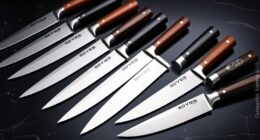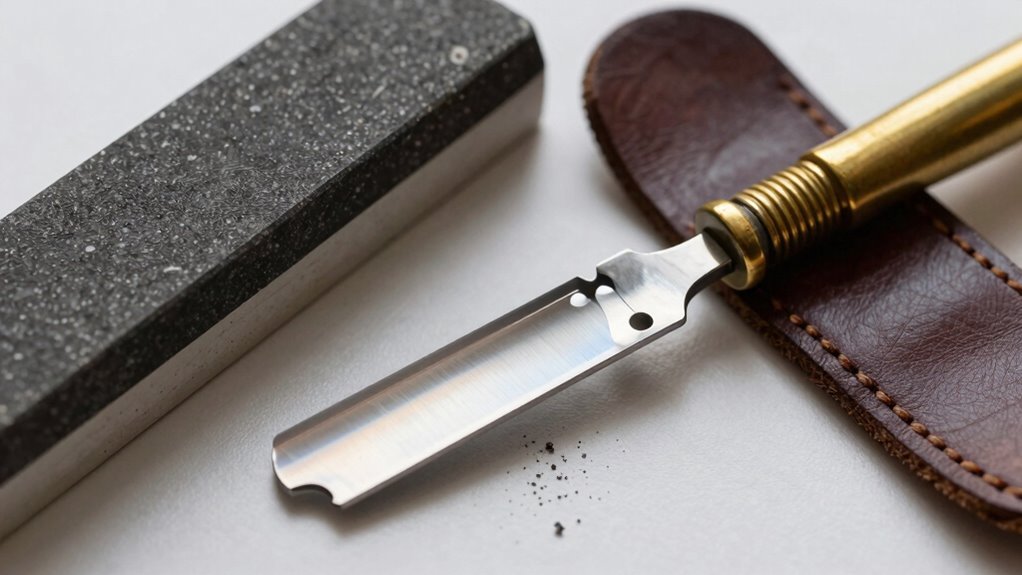

To keep your knife’s edge sharp, regularly hone it with a rod or leather strop to realign microscopic burrs, preventing dullness. Use proper technique by maintaining a consistent 15-20 degree angle and alternating sides with gentle strokes. Polish the edge with a leather strop and fine compound for a smooth, refined finish. Clean and condition your stropping tools often, and watch for signs like tearing or food slipping to know when it’s time to sharpen. Discover more tips to perfect your routine.
Key Takeaways
- Regularly hone blades with a honing rod or leather strop to realign edges and prevent dullness.
- Use proper angles (15-20 degrees) and light strokes, alternating sides during honing and stropping.
- Apply fine stropping compounds evenly on leather to polish microscopic burrs and maintain sharpness.
- Clean and condition leather strops with alcohol and balm, reapplying compound as needed for optimal performance.
- Schedule sharpening when signs of dullness appear, and maintain tools and storage for safety and edge longevity.
Understanding the Difference Between Honing and Sharpening
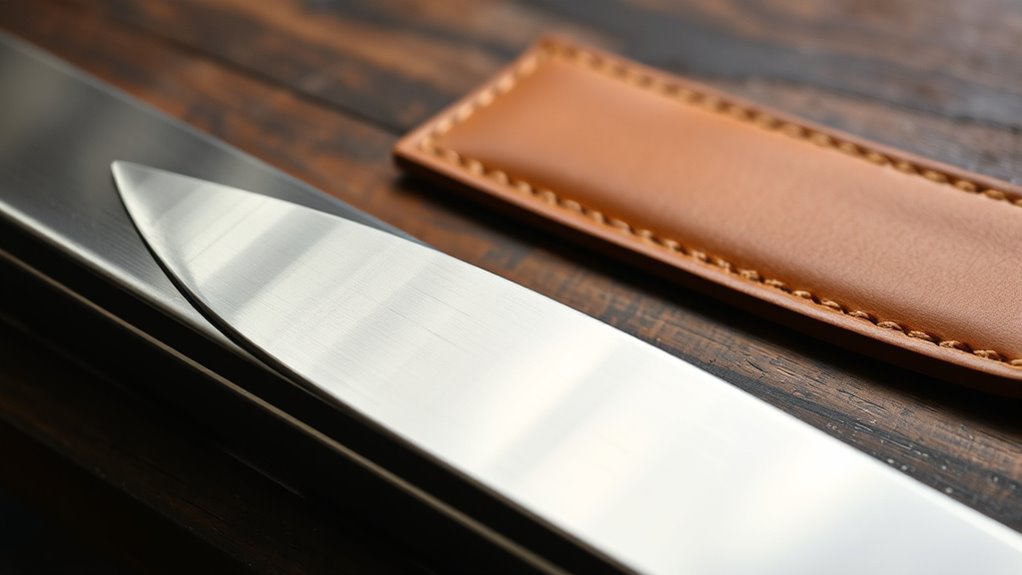
Honing and sharpening are often confused, but they serve different purposes in maintaining your knives. Honing realigns the edge without removing metal, keeping it straight and effective. You typically use honing rods or leather strops for this task, which you do regularly to maintain performance. Sharpening, on the other hand, involves removing metal to create a new, more precise edge, usually done with a grinder or stone. It’s a more aggressive process that’s needed less frequently. Honing helps prevent dullness by straightening the edge, while sharpening restores a dull or damaged blade. Proper maintenance routines ensure your knives stay in optimal condition and extend their lifespan. Additionally, using the appropriate projector technology ensures optimal image quality and longevity of your equipment. Regularly inspecting your tools and understanding the difference between honing and sharpening can also help prevent unnecessary wear. Incorporating routine care practices into your knife maintenance can further prolong their sharpness and overall durability.
The Role of Honing in Knife Maintenance
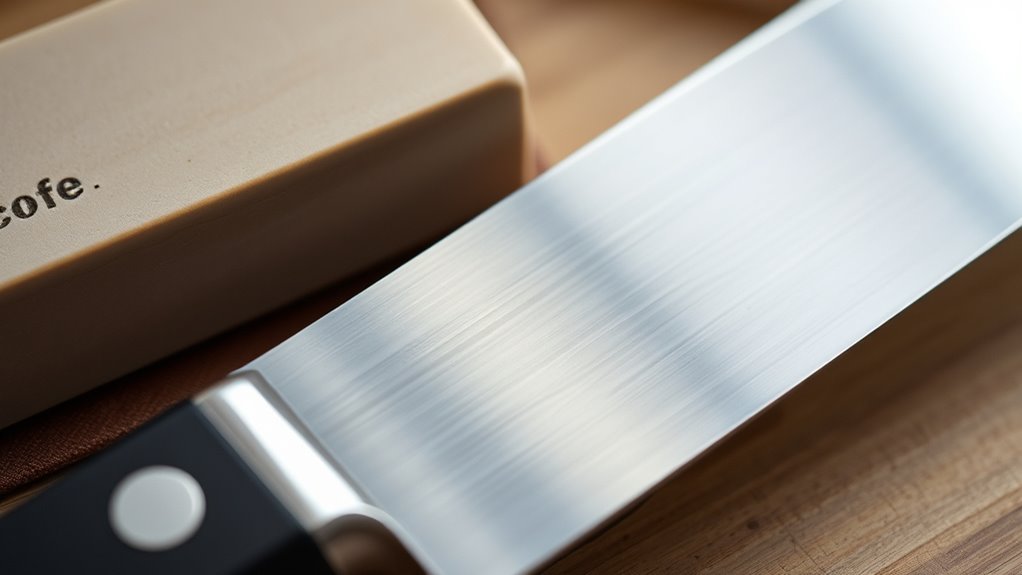
Regular honing plays a vital role in keeping your knives performing their best. It realigns the microscopic teeth along the blade’s edge, preventing it from becoming dull or misshapen. Unlike sharpening, honing doesn’t remove metal; it simply straightens the edge, restoring its cutting efficiency. Using honing rods or leather strops regularly helps maintain a sharp and safe edge between sharpenings. Consistent honing reduces the amount of force needed when cutting, making tasks easier and safer. It also extends the time between full sharpenings, preserving your knife’s integrity. Incorporating honing into your routine guarantees your blades stay aligned, smooth, and ready for precise work. By doing so, you keep your knives in top condition, prolonging their lifespan and maintaining peak performance. Understanding home‑care techniques can help you select the right tools and methods for optimal maintenance, including the proper honing process to ensure your blades stay true.
Proper Techniques for Honing Your Blades
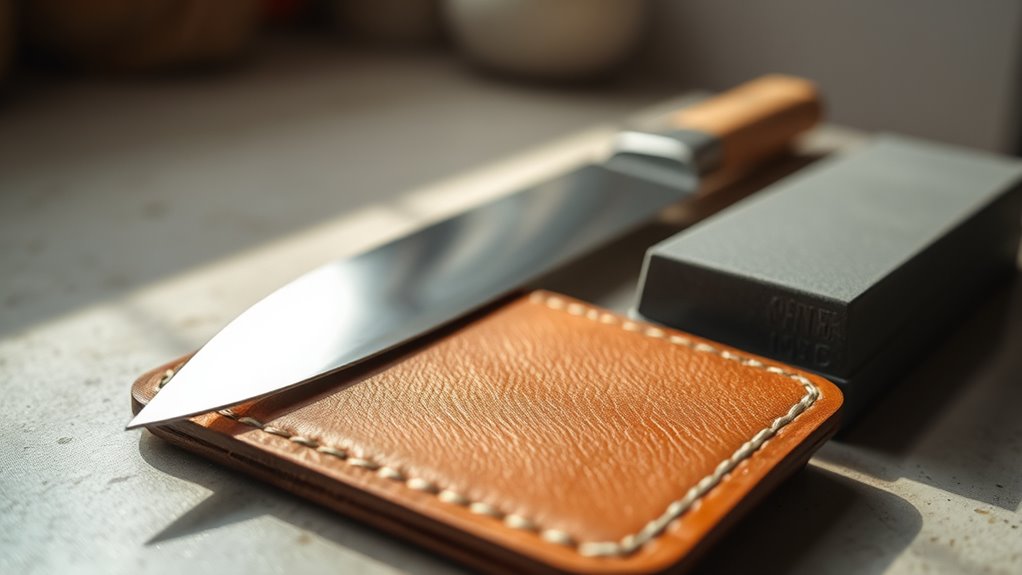
To effectively hone your blades, you need to maintain the correct angle and use smooth, controlled strokes. This guarantees realignment without damaging the edge. Keep these tips in mind:
- Set the right angle—match it to your knife’s edge, usually between 15-20 degrees.
- Use consistent pressure—light to moderate, avoiding forceful strokes that could bend or dull the edge.
- Stroke smoothly—draw the blade along the honing rod or strop in a single, fluid motion.
- Alternate sides—hone each side equally, typically 5-10 strokes per side, to keep the edge balanced.
Practicing this technique keeps your blade sharp, safe, and ready for use without unnecessary wear.
When and How to Use a Leather Strop for Polishing
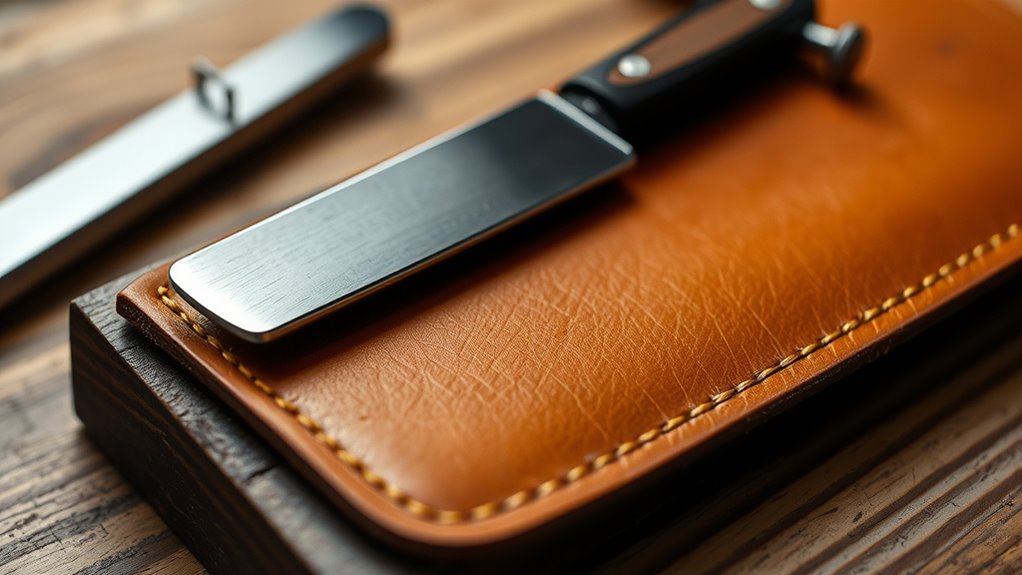
Using a leather strop for polishing is most effective after sharpening or honing when you want to refine and produce a razor-sharp edge. You should strop regularly, ideally every 20-30 minutes during heavy use, or daily for maintenance. Begin by ensuring your blade is clean and properly honed. Apply a small amount of compound to a clean leather strop, spreading it evenly. Hold the blade at your established sharpening angle and draw it backward across the strop, starting at the heel and ending at the tip. Use light, consistent pressure, and alternate sides with each pass to balance the edge. This process helps remove microscopic burrs and polishes the edge, ensuring it stays sharp, smooth, and safe for precise cutting. Regular stropping can also help maintain the edge integrity and prolong the intervals between sharpening sessions.
Selecting and Applying the Right Compound for Stropping
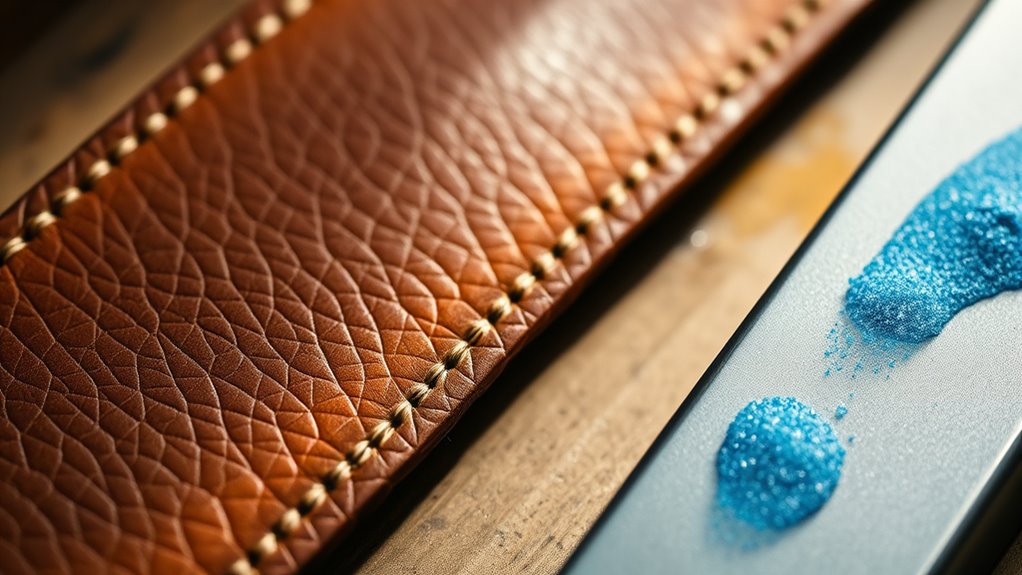
Choosing the right compound for stropping is essential to achieving a razor-sharp edge and prolonging your blade’s effectiveness. The correct compound enhances polishing and smooths microscopic ridges. Here’s what to contemplate:
Selecting the proper stropping compound ensures a sharper edge and longer-lasting blade performance.
- Grit Level: Use extra-fine (0.5-1 micron) for finishing touches, and coarser compounds for initial polishing.
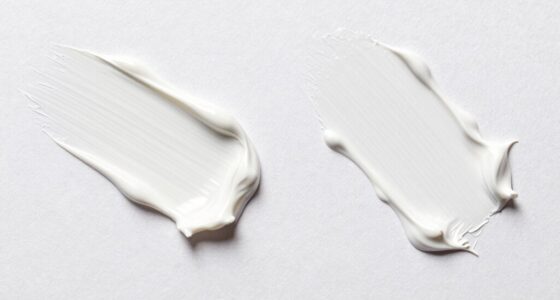
- Type of Compound: Green honing compound works well on suede, while white or red compounds suit leather strops.
- Application Method: Rub the compound lightly onto a clean, dry leather surface, avoiding excess buildup.
- Rejuvenation: Reapply after cleaning or if the compound starts to wear thin, ensuring consistent polishing.
- Compatibility with Materials: Ensure the compound is compatible with your strop material for optimal results based on the best vacuum recommendations].
Choosing the right compound and applying it properly will give you a sharp, durable edge every time.
Cleaning and Rejuvenating Your Strops
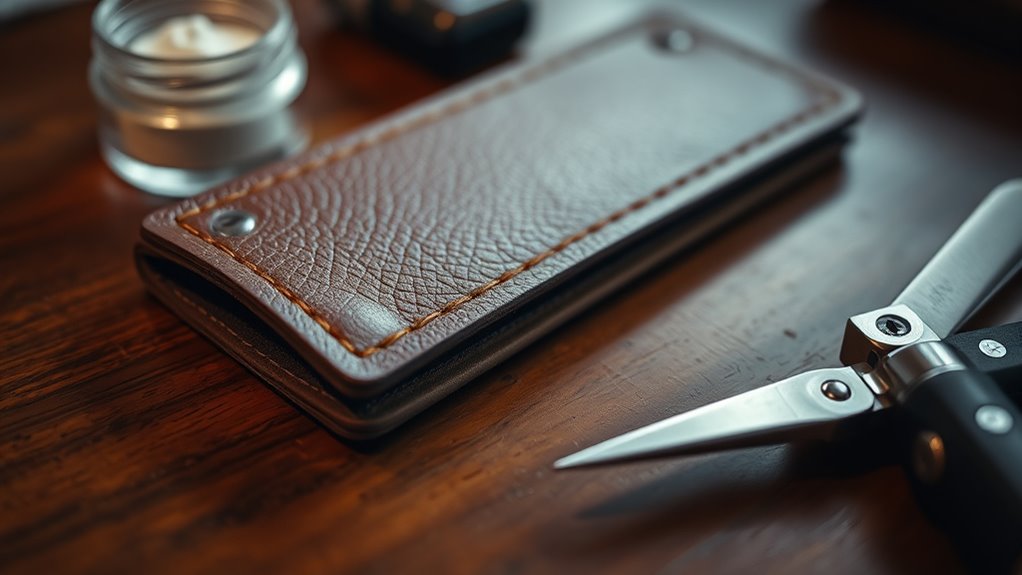
To keep your strops performing at their best, you need to properly remove compound residue and restore leather flexibility. Regular cleaning prevents surface damage and keeps the leather supple, ensuring a smooth, effective stropping process. Taking these steps helps extend your strops’ lifespan and maintain a sharp, safe edge. Additionally, understanding the importance of proper maintenance procedures can help you preserve the quality and effectiveness of your strops over time. Incorporating routine inspections can also help identify wear early, ensuring consistent performance and safety during use. Regularly checking for leather condition helps prevent unexpected damage and ensures your strops remain effective, especially when combined with climate‑specific care. Paying attention to auditory processing techniques can further support your understanding of proper care and maintenance routines.
Removing Compound Residue
Regularly removing compound residue from your strops is essential to maintain their effectiveness and prevent buildup that can dull your edge. Over time, old compound can clog the leather surface, reducing abrading power. To keep your strops in top shape:
- Use a sharp razor blade to gently scrape off hardened compound layers.
- Wipe the surface with a cloth dampened with rubbing alcohol to dissolve remaining residues.
- Brush or vacuum debris from the leather to prevent particles from scratching your blade.
- Lightly sand the surface with 120-220 grit sandpaper if it feels rough or uneven after cleaning.
- Leather conditioning can help restore flexibility and longevity after cleaning. Additionally, compound residue removal is crucial for maintaining a smooth, effective surface that enhances your honing routine.
This routine ensures your strops stay clean, effective, and ready for maximum polishing. Proper residue removal prolongs strop life and keeps your edges consistently sharp.
Restoring Leather Flexibility
Leather strops can lose their flexibility over time due to drying out or exposure to contaminants, which compromises their effectiveness. When this happens, your strop may become stiff, crack, or develop surface roughness, hindering proper edge polishing. To restore flexibility, start by cleaning the leather with a soft brush or cloth to remove dirt and debris. Next, apply a thin layer of leather balm or conditioner, massaging it into the surface to hydrate the fibers. Regular conditioning prevents leather from drying out and cracking, ensuring your strop remains supple and effective. Let it sit overnight to absorb fully. Wipe off any excess before storing. Proper storage in a cool, dry place also helps maintain its material integrity, preventing unnecessary deterioration. Additionally, understanding nanotechnology advancements can inspire new methods for preserving and rejuvenating leather products. Staying informed about innovative preservation techniques allows for more effective maintenance practices. For example, some emerging leather preservation innovations utilize advanced coatings to extend durability. With proper care, your strops will stay flexible, prolonging their lifespan and maintaining optimal polishing performance.
Preventing Surface Damage
Cleaning and rejuvenating your strops is essential for preventing surface damage that can impair their polishing ability. Proper care keeps the leather smooth, free of debris, and maximizes sharpening results. Here are four key steps:
- Use a sharp razor blade to gently scrape off dried compound buildup without gouging the leather.
- Wipe the surface with rubbing alcohol on a cloth to remove residual metal particles and old compounds.
- Brush away loose debris and dirt to prevent scratches during future use.
- Smooth rough patches with 120-220 grit sandpaper to restore an even surface before reapplying compound or balm.
Following these steps regularly preserves your strops’ integrity, ensuring consistent polishing and extending their lifespan. Proper maintenance keeps your edges sharp and your sharpening routine effective.
Best Practices for Maintaining Your Honing and Stropping Tools

Maintaining your honing and stropping tools properly guarantees they perform at their best and last longer. Regularly clean your strops by scraping off old compound with a razor blade and wiping with rubbing alcohol to remove residue. Brush away debris and smooth rough spots with fine sandpaper to keep surfaces even. Rejuvenate dry leather by applying a thin layer of leather balm, rubbing it in thoroughly, then wiping off excess and letting it dry overnight. Store your tools in sealed plastic bags to prevent dehydration and contamination. Keep different grit strops separate to avoid cross-polluting compounds. Periodically refresh the compound after cleaning to ensure excellent edge polishing. Proper maintenance preserves flexibility, prevents cracks, and keeps your tools ready for precise, effective honing and stropping.
Recognizing Signs That Your Knife Needs Sharpening or Rehoning

Recognizing when your knife needs sharpening or rehoning is essential for maintaining its cutting performance. Over time, your blade’s edge shows clear signs of wear, making tasks harder and increasing safety risks. Proper maintenance routines help extend the life of your knives and ensure consistent results. Here are four signs to watch for:
- Dull Cutting: Food slides off or requires excessive force.
- Tearing or Dragging: The knife tears rather than slices cleanly.
- Visual Burrs: Tiny metal curls or a rolled edge become visible.
- Uneven Cut: Inconsistent slicing or uneven surfaces on cut items.
If you notice any of these, it’s time to sharpen or rehone your knife. Regularly checking these signs keeps your blades performing at their best and ensures safe, efficient cutting.
Incorporating a Routine to Keep Knives in Peak Condition

Establishing a consistent knife care routine guarantees your blades stay sharp, safe, and ready for any task. Start by honing your knife regularly—after every few uses—to realign the edge without removing metal. Use a honing rod or leather strop, maintaining the correct angle to ensure effective maintenance. After honing, apply a light layer of compound to your strop and draw the blade backward, alternating sides, to polish and refine the edge. Schedule deeper sharpening sessions as needed, based on signs of dullness. Clean and condition your strops periodically with alcohol and balm to keep them effective and flexible. Incorporating advanced kitchen technology such as precision sharpening tools can further enhance your routine. Using high-quality sharpening stones can also improve the efficiency and accuracy of your sharpening process. Additionally, storing your knives properly in a dedicated knife storage solution prevents unnecessary dulling and damage. Implementing proper blade handling techniques can help maintain your knives’ sharpness over time. Incorporating vintage-inspired kitchen accessories can also add a charming aesthetic while protecting your blades. By integrating these simple steps into your routine, you’ll extend your knife’s lifespan, improve safety, and always have a sharp edge ready for precision cuts.
Frequently Asked Questions
How Often Should I Hone My Knives to Maintain Optimal Sharpness?
You should hone your knives daily or after every few uses to keep them sharp and safe. Regular honing realigns the edge without removing metal, preventing dullness. For best results, match your honing routine to your knife’s usage and steel type. Use a honing rod or leather strop, maintaining a consistent angle. This routine reduces force needed during cutting, improves safety, and extends your knife’s lifespan.
Can I Use a Strop on Serrated or Ceramic Knives?
Using a strop on serrated or ceramic knives is like trying to polish a gemstone that’s not meant to shine the same way. For serrated blades, stropping isn’t effective because their teeth can’t be realigned or polished with leather. Ceramic knives are too hard and brittle, risking damage if you attempt to strop. Instead, focus on proper sharpening methods designed specifically for serrated or ceramic blades to keep them in top shape.
What Are the Signs That My Strop Needs Cleaning or Replacing?
You’ll know your strop needs cleaning if the polishing becomes uneven, or if it feels rough and clogged with compound buildup. If the surface looks dull or scratches easily, it’s time to replace it. Regularly scrape off old compound and clean with alcohol to keep it effective. When cleaning no longer restores smoothness or polishing quality, replacing the strop guarantees your edges stay sharp and safe.
Is It Necessary to Use Different Compounds for Different Types of Blades?
Did you know that using the right compound can increase your blade’s sharpness by up to 30%? You don’t necessarily need different compounds for every blade type, but harder steels benefit from finer, more abrasive compounds. Softer blades may require coarser options initially. Match the compound grit to your blade’s hardness for ideal results, ensuring a polished, safe edge without unnecessary wear.
How Do I Prevent My Leather Strop From Cracking or Drying Out?
To prevent your leather strop from cracking or drying out, you should regularly lubricate it with leather balm. Rub the balm in until the surface is saturated, then wipe off any excess and let it dry overnight. Store your strop in a sealed plastic bag to keep moisture in and contamination out. Also, avoid exposing it to direct sunlight or extreme heat, which can cause the leather to crack or become brittle.
Conclusion
By regularly honing, stropping, and maintaining your knives, you keep their edges as sharp as a finely tuned instrument. Think of it as tending a garden—consistent care prevents weeds from taking over. With proper technique and routine, your blades will perform effortlessly and last longer. Embrace these simple steps, and you’ll enjoy cutting tasks as smoothly as a river flows—confident and precise every time.