To keep your knives sharp without full sharpening, focus on regular honing and stropping. Use a leather strop at about a 20° angle, applying gentle backward strokes to realign microscopic teeth and remove burrs. Make this a daily routine to maintain a razor-sharp edge and prevent dullness. Proper storage and cleaning also help prolong blade life. Keep learning to discover effective techniques that guarantee your knives stay in top condition longer.
Key Takeaways
- Regular stropping on leather realigns microscopic teeth, maintaining a sharp edge without removing metal.
- Use consistent angles (~20°) and gentle strokes to polish and straighten the blade’s edge daily.
- Proper storage prevents damage and rust, extending the intervals between full sharpening sessions.
- Keep the leather strop conditioned and clean for optimal honing performance and longevity.
- Consistent maintenance practices, including stropping and proper storage, prolong blade life and performance.

HOSHANHO Kitchen Knife in Japanese High Carbon Steel, Professional High-Class Chef's Knife 8 inch, Non-slip Ultra Sharp Cooking Knives with Ergonomic Handle
【High-End Japanese Steel Chef's Knife】 HOSHANHO chef's knife is made of Japanese high carbon steel 10Cr15CoMoV, 2x of...
As an affiliate, we earn on qualifying purchases.
Understanding the Role of Honing in Knife Maintenance
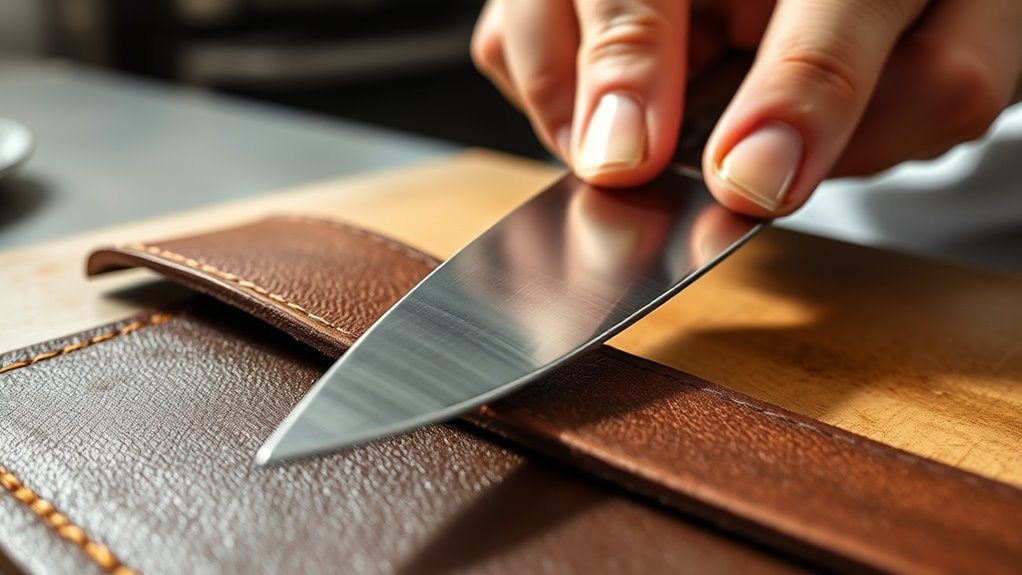
Honing plays a crucial role in maintaining your knife’s sharpness by realigning its microscopic teeth rather than removing metal like sharpening does. Over time, use causes the tiny edge fibers to bend and fold, creating a dull or uneven cutting surface. Honing gently pushes these fibers back into proper alignment, restoring the edge’s precision without thinning it. It’s especially effective after using a whetstone or when your knife begins to feel less responsive. Regular honing keeps your knife performing at its best, prolonging the intervals between full sharpenings. Additionally, proper knife maintenance practices like honing help prevent unnecessary wear and tear on your blades. By maintaining this alignment, you reduce the risk of accidents caused by dull blades and ensure safer, cleaner cuts. Honing is simple yet essential for everyday knife care, helping you keep your blades sharp and effective with minimal effort. Incorporating proper knife maintenance practices ensures your tools remain in optimal condition, contributing to safer and more efficient cooking experiences. Consistent honing routine can significantly extend the lifespan of your knives and maintain their cutting performance over time.

MOSFiATA 8" Super Sharp Professional Chef's Knife with Finger Guard and Knife Sharpener, German High Carbon Stainless Steel EN1.4116 with Micarta Handle and Gift Box
【High Carbon German Stainless Steel Laser-engraved Pattern(Not Damascus Pattern )】 MOSFiATA 8 inch pro chef's knife is made...
As an affiliate, we earn on qualifying purchases.
Proper Stropping Techniques for a Razor-Sharp Edge
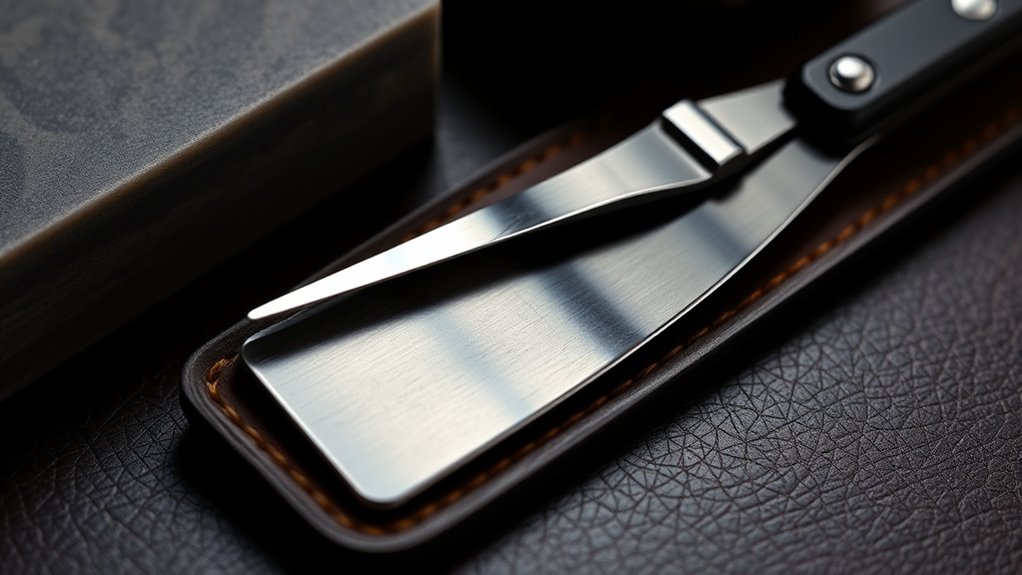
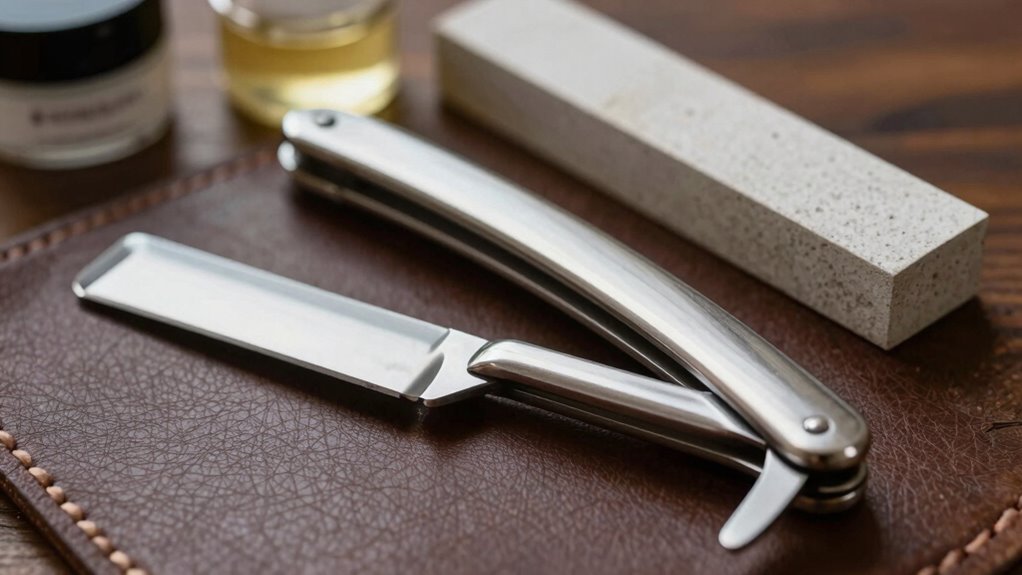
To achieve a razor-sharp edge through stropping, you need to master the proper technique. Hold your knife at about a 20-degree angle against the leather strop. Use a gentle, controlled pulling motion backward across the leather surface, avoiding sawing or pressing down hard. Alternate sides with each stroke to evenly straighten the edge and push remaining burrs along the blade. Apply light pressure until you feel slight resistance; too much pressure can damage the edge. Perform 20 to 30 strokes on each side, ensuring consistent contact. This process realigns microscopic teeth and polishes the edge, restoring sharpness without removing metal. Regular stropping maintains your knife’s performance, keeps the edge aligned, and reduces the need for frequent sharpening. Additionally, understanding the contrast ratio of your projector can significantly improve your viewing experience by providing deeper blacks and brighter whites.

PAUDIN Chef Knife, 8 Inch High Carbon Stainless Steel Sharp Kitchen Knife with Ergonomic Handle, Gift Box for Family & Restaurant
Professional Chef's Knife: This PAUDIN kitchen knife is suitable for cutting bread, vegetables, fillets or meats etc, and...
As an affiliate, we earn on qualifying purchases.
Essential Daily Maintenance for Kitchen Knives
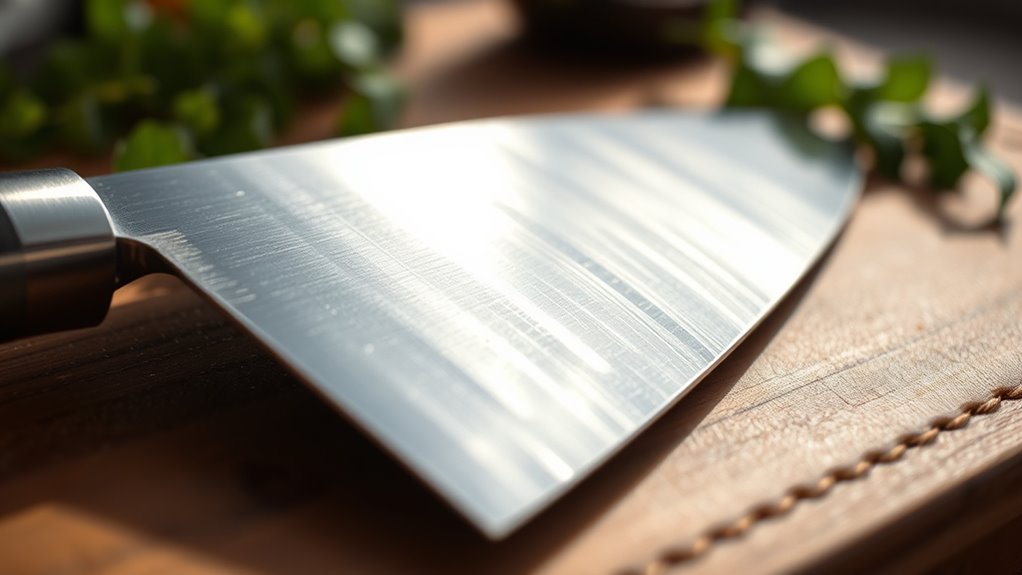
Performing daily maintenance on your kitchen knives is essential for keeping them sharp and safe to use. Each day, spend a few minutes stropping your blades on a leather surface to realign microscopic teeth. This quick step prevents dullness and maintains a razor-sharp edge without removing metal. Regular knife care practices, such as honing and proper storage, are crucial for preserving blade integrity over time. Before use, ensure your knives are clean and dry to avoid debris that can dull the edge. Applying a light coat of leather balm or petroleum jelly helps keep the strop in good condition, preventing drying or cracking. Regularly inspecting and cleaning your strop guarantees maximum performance. Additionally, proper knife storage techniques can prevent damage and maintain blade integrity. Using proper maintenance routines consistently can significantly extend the lifespan of your knives and ensure optimal performance. Incorporating strop conditioning into your routine can further enhance the effectiveness of your sharpening tools. Maintaining a dedicated cutting surface can also protect your blades from unnecessary wear and damage. By dedicating just five minutes daily, you’ll extend the life of your knives, improve cutting precision, and reduce the need for frequent sharpening. Consistency is key to keeping your knives in top shape.
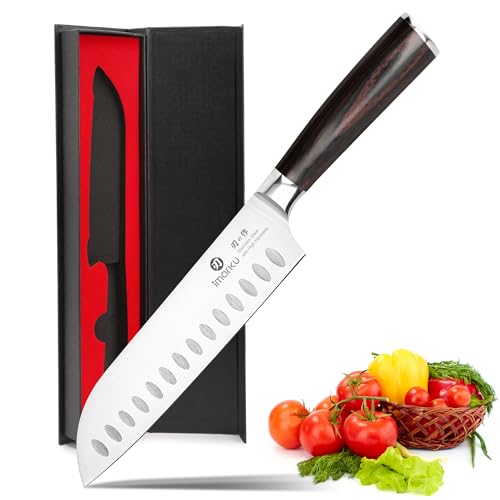
imarku Chef Knife 7 Inch Kitchen Knife Ultra Sharp Santoku Knife - High Carbon Japanese Chefs Knife, Kitchen Gadgets 2025, Apartment Essentials, Birthday Gifts for Him Her, Best Gifts for Women Men
Professional Santoku Knife: This imarku super sharp santoku knife is made of high carbon stainless steel that resists...
As an affiliate, we earn on qualifying purchases.
Preparing Your Strop for Optimal Performance
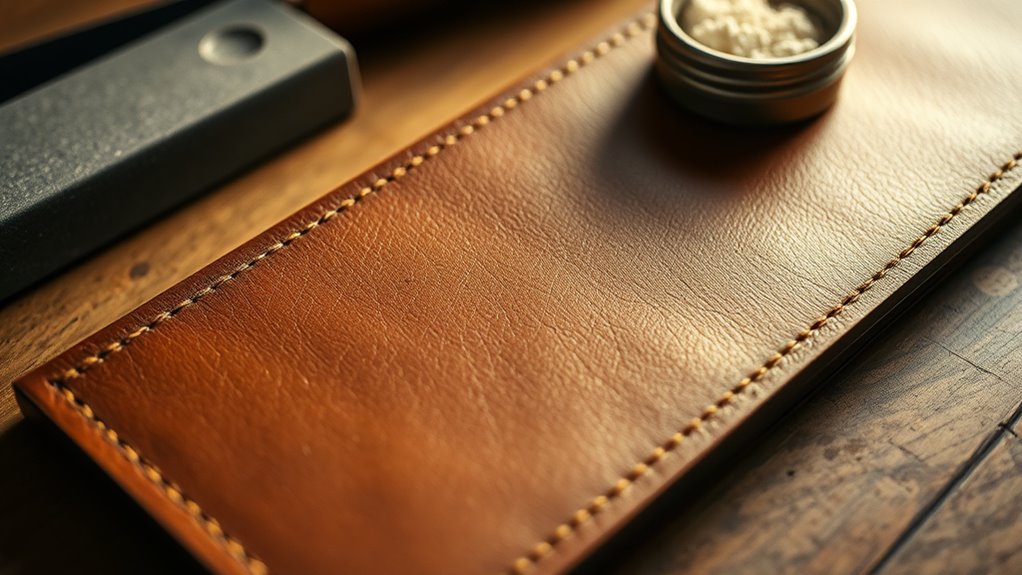
Before using your strop, it’s important to prepare it properly to guarantee peak performance. Start by cleaning the leather surface to remove dust and debris, which can affect polishing. Apply a thin, even layer of stropping compound—using an extra-fine grit for the best results—and spread it like a crayon, avoiding excess buildup. This ensures smooth contact and effective polishing. Check that your leather is supple; if it feels dry, treat it with a leather balm or petroleum jelly, rubbing it in until saturated and wiping off any excess. Store your strop in a sealed plastic bag to prevent drying out and contamination. Proper preparation creates a clean, well-lubricated surface, making sure your strop performs consistently and keeps your blade edges finely tuned. Regular maintenance of the leather’s moisture levels can help extend the life and effectiveness of your strop. Maintaining proper leather condition is essential for consistent sharpening results and prolongs the usability of your strop. Additionally, understanding aero guard maintenance can help you keep your tools in top shape and avoid unnecessary replacements. Incorporating routine leather conditioning can prevent cracking and preserve the flexibility needed for effective stropping. Keeping an eye on pinball machine weight can also inform proper handling and installation, ensuring safety during maintenance and use.
Maintaining and Caring for Your Leather Strop

Regular maintenance keeps your leather strop in top condition and guarantees consistent sharpening results. Start by removing any built-up compound with a sharp razor blade, then smooth the surface with 120-220 grit sandpaper if it feels rough. Apply a leather balm or petroleum jelly to keep the leather supple and prevent drying out; rub it in until saturated, wipe off the excess, and let it sit overnight. Store your strop in a sealed plastic bag to avoid dehydration and contamination. Periodically, check for cracks or tears, and replace the strop if it shows significant damage. Proper storage and routine care ensure your strop remains effective, preserving its polished surface and prolonging its lifespan. This simple upkeep helps maintain ideal edge refinement every time you strop, especially since quality materials like premium leather contribute to better honing results. Additionally, maintaining the strop’s surface integrity ensures consistent contact with the blade, optimizing your sharpening process.
Benefits of Regular Stropping and Daily Upkeep
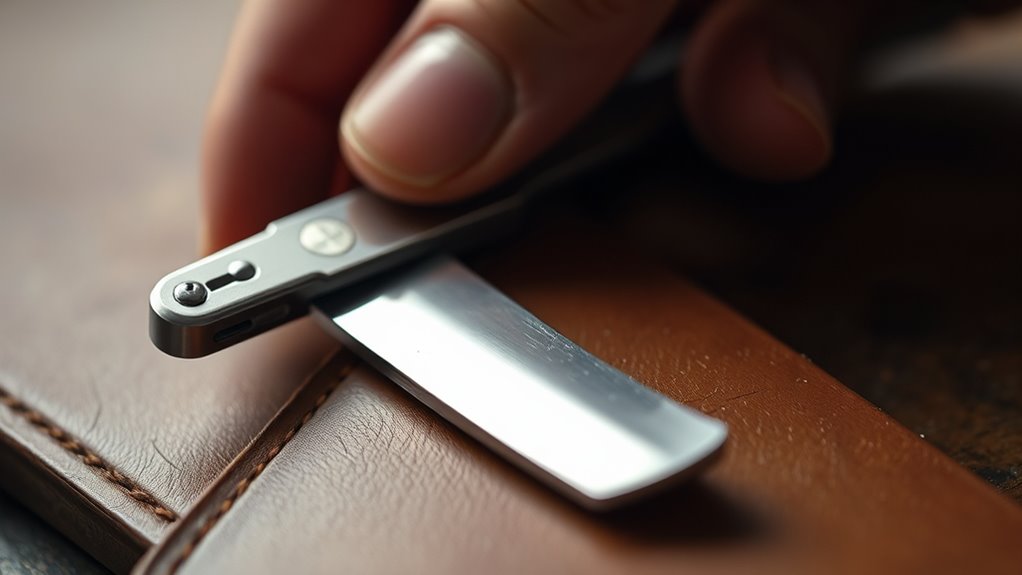
Stropping daily keeps your knife’s edge sharp and ready for precise cuts, reducing the need for frequent sharpening. By realigning microscopic teeth, you maintain a consistently keen edge, which enhances safety and efficiency in your tasks. Regular upkeep prevents micro-damage and micro-scratches that dull the blade over time. It also preserves the polished finish from honing, ensuring your knife performs at its best. Daily stropping is quick and simple, taking just a few minutes, but its impact is significant. It helps you avoid the inconvenience and cost of more aggressive sharpening methods. Consistent maintenance prolongs the lifespan of your blade, keeps cuts clean and effortless, and maintains *ideal* performance between full sharpenings. This daily routine ultimately saves you time, effort, and money in the long run. Proper maintenance techniques are essential for maintaining optimal blade performance and longevity, as understanding blade maintenance can further enhance your skills and results. Incorporating regular upkeep practices into your routine ensures your tools stay in top condition and ready for any task, with micro-teeth realignment playing a crucial role in maintaining a sharp edge over time.
Tips for Extending the Life of Your Cutting Edge

To keep your knife performing its best, make it a habit to regularly use a strop, which helps maintain a sharp edge and reduce wear. Proper storage also plays a key role in protecting the blade from moisture and damage that can shorten its lifespan. By combining consistent stropping with careful storage, you’ll extend the life of your cutting edge and ensure ideal performance.
Regularly Use a Strop
By incorporating daily stropping into your routine, you can considerably extend the lifespan of your knife’s sharp edge. Regular use realigns microscopic teeth and removes minor burrs, keeping the edge sharp longer. To maximize benefits, keep these tips in mind:
- Use a consistent angle—around 20 degrees—to ensure proper contact.
- Apply light, even pressure, focusing on a slow, deliberate pull across the leather.
- Alternate sides with each stroke to maintain symmetry and prevent uneven wear.
- Using a quality strop made from leather or a similar material can further enhance the effectiveness of your stropping routine.
- Consistent maintenance practices help preserve the integrity of your cutting tools over time.
Spend about a minute each day stropping; this simple step prevents dullness and reduces the need for frequent sharpening. Proper technique and consistency will keep your knife performing at its best, making every cut smoother and safer.
Maintain Proper Storage
Proper storage is essential for preserving your knife’s sharp edge and preventing damage. Store your knife in a way that avoids contact with other utensils or hard surfaces, which can dull or chip the blade. Use a knife block, magnetic strip, or sheath to protect the edge. Keep your knife dry and clean to prevent rust and corrosion. Avoid storing it loosely in a drawer, where it can get scratched or bent. Regularly inspect and clean storage areas to ensure no debris or moisture is present. Proper storage techniques help extend the lifespan of your cutting edge and maintain optimal performance. Additionally, utilizing storage options with moisture-resistant materials can further prevent rust and corrosion over time. Maintaining a dry environment can significantly reduce the risk of rust formation and keep your knife in top condition. To further protect your blades, consider using blade guards or sheaths when storing or transporting your knives. Ensuring proper storage also involves temperature regulation, which can help prevent material degradation over time.
Frequently Asked Questions
How Often Should I Hone My Knife for Optimal Sharpness?
You should hone your knife every 3 to 4 days for peak sharpness, especially with Japanese-style kitchen knives. This routine realigns microscopic teeth without removing metal, keeping your edge sharp and safe. If you notice your knife requires more force or isn’t slicing as smoothly, it’s time to hone. Regular honing prevents dullness, reduces the need for full sharpening, and maintains your knife’s performance for precise cuts.
Can Stropping Replace Sharpening Entirely?
Yes, stropping can replace sharpening temporarily, but only for a while. It’s like giving your blade a quick refresh, realigning microscopic teeth and polishing the edge. Still, over time, the metal wears down, and sharpening becomes necessary again. So, while daily stropping keeps your knife razor-sharp and performs beautifully, don’t rely on it forever—eventually, a full sharpening will be your best move to restore maximum edge.
What Are Signs My Strop Needs Maintenance or Replacement?
You’ll know your strop needs maintenance or replacement if it feels rough or develops cracks, making stropping less effective. Excessive buildup of compound or debris can cause uneven polishing, so clean it regularly. If the leather becomes too worn, torn, or loses its suppleness, consider replacing it. Maintaining a smooth, conditioned surface guarantees consistent results, prolonging your strop’s life and keeping your blade razor-sharp.
Is It Safe to Use Petroleum Jelly on My Leather Strop?
Yes, it’s safe to use petroleum jelly on your leather strop. Some worry it might damage the leather, but when applied sparingly, it actually helps prevent drying and cracking, keeping your strop in top condition. Just be sure to spread a thin layer evenly and wipe off any excess. Regularly reapply as needed, and your strop will stay supple and effective, ensuring safe, efficient sharpening every time.
How Do I Know if My Knife Is at the Correct Stropping Angle?
You can tell if your knife is at the correct stropping angle by holding it at about 20 degrees, which is slightly shallower than sharpening. If you’re unsure, try gently resting the blade on the strop and see if it maintains contact without forcing it. Your goal is to achieve a consistent, light contact that allows the edge to align naturally, ensuring effective stropping without damaging the blade.
Conclusion
By honing, stropping, and performing daily maintenance, you can keep your knives sharp and ready for any task. Did you know that regular stropping can extend the life of your blade by up to 50%? Staying consistent with these simple techniques not only preserves your knife’s edge but also enhances safety and efficiency in the kitchen. Keep up with your routine, and your blades will serve you well for years to come.