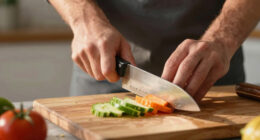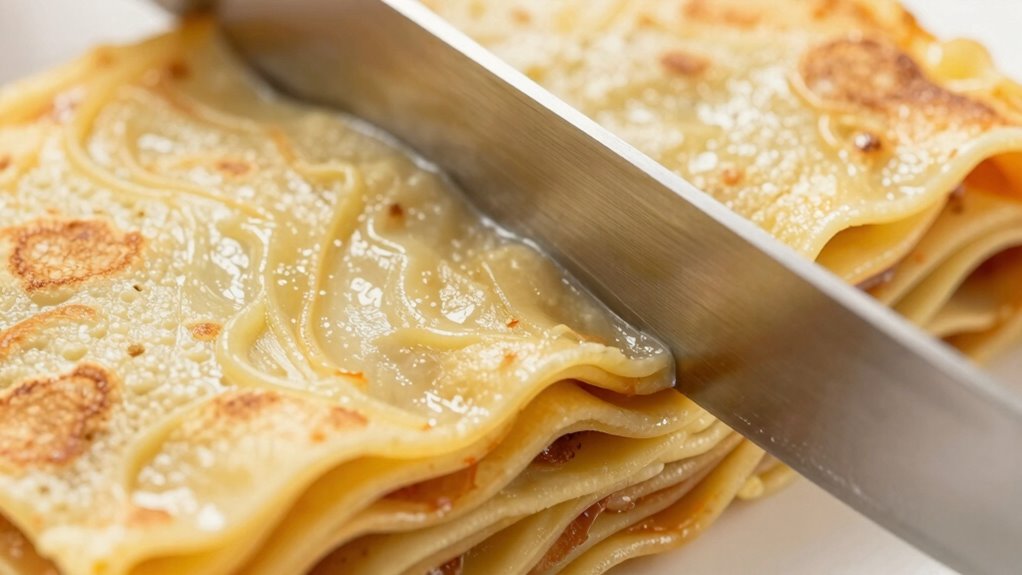

Thin knives can steer in tall foods because their geometry allows the blade to flex and follow complex contours with ease. This flexibility enables you to guide the knife gently along curved or layered surfaces, reducing the force needed and preventing damage. The sharp, precise edge combined with a refined angle helps you make clean, controlled cuts. Want to learn how these design features work together? Keep exploring for more insights.
Key Takeaways
- Thin knives have a sharper cutting angle, enabling precise, controlled guidance along food contours.
- The flexibility allows the blade to bend and follow the natural shape of tall or layered foods.
- Reduced resistance minimizes slipping, giving better control during complex or delicate cuts.
- The combination of flexibility and sharpness allows gentle steering rather than forcing through food.
- This geometry ensures the blade responds smoothly to guiding motions, enhancing precision and minimizing damage.
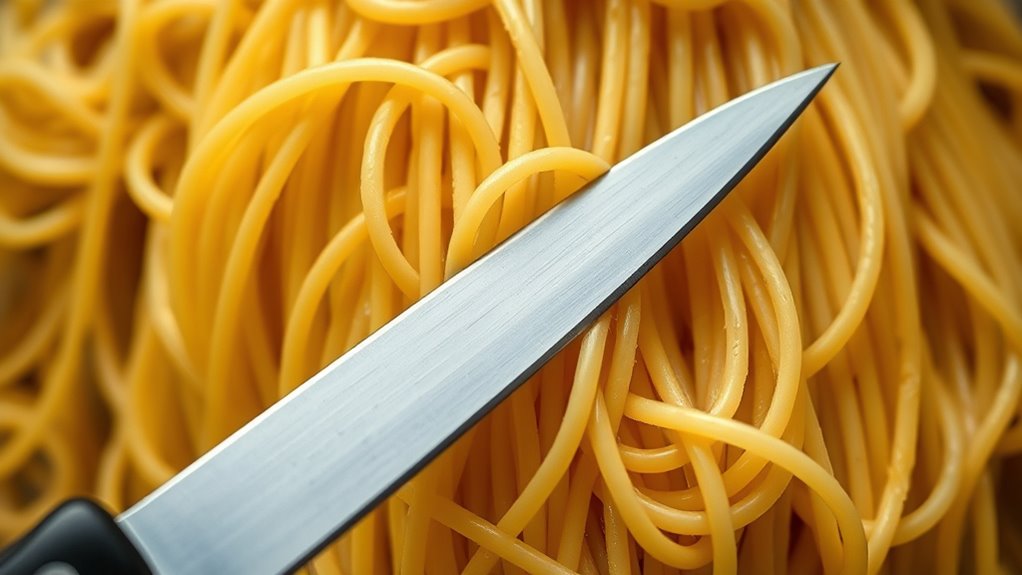
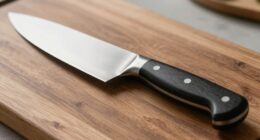
When it comes to preparing and serving food, the tools you choose can make a big difference—especially thin knives. These knives excel at maneuvering through tall, layered foods because their design allows for precise control and minimal resistance. One key aspect that makes them so effective is their blade flexibility, which influences how well the knife can adapt to different cutting angles and contours. Unlike thicker, more rigid blades, thin knives bend slightly under pressure, allowing you to follow the shape of the food more naturally. This flexibility is vital when you’re dealing with tall foods like layered cakes, stacked vegetables, or layered pastries, where a straight cut can be difficult or damaging.
The cutting angle of a thin knife plays a significant role in its ability to ‘steer’ through tall foods. Because these knives are designed with a sharper, more acute cutting edge, they enable you to approach the food at a precise angle. This sharpness reduces the force needed and helps you maintain control, especially when slicing through multi-layered or uneven structures. When you apply even pressure with a thin blade, the sharper cutting angle ensures a clean, smooth cut without crushing or tearing the layers. This is especially useful for foods that have delicate textures or intricate layers, where a clean cut preserves the presentation and integrity of the dish.
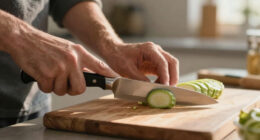
Furthermore, the combination of blade flexibility and a refined cutting angle allows the knife to follow the natural contours of tall foods. Instead of forcing the blade straight down, you can gently guide it along the surface, making slicing more efficient and less disruptive to the food’s structure. This ability to ‘steer’ the blade is what sets thin knives apart—they’re responsive and adaptable, giving you better control over your cuts. The more flexible blade conforms to the shape of the food, reducing the risk of slipping or uneven slices, which is common when using less specialized tools.
In essence, the geometry of a thin knife—particularly its blade flexibility and cutting angle—empowers you to navigate tall foods with confidence. You can make precise, clean cuts that maintain the food’s aesthetic appeal and structural integrity. Whether you’re slicing a towering layered cake or delicate vegetable stacks, these tools give you the finesse needed to handle complex, tall foods efficiently. Mastering their use means you’ll be able to serve up beautiful, professional-looking dishes every time, thanks to the thoughtful design that allows the knife to adapt seamlessly to the food’s shape.
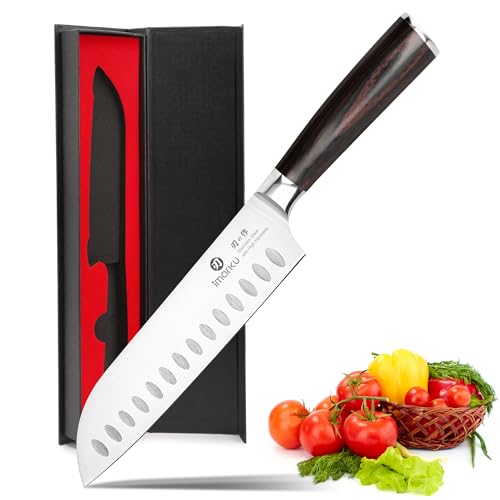
imarku Chef Knife 7 Inch Kitchen Knife Ultra Sharp Santoku Knife - High Carbon Japanese Chefs Knife, Kitchen Gadgets 2025, Apartment Essentials, Birthday Gifts for Him Her, Best Gifts for Women Men
Professional Santoku Knife: This imarku super sharp santoku knife is made of high carbon stainless steel that resists...
As an affiliate, we earn on qualifying purchases.
Frequently Asked Questions
Can Thicker Knives Be Used Effectively on Tall Foods?
Thicker knives can be used effectively on tall foods, but you need to pay attention to knife maintenance and your cutting surface. A thicker blade might require more effort and could cause more resistance, so keep your knife sharp and guarantee a smooth cutting surface. Properly maintaining your knife and choosing the right cutting surface helps you control thicker knives better, making it easier to handle tall foods without slipping or losing precision.
How Does Knife Material Affect Cutting Precision in Tall Foods?
Your choice of knife material impacts cutting precision by influencing knife sharpness and handle ergonomics. A high-quality steel retains sharpness longer, allowing you to make cleaner, more accurate cuts in tall foods. Additionally, a handle with good ergonomics provides better control and reduces fatigue, helping you maintain precision during lengthy tasks. When selecting a knife, prioritize materials that enhance sharpness and comfort to improve your overall cutting accuracy.
Are There Specific Techniques for Cutting Tall Foods With Thin Knives?
Think of your knife as a guiding compass for tall foods. To cut with precision control, you should maintain consistent cutting angles and use gentle, steady pressure. Start with a slight tilt to navigate through layers smoothly, and keep your hand stable. Practice slow, deliberate strokes to master the technique, turning a towering challenge into a neat, controlled cut that reveals the food’s hidden beauty behind your skillful hands.
Does the Height of the Food Influence the Choice of Knife Thickness?
Yes, the height impact of tall foods influences your choice of knife thickness. When cutting taller items, a thinner knife can better navigate the food’s stability, allowing more precise cuts without slipping. Thinner knives are more flexible, making them ideal for maintaining control and steering through the height, especially when food stability is a concern. So, for tall foods, opt for a thinner blade to improve accuracy and reduce accidents.
Can Thin Knives Cause Damage to Delicate Tall Foods?
A stitch in time saves nine, so be cautious. Thin knives can cause damage to delicate tall foods if you don’t maintain a proper knife grip and guarantee food stability. Because they’re sharper and more precise, they can easily pierce or crush fragile textures. Handle them gently, especially with tall, delicate items, to avoid tearing or squashing. Proper technique keeps your food intact and your knife safe.
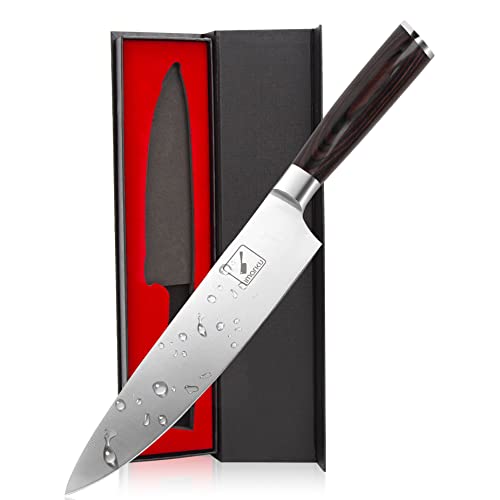
imarku Japanese Chef Knife - Sharp Kitchen Knife 8 Inch Chef's Knives HC Steel Paring Knife, Unique Gifts for Men and Women, Gifts for Mom or Dad, Kitchen Gadgets with Gift Box, Gyutou Knives
High-Carbon Stainless Steel Blade: It is manufactured from high-quality stainless steel that maintains its functionality for a long...
As an affiliate, we earn on qualifying purchases.
Conclusion
So, next time you’re slicing through towering foods with a thin knife, remember—there’s more at play than just cutting. The geometry beneath your fingertips guides your blade in ways you never expected, almost as if it’s steering itself. What other secrets does this delicate dance hide? Keep your curiosity sharp—because sometimes, the simplest tools hold the most surprising powers, waiting to be uncovered just beneath the surface. Will you discover what’s truly possible with a thin knife?

MITSUMOTO SAKARI 8 inch Gyuto Chef Knife, Japanese Hand Forged Kitchen Chef's Knives, 3-Layer 9CR18MOV High Carbon Steel, Rosewood Handle & Sandalwood Box
JAPANESE TRADITIONAL HAND FORGED: Professional chef knife blends traditional handmade forging craft with advanced tech and premium materials....
As an affiliate, we earn on qualifying purchases.

HOSHANHO Kitchen Knife in Japanese High Carbon Steel, Professional High-Class Chef's Knife 8 inch, Non-slip Ultra Sharp Cooking Knives with Ergonomic Handle
【High-End Japanese Steel Chef's Knife】 HOSHANHO chef's knife is made of Japanese high carbon steel 10Cr15CoMoV, 2x of...
As an affiliate, we earn on qualifying purchases.