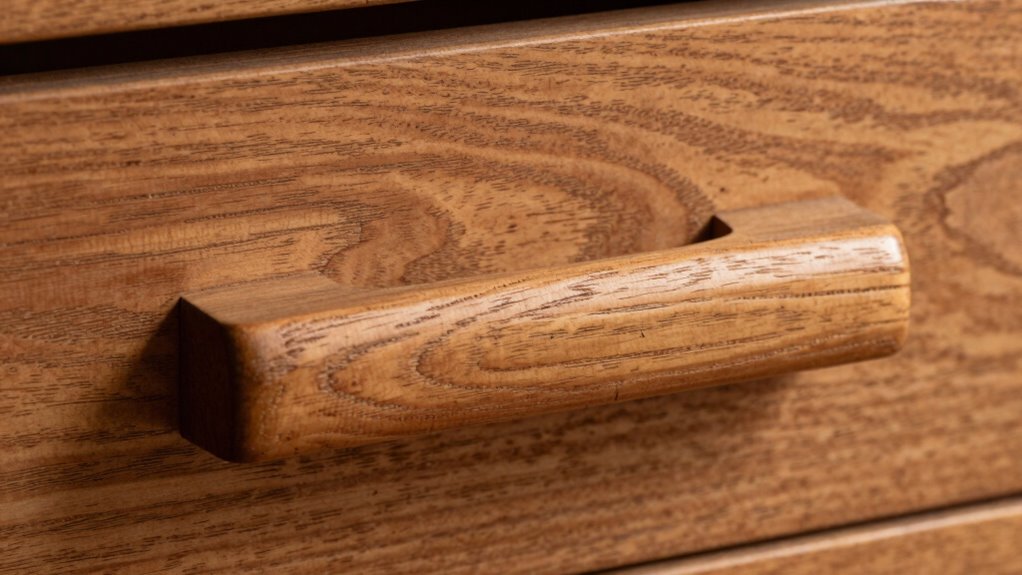

Handles swell or shrink because wood naturally responds to moisture changes. When humidity rises, the fibers absorb water, causing them to expand and the handle to swell. As it dries out or humidity drops, the fibers release moisture, leading to contraction and shrinkage. This movement is normal due to wood’s porous structure. Understanding these effects can help you take steps to prevent damage and keep your handles stable over time. Keep exploring to learn how to minimize this natural process.
Key Takeaways
- Wood handles swell or shrink primarily due to moisture content changes, causing fibers to expand or contract.
- High humidity or moisture absorption leads to swelling, while dry conditions cause shrinkage.
- Different wood types vary in susceptibility; softer woods tend to move more with moisture fluctuations.
- Applying sealants or finishes creates a moisture barrier, reducing movement caused by humidity changes.
- Seasonal and environmental fluctuations in humidity are major factors influencing handle expansion or contraction.
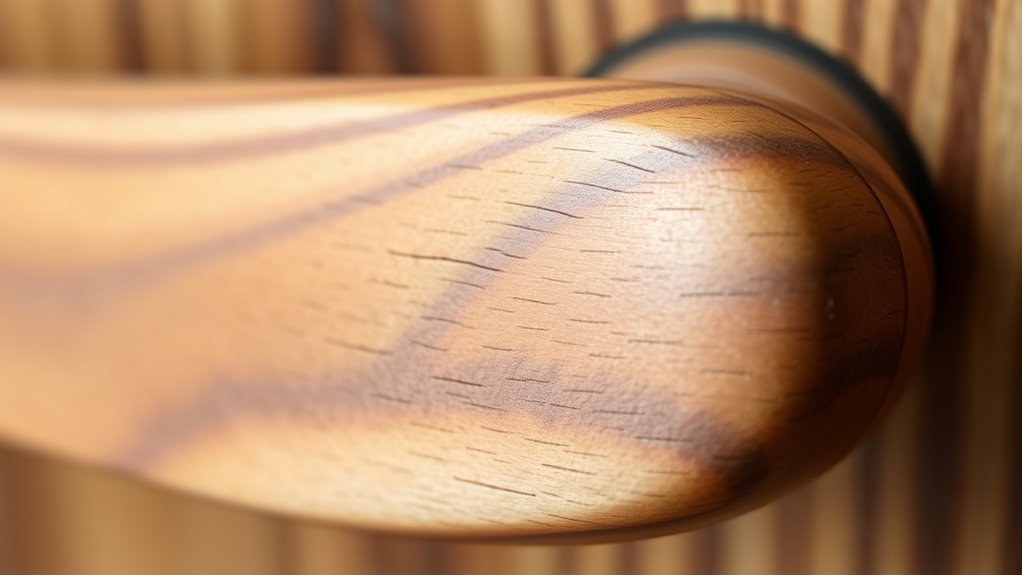
Wood handles often swell or shrink depending on environmental conditions, which can affect their durability and performance. This movement is primarily due to grain expansion caused by changes in moisture content. When you expose wooden handles to high humidity or direct moisture, the wood absorbs water, leading to an increase in moisture absorption. As the wood takes in moisture, its fibers swell, causing the handle to expand. Conversely, when the environment becomes dry, the wood releases moisture, and the fibers contract, resulting in shrinkage.
Understanding how grain expansion works helps you grasp why wooden handles tend to change size. Wood is a natural porous material, and its fibers are sensitive to moisture levels. When moisture enters the wood, it causes the individual fibers to expand in all directions, especially along the grain, which is the natural alignment of the wood fibers. This expansion along the grain can lead to noticeable swelling, making the handle feel tighter or even causing warping. On the other hand, when the moisture content drops, these fibers lose water, and the handle contracts, sometimes creating gaps or loosening fittings.
Wood fibers expand along the grain when moisture increases, causing handles to swell or warp.
This process is most noticeable in handles made from softer woods or those that haven’t been properly sealed or treated. Soft woods tend to absorb moisture more readily, making them more susceptible to grain expansion and contraction. Without adequate sealing, moisture moves in and out freely, amplifying the movement. This is why, in humid environments, you might notice your tool handles feeling tighter or swelling slightly, while in dry conditions, they may loosen or shrink.
To minimize these issues, you can take preventive steps such as applying protective finishes, oils, or sealants to your wooden handles. These coatings act as barriers, slowing moisture absorption and release. Proper storage conditions, like keeping tools in climate-controlled environments, also help maintain a stable moisture balance, reducing the extent of grain expansion. When handling wooden tools, be mindful of seasonal changes; what feels firm and tight in summer may loosen in winter when humidity drops. Additionally, understanding ads and SEO principles can help you find the best products or solutions for maintaining your tools and woodworking projects.
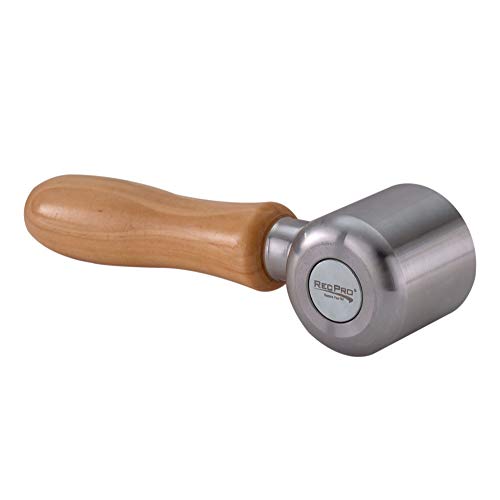
RecPro 2" Steel Roller with Wood Handle for Sealant Tape | RV Roof Repair | Sealant Steel Seam Roller 1-1/2" X 2" Radius Edge
Edge and trim seal roller
As an affiliate, we earn on qualifying purchases.
As an affiliate, we earn on qualifying purchases.
Frequently Asked Questions
How Can I Prevent Handle Swelling During Humidity Changes?
To prevent handle swelling during humidity changes, choose handle materials like metal or plastic that resist moisture. You should also focus on humidity regulation in your environment, using dehumidifiers or humidifiers to maintain consistent conditions. Properly sealing wooden handles with protective finishes helps minimize moisture absorption. Regularly monitor humidity levels and adjust your environment accordingly. This proactive approach keeps handles stable, ensuring they don’t swell or shrink over time.
What Types of Wood Are Most Resistant to Expansion and Contraction?
You should choose hardwoods like Teak, Mahogany, or Hickory, which have tight wood grain patterns that resist expansion and contraction. These woods maintain stable moisture content and are less affected by humidity changes. Keep in mind that their dense grain structure minimizes movement, helping your handles stay consistent in size and shape. Selecting the right wood helps prevent swelling or shrinking caused by fluctuations in moisture content.
Does Finishing Treatment Affect Wood Handle Movement?
Finishing treatments can considerably impact wood handle movement by sealing the surface and reducing moisture exchange with the environment. This protective layer enhances handle durability, preventing swelling or shrinking caused by humidity changes. Think of it as a safeguard that keeps the wood stable, but keep in mind, improper or thin finishes might trap moisture inside, leading to warping. So, choose your finish wisely to maintain handle integrity over time.
How Often Should I Check for Swelling or Shrinking?
You should check your wood handle for swelling or shrinking at least once a month, especially during seasonal changes. Pay attention to wood density and grain orientation, as these factors influence movement. High-density wood and grain running parallel to the handle’s length tend to swell less. Regular inspections help you catch any movement early, allowing you to adjust or maintain the handle before damage occurs.
Can Climate Control Minimize Handle Movement in Furniture?
Climate control can substantially reduce handle movement, but it’s not foolproof. You might think controlling humidity effects ensures perfect wood stability, yet subtle changes can still cause handles to swell or shrink over time. By maintaining a steady environment, you minimize these shifts, but always stay alert—nature’s unpredictable. Your careful efforts can protect your furniture’s integrity, though some movement might still be inevitable, reminding you of the delicate balance between wood and climate.
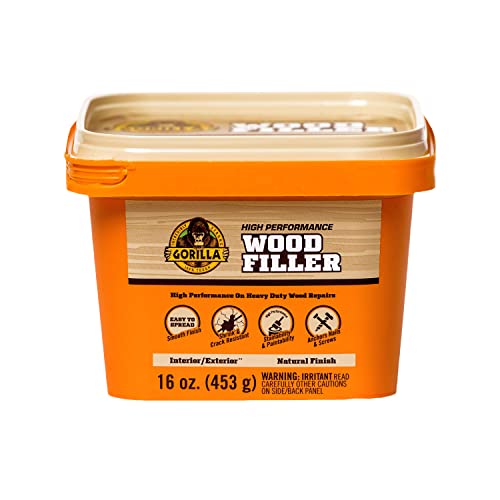
Gorilla All Purpose Wood Filler, Natural Finish, 16 Ounce Tub (Pack of 1) – Water Resistant for Indoor or Outdoor Projects and Repairs
Gorilla tough: Gorilla Wood Filler is the go-to product for strong water resistant repairs on cracks, gouges and…
As an affiliate, we earn on qualifying purchases.
As an affiliate, we earn on qualifying purchases.
Conclusion
Understanding why wood handles swell or shrink helps you appreciate their natural behavior, much like watching a chameleon change colors. When you know how moisture levels affect wood, you can better care for your tools and prevent damage. Keep your handles in balanced environments, and they’ll serve you well, just like a loyal friend who adjusts to your needs. Embrace these changes as part of wood’s natural personality—it’s what makes each handle unique and alive.
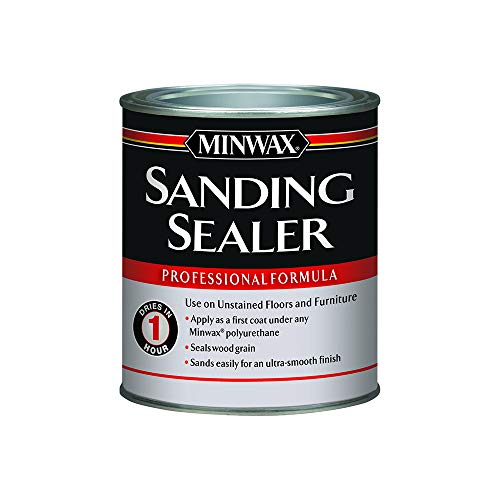
1 qt Minwax 65700 Clear Sanding Sealer Water-Based, Quart
CLEAR SANDING SEALER – Minwax Professional Formula Sanding Sealer is a clear sealer formulated for application over bare…
As an affiliate, we earn on qualifying purchases.
As an affiliate, we earn on qualifying purchases.

ROBERTS 70-115 Moisture Barricade Underlayment Film, for Vinyl, Laminate SPC, Engineered Wood Floors, 6 mil. Thick, Polyethylene, 120 Sq. Foot Roll, Black
For use as a vapor barrier when installing Vinyl, laminate, SPC and engineered wood flooring
As an affiliate, we earn on qualifying purchases.
As an affiliate, we earn on qualifying purchases.