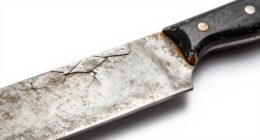
Hot water can weaken your knives over time by causing microfractures in the blade and damaging handles. Repeated exposure to high temperatures stresses the metal, leading to fatigue, chipping, or breaking. Handles, especially wood, can swell, warp, or crack, while plastic ones soften and lose grip. To keep your knives safe and sharp, avoid prolonged hot water contact. Keep exploring to learn more about protecting your tools and ensuring their longevity.
Key Takeaways
- High temperatures cause microfractures in blades, increasing chipping or breakage risks.
- Hot water absorption can lead to handle swelling, warping, or cracking, especially in wooden handles.
- Plastic handles may soften or deform when exposed to sustained high heat, reducing grip stability.
- Prolonged hot water exposure weakens both blade integrity and handle durability over time.
- Proper cleaning methods, like quick rinses or alcohol wipes, help prevent heat-related damage.
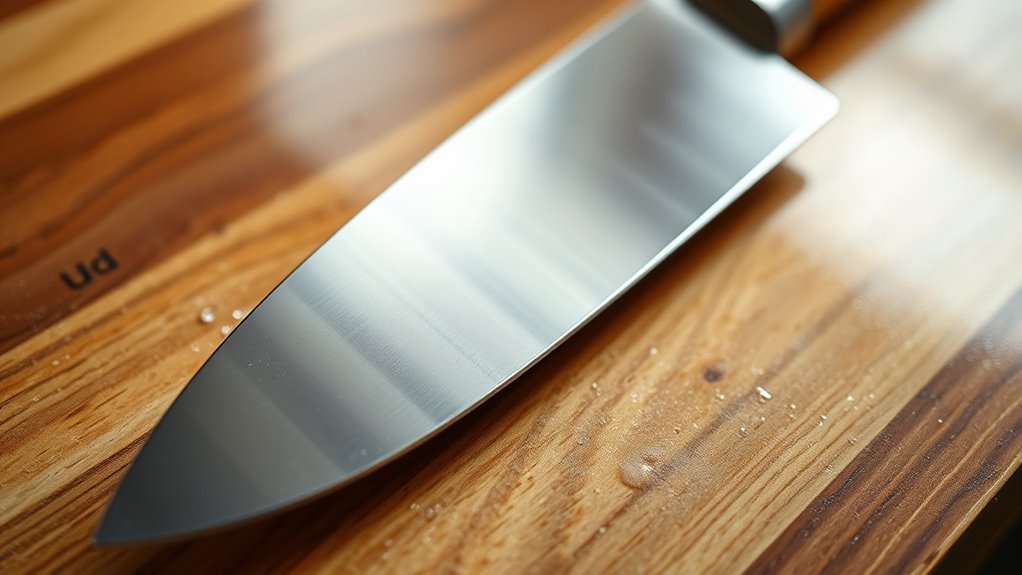
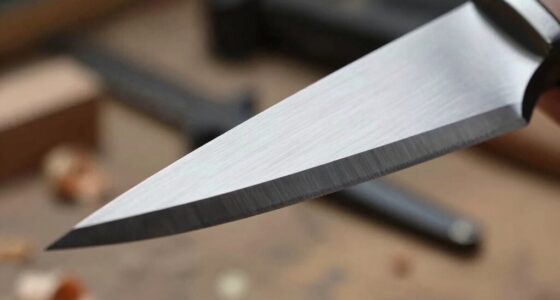
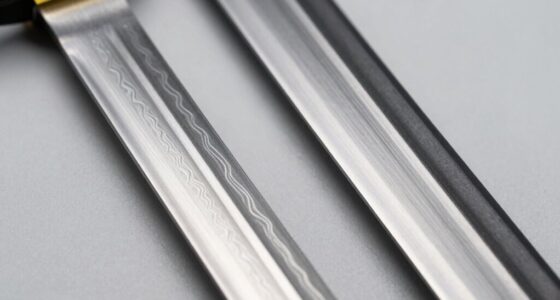
Heat plays a crucial role in the effectiveness and safety of using knives, whether in the kitchen or in specialized crafts. When you expose knives to high temperatures, especially through hot water or prolonged heating, you risk compromising their integrity. One key issue is metal fatigue, which occurs when repeated or sustained heat causes the metal to weaken over time. Metal fatigue can lead to microfractures in the blade, making it more prone to chipping or breaking during use. This not only shortens the lifespan of your knife but can also pose safety hazards if a blade unexpectedly fails during cutting.
Exposing knives to high heat causes metal fatigue, microfractures, and safety hazards during use.
In addition to the blade’s durability, the handle can suffer from degradation when exposed to excessive heat. Many knife handles are made from materials like wood, plastic, or composite substances, each reacting differently to heat. For instance, wooden handles can absorb moisture from hot water, leading to swelling, warping, or cracking over time. Plastic handles, while often more resistant to moisture, can soften or deform if subjected to sustained high temperatures. This softening compromises the handle’s grip and stability, increasing the risk of accidents during use. Handle deterioration not only diminishes the knife’s overall safety but also affects its balance and comfort, making it less effective and more difficult to control.
Understanding these effects helps you make smarter choices about how you care for your knives. While hot water might seem like a good way to clean or sanitize your blades, it’s essential to avoid prolonged exposure. Quick rinses or using warm, not boiling, water can help prevent unnecessary stress on the metal and handle. If you need to sterilize or sanitize, consider alternative methods, such as using alcohol wipes or specialized cleaning solutions designed for your specific knife type. Proper drying after washing is equally important, as residual moisture can accelerate handle deterioration and promote rust or corrosion on the blade.
Additionally, regular maintenance and proper storage can help mitigate heat-related damage and extend the lifespan of your knives. Ultimately, heat is a double-edged sword when it comes to knives. While it’s necessary for cleaning or sterilization, excessive exposure can weaken both the blade and handle. By understanding how heat affects metal fatigue and handle degradation, you can extend the lifespan of your knives and maintain their safety and performance. Take care to avoid exposing your knives to unnecessary high temperatures, and always follow manufacturer instructions for cleaning and maintenance. Doing so ensures your knives stay sharp, safe, and reliable for all your culinary or craft tasks.

EAST OAK 30" Electric Smoker for Outdoors | Built-in Meat Probe & Clear Viewing Window | Side Chip Loader for 6x Longer Uninterrupted Smoking | 725 sq in Cooking Area for Bigger Batches, Night Blue
FEWER REFILLS, MORE FLAVOR – With 6× longer smokes per load, you get uninterrupted smoking sessions that lock...
As an affiliate, we earn on qualifying purchases.
Frequently Asked Questions
How Does Hot Water Affect Different Types of Knife Blades?
Hot water causes your knife blades to expand through thermal expansion, which can weaken the metal over time. It also speeds up blade corrosion, especially if the knife isn’t dried properly afterward. Different blade materials react differently; stainless steel resists corrosion better, but high heat can still affect the edge’s sharpness. To keep your knives in top shape, avoid soaking them in hot water for long periods.
Can Soaking Knives in Hot Water Cause Handle Discoloration?
Soaking knives in hot water can definitely cause handle discoloration. You might notice handle staining or uneven coloring over time, especially with certain materials like wood or plastic. The heat and prolonged exposure increase the discoloration risks, making your knife look worn or aged. To avoid this, wash knives promptly with warm, soapy water and dry them thoroughly, preventing handle staining and keeping your knives looking their best.
What Temperature Threshold Begins to Damage Knife Edges?
Think of your knife like a delicate bridge. When water reaches about 140°F (60°C), thermal expansion begins to weaken the blade’s metal, making it more vulnerable. Above this temperature, water corrosion accelerates, gradually dulling and damaging the edge. To preserve your knife’s sharpness, avoid exposing it to hot water exceeding this threshold, as prolonged heat causes irreversible damage to the edges and compromises its integrity.
Are There Specific Knife Materials More Resistant to Heat Damage?
Certain knife materials, like ceramic blades, have higher durability against heat, making them less prone to damage from hot water or high temperatures. Stainless steel knives also resist heat well, maintaining their edge and handle integrity longer under heat exposure. You’ll find ceramic blades excel in durability, while stainless steel offers reliable resistance, giving you versatile options when considering heat’s impact on your knives.
How Quickly Can Hot Water Degrade a Knife’s Sharpness?
Hot water can dull your knife faster than you’d expect, like sandpaper smoothing rough edges. It causes thermal expansion, which loosens the bond between the blade and handle, and water absorption that can weaken the handle material. This process can start degrading sharpness within just a few uses if exposed repeatedly. To protect your knife’s edge, avoid soaking it in hot water for extended periods, and dry it thoroughly afterward.

Cuisinart 30" Electric Smoker, 3 Adjustable Racks, Large Capacity BBQ Meat Smoker, Water & Wood Trays for Smoked Meat, Brisket, Salmon & Jerky, Adjustable Temperature Control
SPACIOUS SMOKING AREA: 548 Sq. In. cooking area with a vertical footprint, ideal for smoking meat, fish, and...
As an affiliate, we earn on qualifying purchases.
Conclusion
So, next time you reach for hot water to clean your knives, think twice. That gentle warmth might seem harmless, but it could be quietly weakening your edges and handles over time. The real question is, how much are you willing to risk before you notice the damage? Sometimes, what seems like a small convenience can hide a bigger problem lurking beneath the surface. Will you catch it before it’s too late? The choice is yours.

EAST OAK Ridgewood Pro 30" Electric Smoker Built-in Meat Probe & Elevated Stand for Outdoors Up to 6× Longer Smokes, Adjustable Side Chip Loader Smoke with 725 sq in Cooking Area, Night Blue
FEWER REFILLS, MORE FLAVOR – With 6× longer smokes per load, you get uninterrupted smoking sessions that lock...
As an affiliate, we earn on qualifying purchases.

Meat Slicer, 200W Meat Slicer Machine for Home, DC Motor Quiet Deli Slicer with 2 Removable 7.5'' Stainless Steel Blades, Adjustable Dial for 0-15mm, Electric Food Slicer for Meat, Cheese, Bread
Powerful 200W DC Motor: The meat slicer is equipped with a 200W DC motor, delivering stable torque and...
As an affiliate, we earn on qualifying purchases.