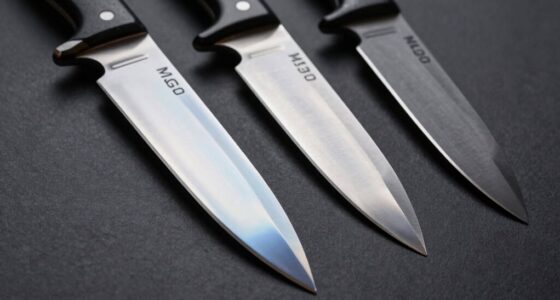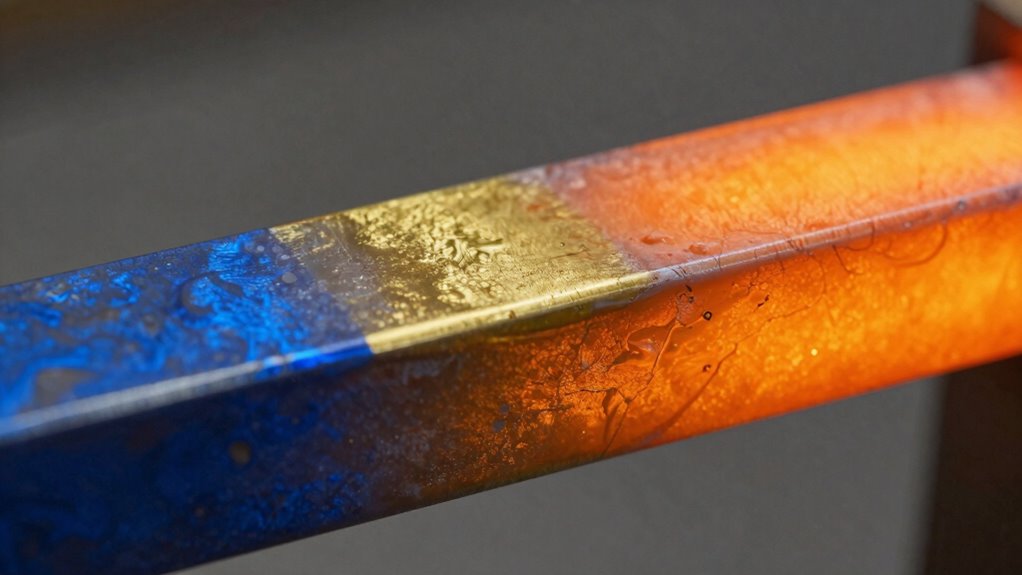

Heat treatment dramatically changes steel’s microstructure, which directly impacts its hardness, toughness, and wear resistance. By controlling heating and cooling rates, you can transform the microstructure into phases like martensite for increased strength or softer phases like pearlite for ductility. Proper heat treatment balances these properties, preventing defects like cracking. If you keep exploring, you’ll discover how these transformations can be tailored to suit specific performance needs.
Key Takeaways
- Heat treatment alters steel’s microstructure, transforming phases like ferrite, cementite, and austenite into different arrangements.
- Rapid cooling during hardening creates martensite, significantly increasing hardness and strength.
- Controlled tempering adjusts microstructure to balance hardness, toughness, and ductility.
- Precise heat treatment prevents defects such as cracking, warping, and residual stresses.
- Microstructure modifications dramatically enhance steel’s properties for specific applications and performance requirements.
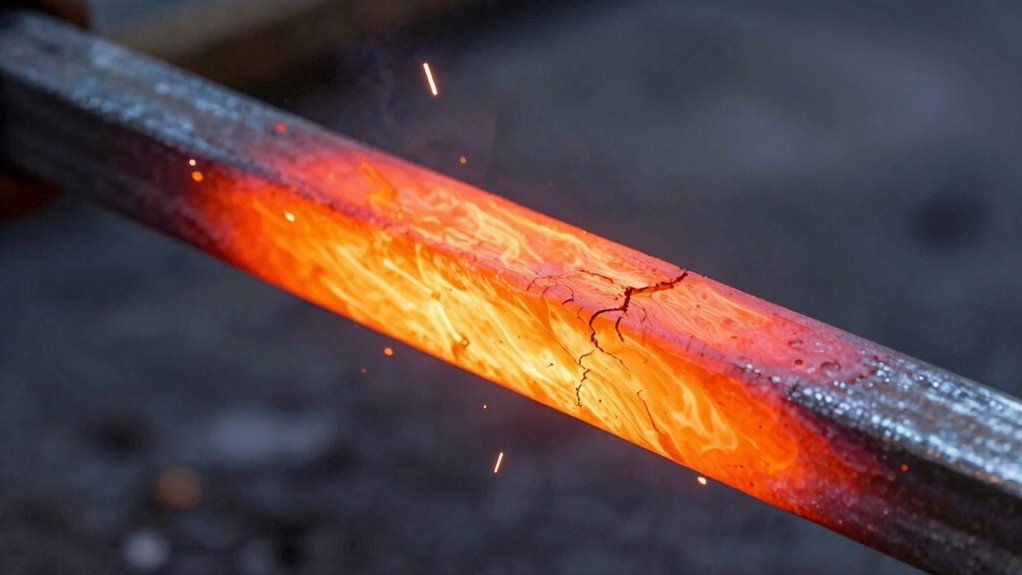
Have you ever wondered how steel is strengthened or customized for specific uses? The answer lies in heat treatment, a process that dramatically alters the steel’s internal structure and properties. When you expose steel to carefully controlled heating and cooling cycles, you trigger a microstructure transformation that can significantly change its hardness, ductility, and strength. This transformation isn’t just superficial; it penetrates deeply, creating a material tailored to your needs.
During heat treatment, the steel’s microstructure undergoes precise changes. For example, heating steel to a specific temperature causes the microscopic phases within it—like ferrite, cementite, or austenite—to shift into different arrangements. When cooled rapidly, this results in a hardened microstructure called martensite, which is extremely hard and resistant to deformation. Conversely, slow cooling allows the microstructure to transform into softer, more ductile phases such as pearlite or bainite. These microstructure transformations directly influence the steel’s hardness variation, allowing you to select the right treatment based on whether you need a tough, impact-resistant material or a softer, more formable one.
Microstructure changes during heat treatment determine steel’s hardness, ductility, and suitability for various applications.
The process of hardening, which involves heating steel to a specific transformation temperature followed by rapid cooling, produces a significant increase in hardness. This is because the rapid cooling traps carbon atoms in a distorted body-centered tetragonal structure—martensite—that’s much harder than the original microstructure. However, this increased hardness often comes at the expense of toughness, making the steel more brittle. To balance hardness with ductility, you can perform tempering—a subsequent heating at lower temperatures—causing microstructure adjustments that reduce brittleness without sacrificing too much hardness. This cycle of microstructure transformation and heat treatment allows you to fine-tune the steel’s properties for different applications.
The dramatic change in properties achieved through heat treatment isn’t just about hardness; it also affects strength, wear resistance, and overall performance. By controlling the temperature, cooling rate, and duration, you can manipulate the microstructure transformation process and achieve the desired hardness variation. Whether you’re making cutting tools, gears, or structural components, understanding how heat treatment influences the microstructure lets you customize steel for optimal performance. Additionally, the microstructure transformation process is heavily influenced by the microstructure phases, which are key to tailoring the properties of the steel. Recognizing the phase transformations that occur during heat treatment enables engineers to predict and control the final characteristics of the material, unlocking its full potential. Proper control of these phase changes can help prevent defects like cracking or warping during manufacturing. By understanding the microstructure transformations, engineers can better anticipate the effects of heat treatment on steel’s performance, leading to more reliable and durable components. Moreover, controlling these transformations can help optimize the thermal cycles to improve efficiency and consistency in production. This process unlocks the full potential of steel, transforming it from a basic alloy into a precisely engineered material tailored to your specific needs.
As an affiliate, we earn on qualifying purchases.
Frequently Asked Questions
How Does Heat Treatment Affect Steel’s Corrosion Resistance?
Heat treatment can greatly improve steel’s corrosion resistance by altering its microstructure, which affects corrosion mechanisms. You’ll find that properly tempered steel forms a more stable oxide layer, reducing vulnerability to rust. However, heat treatment alone isn’t enough; applying protective coatings further enhances corrosion resistance. This combined approach helps prevent corrosion, extending the steel’s lifespan and maintaining its strength in harsh environments.
Can Heat Treatment Improve Steel’s Ductility Without Compromising Strength?
Imagine sculpting a block of steel into a flexible yet strong figure. Heat treatment can indeed boost steel’s ductility without sacrificing strength by inducing grain refinement and phase transformation. You refine the grains, making the metal more adaptable, like stretching a rubber band without snapping it. This process balances toughness and flexibility, allowing the steel to bend without breaking, giving you a material that’s both resilient and pliable in your applications.
What Are the Environmental Impacts of Heat-Treating Steel?
You need to take into account that heat-treating steel impacts the environment mainly through energy consumption and environmental regulation. The process requires significant energy, often from fossil fuels, contributing to greenhouse gas emissions. Additionally, strict environmental regulations push you to manage emissions and waste carefully, which can increase costs. Responsible practices like energy efficiency and pollution control help reduce these impacts, ensuring you meet regulations while minimizing your environmental footprint.
How Does Heat Treatment Influence Steel’s Machinability?
Heat treatment improves your steel’s machinability by refining its grain structure, making it easier to cut and shape. It also enhances surface hardening, which reduces tool wear and improves surface finish. By controlling cooling rates, you can optimize these effects, resulting in smoother machining processes. Overall, heat treatment allows you to produce more precise components with less effort, boosting efficiency and quality in your manufacturing.
Are There Differences in Heat Treatment Effects on Different Steel Alloys?
Yes, heat treatment effects vary across different steel alloys. Alloy composition influences how heat alters their microstructure, affecting hardness, toughness, and ductility. Some alloys respond to heat treatment with significant microstructure alteration, leading to dramatic property changes, while others show more subtle effects. You’ll find that understanding each alloy’s specific composition helps predict its behavior during heat treatment, ensuring you optimize processes for the desired mechanical properties.
As an affiliate, we earn on qualifying purchases.
Conclusion
By changing the heat treatment, you transform steel from a dull, soft metal into a gleaming, hard force. It’s like turning a quiet, fragile river into a raging torrent—powerful and unyielding. That simple process of heating and cooling reveals steel’s true potential, forging strength where there was once weakness. So, next time you see steel, remember: a little heat can ignite a dramatic metamorphosis, shaping something resilient from the ordinary.
As an affiliate, we earn on qualifying purchases.
As an affiliate, we earn on qualifying purchases.