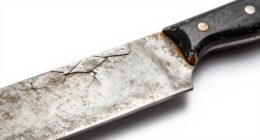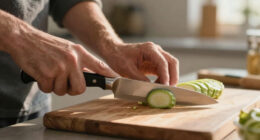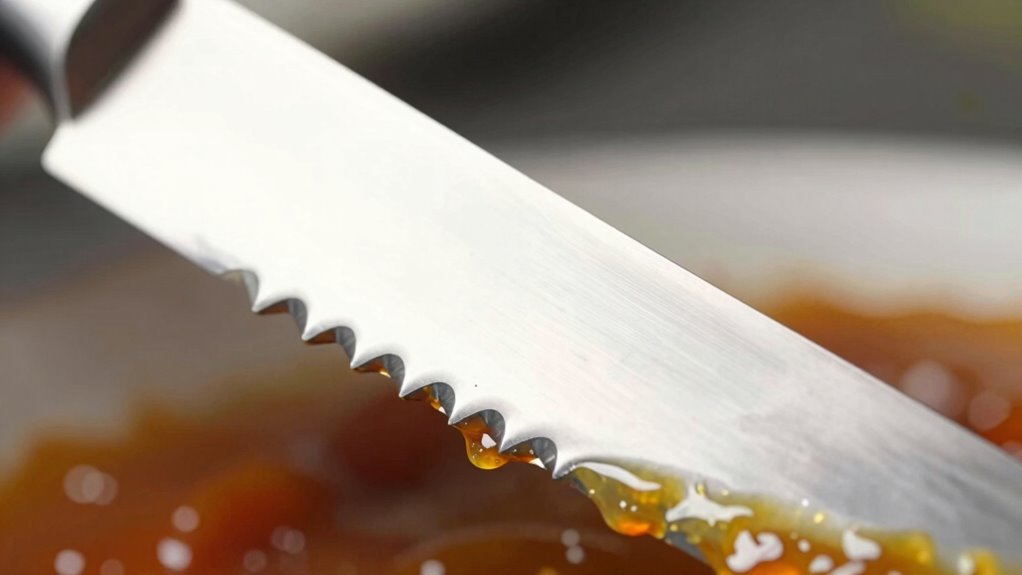

Food sticks to your knife because of surface tension, adhesion, and how both the food and blade interact. Moisture, texture, temperature, and surface roughness play major roles in stickiness. Cold or lubricated knives help reduce sticking, while cutting technique and blade material also matter. If you keep these factors in mind, you can improve your slicing and prevent food from clinging. Want to discover simple ways to make your cuts smoother? Keep exploring!
Key Takeaways
- Surface tension and surface roughness of the food and knife influence adhesion and sticking behavior.
- Moisture content and temperature of food affect its stickiness; wetter and warmer foods tend to adhere more.
- Food components like proteins, sugars, and fats interact with the knife surface, impacting adhesion levels.
- Cutting technique, angle, and maintaining a sharp, clean knife reduce friction and food sticking.
- Lubricants and proper temperature management create barriers that minimize food-knife adhesion during slicing.
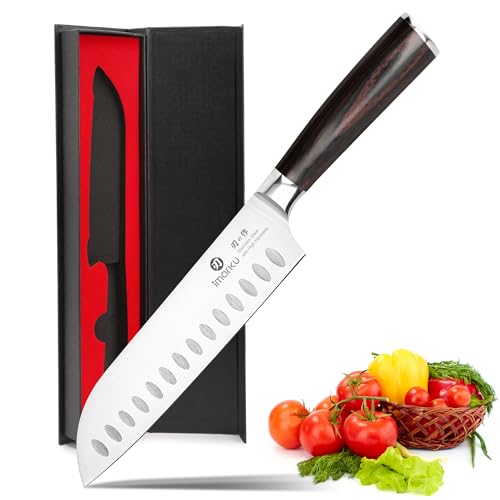
imarku Chef Knife 7 Inch Kitchen Knife Ultra Sharp Santoku Knife - High Carbon Japanese Chefs Knife, Kitchen Gadgets 2025, Apartment Essentials, Birthday Gifts for Him Her, Best Gifts for Women Men
Professional Santoku Knife: This imarku super sharp santoku knife is made of high carbon stainless steel that resists...
As an affiliate, we earn on qualifying purchases.
The Role of Surface Tension and Adhesion in Food Cutting
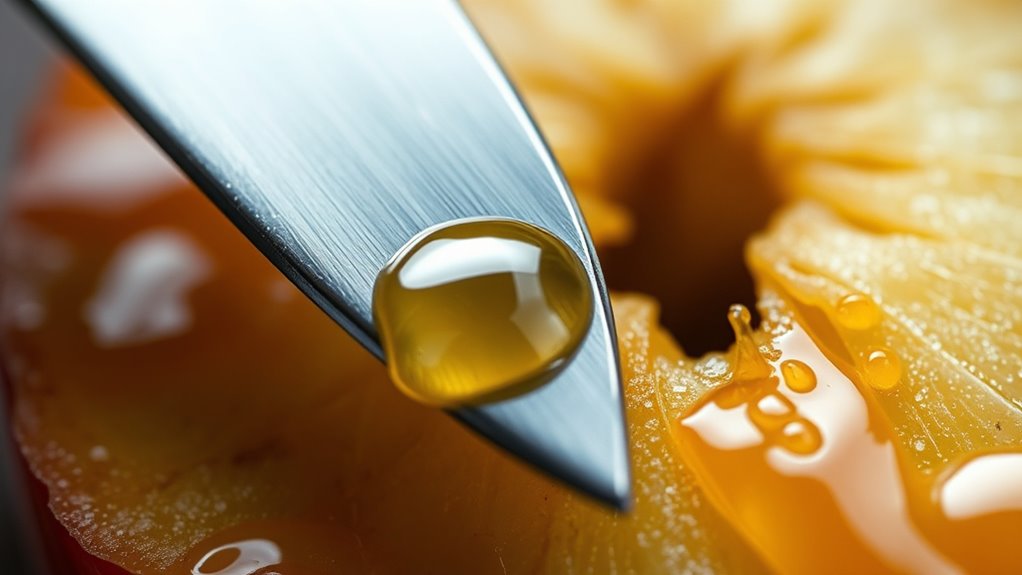
When you cut through food, surface tension and adhesion play essential roles in how well the food releases from the knife. Proper food storage can influence these factors, as moisture and temperature affect how sticky the food becomes. If food is too moist or sticky, it adheres more strongly to the blade due to increased adhesion. Keeping your knife sharp is critical because dull blades increase surface contact, making food more likely to stick. A sharp knife reduces the force needed to cut, minimizing deformation and reducing food residue. Additionally, understanding the properties of surface tension can help in choosing the right cutting techniques and tools for different foods. Recognizing how food properties influence adhesion can further optimize your cutting process. For example, the texture of food impacts how easily it releases from the knife surface. Remember, well-maintained knives and correct food storage help manage surface tension and adhesion, making food release smoother and cleaner. This understanding is fundamental to preventing food from sticking and improving your overall cutting experience.
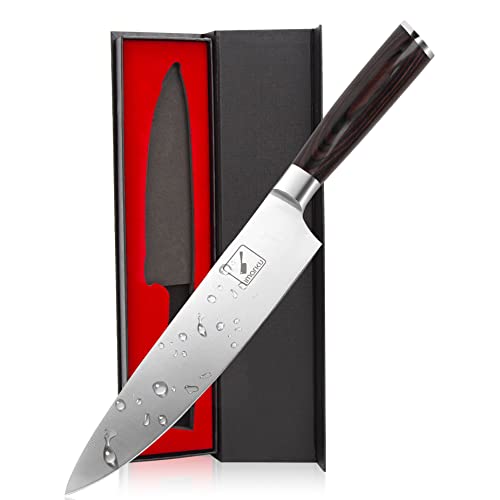
imarku Japanese Chef Knife - Sharp Kitchen Knife 8 Inch Chef's Knives HC Steel Paring Knife, Unique Gifts for Men and Women, Gifts for Mom or Dad, Kitchen Gadgets with Gift Box, Gyutou Knives
High-Carbon Stainless Steel Blade: It is manufactured from high-quality stainless steel that maintains its functionality for a long...
As an affiliate, we earn on qualifying purchases.
How Different Food Textures Affect Stickiness
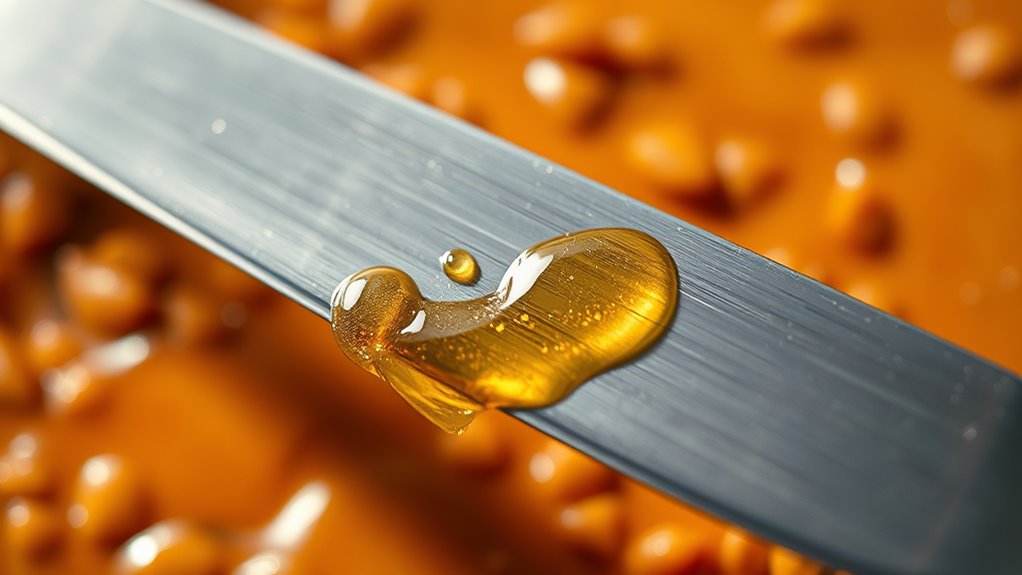
Food texture markedly influences how sticky it becomes during cutting, as different structures interact uniquely with a knife’s surface. For example, foods with a high moisture content and soft texture, like ripe tomatoes or cooked eggs, tend to stick more because they offer less cutting resistance and adhere easily. Conversely, foods with a firmer, denser texture, such as carrots or firm cheeses, usually produce less stickiness due to increased cutting resistance. The surface structure also matters; sticky foods often have a smooth, slippery surface that promotes adhesion, while rougher textures reduce contact points. surface tension of the food plays a significant role in how and why foods stick during cutting. Additionally, the interaction between food surface and knife material can influence the degree of stickiness, as certain materials may reduce adhesion and facilitate cleaner cuts. Employing proper knife maintenance not only keeps your tools sharp but can also help minimize food adherence and sticking. Understanding how food texture affects cutting resistance helps you anticipate stickiness, allowing you to choose the right tools and techniques for cleaner cuts and less residue on your knife. Recognizing the influence of food moisture content can further help in selecting the optimal cutting methods to minimize sticking, and employing proper knife maintenance can also reduce food adherence.

HOSHANHO Kitchen Knife in Japanese High Carbon Steel, Professional High-Class Chef's Knife 8 inch, Non-slip Ultra Sharp Cooking Knives with Ergonomic Handle
【High-End Japanese Steel Chef's Knife】 HOSHANHO chef's knife is made of Japanese high carbon steel 10Cr15CoMoV, 2x of...
As an affiliate, we earn on qualifying purchases.
The Impact of Knife Blade Material and Coating
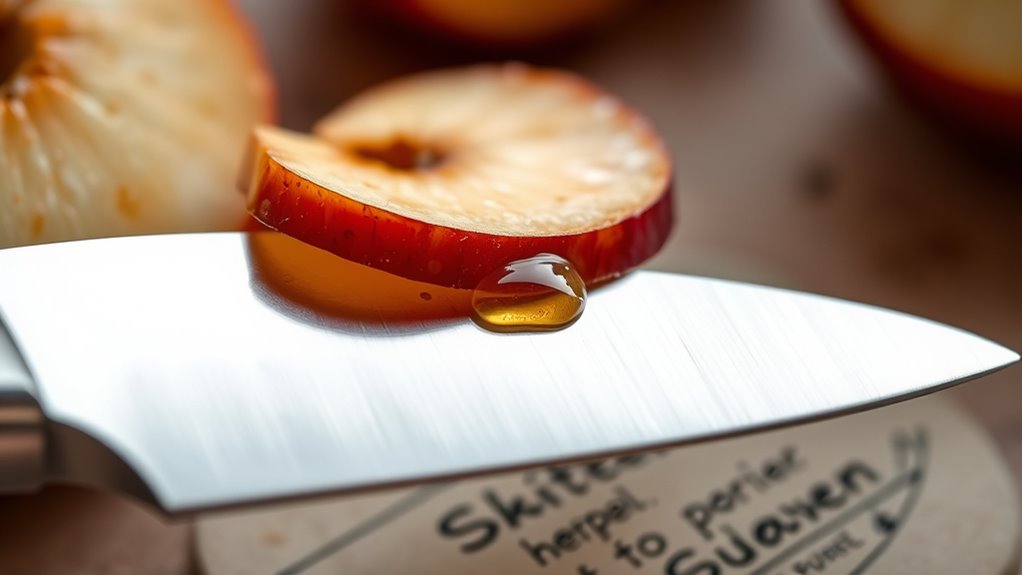
The material and coating of your knife blade play a vital role in how food interacts with it. You’ll notice differences in surface texture, coating durability, and non-stick properties that affect food release. Understanding these factors helps you choose the right knife for smoother cuts and less sticking. For example, certain coatings may incorporate antimicrobial properties that further prevent food from adhering and reduce bacterial buildup on the blade. Additionally, the blade material influences how well the knife performs with various foods, affecting its resistance to corrosion and wear over time. Selecting a blade with appropriate material can also impact how easily food releases during cutting tasks, especially when handling sticky or delicate ingredients. The surface texture of the blade is another important factor, as smoother surfaces tend to minimize food adhesion and make cleaning easier. Moreover, the choice of coating technology can significantly alter the non-stick capabilities and longevity of your knife.
Blade Surface Texture
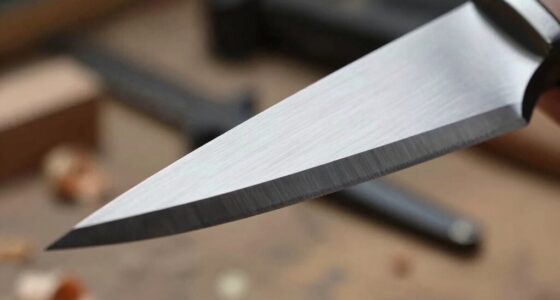
The surface texture of a knife blade considerably influences how food sticks during cutting. A smoother blade surface reduces friction and minimizes food adhesion, making slicing cleaner. Conversely, a rough or textured surface can trap food particles, increasing sticking. Even with a sharp knife edge, an uneven or coarse blade surface can cause food to cling, especially with sticky or moist ingredients. The blade surface texture interacts with knife edge sharpness, affecting how easily food releases after each cut. Modern blades often feature polished, smooth finishes to decrease sticking, while some textured surfaces are designed intentionally for specific tasks. Proper maintenance and blade surface texture can significantly improve overall cutting performance. Additionally, understanding material properties of the blade can help optimize its performance and durability in various cutting scenarios. Regular cleaning and blade surface care are essential for maintaining a smooth surface and preventing buildup that could compromise cutting efficiency. For example, choosing the right blade coating can also play a crucial role in reducing food cling and enhancing longevity. An understanding of surface treatments can further enhance a blade’s resistance to corrosion and sticking, extending its effective lifespan. Ultimately, a well-maintained, smooth blade surface enhances cutting efficiency and decreases food build-up, ensuring smoother, more precise cuts.
Coating Durability and Type
Choosing the right coating or blade material considerably impacts a knife’s performance and longevity. A durable food coating helps prevent food from sticking, making slicing smoother and reducing residue buildup. The type of coating, such as ceramic, PTFE, or titanium, affects how well it resists wear and tear over time. Some coatings may wear off quickly, decreasing blade durability and leading to more food sticking or sticking more often. High-quality coatings maintain their properties longer, ensuring consistent release and easier cleaning. Additionally, the blade material itself influences durability; harder steels resist corrosion and dulling, preserving the coating’s effectiveness. The coating durability is also affected by how well the coating adheres to the blade, which depends on manufacturing quality. By selecting a knife with a resilient coating and strong blade material, you enhance both the performance and lifespan of your kitchen tool.
Material’s Non-Stick Properties
Your knife’s non-stick performance heavily depends on the material of the blade and its coating, as both play essential roles in preventing food from sticking. Ceramic coatings are popular because they create a smooth, slippery surface that reduces adhesion. These coatings are resistant to scratches and heat, enhancing their non-stick properties. The surface finish of the blade also matters; a polished, fine surface finish minimizes roughness, decreasing food contact points and sticking chances. High-quality materials like ceramic or specially treated metals contribute to better non-stick behavior. By choosing blades with ceramic coatings and a smooth surface finish, you improve food release, making cutting and cleaning easier. Ultimately, the right material and coating design directly influence how well food slides off your knife.

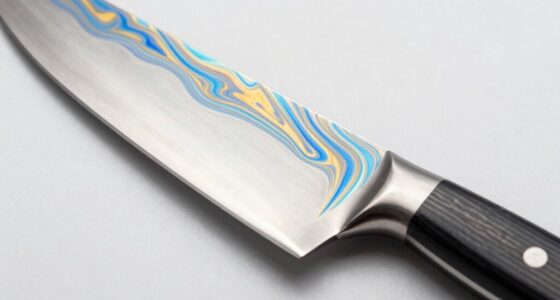
Japanese Chef Knife, 8 Inch Damascus Kitchen Knife with VG10 Steel, Handcrafted Sharp Knife with Ergonomic Handle, Cooking Knives for Home Chefs, Cooking Gifts for Men and Women
【Premium Damascus Chef Knife with VG-10 Steel Core】Our Japanese knives feature a VG-10 steel core (60 HRC) for...
As an affiliate, we earn on qualifying purchases.
The Influence of Cutting Technique and Angle
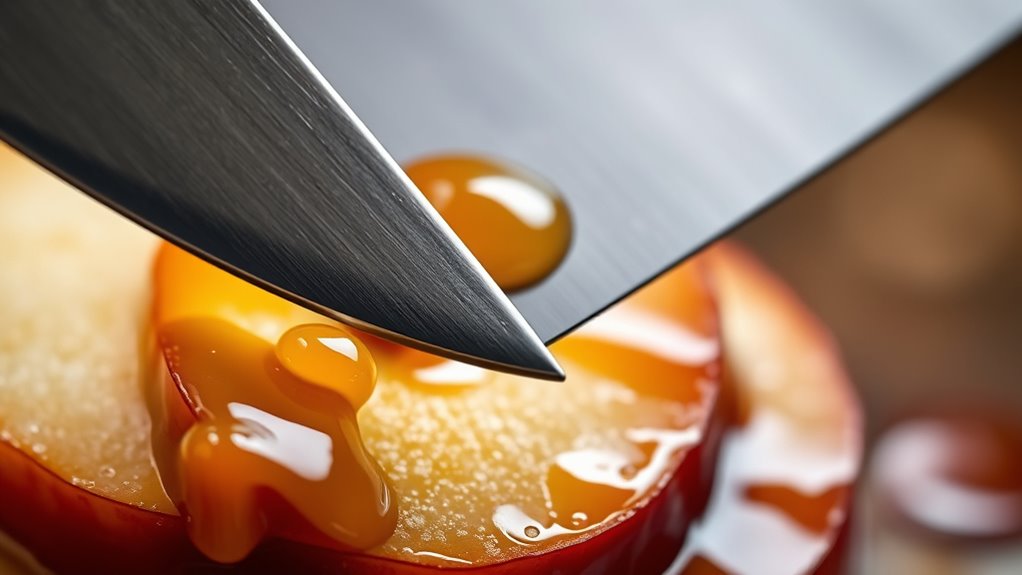
Your cutting angle can considerably affect how food sticks to your knife, especially with different types of ingredients. Using the right technique and angle helps reduce food adhesion and makes slicing smoother. Paying attention to these details can improve your efficiency and the quality of your cuts. Understanding cutting techniques can further optimize your approach and prevent food from sticking. Additionally, selecting the appropriate blade material can influence how easily food releases from your knife. Incorporating proper maintenance practices can also help minimize food buildup and maintain optimal performance. Developing consistent testing methodologies ensures your knife techniques remain effective over time. Moreover, mastering the properties of different herbal parts used in plant-based remedies can inform your approach to food preparation and knife use.
Cutting Angle Impact
Have you ever noticed how the angle at which you hold your knife can make a difference in how food sticks? The cutting angle directly influences how the food interacts with the knife’s edge geometry. A steeper angle creates a sharper, more precise edge that reduces surface contact, helping food release more easily. Conversely, a shallow cutting angle results in a broader edge that can increase friction and cause sticking. The edge geometry determines how the food interacts with the blade during cutting; a well-optimized angle minimizes surface tension and adhesion. Properly maintaining your knife’s edge geometry can significantly impact food release and cutting efficiency. Additionally, maintaining a consistent cutting technique ensures optimal contact and reduces the likelihood of food adhering to the blade. By adjusting your cutting angle, you can markedly improve food release, making slicing smoother and cleaner. Understanding this relationship helps you choose the right technique to reduce sticking and enhance your overall cutting experience.
Technique and Food Type
The way you hold your knife and the technique you use can considerably influence how food interacts with the blade, especially when considering different food types. For example, slicing soft foods like tomatoes requires a gentle, sawing motion, which reduces sticking, while firm foods like carrots benefit from a more direct, downward cut. Proper knife sharpening ensures a clean edge, minimizing food adhesion, regardless of technique. Additionally, your cutting board material impacts food release; a smooth surface like plastic or wood helps prevent sticking compared to textured surfaces. Adjusting your technique—such as lifting the knife slightly during cuts—can also make a difference. Mastering both your cutting approach and maintaining a sharp knife will help food slide off more easily, improving efficiency and reducing frustration.
Moisture Content and Its Effect on Food Release
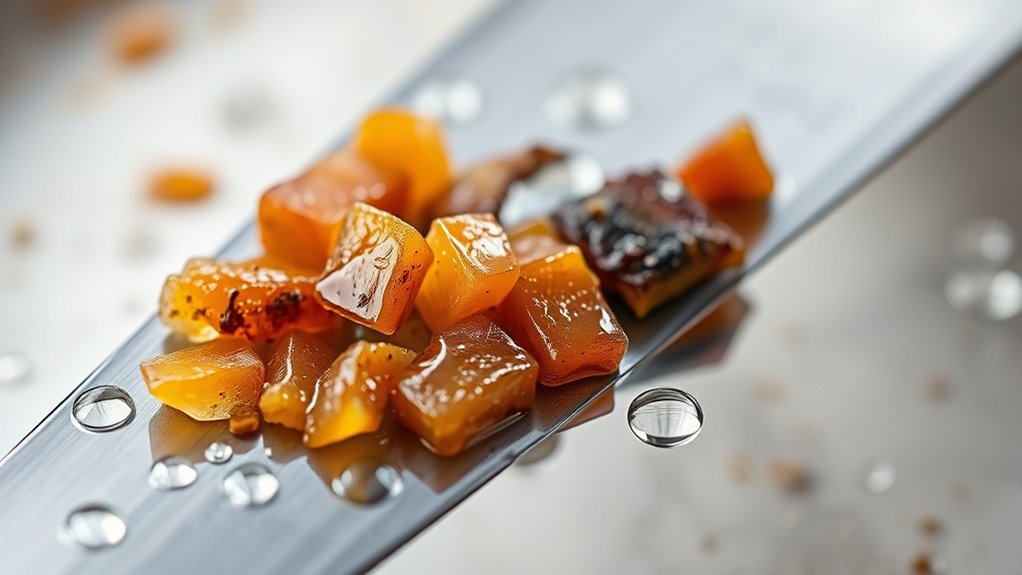
Moisture content plays a essential role in how food interacts with a knife, directly influencing its tendency to stick. When you use certain cooking techniques, like boiling or steaming, foods tend to be wetter and more prone to sticking. Proper storage methods also matter; storing foods in airtight containers can preserve moisture levels, affecting how they release from a knife. If the food is too moist, it creates a thin film that causes sticking, especially during slicing or chopping. To reduce sticking, you can pat foods dry or let them drain before cutting. Adjusting moisture levels through these methods helps improve food release, making your prep smoother and cleaner. Understanding moisture’s impact allows you to choose techniques that minimize sticking effectively.
The Chemistry of Food Components and Their Adhesion Properties
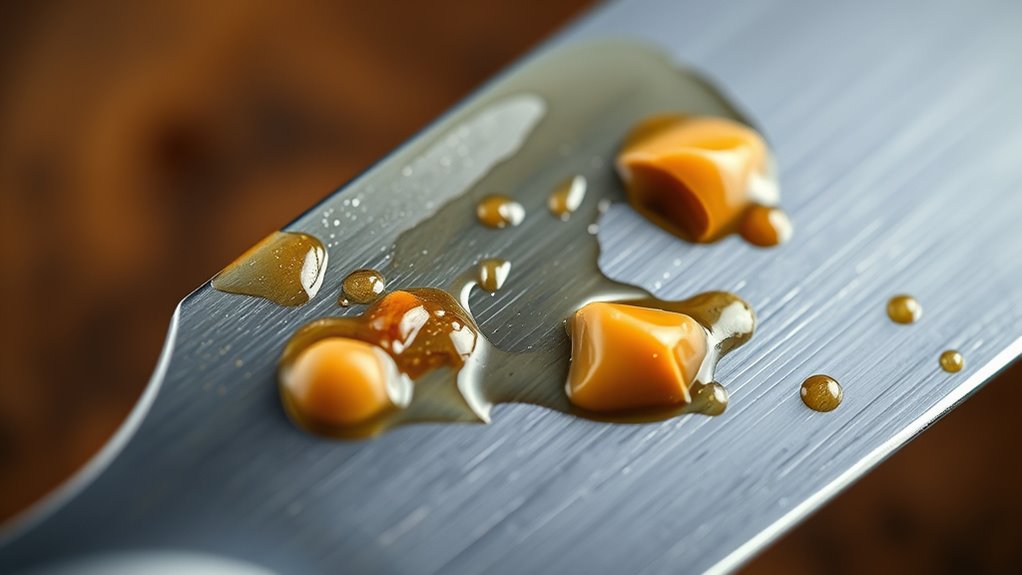
Understanding how food components interact at the molecular level is key to explaining their adhesion to a knife. Food contains proteins, carbohydrates, and fats, each influencing stickiness through specific chemical bonds. Food additive interactions can modify adhesion—some enhance it, others reduce it. Enzymatic reactions also play a role, breaking down molecules and altering surface properties. For example, enzymes can degrade sticky proteins, making food easier to release. The table below highlights key components and their effects:
| Food Component | Effect on Adhesion |
|---|---|
| Proteins | Increase stickiness through bonding |
| Carbohydrates | Promote adhesion via hygroscopicity |
| Fats | Reduce adhesion by creating a barrier |
| Additives | Modify surface interactions |
These factors combine to determine how tightly food adheres to a knife during cutting.
Surface Roughness and Its Effect on Food Retention
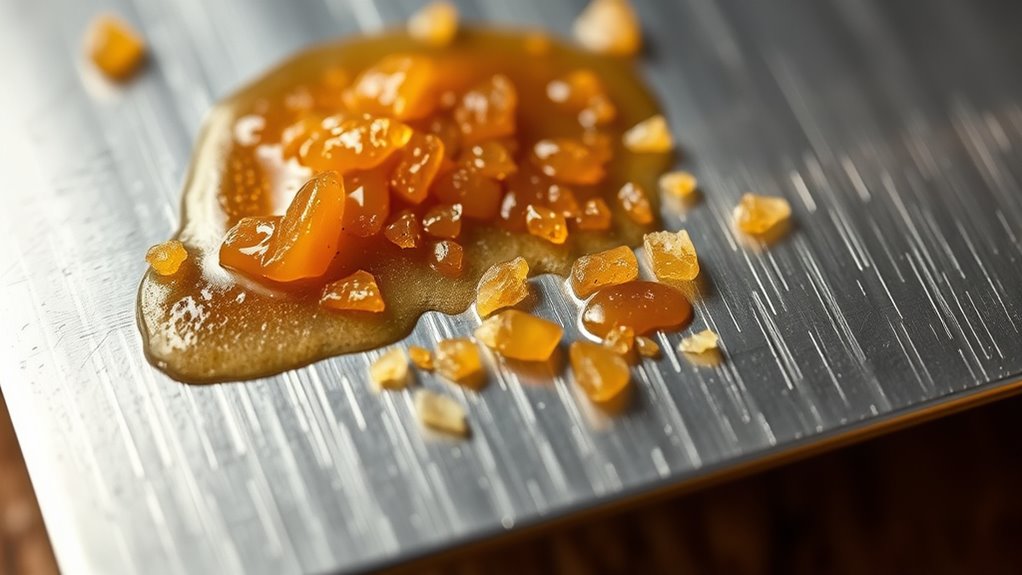
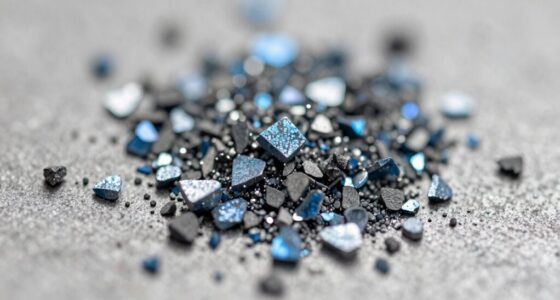
Surface roughness plays a crucial role in how food particles cling to a knife during cutting. When the blade’s surface has microscopic roughness, it creates tiny valleys and peaks that trap food debris. These irregularities are often influenced by grain boundaries, which are the interfaces between different crystal orientations in the metal. The grain boundaries contribute to increased microscopic roughness, making the surface less smooth. As a result, food particles can lodge into these microscopic crevices, increasing adhesion. A smoother knife reduces these tiny pockets, decreasing the chances of food sticking. Conversely, rougher surfaces with more grain boundaries and microscopic irregularities tend to hold onto food more tightly. Understanding this relationship helps you choose or maintain knives to minimize food retention and improve cutting efficiency.
The Significance of Food Temperature and Its Influence on Stickiness
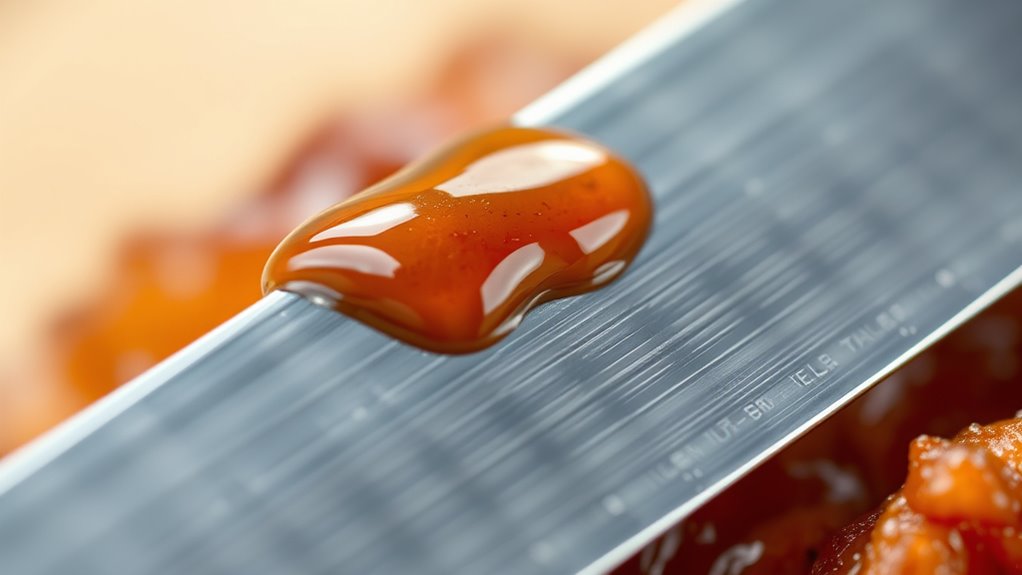
When you work with hot food, it tends to stick more to your knife because heat increases adhesion. Conversely, cold foods usually release more easily, making slicing smoother. Understanding how temperature affects stickiness can help you achieve cleaner cuts and better results.
Hot Food and Adhesion
Hot food tends to stick more to a knife because higher temperatures cause the food’s proteins and sugars to become stickier. This increased stickiness can make cutting and serving more challenging, but it also *release* flavor enhancement as heat intensifies aroma and taste. Additionally, serving food at *best* temperatures helps preserve nutritional benefits, ensuring you get the maximum value from your meal. When food is hot, its molecules move faster, promoting better release of flavors and nutrients, which can improve overall enjoyment. However, this also means you need to be mindful when handling hot dishes to avoid sticking issues. Understanding how temperature influences adhesion allows you to *maximize* both the flavor experience and the ease of serving, making your culinary efforts more effective and satisfying.
Cold Food and Release
Cooling food reduces its stickiness to a knife because lower temperatures slow down the movement of proteins and sugars, making them less likely to cling. Cold food’s reduced molecular activity decreases adhesion, allowing for smoother release. When food is very cold, ice crystallization can occur, especially in frozen or chilled items. These ice crystals create a barrier that prevents direct contact between the food and the knife’s surface, easing removal. However, if the food is too cold or frozen, it may become brittle or tough, affecting cutting and release. Managing food temperature is key: slightly chilled foods tend to stick less than warm ones, while extreme cold can introduce ice crystals that alter the food’s surface, ultimately influencing how easily it releases from a knife.
How Oil and Lubricants Modify Food-Knife Interaction
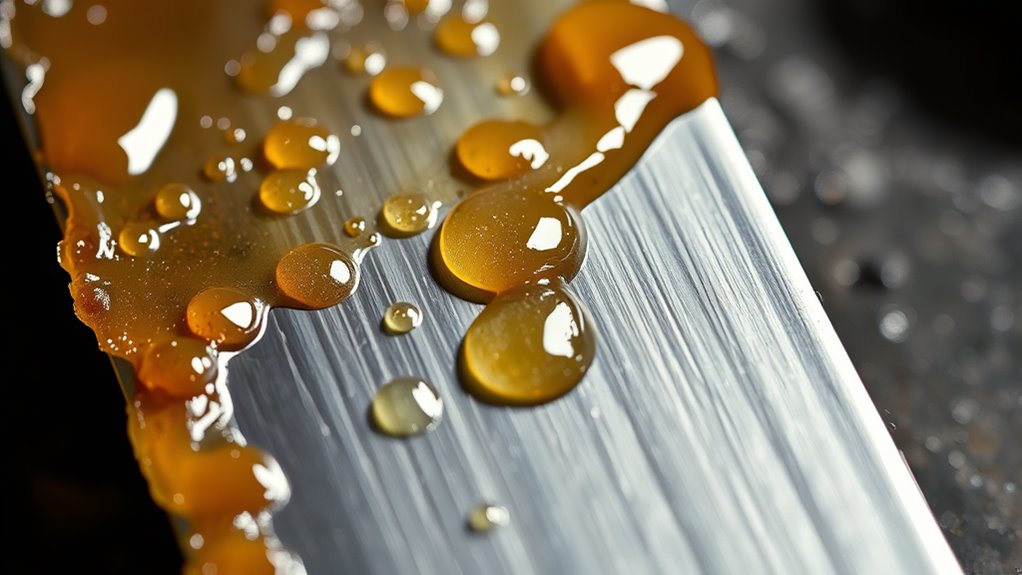
Oil and lubricants play a crucial role in reducing food’s tendency to stick to a knife by creating a thin barrier between the blade and the food. This layer minimizes friction, making cutting smoother and more efficient. When you apply oil, it not only helps with release but also preserves food aroma by preventing sticking that can trap volatile compounds. Additionally, lubricants enhance knife ergonomics by reducing resistance, decreasing hand fatigue during prolonged use. This smoother interaction allows for cleaner cuts and less food residue on the blade. By controlling the surface properties of both the knife and the food, oils make slicing more precise, ensuring better release and easier cleanup. Overall, lubricants are essential for optimizing cutting performance and maintaining food quality.
Practical Tips for Reducing Food Stickage During Cutting
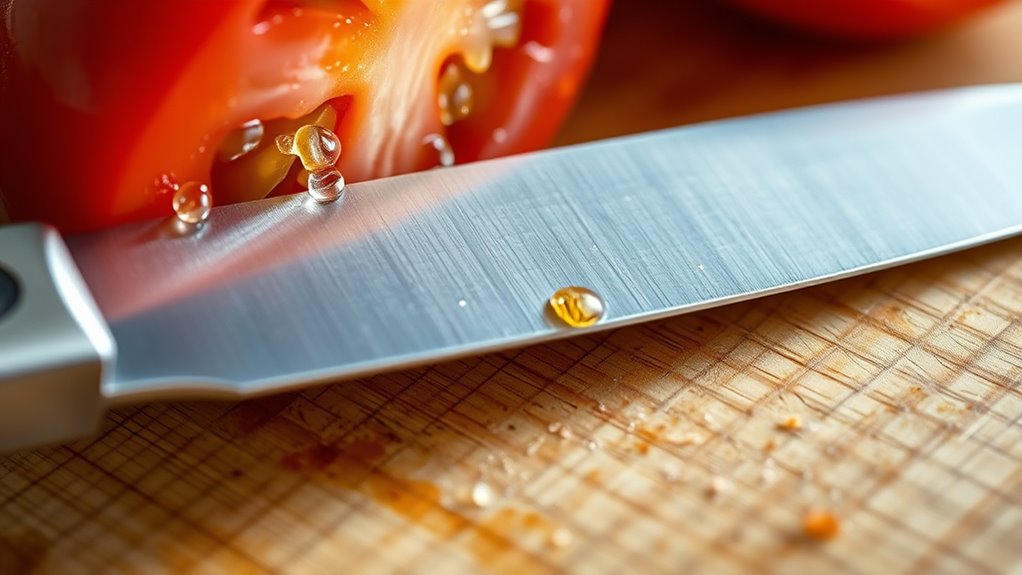
To effectively reduce food stickage during cutting, you should start by ensuring your knife is properly prepared. A sharp knife minimizes surface contact and reduces sticking. Here are some practical tips:
- Sharpen your knife regularly—a dull blade increases friction and food clinginess.
- Use appropriate food pairing techniques—pairing foods with natural lubricants, like oily ingredients, can help food slide off.
- Maintain a clean blade—residue buildup encourages sticking, so clean your knife frequently.
- Apply light pressure and proper technique—cut with a gentle, consistent motion to prevent food from catching.
These tips, combined with proper knife sharpening, make cutting smoother and minimize food stickage, especially when working with sticky foods or delicate ingredients.
Frequently Asked Questions
How Does the Chef’s Hand Pressure Influence Food Sticking to the Knife?
Your hand pressure and grip strength directly influence how food sticks to the knife. If you press too hard, the food may adhere more because of increased friction and force. Conversely, a gentle grip reduces sticking by minimizing pressure and allowing the knife to glide smoothly. Maintaining consistent, moderate hand pressure helps control food release, making your cutting more efficient and reducing the chances of food sticking to the blade.
Can Knife Sharpening Techniques Affect Food Release?
Imagine you’re preparing a delicate fish fillet, and your knife’s edge isn’t sharp enough. Yes, sharpening techniques can influence food release by maintaining ideal knife edge durability. Regular sharpening ensures a fine, smooth edge, reducing sticking. If you neglect sharpening frequency, the dull edge causes more food to cling. So, keep your knife sharp and well-maintained to make slicing smoother and prevent food from sticking, saving you time and effort.
Do Different Types of Cutting Boards Impact Food Adhesion?
Different cutting board materials and surface textures definitely impact food adhesion. For example, smooth plastic boards tend to release food more easily, while textured wood surfaces might trap bits, making it harder to clean and causing food to stick. You should choose a cutting board with a less porous surface and a smooth texture if you want to minimize food sticking, making your prep and cleanup quicker and more efficient.
How Does Ambient Humidity Alter Food-Stick Behavior?
Ambient humidity effects your food’s stickiness by changing moisture levels. Higher humidity increases moisture, making food more likely to adhere to your knife. Conversely, low humidity reduces moisture, helping food release more easily. You’ll notice this especially with sticky ingredients like onions or garlic. To keep food from sticking, consider adjusting your environment or using tools like coatings or different cutting techniques to counteract humidity effects.
Are There Specific Knife Shapes That Reduce Food Sticking?
Ever notice how some knives seem to glide through food effortlessly? You should select knives with a curved or offset blade shape, which reduces contact and minimizes sticking. Good knife handle ergonomics ensure comfort during use, while high-quality blade materials like stainless steel or ceramic resist food adhesion. These design features work together to make slicing smoother, keeping food from clinging and your prep efficient.
Conclusion
Now that you know the science behind food sticking to your knife, you’re practically a culinary wizard! With just a few tricks—like adjusting moisture, temperature, and technique—you’ll cut through food like a hot knife through butter, leaving messes in the dust. Say goodbye to sticky disasters and hello to effortless slicing. Soon, your kitchen will be the envy of all, and your knives will glide smoother than a figure skater on ice!