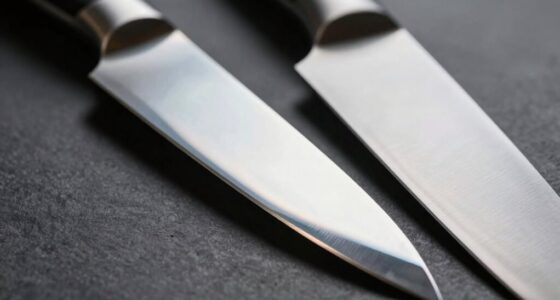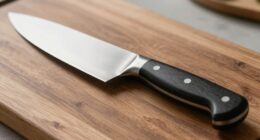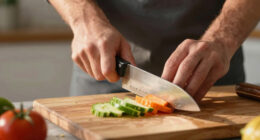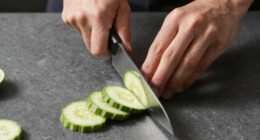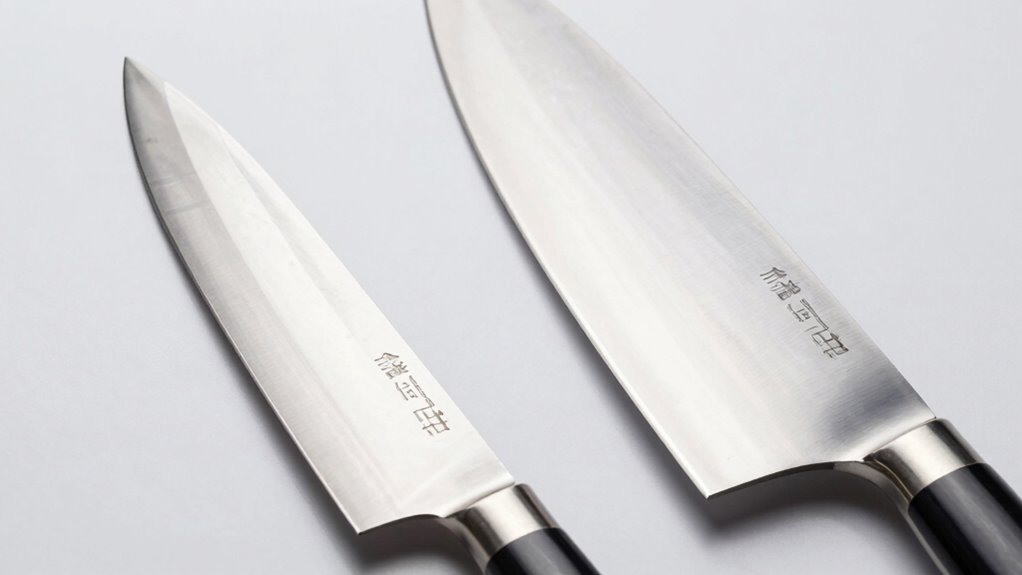
Japanese and German knives differ mainly in blade geometry and construction. Japanese blades are thinner, lighter, and often straight, with a single bevel optimized for precise, delicate cuts. German knives tend to be sturdier, curved, and double-beveled, ideal for rocking motions and heavy chopping. These design choices reflect their cultural culinary techniques—finesse versus robustness. To discover how these principles affect performance and usage, explore further into their unique features and benefits.
Key Takeaways
- Japanese knives typically have straight blades with minimal curvature, supporting precise push-cutting and delicate slicing techniques.
- German knives feature curved blades with a pronounced belly, ideal for rocking cuts and versatile chopping motions.
- Blade shape influences cutting motion: straight blades excel in finesse work, curved blades enhance efficiency in heavy chopping.
- Japanese blade geometry emphasizes precision and presentation, while German design prioritizes robustness and practicality.
- Curvature and shape reflect cultural culinary styles: Japanese for finesse and detail, German for durability and heavy-duty use.
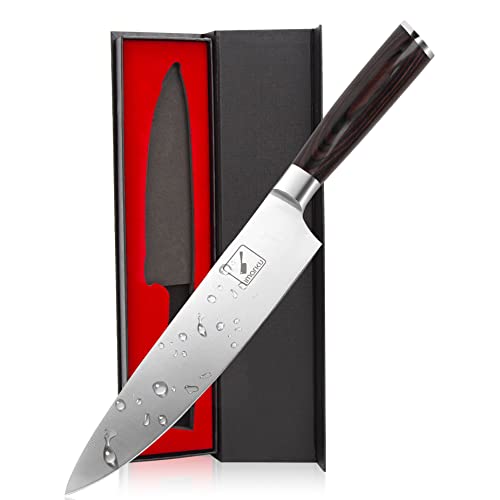
imarku Japanese Chef Knife – Sharp Kitchen Knife 8 Inch Chef's Knives HC Steel Paring Knife, Unique Gifts for Men and Women, Gifts for Mom or Dad, Kitchen Gadgets with Gift Box, Gyutou Knives
High-Carbon Stainless Steel Blade: It is manufactured from high-quality stainless steel that maintains its functionality for a long…
As an affiliate, we earn on qualifying purchases.
As an affiliate, we earn on qualifying purchases.
Blade Thickness and Material Composition
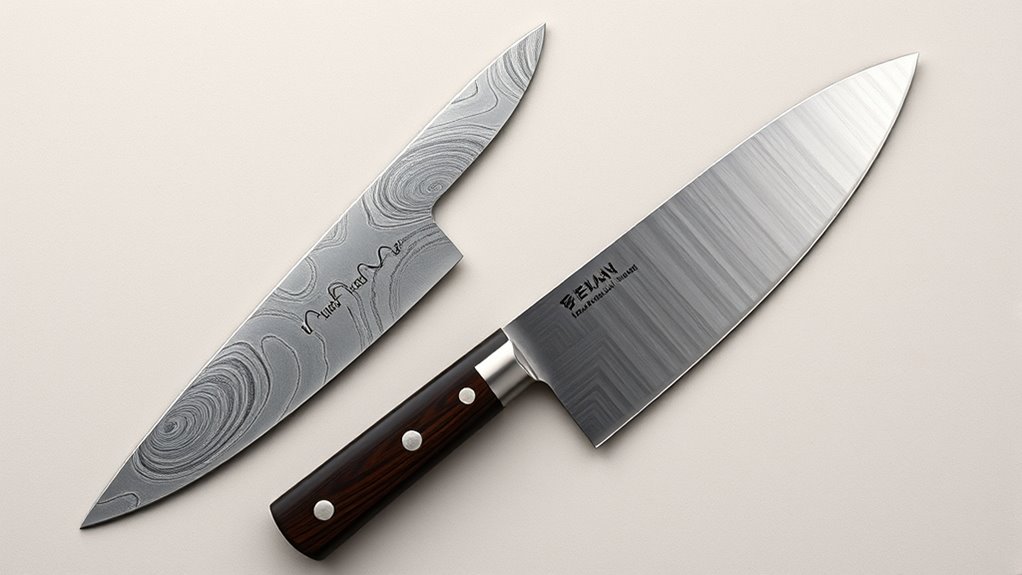
When comparing Japanese and German knives, blade thickness is a key factor that influences performance and handling. Japanese blades are thinner, usually around 2-3 millimeters, which allows for precise, clean cuts and reduces effort. Their steel is often harder, with a Rockwell hardness of 60-66, enabling sharper edges that stay longer. Japanese knives are also designed with blade geometry that emphasizes a thinner profile for enhanced slicing capabilities. This design often results in a more agile cutting experience, especially suited for delicate tasks. German knives are thicker, typically 3-4 millimeters, making them more durable for heavy-duty tasks like chopping bones or dense vegetables. They use softer steel, around 56-58 Rockwell, which is easier to sharpen and offers more flexibility. The thicker blade also provides added strength, preventing bending or breaking during tough cuts. This difference in blade thickness and material composition directly impacts how each knife performs and feels in your hand. Additionally, the choice of blade geometry can influence the cutting efficiency and overall usability of the knife for different culinary tasks.

MOSFiATA 8" Super Sharp Professional Chef's Knife with Finger Guard and Knife Sharpener, German High Carbon Stainless Steel EN1.4116 with Micarta Handle and Gift Box
【High Carbon German Stainless Steel Laser-engraved Pattern(Not Damascus Pattern )】 MOSFiATA 8 inch pro chef's knife is made…
As an affiliate, we earn on qualifying purchases.
As an affiliate, we earn on qualifying purchases.
Bevel Design and Cutting Advantages
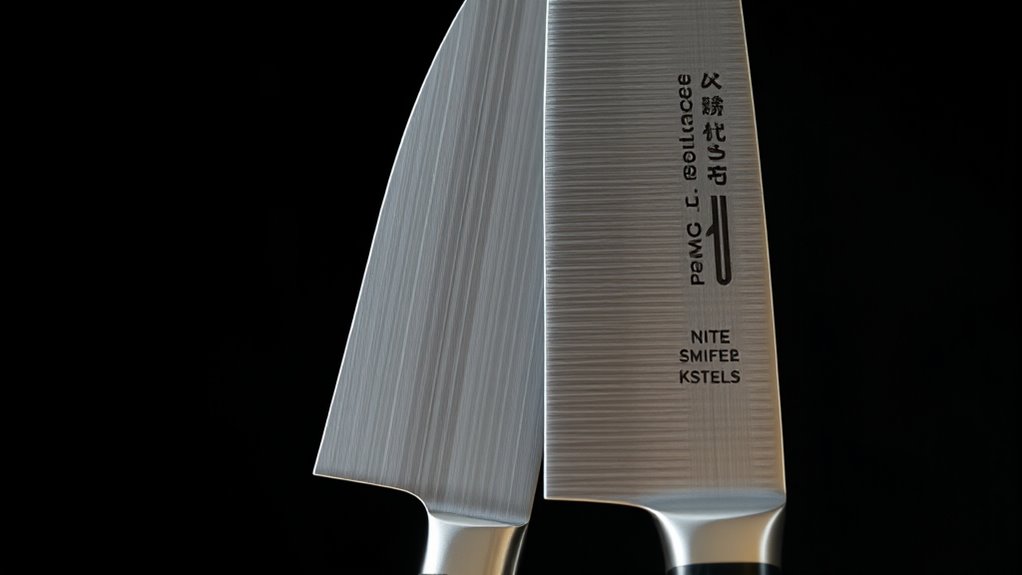
Your choice of bevel design impacts how precisely and easily you can cut. Japanese knives typically feature a single bevel for razor-sharp edges and detailed cuts, but require special sharpening techniques. German knives use double bevels, offering versatility and ease of use for both hands and a variety of cutting techniques. Understanding visual and auditory cues can further improve your technique and efficiency in knife handling. Additionally, the edge retention of a blade influences how long it maintains its sharpness during use. Recognizing cultural differences in design can also help in choosing the right knife for specific culinary tasks, as these differences often reflect traditional practices and preferences. Being aware of blade geometry can aid in selecting the most suitable knife to match your cooking style and needs.
Bevel Types and Usability
Bevel design considerably influences a knife’s precision, usability, and maintenance. You’ll find that Japanese knives typically have a single bevel, which offers a sharper edge and enables precise cuts for specialized tasks. In contrast, German knives usually feature a double bevel, making them more versatile and user-friendly for both hands. Here’s a quick overview:
- Japanese single bevel provides superior precision but requires specialized sharpening.
- German double bevel offers balanced usability, suitable for various cutting styles.
- Japanese bevel angles are more acute (7-8° per side), resulting in sharper edges.
- German bevel angles are slightly wider (around 10° per side), prioritizing durability.
Understanding these differences helps you choose a knife that matches your cutting needs and maintenance preferences.
Cutting Precision and Technique
The design of a knife’s bevel directly impacts your cutting accuracy and technique. A single bevel Japanese knife offers unmatched precision, ideal for detailed slicing and delicate work, especially with thin cuts. Conversely, German double bevel knives provide versatility, allowing ambidextrous use and easier sharpening. The sharper Japanese angles (7-8° per side) deliver a finer edge, perfect for controlled, exact cuts. German angles (around 10° per side) prioritize durability, handling tougher tasks. Use Japanese knives for precision, light slicing, and thin cuts; German knives excel in heavy-duty chopping, rocking cuts, and versatility. The following table highlights key differences:
| Feature | Japanese Bevel | German Bevel | Cutting Advantage |
|---|---|---|---|
| Bevel Type | Single | Double | Precision vs. versatility |
| Angle per Side | 7-8° | 10° | Sharpness vs. durability |
| Sharpening | Specialized techniques | Standard sharpening | Maintenance and ease of use |
| Ideal Use | Precision slicing, delicate work | Heavy chopping, general tasks | Flexibility and robustness |
| Edge Sharpness | Very sharp, fine cutting | Sharp but durable | Precision and control |
Additionally, understanding cutting angles can help you select the most suitable knife for your specific needs. Properly maintaining and understanding blade geometry is essential for achieving optimal performance and longevity of your knives. Developing a consistent sharpening technique ensures your blades remain in prime condition over time. Furthermore, blade maintenance practices can extend the lifespan of your knives and maintain their cutting effectiveness.
single bevel Japanese knife
As an affiliate, we earn on qualifying purchases.
As an affiliate, we earn on qualifying purchases.
Edge Angles and Sharpness Capabilities
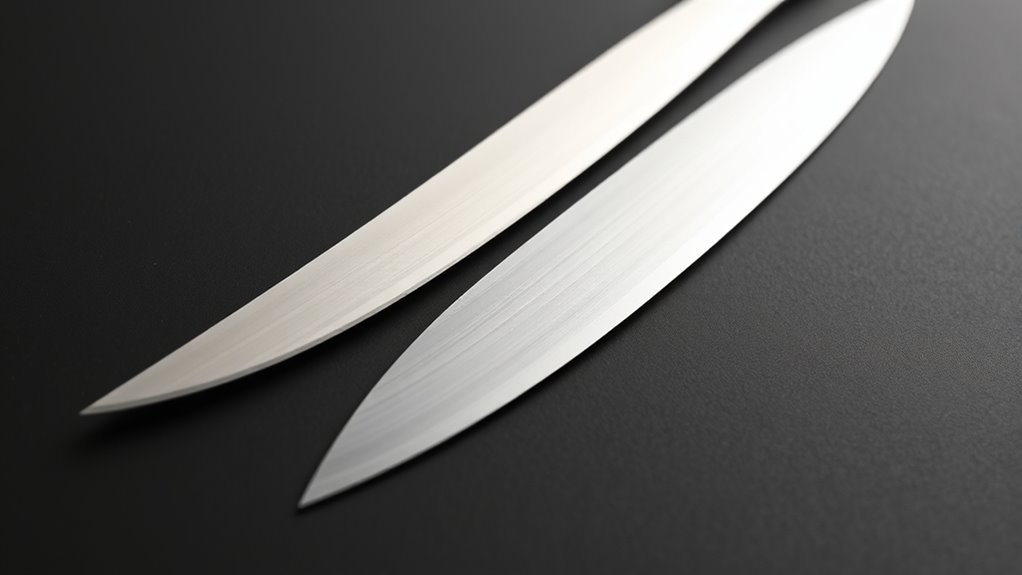
Japanese knives are renowned for their sharpness, thanks to their edge angles typically sharpened to 10-15 degrees per side, which creates a finer, more acute cutting edge. This narrow angle allows you to make precise, clean cuts with less effort. In contrast, German knives usually have edges sharpened to around 17.5-20 degrees per side, prioritizing durability over extreme sharpness. Additionally, the welding point between the blade and the edge influences overall strength and performance. Here’s what to contemplate:
- Japanese edges are sharper but require more delicate handling.
- German edges are more robust, suited for heavy-duty tasks.
- Japanese steel retains sharpness longer due to higher hardness.
- German steel, being softer, needs more frequent sharpening but offers flexibility.
- The blade geometry also affects how the knife interacts with different cutting techniques and foods. Proper blade design can enhance performance and ease of use.
- The edge angle can also influence how quickly a knife dulls, affecting maintenance routines and overall efficiency.
Your choice impacts cutting precision, maintenance, and the techniques you can perform effectively.
double bevel German knife
As an affiliate, we earn on qualifying purchases.
As an affiliate, we earn on qualifying purchases.
Blade Shape and Recommended Cutting Techniques
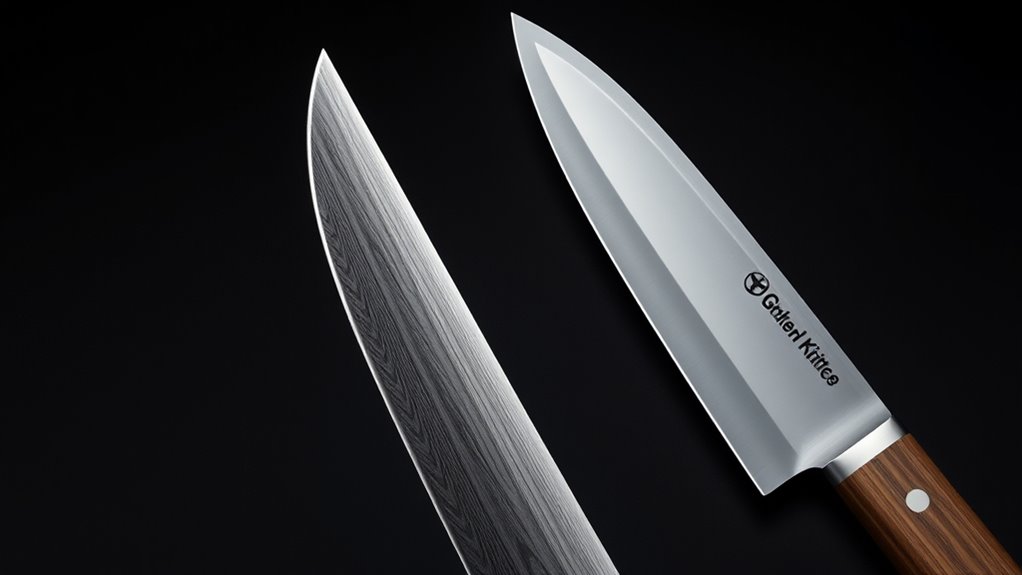
Your choice of blade shape directly influences your cutting motion and technique. Straight, flatter Japanese blades excel at push-cutting and slicing, while curved German blades are better for rocking and mincing. Understanding how shape impacts precision helps you select the right knife for each task. Blade geometry also affects the ease of sharpening and maintenance, ensuring your tools stay effective over time.
Blade Curvature and Motion
Blade curvature directly influences cutting techniques, guiding how you use the knife for different tasks. Japanese knives tend to be straighter, making them ideal for push-cutting, slicing, and precise, controlled movements. German knives feature a pronounced curve with a belly, suited for rocking chops, mincing, and chopping motions. This curvature allows for a fluid rocking motion, reducing wrist strain. Here’s how the differences play out:
- Japanese blades excel in straight, downward pushes and slicing motions.
- German blades support rocking cuts with a smooth, curved belly.
- Japanese straight blades promote precision in delicate tasks.
- German curved blades enable efficient chopping and mincing.
- The blade shape also influences cutting efficiency, impacting how comfortably and accurately you perform various kitchen tasks. Additionally, the blade geometry affects how easy it is to maintain proper technique and reduce fatigue during extended use.
Cutting Technique Compatibility
The shape of a knife’s blade directly influences which cutting techniques it excels at, guiding you to use it most effectively. Japanese blades, with their straighter edge and thinner profile, are ideal for push-cutting and slicing tasks. You’ll find they excel at precise, controlled cuts, especially when working with delicate ingredients like fish or vegetables. Japanese knives typically favor straight slicing motions, supporting their use in delicate, precise tasks. German knives, featuring a curved belly, are better suited for rocking chops and mincing. Their design allows for a smooth, continuous motion, making general kitchen tasks more efficient. The blade shape also affects how you hold and maneuver the knife; Japanese blades favor straight slicing motions, while German blades support more fluid, rocking techniques. Blade geometry influences not only cutting technique compatibility but also how you handle and maintain your knives, ensuring optimal performance over time. Proper blade maintenance is essential for preserving the shape and sharpness, contributing to better control and safety during use. Additionally, understanding cutting technique compatibility can help you select the appropriate knife for specific culinary tasks, enhancing your overall cooking experience. Choosing the right knife shape ensures you maximize efficiency and precision in your cutting, and paying attention to ergonomic design can improve comfort during prolonged use.
Shape Impact on Precision
Because of their straighter profiles, Japanese knives are designed for precise push-cutting and slicing techniques, allowing you to make controlled, clean cuts with minimal effort. The shape influences your cutting style in several ways:
- Straight Edge: Ideal for push cuts, delicate slicing, and julienning, giving you accuracy and control.
- Flattened Spine: Supports downward slicing motions, reducing surface contact and preventing tearing.
- Minimal Belly: Less curve means less rocking, perfect for straight cuts and precise tasks.
- Pointed Tip: Facilitates detailed work like garnishing or intricate cuts.
Additionally, the blade geometry emphasizes the importance of maintaining proper technique to maximize performance and safety. This blade shape enhances finesse, making Japanese knives perfect for precision tasks that demand accuracy and finesse. Moreover, the design philosophy behind Japanese blades often reflects a deep respect for craftsmanship and traditional methods, further elevating their quality standards. Recognizing the significance of blade angle can further improve cutting efficiency and edge retention, aligning with the traditional sharpening methods valued in Japanese cutlery.
Steel Hardness and Its Impact on Performance
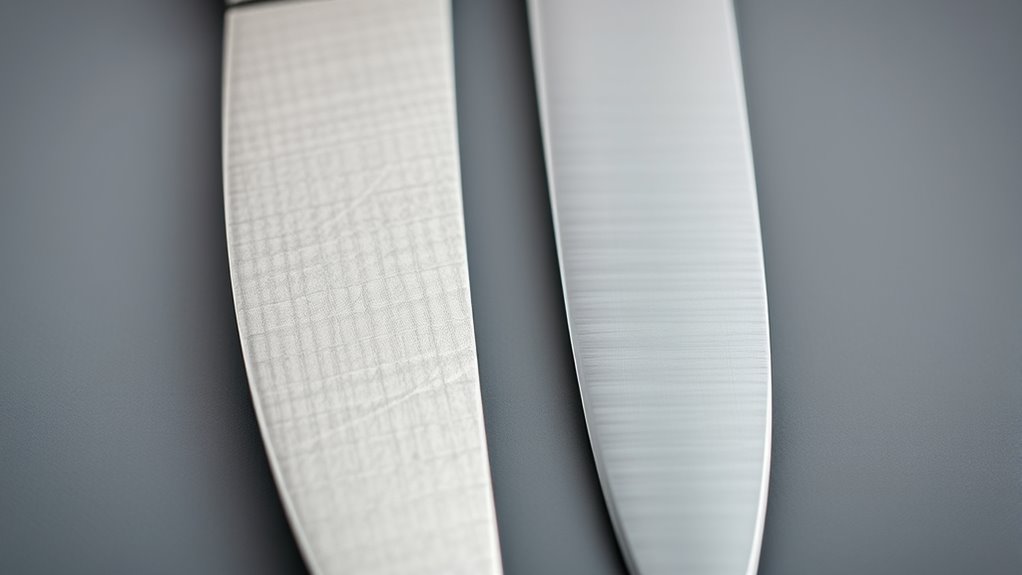
Steel hardness plays a crucial role in determining a knife’s cutting performance and maintenance needs. Harder steel, like Japanese blades with Rockwell ratings of 60-66, retains a sharper edge longer but can be more brittle. Softer German steel, rated around 56-58, offers greater flexibility and easier sharpening but dulls faster. This difference influences your choice based on usage: precision slicing or heavy-duty tasks. Additionally, advancements in smart contracts and blockchain technology are revolutionizing how digital assets are managed securely, emphasizing the importance of choosing the right material for specific applications.
Handle Materials and Ergonomic Considerations
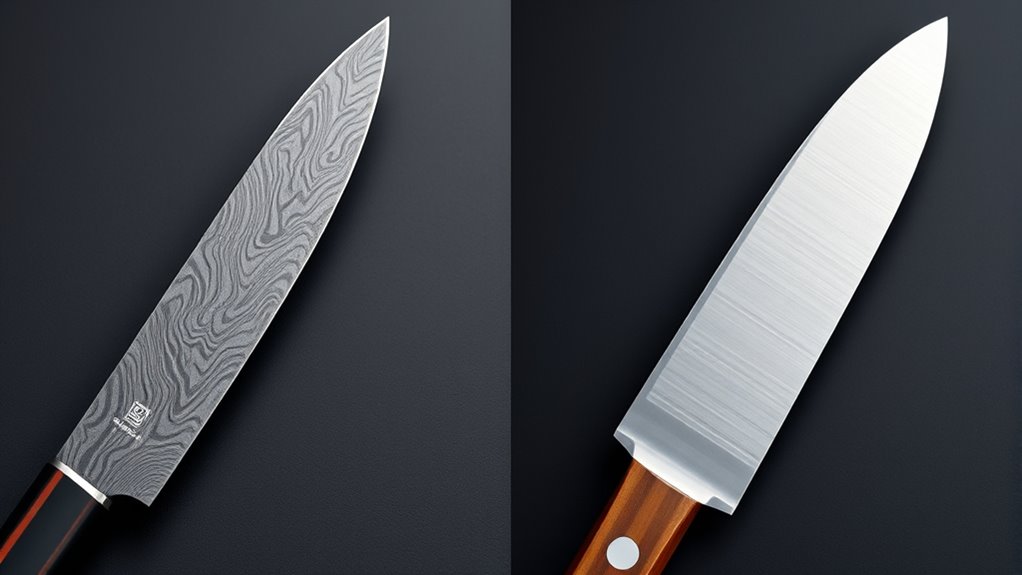
Handle materials and ergonomic design profoundly influence your comfort, control, and the knife’s overall performance during use. Your choice impacts grip stability, maneuverability, and fatigue. Here are key considerations:
- Material durability: Japanese handles often use wood, resin, or composites, offering lightweight, sleek designs. German handles favor pakkawood or synthetics, emphasizing robustness.
- Ergonomic shape: Japanese handles tend to be slimmer and partial tang, providing a refined, comfortable grip. German handles are bulkier with full tangs, ensuring a solid, balanced feel.
- Weight distribution: Japanese designs focus on lightweight comfort to reduce fatigue. German handles prioritize balance and durability for heavy-duty tasks.
- Maintenance: Both styles benefit from proper storage, but Japanese handles may require more delicate care to preserve materials.
Weight and Balance for Different Culinary Tasks

Choosing the right knife weight and balance is essential for optimizing your comfort and efficiency during different culinary tasks. If you’re slicing delicate fish or vegetables, a lighter Japanese knife offers precise control with minimal fatigue. Its balanced, lightweight design makes detailed work more comfortable. On the other hand, German knives tend to be heavier and more balanced toward the handle, providing better leverage for heavy-duty tasks like chopping through bones or dense produce. The extra weight helps you apply more force with less effort, reducing strain. For versatile tasks, a balanced knife that feels natural in your hand improves accuracy and safety. Ultimately, selecting a knife with the right weight and balance depends on your specific kitchen needs and personal handling preferences.
Durability and Maintenance Requirements
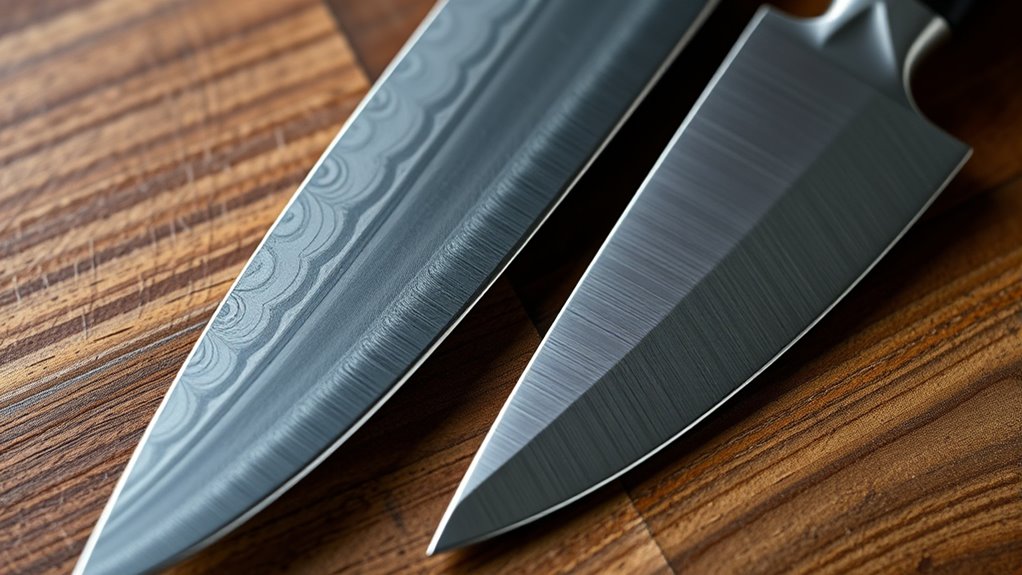
Japanese knives are known for their exceptional edge retention due to their harder steel, but this also means they require careful maintenance to prevent chipping or warping. To keep them in top shape:
- Regularly hone the edge with a fine stone to maintain sharpness.
- Use proper cutting surfaces like wood or plastic, avoiding glass or stone.
- Hand wash and dry immediately to prevent rust and corrosion.
- Store safely in a knife block or magnetic strip to avoid accidental damage.
Because of their thin blades and high hardness, they’re more prone to chipping if misused. You’ll need to sharpen them more carefully and avoid twisting or forcing cuts. Proper maintenance extends their lifespan and preserves their cutting performance.
Cultural Influences on Knife Design Philosophy
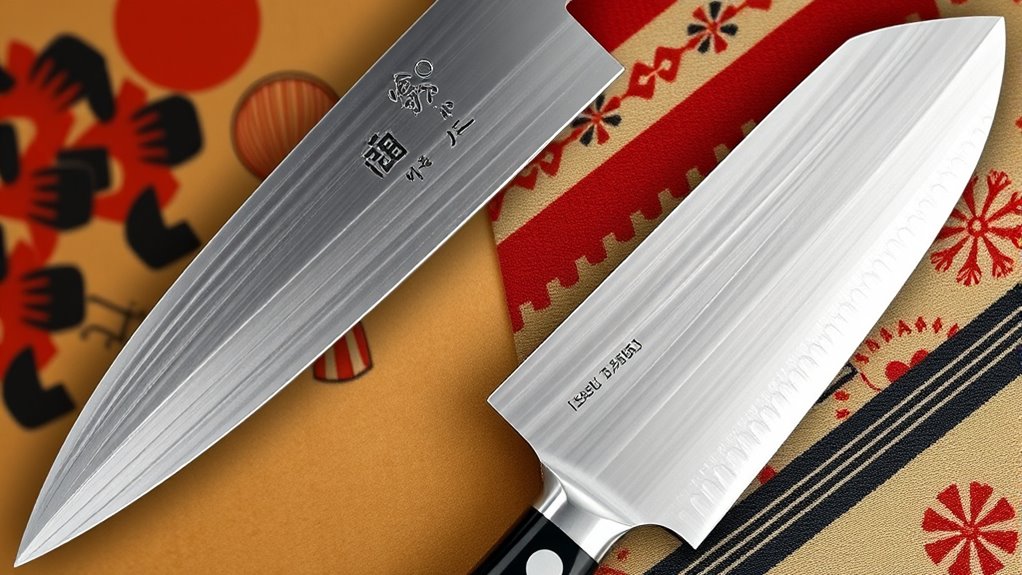
Your approach to knife design is shaped by cultural traditions that prioritize specific techniques and ingredients. Japanese craftsmanship emphasizes precision and finesse, reflecting a culinary focus on delicate slicing, while German craftsmanship values robustness for hearty, heavy-duty tasks. These cultural influences drive the materials chosen and the craftsmanship techniques tailored to each style.
Culinary Tradition Impact
Culinary traditions deeply influence knife design, shaping both functionality and aesthetic preferences to suit specific cooking styles. In Japanese cuisine, precision and finesse are paramount, leading to thin, sharp blades ideal for delicate slicing and sushi preparation. Conversely, German cuisine emphasizes robustness and versatility, favoring thicker, durable blades for heavy-duty tasks like chopping, mincing, and handling tougher ingredients.
- Japanese cuisine’s focus on elegance results in lightweight, razor-sharp knives tailored for finesse.
- German culinary practices demand sturdy, versatile knives capable of tackling diverse ingredients.
- The emphasis on presentation in Japanese cooking influences the precision and thinness of blades.
- German culinary traditions prioritize efficiency and durability, guiding blade thickness and strength.
Material and Craftsmanship
Cultural values deeply influence how knives are crafted, shaping choices in materials and construction techniques. You’ll notice Japanese knives often use high-quality, hard steels like VG10 or Carbon Steel, allowing for sharper edges and longer retention. Their craftsmanship emphasizes precision, with many blades hand-forged by artisans who prioritize meticulous attention to detail. In contrast, German knives typically employ stainless steels like 1.4116 or high-carbon alloys designed for durability and ease of maintenance. German makers focus on sturdy construction and reliable performance, often incorporating full tang handles for balance. The Japanese approach leans toward lightweight, refined designs that honor craftsmanship traditions, while German knives emphasize robustness and practicality. Both cultures value mastery, but their materials reflect differing priorities—sharpness and finesse versus strength and resilience.
Practical Implications for Different Cooking Styles
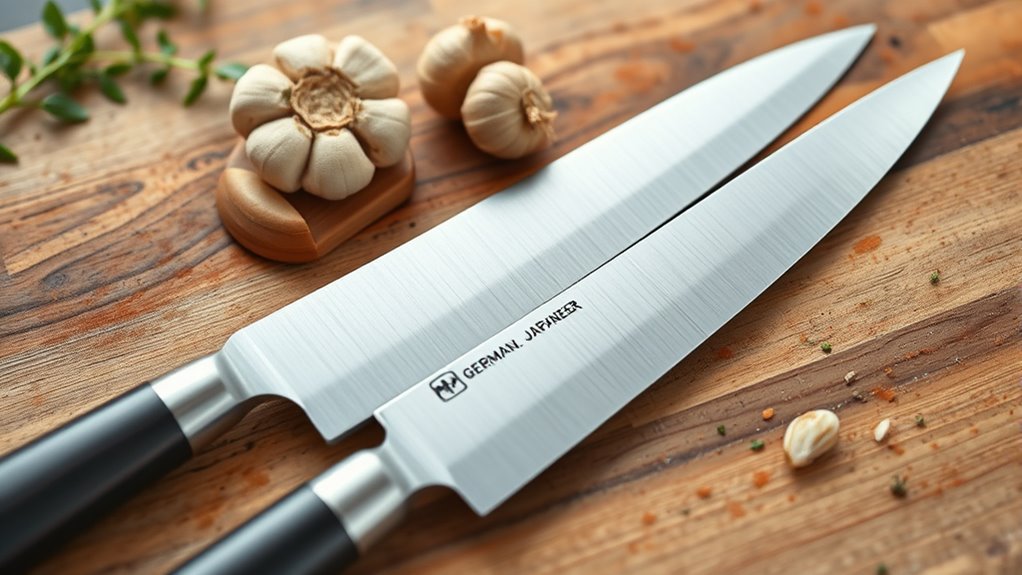
Different cooking styles benefit from the distinct characteristics of Japanese and German knives. If you focus on precision and delicate cuts, a Japanese knife excels due to its thinner blade, sharper edge, and straight shape. For hearty tasks like chopping large vegetables or breaking down meats, a German knife’s thicker blade, curved design, and robustness make it ideal. Consider these practical implications:
- Precision slicing and delicate work—best with Japanese knives.
- Heavy-duty chopping and tough ingredients—better with German knives.
- Fine, controlled cuts—achieved with Japanese single bevel edges.
- Versatile, all-around use—served by German double bevel blades.
Choosing the right knife depends on your cooking style, whether you prioritize finesse or durability.
Frequently Asked Questions
How Does Blade Thickness Affect Cutting Precision and Durability?
Blade thickness directly impacts your cutting precision and durability. Thinner blades, like Japanese knives, give you sharper, more precise cuts and require less force, ideal for delicate tasks. Thicker blades, such as German knives, are sturdier and better suited for heavy-duty chopping and tougher ingredients. You’ll find that thinner blades are lighter and more delicate, while thicker blades provide robustness and longevity, making each type better suited for specific tasks.
Why Are Japanese Blades Typically Lighter Than German Counterparts?
Think of Japanese blades as a swift fox, sleek and agile, compared to the sturdy bear of German knives. You’ll find Japanese blades are typically lighter because they feature thinner steel and a more refined design, making them easier to handle and perfect for precision. This lightweight nature allows for delicate, controlled cuts, whereas German knives prioritize durability and strength, resulting in a heftier, more robust feel.
What Are the Benefits of Single Versus Double Bevels?
You’ll find that single bevel knives offer unmatched precision, ideal for detailed slicing and specialized work, especially for right-handed users. They cut with cleaner, thinner slices and retain sharpness longer. Double bevel knives are versatile, suitable for both hands, and excel at general tasks like chopping and mincing. While double bevels are easier to sharpen and handle, single bevels provide more control for delicate, intricate cuts.
How Do Edge Angles Influence Sharpness and Ease of Sharpening?
Think of edge angles as the brushstrokes of a master painter. When your knife has a narrower angle, like 10-15 degrees, it slices through with razor-sharp precision but demands careful sharpening, like tending a delicate garden. Wider angles, around 17.5 degrees, are sturdier, easier to sharpen, and more forgiving, much like a well-worn path. So, your choice influences both the knife’s cutting finesse and the effort needed to keep it at its best.
In What Ways Do Handle Materials Impact Knife Ergonomics?
You notice that handle materials directly affect your comfort and control. Japanese handles, made from wood, resin, or composites, are sleek and ergonomic, making them lightweight and easy to maneuver for precise cuts. German handles, often full tang with pakkawood or synthetic materials, provide a more substantial grip, enhancing stability during heavy-duty tasks. Your choice depends on whether you prioritize lightweight agility or robust support.
Conclusion
By understanding the nuances of Japanese and German knife designs, you can choose tools that perfectly suit your style. Japanese knives boast precision and portability, while German blades bring robustness and reliability. Recognizing these cultural cues helps you craft culinary creations with confidence. So, explore into details, discover differences, and decide which design delights your dishes. Ultimately, your choice shapes your skills, shaping your success in the kitchen’s exciting, evolving environment.