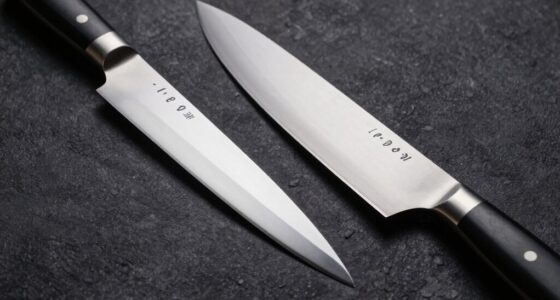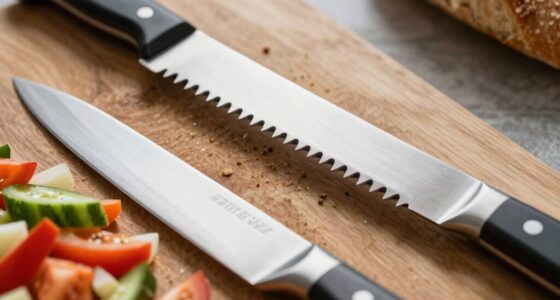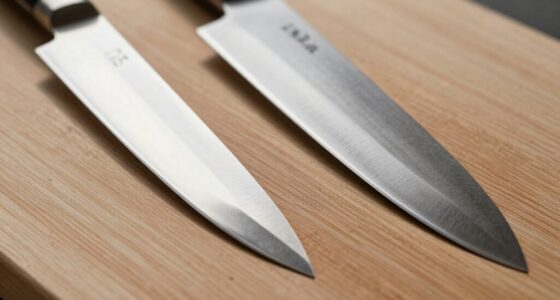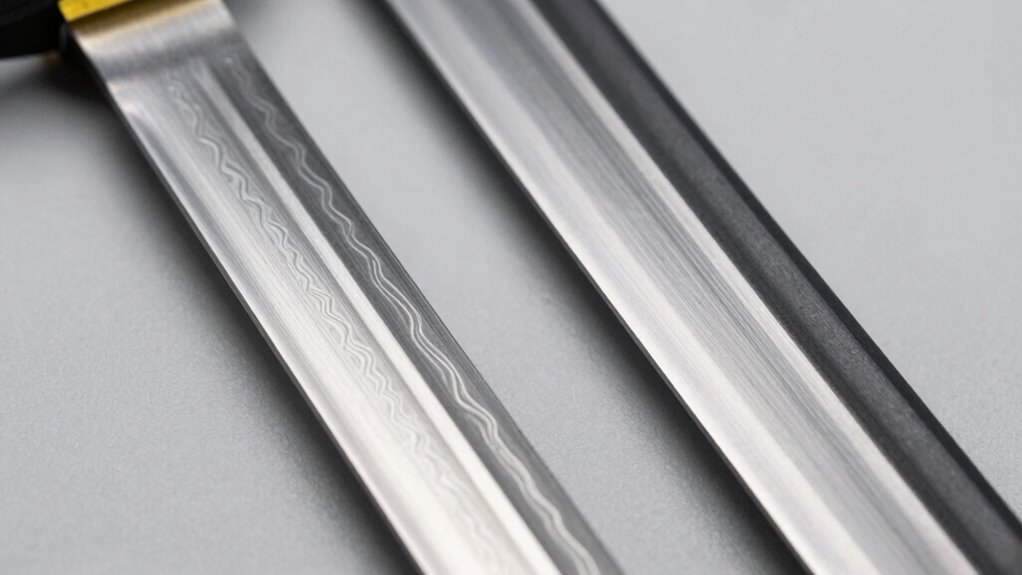
Japanese and German knives differ mainly in blade design, affecting how they perform. Japanese blades are thinner, sharper, and lighter, making them ideal for precision tasks like slicing fish or herbs. German knives are thicker, sturdier, and shaped for heavy-duty work like chopping and meat carving. These design choices influence control, speed, and application. To understand how these styles can enhance your kitchen skills, explore how blade geometry impacts performance.
Key Takeaways
- Japanese knives have straighter, thinner blades with sharper angles, ideal for precision slicing and delicate work.
- German knives feature curved, thicker blades designed for heavy chopping and robust tasks.
- Full tang construction in German knives offers greater stability and control, enhancing durability during demanding tasks.
- Japanese blades are typically harder with higher carbon content, providing longer edge retention but increased brittleness.
- Blade shape and geometry influence cutting technique, with Japanese supporting push cuts and German favoring rocking or hacking motions.
Blade Thickness and Its Impact on Cutting Tasks

Blade thickness directly influences how well a knife performs different cutting tasks. Thinner blades, like those common in Japanese knives, excel at precision slicing and delicate work because they create sharper edges and reduce resistance. This makes them ideal for tasks such as trimming vegetables or slicing fish. Thicker German blades, on the other hand, are built for durability and strength, allowing them to handle tough vegetables, meats, and even bones without chipping or bending. The increased thickness provides extra stability and resilience during heavy-duty tasks. Additionally, blade geometry can significantly affect cutting efficiency and safety during various culinary applications. Your choice depends on what you prioritize: a razor-sharp, lightweight blade for finesse or a sturdier, thicker blade for power and durability. Understanding blade thickness helps you select the right knife for every task in your kitchen. For example, blade maintenance is crucial to preserve performance and safety over time. Choosing the right blade is essential for optimizing performance and ensuring safety.
Edge Angles: Precision Vs Durability

Choosing the right edge angle involves balancing sharpness with durability. A sharper angle, like the Japanese 10-16 degrees per side, creates a razor-sharp edge ideal for precise cuts but can be more fragile. In contrast, German 14-20 degree angles offer more durability, resisting chipping during heavy-duty tasks. When selecting your blade, consider:
Choosing the right edge angle balances sharpness for precise cuts with durability for heavy-duty tasks.
- Sharper angles for detailed slicing
- Wider angles for toughness and longevity
- Hand-honed edges for finer precision
- Machine-finished edges for consistency
- The impact of steel hardness on edge maintenance
A narrower angle means a keen edge that cuts effortlessly but may dull faster. A wider angle sacrifices some sharpness but enhances resilience. Find the right balance based on your cutting needs and the tasks at hand. Whatever Want, understanding the steel hardness can significantly influence how well your blade maintains its edge over time. Additionally, being aware of artistic expression can help you choose the right technique and style for your specific tasks. Exploring different blade materials can further optimize performance and longevity for various applications.
Steel Hardness and Edge Retention
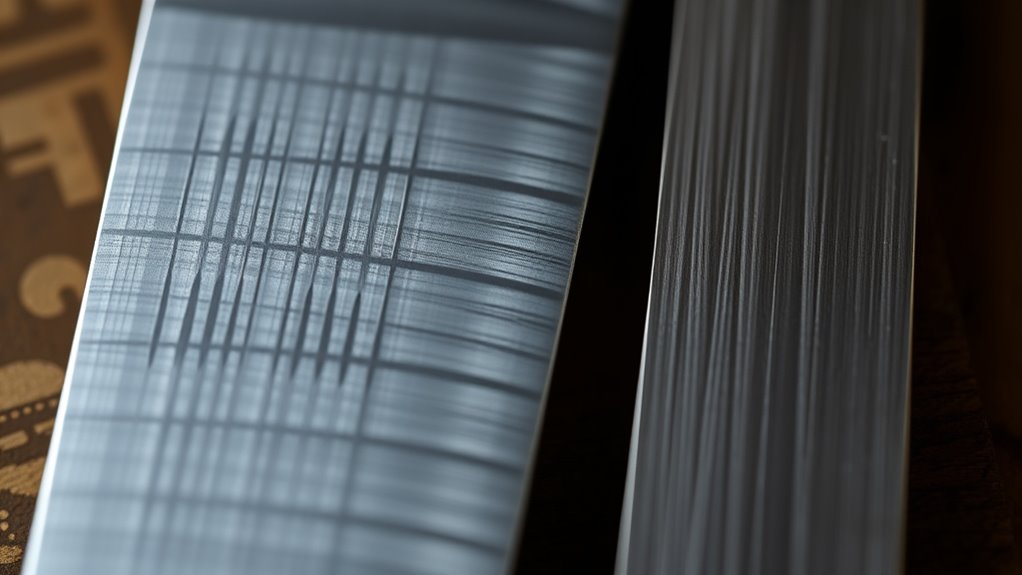
Steel hardness directly influences how well a knife retains its edge over time. Higher HRC ratings mean the steel is harder, keeping a sharp edge longer, but can be more brittle. Japanese steels, often at 60-66 HRC, are tougher and maintain their edge but may chip more easily. German steels, usually at 56-58 HRC, are softer, easier to sharpen, and more resistant to chipping. The table below compares key aspects:
| Steel Type | Hardness (HRC) | Edge Retention | Durability |
|---|---|---|---|
| Japanese | 60-66 | Excellent | Moderate |
| German | 56-58 | Good | High |
| Both | N/A | Varies | Varies |
Choosing depends on your need for sharpness vs. toughness. Steel hardness plays a crucial role in how well a knife performs and how long it maintains its sharp edge. Additionally, steel composition can influence corrosion resistance and ease of maintenance, which are important factors for different usage environments. For example, the microstructure of steel affects its overall performance and longevity. Moreover, understanding the manufacturing process can further impact the quality and consistency of the steel used in knife blades. Recognizing how heat treatment alters steel properties is also essential for optimizing blade performance and lifespan.
Blade Shapes and Their Functional Advantages
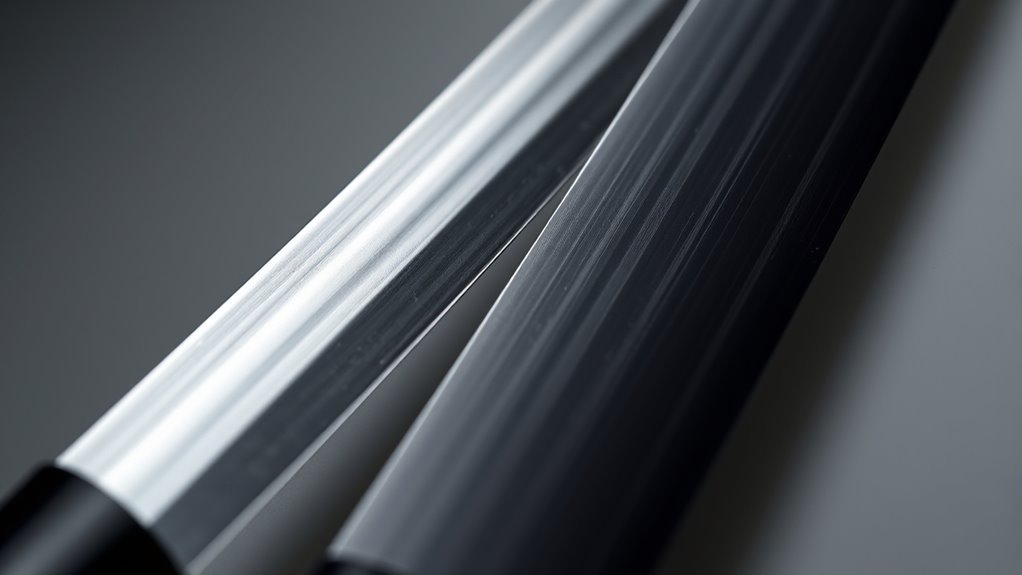
Different blade shapes are designed to optimize specific cutting techniques and tasks. Japanese blades typically feature straighter edges, perfect for push slicing and precision cuts. In contrast, German blades often have a curved belly, which facilitates rocking motions for chopping and mincing. You’ll also notice that Japanese blades frequently have single or double bevels, giving you greater control for delicate work. German blades often have a pronounced tip curve, ideal for mincing and intricate tasks. Additionally, the overall profile influences handling: blade geometry directly affects how efficiently you perform different culinary tasks. Recognizing the influence of Blade profiles can help you select the best tool for your specific needs and improve overall performance. Understanding these blade shapes empowers cooks to choose knives that enhance their comfort and precision in the kitchen. Moreover, the blade angle plays a crucial role in cutting efficiency and edge durability, which varies between styles. Being aware of blade angle variations can help you maintain your knives better and extend their lifespan.
Weight Distribution and Balance for Handling
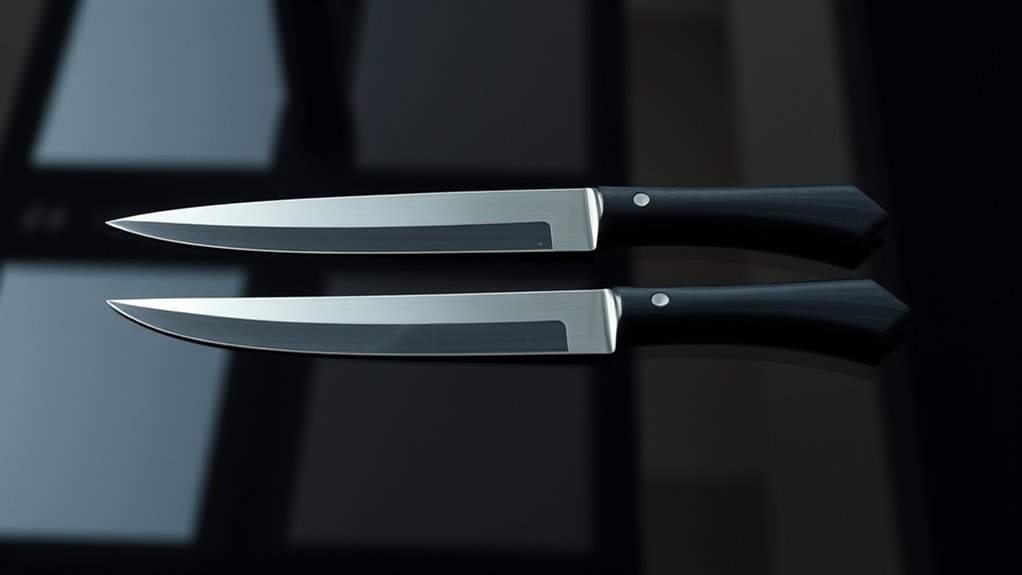
You’ll notice that Japanese knives feel lighter and more blade-heavy, giving you quick, nimble control for delicate cuts. In contrast, German knives are designed with a full tang for added stability and balanced weight across the handle. Understanding these differences helps you choose the right knife to match your handling style and tasks. Additionally, weight distribution and balance play a crucial role in ensuring comfort and efficiency during use. Proper ergonomic design can reduce fatigue and improve precision over extended periods of use, especially when considering home kitchen safety and comfort. Recognizing how knife construction affects handling can also aid in selecting tools that support your skill level and cooking needs. Moreover, user comfort is enhanced by designing knives that align with ergonomic principles, minimizing strain during extended use.
Japanese: Blade-Heavy Feel
Japanese knives often feel blade-heavy in your hand because their lighter overall mass shifts the balance toward the blade itself. This design offers a nimble, responsive feel that enhances precision. You’ll notice:
- Easier control during delicate slicing and trimming
- Reduced fatigue in extended use
- Better feedback from the cutting edge
- Increased responsiveness with lighter handling
- Less stability for heavy-duty chopping
This balance makes Japanese knives ideal for detailed work, where finesse matters most. The lighter weight allows you to maneuver easily, especially when working with thin slices or small ingredients. Additionally, the Free Floating design in Japanese blades helps improve overall agility and responsiveness during use. Incorporating blade geometry principles tailored to Japanese styles can further enhance cutting performance and control, especially through optimized weight distribution. Understanding knife weight and how it affects handling can help you choose the right style for your specific tasks. Recognizing how blade balance impacts your cutting experience can also guide your selection of the ideal knife for different culinary tasks.
German: Full Tang Stability
German knives are designed with a full tang that runs the length of the handle, providing exceptional stability and balanced weight distribution. This construction guarantees the blade and handle move as a single unit, giving you more control and reducing fatigue during heavy-duty tasks. The full tang adds strength, making the knife more resistant to bending or breaking under pressure, especially when chopping tough vegetables or bones. The weight is evenly distributed, giving you a solid, balanced feel that enhances precision and safety. Unlike partial tang designs, the German full tang allows for better handling during prolonged use, minimizing wobbling or slipping. Overall, this design choice makes German knives highly reliable for demanding kitchen tasks, ensuring consistent performance with every cut. Proper knife maintenance also helps preserve the full tang structure and prolongs the lifespan of the tool.
Performance in Delicate Versus Heavy-Duty Tasks

When it comes to delicate tasks, Japanese blades excel with their sharp edges and thinner geometry, allowing for precise cuts and finesse. For heavy-duty chores, German blades provide the power and durability needed to handle tough vegetables, meats, and bones. Understanding these differences helps you choose the right blade for each task, maximizing efficiency and results.
Precision With Japanese Blades
Have you ever noticed how a finely honed blade can make all the difference in your kitchen? Japanese blades excel in precision tasks due to their thin profile and sharp edges. Their lighter weight allows for meticulous control, ideal for slicing delicate ingredients like fish, herbs, or paper-thin vegetables. The slender geometry enables you to:
- Achieve extremely fine, clean cuts
- Minimize crushing or tearing of delicate items
- Maintain precise control during slicing
- Follow intricate shapes or patterns
- Reduce fatigue during extended use
Their high hardness keeps edges sharp longer, ensuring consistent results. However, this brittleness means you should handle them carefully, especially with tougher ingredients. Japanese blades are perfect for tasks that demand finesse and accuracy, elevating your culinary precision with every cut.
Power With German Blades
German blades are designed to deliver stable performance across a range of tasks, especially in heavy-duty kitchen work. Their thicker, sturdier construction allows you to chop through tough vegetables, dense meats, and bones with confidence. The wider edge angles, typically 14-20 degrees per side, increase durability, reducing the risk of chipping or breaking under pressure. Heavier weight and full tang construction provide balance and stability during demanding tasks, making them less prone to slipping or wobbling. The curved belly facilitates a rocking motion for chopping large quantities efficiently. While they may lack the finesse of Japanese blades in delicate slicing, German knives excel in power, resilience, and consistent performance in tough, heavy-duty preparations. This robustness makes them ideal for everyday heavy kitchen tasks.
Material Composition and Its Effect on Edge Sharpness
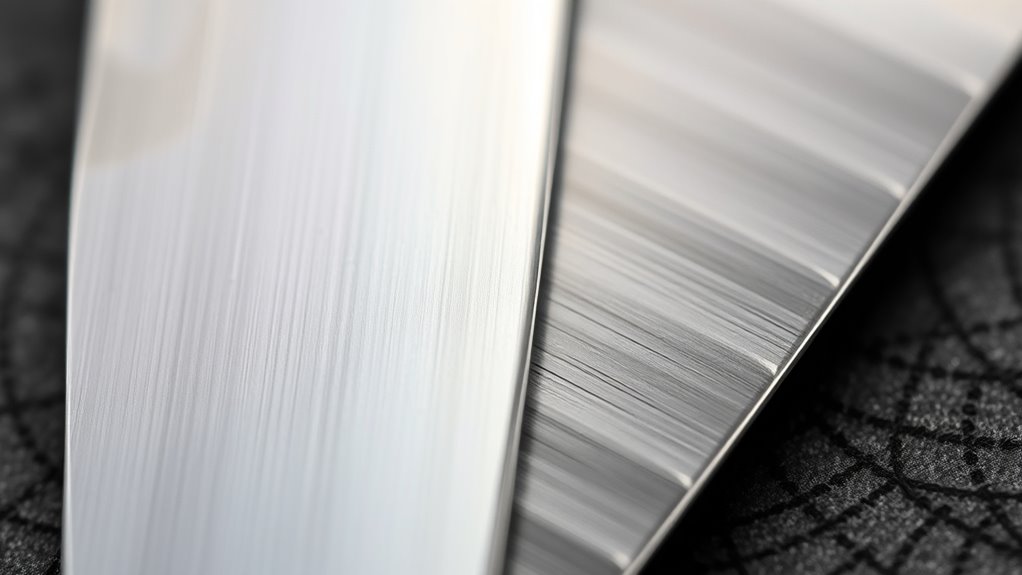
The material composition of a blade directly influences its ability to maintain a sharp edge. Higher carbon content and alloy quality determine how well the blade retains sharpness and resists dulling.
- Japanese steels often have higher carbon levels (60-66 HRC), producing harder, sharper edges but increasing brittleness.
- German steels usually feature slightly softer alloys (56-58 HRC), making sharpening easier and reducing chipping risks.
- The higher carbon Japanese blades can hold an edge longer despite increased fragility.
- German steels prioritize durability and resilience, especially for heavy-duty tasks.
- The steel’s hardness impacts edge retention, with Japanese blades excelling in precision and longevity, while German blades favor toughness and ease of maintenance.
How Blade Geometry Influences Cutting Techniques
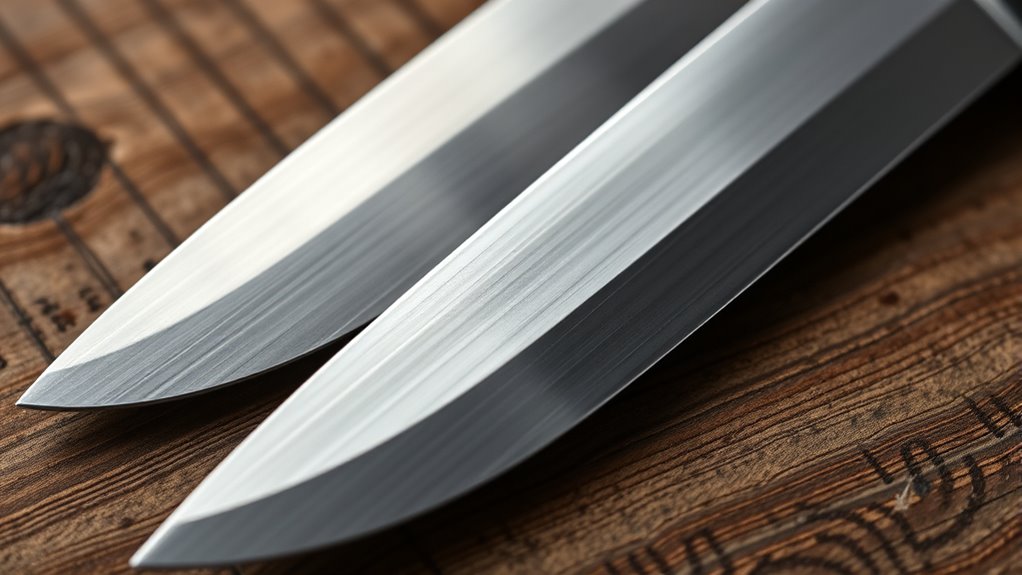
Blade geometry directly shapes how you approach different cutting techniques. Japanese blades, with their thinner profiles and sharper angles, excel at precision slicing and delicate work. German blades, thicker and more robust, support heavy chopping and brute-force tasks. The shape and edge angles influence your control—Japanese blades favor push cuts, while German ones are better for rocking or hacking. The following table summarizes key differences:
| Aspect | Japanese | German |
|---|---|---|
| Blade Thickness | Thinner for precision | Thicker for durability |
| Edge Angle | 10-16° for sharpness | 14-20° for strength |
| Shape and Bevel | Straight, single/double bevel | Curved belly, double bevel |
Knowing these nuances helps you select the right technique for every task, maximizing performance.
Comparing Practical Applications of Japanese and German Styles
Japanese knives excel in tasks that require precision and finesse, making them ideal for slicing delicate ingredients like fish, herbs, and thin vegetables. Their thin blades and sharp angles let you achieve clean, thin cuts with minimal effort. In contrast, German knives are more suited for heavy-duty tasks like chopping root vegetables, meats, and bones thanks to their thicker blades and broader angles.
Consider these practical applications:
- Use Japanese knives for sushi, sashimi, and fine garnishes.
- Rely on German knives for chopping carrots, pumpkins, or breaking down poultry.
- Japanese blades excel in filleting fish or slicing herbs.
- German blades handle tougher tasks like carving roasts or splitting bones.
- Japanese knives’ lightness improves control during delicate cuts, while German knives provide durability for demanding prep.
Frequently Asked Questions
How Does Blade Thickness Affect Overall Knife Weight and Maneuverability?
Blade thickness directly impacts your knife’s weight and maneuverability. Thinner Japanese blades are lighter, making them easier to handle for delicate tasks and precise cuts. Thicker German blades add weight, providing stability and control for heavy-duty chopping. So, if you want a nimble, responsive knife, a thinner blade suits you better. Conversely, a thicker blade offers more heft and durability when tackling tougher ingredients.
Can Japanese and German Blades Be Effectively Used for the Same Tasks?
Yes, Japanese and German blades can be used for the same tasks, but they excel in different areas. You’ll find Japanese knives perfect for delicate slicing and precision, thanks to their thinner, sharper edges. German blades are better for heavy-duty chopping and tougher ingredients due to their thicker, more durable design. While you can use either for general prep, choosing depends on whether you prioritize finesse or strength in your kitchen.
How Does Steel Hardness Influence Sharpening Difficulty and Maintenance?
Steel hardness directly impacts sharpening and maintenance. When you have harder Japanese steel (60-66 HRC), it stays sharper longer but is trickier to sharpen, requiring more skill and patience. Softer German steel (56-58 HRC) is easier to sharpen and maintain, but it dulls faster. So, if you prefer low-maintenance blades, softer steel suits you. If you want longer-lasting edges and don’t mind extra effort, harder Japanese steel is ideal.
What Role Does Blade Shape Play in Different Cutting Techniques?
Did you know Japanese knives often feature straighter edges? This shape enhances push slicing, making delicate cuts more precise, especially for thin, even slices. German blades, with their curved bellies, excel at rocking cuts, ideal for chopping. Your choice influences technique: Japanese shapes favor finesse, while German shapes support robust, efficient chopping. Understanding these differences helps you select a knife suited to your preferred cutting style.
Are Japanese or German Knives Better Suited for Home Kitchen Use?
You’ll find Japanese knives better suited for precise, delicate tasks in your home kitchen due to their thinner blades, sharper edges, and lighter weight. They excel at slicing and trimming vegetables or fish. German knives, with their thicker blades, durability, and heavier feel, are ideal for heavy-duty chopping and tougher ingredients. Both styles serve different needs, so choose based on your cooking style and the tasks you perform most often.
Conclusion
Think of Japanese and German blade styles as two different dance partners—each with its unique rhythm and style. Your choice influences how smoothly your tasks flow, whether delicately or with force. By understanding their differences, you can select the perfect blade to match your needs, turning any cut into a seamless performance. Ultimately, mastering these styles lets you choreograph your work with precision and confidence, transforming everyday tasks into a graceful dance.