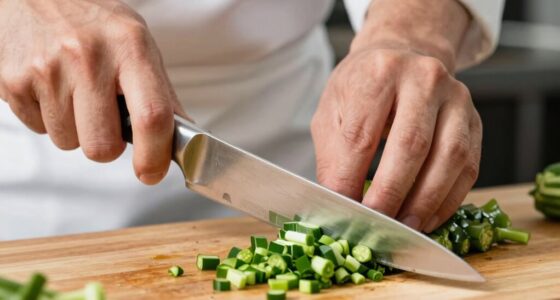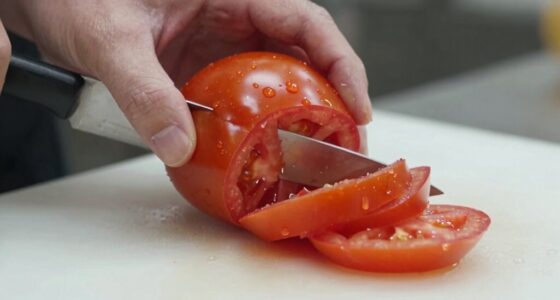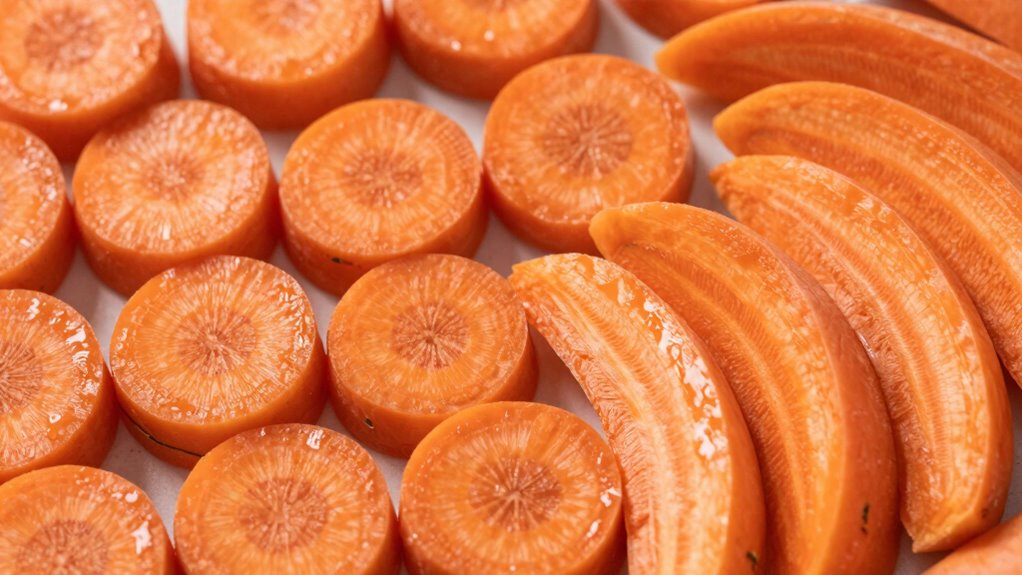

Choosing between rondelle and half-moon slices directly affects your cooking time and nutrient preservation. Rondelles, being uniform and thin, cook quickly and evenly, helping you retain more nutrients. Half-moons, with their larger surface area and curved shape, often need longer cooking, which can lead to nutrient loss if not timed carefully. Understanding how shape influences cooking can help you plan better—keep exploring to learn more about making the right choice for your dish.
Key Takeaways
- Rondelle slices cook faster and more evenly due to their uniform thickness.
- Half-moon slices often require longer cooking times because of larger surface area and curved shape.
- Thinner half-moons can reduce cooking time, approaching the quick cook advantage of rondelles.
- Shape influences heat penetration, affecting overall cooking duration for each slice type.
- Properly selecting slice shape based on cooking method optimizes time and nutrient retention.
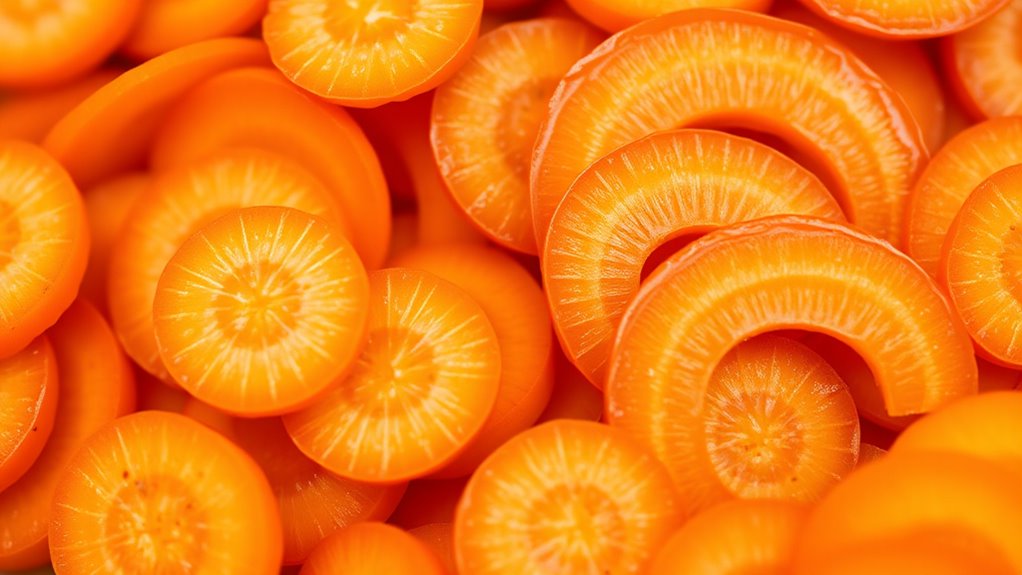
When choosing between rondelle and half-moon slices, understanding their distinct shapes and the visual impact they create can help you make the best decision for your dish. The shape you select influences not just presentation but also how the ingredients cook and how nutrients are retained. Rondelle slices are circular, uniform discs that often emphasize a clean, classic look, especially in salads, soups, or garnishes. Half-moon slices, on the other hand, are created by slicing ingredients at an angle or in half, producing curved, crescent shapes that bring a more dynamic and textured appearance to your plate.
From a cooking perspective, the shape impacts cooking techniques and timing. Rondelles, with their uniform thickness and shape, tend to cook more evenly and quickly when sliced thinly. They’re ideal for quick sautés or stir-fries, where even heat distribution matters. Because they cook faster, you need to watch the timing to prevent overcooking, which can lead to nutrient loss. With rondelle slices, you preserve more nutrients by minimizing cooking time, especially when you use methods like blanching or steaming that are gentle on vitamins and minerals. Additionally, high surface area can influence how ingredients absorb flavors and seasonings during cooking.
Rondelle slices cook quickly and evenly, preserving more nutrients through shorter cooking times.
Half-moon slices often have a larger surface area and can take slightly longer to cook through, especially if they’re thicker. They’re perfect for roasting or slow-cooking dishes where a bit more time allows flavors to develop and ingredients to soften. The curved shape means they don’t always cook as uniformly as rondelles, which can affect nutrient retention if parts are overcooked or undercooked. To maximize nutrient preservation with half-moon slices, you should adjust your cooking techniques—such as slicing thinner or using lower heat—and pay close attention to cooking times.
The shape also influences how ingredients absorb sauces or seasonings. Rondelles, with their flat surfaces, coat evenly, making them suitable for dishes where flavor distribution is key. Half-moons, with their curves, can trap seasonings and juices more effectively, adding depth to the flavor. When selecting between these shapes, consider not only how they look but how they’ll behave during cooking. Properly managing cooking techniques for each shape ensures you retain essential nutrients and achieve the desired texture.
Frequently Asked Questions
Do Different Shapes Affect the Nutritional Content of Vegetables?
Different shapes don’t substantially change the nutritional content of vegetables, but they can impact nutritional density and antioxidant preservation. When you cut vegetables into smaller or more exposed shapes, you increase surface area, which can lead to faster nutrient loss during cooking or storage. So, choosing a shape that minimizes surface exposure helps preserve antioxidants and maintains overall nutritional value, ensuring you get the most health benefits from your veggies.
Which Shape Is Best for Raw Salads?
For raw salads, half-moon slices are your best choice because they offer great visual appeal and are easy to prepare. Their curved shape adds an attractive look to your dish, making it more inviting. Plus, they slice quickly and evenly, saving you time in the kitchen. Whether you want a polished presentation or simple prep, half-moon slices strike a perfect balance of aesthetics and convenience.
How Do Shape Preferences Influence Presentation and Plating?
Your shape choices markedly influence presentation and plating by enhancing aesthetic appeal and creating striking color contrast. Opting for uniform rondelle or half-moon slices adds a clean, organized look, making your dish more inviting. You can also experiment with varied shapes to introduce visual interest and highlight different colors, guiding the eye and elevating the overall dining experience. Your thoughtful shape selection makes your plates more attractive and appetizing.
Are There Traditional Dishes That Require Specific Slice Shapes?
Yes, you’ll find traditional dishes that call for specific slice shapes. For example, classic French onion soup features sliced onions often cut into rondelles, reflecting their cultural significance and historical origins in French cuisine. These shapes influence not only presentation but also cooking time and texture. When preparing such dishes, pay attention to the shape, as it preserves authenticity and enhances the overall dining experience.
Can Shape Choice Impact the Texture of Cooked Vegetables?
You might think shape doesn’t matter, but it actually affects texture through cutting technique and heat transfer. Thin rondelle slices cook faster and become softer because they expose more surface area, while thicker half-moon slices retain a firmer bite. The shape influences how heat penetrates, so choosing the right cut can help you achieve the perfect vegetable texture for your dish.
Conclusion
So, next time you’re slicing, remember that your shape choice might just surprise you—sometimes, a rondelle cooks faster than a half-moon, and other times, it’s the opposite. It’s funny how a simple cut can change your dish’s timing, almost like the veggies have their own secret schedule. Keep experimenting, and you might find that your accidental shape switch leads to perfectly cooked veggies—proof that sometimes, coincidence makes all the difference in your kitchen adventures.