To portion fish fillets evenly, start by using a sharp, flexible knife to trim uneven edges and remove bones. Pat the fillet dry for better control and decide on a consistent thickness, around 1 to 1.5 inches. Use a kitchen scale or measuring guides to guarantee each piece weighs or measures the same, slicing at regular intervals. Maintaining a systematic approach and using proper tools helps you achieve uniform portions that cook evenly; learn more to master this technique.
Key Takeaways
- Use a sharp, flexible fillet knife and cut at a slight angle with smooth sawing motions for clean, even slices.
- Decide on uniform thickness, typically 1 to 1.5 inches, to ensure even cooking across all fillets.
- Pat fillets dry and trim uneven edges before portioning to improve control and consistency.
- Measure each portion with a kitchen scale or marking guides to achieve equal weight or size.
- Slice at regular intervals along the fillet, maintaining a systematic approach for uniform pieces.
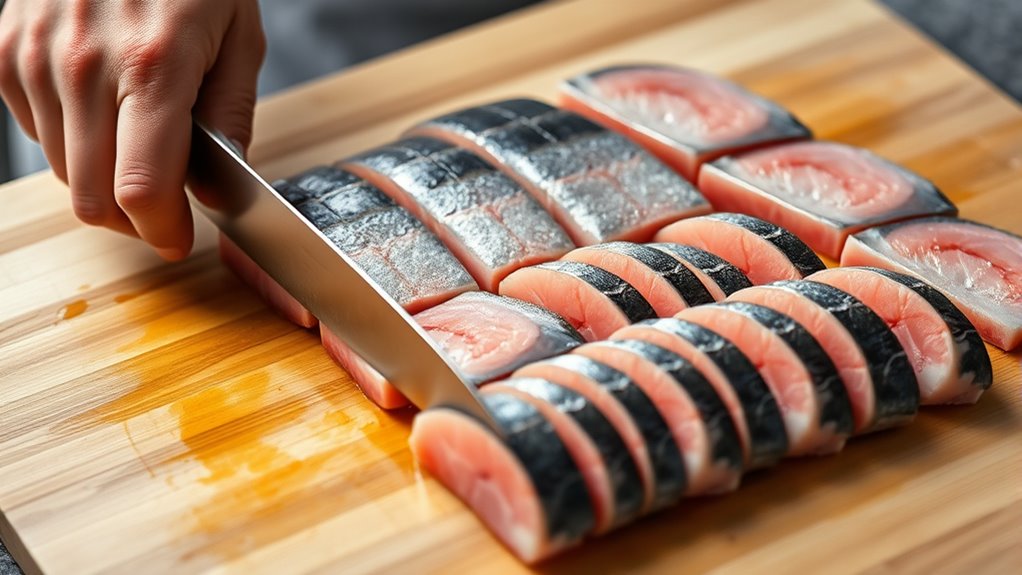
Portioning fish fillets correctly guarantees even cooking and proper serving sizes. When you’re preparing fish, the key is to ensure each piece is uniform in thickness and weight. This not only improves presentation but also ensures that all fillets cook evenly, preventing some from overcooking while others remain underdone. To achieve this, mastering knife techniques is essential. Use a sharp, flexible fillet knife to make precise cuts. Hold the knife at a slight angle and use smooth, gentle sawing motions rather than pressing down hard, which can tear the delicate flesh. Proper knife skills allow you to trim uneven edges and remove any remaining bones, creating clean, uniform fillets ready for portioning.
In addition to good knife techniques, having the right portioning tools makes a significant difference. A reliable kitchen scale helps you measure each fillet accurately, ensuring consistent weights across all servings. If you don’t have a scale, you can use a ruler or a portioning guide to cut fillets into equal lengths, which helps in achieving uniform thickness. Some cooks prefer to use portioning boards or guides with marked sections to help visually divide the fillet into equal parts. These tools simplify the process and reduce guesswork, making it easier to produce evenly sized pieces.
Once you have your knife and tools ready, start by gently patting the fillet dry with paper towels. This step prevents slipping and gives you better control. Use your knife to trim off any uneven or ragged edges, then decide on the size of your portions. For standard servings, aim for fillets that are approximately 1 to 1.5 inches thick, which cook evenly through the center. To maintain consistency, work systematically from one end of the fillet to the other, slicing through the meat at regular intervals. Use your portioning tools to confirm each piece’s weight or size before moving on to the next. If you’re using a scale, weigh each portion as you go; if not, rely on your visual cues and measuring tools.
Frequently Asked Questions
Can I Use a Regular Kitchen Scale for Fish Fillets?
Yes, you can use a regular kitchen scale for fish fillets. Just place the fillet on the scale, and it’ll give you an accurate weight. This makes portioning easier and helps guarantee even cooking. If you want even more precision, consider using portioning tools like a fish scale or a food scale with a tare function. It’s a simple way to get consistent servings every time.
How Do I Account for Bone-In Versus Boneless Fillets?
Think of bone-in versus boneless fillets as the difference between a puzzle with extra pieces and one without. To accurately scale fillet weight, account for bones by subtracting their weight from the total, ensuring even portions. Use a kitchen scale with a tare function to measure only the edible fish. This way, you’ll get precise weights and even portions, regardless of whether your fillet is bone-in or boneless.
What if My Fillets Vary in Thickness?
If your fillets vary in thickness, aim for uniform thickness by gently pounding them with a meat mallet or rolling pin, which makes certain of even cooking. Adjust the cook time accordingly—thicker pieces need a few extra minutes, while thinner ones require less. This approach helps you achieve consistent doneness, prevents overcooking, and guarantees your fish cooks evenly, no matter the initial differences in thickness.
How Do I Prevent Fillets From Sticking While Portioning?
Don’t let sticking catch you off guard; a little prep goes a long way. Before portioning, spray your knife with non-stick spray or place a sheet of parchment paper underneath the fillet. These tricks act like a charm, preventing the fish from sticking and making clean cuts easier. Keep your knife sharp, and work gently. With these steps, you’ll portion fish fillets smoothly and efficiently every time.
Is There a Difference in Portioning Frozen Versus Fresh Fish?
Yes, there’s a difference in portioning frozen versus fresh fish. When portioning frozen fish, you should thaw it properly using methods like refrigeration or cold water to guarantee fillet uniformity. Thawing methods help you cut more precisely and prevent tearing or uneven sizes. Fresh fish is easier to portion because it’s more pliable. Always handle fish carefully, and use a sharp knife for clean, even cuts, regardless of its frozen or fresh state.
Conclusion
Portioning your fish fillets evenly guarantees they cook uniformly and taste great every time. Remember, about 90% of home cooks struggle with inconsistent portions, leading to uneven cooking. By using a simple scale or measuring technique, you’ll boost confidence and impress guests with perfectly cooked fish. Consistent portions aren’t just about presentation—they’re about enjoying a delicious, well-cooked meal every time you cook. Master this skill, and your seafood dishes will always shine.