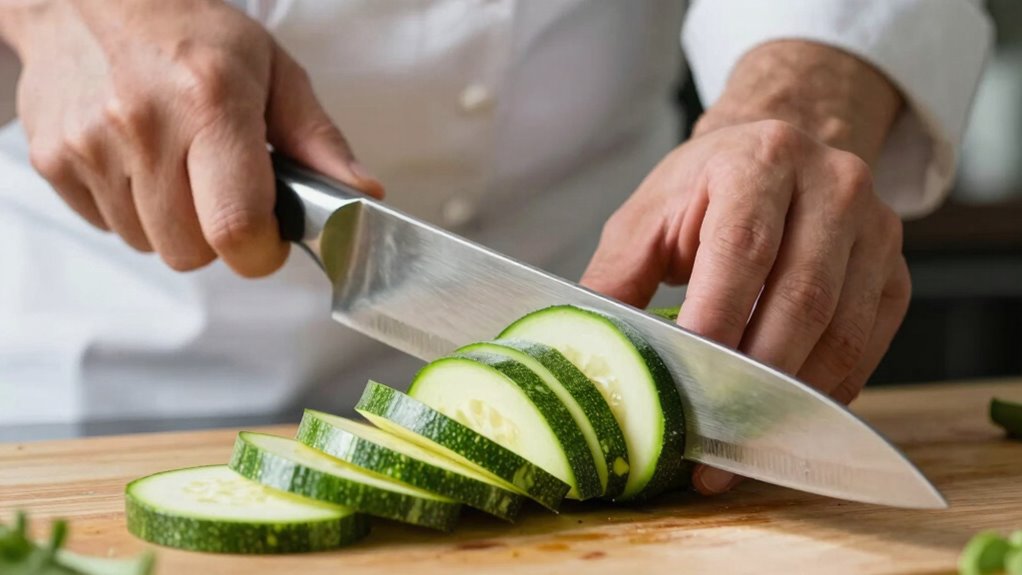
Start with a quick 5-minute warm-up to boost your knife control all day. Begin with grip and posture drills to relax your shoulders and stabilize your stance. Practice precision slicing on a safe surface, focusing on slow, controlled cuts. Do hand and finger flexibility exercises to reduce fatigue and improve dexterity. Finish with controlled cutting motions and balance checks to build muscle memory and confidence. Keep at it, and you’ll discover tips to refine your skills even further.
Key Takeaways
- Perform simple finger and hand stretches to increase flexibility and reduce fatigue before cutting.
- Practice slow, deliberate slicing motions to build muscle memory and enhance control.
- Engage in hand strength exercises using tools like grip trainers or squeezing balls.
- Use a stable cutting surface and focus on proper knife grip during warm-up.
- Incorporate brief arm and wrist rotations to improve mobility and prepare for precise movements.
Grip and Posture Drills
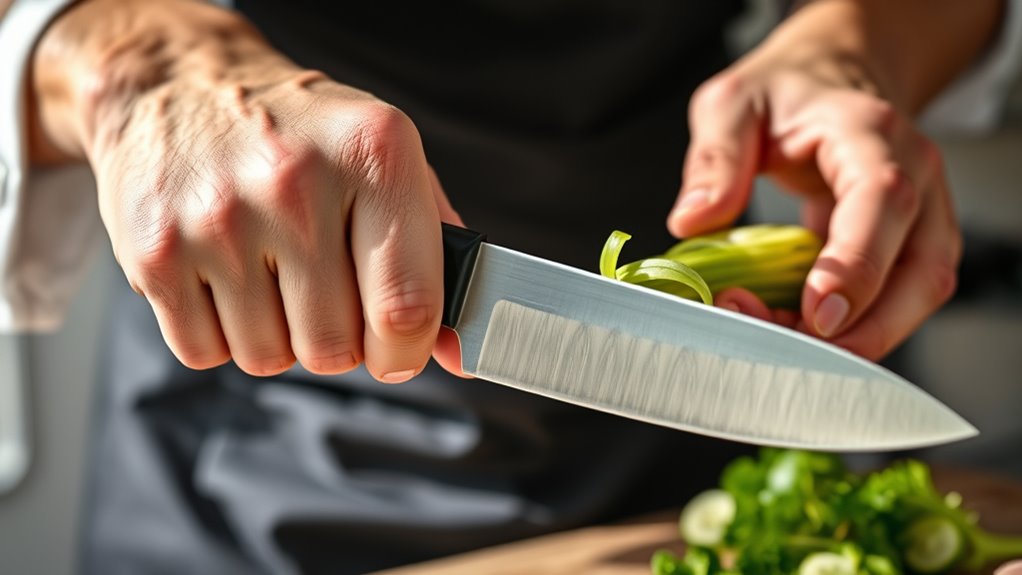
To develop safe and efficient knife skills, you need to master your grip and posture first. Your knife grip should be firm yet relaxed, allowing for control without tension. Hold the handle comfortably, with your fingers wrapped around it and your thumb resting against the side for stability. Your cutting posture is equally important; keep your shoulders relaxed and your elbows close to your body to maintain balance. Stand with feet shoulder-width apart and keep your wrists in a neutral position. Practicing these grip and posture drills helps prevent fatigue and injury, ensuring more precise cuts. Proper technique is essential for consistent performance and developing muscle memory. When you consistently focus on proper technique, you’ll find your control improves naturally, giving you confidence with every chop and slice. Incorporating ergonomic principles into your stance can also reduce strain and enhance your endurance during extended cutting sessions. Regularly refining your grip and posture also promotes long-term safety, helping to prevent repetitive strain injuries over time. Paying attention to proper body alignment can further optimize your efficiency and reduce fatigue during prolonged practice. Additionally, maintaining correct body mechanics can help you sustain your skills for extended periods without discomfort.
Precision Slicing Practice
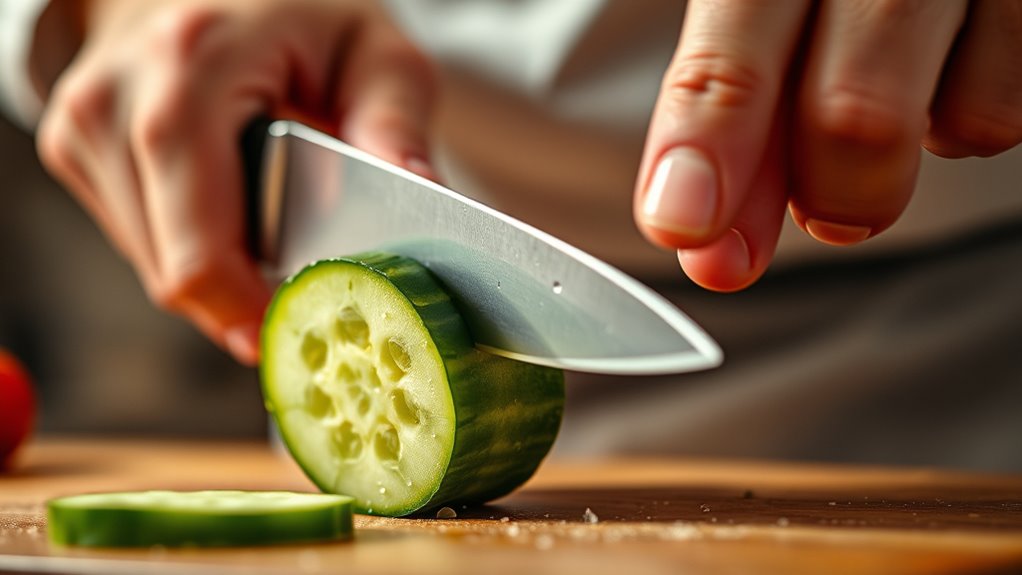
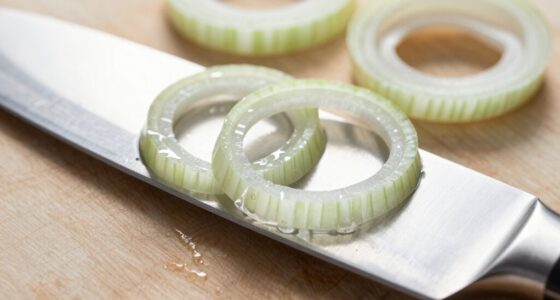
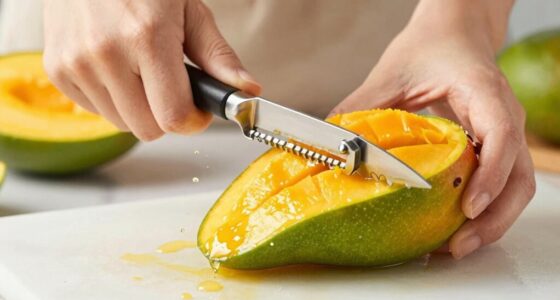
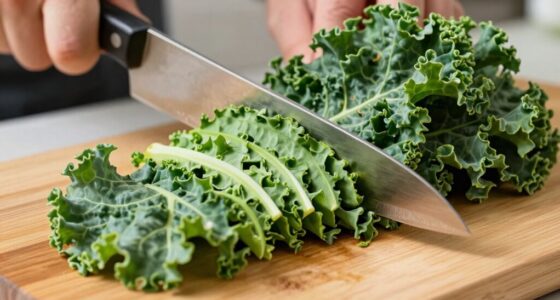
Practicing precision slicing sharpens your control and accuracy with the knife. It’s essential for creating uniform vegetable julienne and intricate fruit carving. Focus on slow, deliberate cuts to build muscle memory and confidence. Start with small, manageable pieces, aiming for even thickness and clean edges. As you improve, challenge yourself with different textures and shapes. Precision slicing isn’t just about aesthetics; it enhances safety and efficiency in the kitchen. Developing this skill helps you execute complex tasks effortlessly and reduces waste. Remember, consistent practice makes perfect. Incorporating proper technique into your routine ensures steady progress and minimizes fatigue. The more mindful you are during practice, the more control you’ll gain. Soon, precision slicing will become second nature, elevating your overall knife skills and culinary artistry. consistent practice is key to mastering these techniques and improving your control. Additionally, understanding knife safety principles can help prevent accidents and maintain your equipment in top condition. Practicing with sharp, well-maintained knives can further improve your accuracy and safety during slicing. To support your skill development, using quality cutting boards can also provide a stable surface and protect your knives from dulling.
Hand and Finger Flexibility Exercises
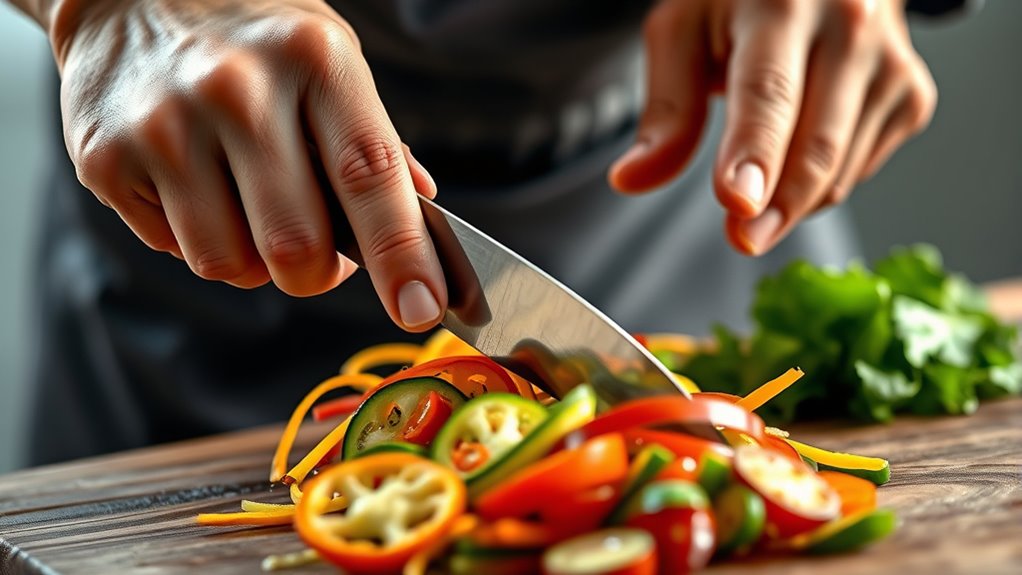
Enhancing hand and finger flexibility is an essential step toward improving your overall knife skills. Start with simple finger stretching exercises, extending each finger individually and holding for a few seconds. This helps loosen tight muscles and increases dexterity. Incorporate hand and finger stretches that target the muscles used in maintaining a proper knife grip, ensuring you can hold the knife securely without strain. Regularly practicing these stretches can reduce fatigue and improve control during cutting. Focus on keeping your fingers relaxed and flexible, which allows for smoother, more precise movements. Remember, a flexible hand and fingers support better control and reduce the risk of slips. Incorporating fitness tech tools like wearable devices can help monitor and improve your hand strength and flexibility over time. Using targeted stretching routines designed for hand and finger mobility can further enhance your skill set. Additionally, paying attention to proper air purifier maintenance can create a cleaner environment that reduces dust and allergens, supporting overall hand health. Incorporating strength training exercises can also help build the necessary muscle endurance for prolonged knife work. Engaging in regular hand exercises can boost your overall dexterity and coordination, making your knife skills more precise. Dedicating a few minutes to finger stretching and grip exercises sets a strong foundation for confident, accurate knife work.
Controlled Cutting Motions

Controlled cutting motions are essential for maintaining safety and precision in your knife work. When you focus on smooth, deliberate movements, you reduce the risk of accidents and improve your cutting accuracy. Using proper cutting techniques allows you to work efficiently and confidently, conserving energy and minimizing frustration. Mastering controlled motions helps develop muscle memory, making your cuts more consistent and safer over time. Remember, safety starts with your technique—never rush or force your cuts. Focus on clean, purposeful movements that keep your fingers and knife safe. Incorporating proper technique and smart home automation can further enhance your control and safety during knife work. Paying attention to cutting mechanics can also help you refine your skills and build confidence in your technique. Additionally, practicing with controlled motions regularly fosters better coordination and reduces fatigue during extended cutting sessions.
Focused Balance and Stability Checks
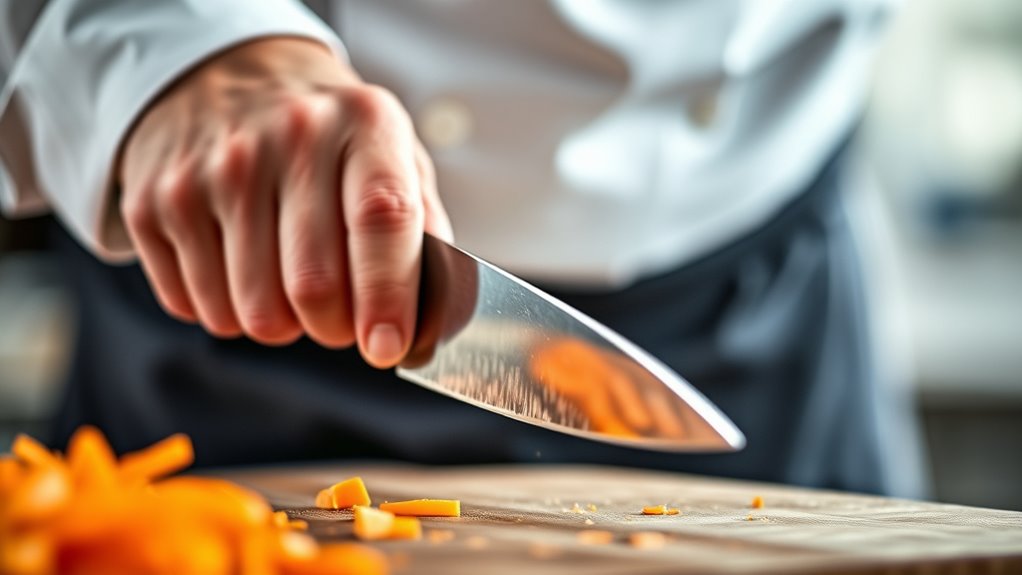
Maintaining focused balance and stability is essential for safe and accurate knife work. Start by ensuring your knife grip is firm but relaxed, giving you control without tension. Your grip influences your overall stability, so find a comfortable hold that allows smooth movements. Check that your cutting surface is stable and at the right height; a wobbling or uneven surface throws off your balance. Keep your feet shoulder-width apart, weight evenly distributed, and focus on a centered stance. During practice, periodically pause to assess your posture and grip, adjusting as needed. Remember, stable footing and a proper grip translate into more precise cuts and reduce the risk of accidents. Focused balance and stability are the foundation of confident, consistent knife skills. Additionally, being mindful of your stability techniques can help you maintain control throughout your practice. Establishing body awareness can further enhance your ability to respond to subtle shifts in your stance and grip, leading to improved precision and safety. Incorporating recovery methods into your routine can also help prevent fatigue and maintain optimal control during extended practice sessions. Practicing awareness of your water-based movements, such as smooth transitions and controlled cuts, can further improve your overall control and fluidity. Developing a conscious focus on core engagement can also support better stability and reduce unnecessary tension in your hands and arms.
Frequently Asked Questions
How Often Should I Perform These Warm-Up Exercises?
You should perform these warm-up exercises daily to build technique consistency and enhance control. Keep the warm-up duration around 5 to 10 minutes each session, ensuring you stay focused and engaged. Regular practice helps reinforce muscle memory and sharpens your skills, making your cutting more precise throughout the day. Consistent warm-ups are key to developing confidence and maintaining ideal knife control, so make them a daily habit.
Can These Drills Prevent Knife-Related Injuries?
Yes, these drills can help prevent knife-related injuries by improving your control and awareness. They promote sharpness maintenance, ensuring your knife stays precise, and enhance grip security, reducing slips. Regularly practicing these exercises makes you more confident and skilled, minimizing risks. Focus on consistent, mindful warm-ups before chopping to stay sharp and secure, ultimately protecting yourself throughout your kitchen tasks.
What Are Signs of Fatigue During Practice?
You’ll notice signs of fatigue when your muscles start whining louder than your stomach during a snack run, and mental alertness takes a nosedive faster than a failed soufflé. If your grip weakens, your cuts become shakier, or you catch yourself daydreaming about pizza instead of focusing, it’s a clear sign. Recognize these cues early, take a break, and keep your skills sharp—and your fingers safe!
How Do I Adapt Drills for Different Knife Types?
To adapt drills for different knife types, focus on adjusting your knife grip and cutting angles. For a flexible kitchen knife, use a relaxed grip and moderate angles for control. For a paring knife, hold it firmly with a pinch grip, and angle it carefully for precision. Practice slow, deliberate cuts first, then gradually increase speed. This approach helps you master each knife’s unique feel and improves overall control.
Are There Beginner-Friendly Modifications for Advanced Techniques?
Absolutely, you can simplify advanced techniques for beginners by breaking them into smaller steps, focusing on core movements first. Use technique simplification to reduce complexity and gradually introduce more precision. This approach supports skill progression, helping you build confidence and control. Practice each step slowly, then increase speed as you gain comfort. By adapting techniques this way, you make mastering knife skills more accessible and enjoyable for beginners.
Conclusion
By dedicating just five minutes to these warm-up drills, you set the foundation for confident, precise knife work all day long. Think of it as sharpening your skills like a blade—ready to cut through any task with ease. With consistent practice, control becomes second nature, turning your kitchen into a stage where every slice sings. Keep at it, and watch your confidence and craftsmanship grow, making every meal a masterpiece waiting to happen.