Start by mastering basic safety habits, like keeping your fingers curled and maintaining a sharp knife. Practice controlled, smooth cutting motions, focusing on consistent slices and proper grip. Gradually incorporate more advanced techniques such as julienne and dice while maintaining those safe habits. Build confidence by practicing regularly, prioritizing patience over speed. As you establish solid fundamentals, you’ll develop confidence and control. Continue exploring these steps to refine your skills and become a confident, precise cutter.
Key Takeaways
- Start with mastering proper grip and claw techniques to ensure safety and control.
- Practice basic cutting motions like slicing, dicing, and julienne with consistent, controlled movements.
- Focus on developing muscle memory through daily repetitions of fundamental cuts.
- Gradually increase speed while maintaining precision and safe handling habits.
- Incorporate advanced techniques once confidence and accuracy in basic skills are established.
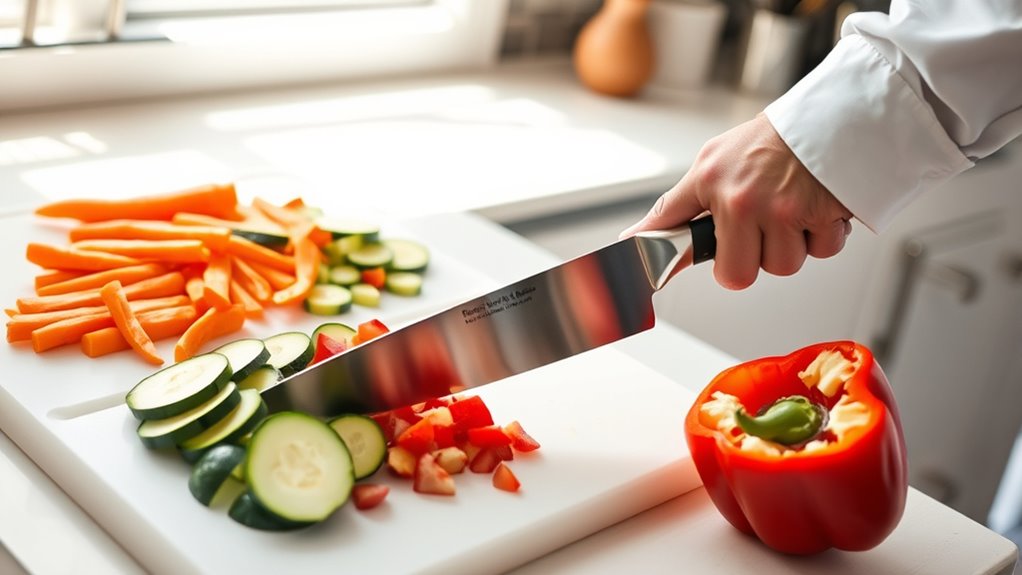
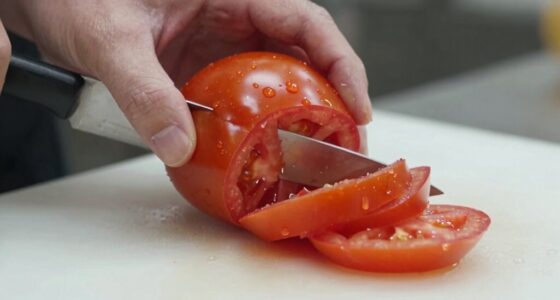
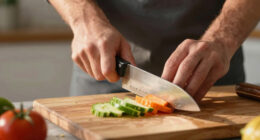
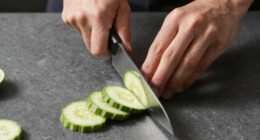
Are you ready to sharpen your kitchen skills? Mastering knife skills is essential for cooking efficiently and safely. The first step in your routine focuses on developing good knife safety habits and understanding proper cutting techniques. When you handle knives, always pay attention to how you grip and control the blade. Hold the handle firmly, but not so tightly that your hand tenses up. Your guide hand should form a claw shape, curling your fingertips inward to protect them from the blade. This technique, often called the “claw grip,” is critical for knife safety because it keeps your fingertips tucked away, reducing the risk of cuts. Concentrate on maintaining this grip throughout your cutting practice, especially when working with sharper knives.
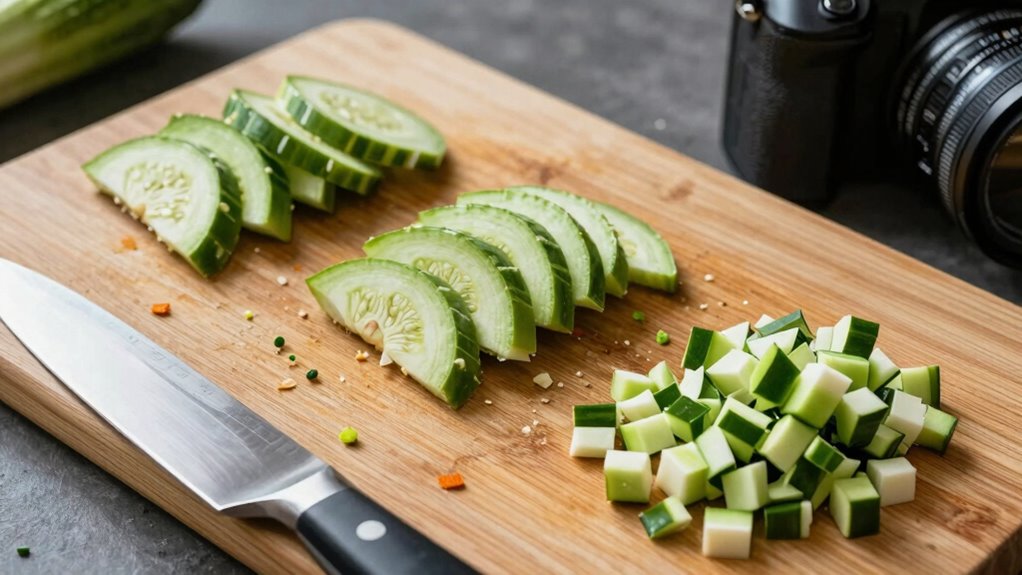
Next, focus on your cutting techniques. Start with simple, controlled motions—think of slicing as a smooth, rocking motion rather than a chopping force. Use the full length of the blade and keep the tip in contact with the cutting board when possible. This helps with stability and precision. As you practice, aim to make uniform cuts, which not only look professional but also cook evenly. To improve your consistency, practice slicing vegetables like carrots or cucumbers into even pieces, paying close attention to your hand movements. Remember, the key to effective cutting techniques is controlled, deliberate motion. Rushing can lead to mishandling the knife or uneven slices, so take your time and focus on precision.
Once you’re comfortable with your grip and cutting techniques, practice maintaining a safe distance between your fingers and the blade. Always keep your guiding hand’s fingertips curled inward and away from the knife’s edge. This simple adjustment dramatically reduces the chance of accidental cuts. Proper knife safety isn’t just about avoiding injuries; it also means keeping your knives sharp, as dull blades require more force and are more likely to slip. Regularly honing and sharpening your knives makes cutting easier and safer, reinforcing good habits during your practice routine. Remember, a sharp knife is safer and more effective because it requires less force and reduces slipping.
As you continue, incorporate different cutting techniques such as julienne, dice, and batonnet, making sure to apply safe handling skills with each. Focus on controlled movements, maintaining a firm grip, and keeping your fingers protected. Over time, these habits will become second nature, and you’ll gain confidence in your ability to handle knives safely and efficiently. Remember, mastering knife skills is a journey—patience and practice are your best tools. Keep practicing these fundamentals daily, and you’ll see progress in your precision, speed, and overall confidence in the kitchen.

Dfito Chef Knife Sets with Roll Bag, 9 Pieces Professional Knife Set, High Carbon Stainless Steel Kitchen Chef Knife Set, Red Pakkawood Handle, Dishwasher Safe
Super Sharp Blade: The super sharp blade is made of high-quality German stainless steel, with a chromium content…
As an affiliate, we earn on qualifying purchases.
As an affiliate, we earn on qualifying purchases.
Frequently Asked Questions
How Long Should I Practice Each Step Daily?
You should practice each step for about 10-15 minutes daily to maintain a good practice schedule and build skill consistency. Consistent, focused practice helps you improve faster and retain techniques better. Break your practice into manageable sessions, ensuring you don’t rush. Over time, gradually increase your practice duration as your confidence and skills grow. Remember, regular, deliberate practice is key to mastering knife skills effectively.
What Common Mistakes Should I Avoid?
To avoid technique errors and timing mistakes, focus on maintaining a proper grip and consistent cutting motion. Don’t rush, as hurrying can lead to uneven slices or slips. Keep your fingers curled away from the blade and practice slow, deliberate cuts before increasing speed. Stay mindful of your technique, and don’t get distracted—these habits help prevent common mistakes and build confidence with your knife skills.
Can I Practice Without Professional Supervision?
Imagine yourself wielding your knife like a painter’s brush, confident and precise. You can practice without supervision if you focus on knife sharpening and kitchen safety. Keep your fingers curled away from the blade, and always cut on a stable surface. Use a sharpening stone regularly to maintain your edge, and avoid rushing. With patience and care, you’ll build skill safely, even without a pro nearby.
How Do I Clean and Maintain My Knives?
To clean and maintain your knives, always hand wash them with warm, soapy water and dry immediately to prevent rust. Regularly sharpen your blades to keep them slicing smoothly, and use a honing steel between sharpenings. For a polished look, occasionally polish the blade with a soft cloth to preserve its shine. Proper maintenance ensures your knives stay sharp, safe, and in excellent condition over time.
What Safety Gear Is Recommended During Practice?
During practice, you should wear protective gloves to safeguard your hands from accidental cuts, especially when you’re just starting out. Cut-resistant sleeves are also highly recommended to protect your arms from slips and nicks. These safety gears help you build confidence and focus on improving your skills without fear of injury. Always make sure your safety gear fits well and is in good condition before practicing your knife skills.
sharp kitchen knives for beginners
As an affiliate, we earn on qualifying purchases.
As an affiliate, we earn on qualifying purchases.
Conclusion
Think of your knife skills as planting a garden. With each practice, you’re nurturing tiny seeds into strong, confident plants. At first, the process feels delicate and slow, but with patience and consistent care, your skills blossom. Soon, chopping and slicing become second nature—like a lush, thriving garden you tend with ease. Keep practicing this routine, and watch your confidence grow, turning your kitchen into a vibrant, skillful landscape.

Intelitopia Complete Knife Sharpening Stone Set – Dual Grit Whetstone 400/1000 3000/8000 Knife Sharpener with Leather Strop, Flattening Stone, Bamboo Base, 3 Non-slip Rubber Bases & Angle Guide
【Complete Knife Sharpening Stone Kit】You don't need to be a Pro to sharpen your blades, all you need…
As an affiliate, we earn on qualifying purchases.
As an affiliate, we earn on qualifying purchases.
cutting board with juice groove
As an affiliate, we earn on qualifying purchases.
As an affiliate, we earn on qualifying purchases.