To segment an orange cleanly using the Supreme Technique, start by peeling the fruit carefully in strips, following its natural curves, to remove the peel and pith neatly. Then, locate the natural divisions between the segments and slide your knife or fingers along these lines. Gently cut along the membranes to release each segment, removing the pith so the flesh is fully exposed. Keep practicing these steps to achieve beautifully clean segments every time. If you continue, you’ll master this smooth technique effortlessly.
Key Takeaways
- Use a sharp knife to cut off the top and bottom of the orange for stability before peeling.
- Peel the orange in strips along natural curves, following the fruit’s contours to reduce mess.
- Locate and gently slide along the natural membrane lines to separate individual segments.
- Carefully cut along the membranes with a knife or fingers to release clean, pith-free segments.
- Remove any remaining pith from the segments for a neat, attractive presentation.
Have you ever wondered how to easily enjoy orange segments without the mess? Mastering the art of segmenting an orange cleanly isn’t just about aesthetics; it’s about enjoying the fruit without the sticky juice dribbling down your fingers. The secret lies in proper peeling techniques and understanding how to store citrus so it stays fresh and easy to work with. Once you get the hang of these methods, you’ll find it effortless to prepare perfect orange segments every time.
Start by choosing a ripe orange that feels firm yet slightly yielding under gentle pressure. Before peeling, consider how citrus storage can impact your fruit’s freshness. Keep oranges in a cool, dry place or in the fridge if you plan to use them later. Proper storage slows down spoilage and makes peeling easier because the fruit remains firm and juicy. If your oranges are stored correctly, they’ll be less likely to slip apart or become overly soft, which can complicate segmenting.
Choose firm, juicy oranges and store them properly for easy, mess-free segmenting.
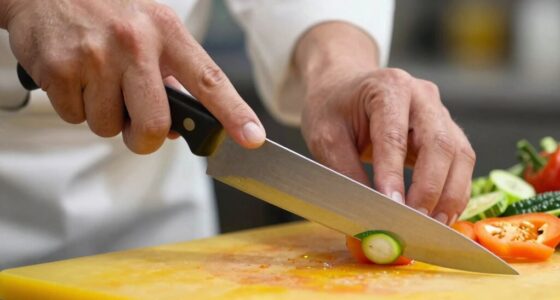
When you’re ready to peel, avoid just ripping into the orange with your hands. Instead, use a sharp knife to cut off the top and bottom of the fruit. This creates a stable base and makes subsequent peeling neater. Now, hold the orange upright on a cutting board and carefully slice away the peel and the white pith in strips, following the natural curve of the fruit. This method minimizes mess and preserves the shape of the orange, making it easier to work with later.
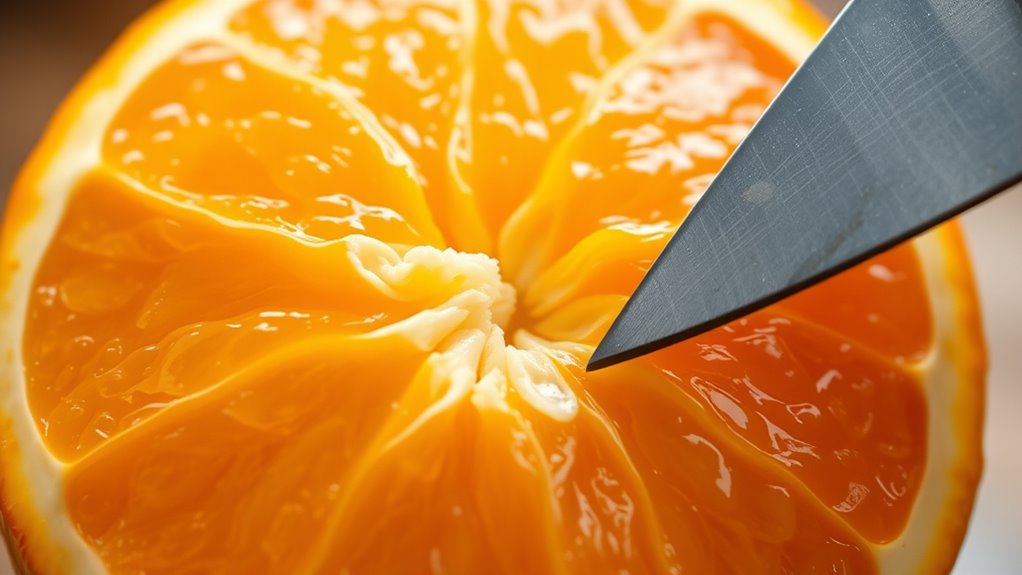
The next step is to segment the orange using the supreme technique, which involves removing the individual membranes to expose the juicy flesh. To do this, hold the peeled orange in your hand or on a plate, and locate the natural divisions between segments. Using your knife or your fingers, carefully slide along these natural lines to loosen each segment. Alternatively, you can gently cut along the membrane to release each piece cleanly, avoiding the bitter pith. This approach results in beautiful, clean orange segments that are perfect for salads, desserts, or snacking without any stringy bits or excess juice dribbling on your hands. Additionally, choosing oranges with the right texture and firmness can make the process even easier.
Practicing these peeling techniques will make the process smoother and quicker over time. Plus, when you store citrus properly, your oranges stay fresh longer and are easier to handle when it’s time to segment. Remember, patience is key—taking your time with each step ensures neat, perfect segments and minimizes mess. Once you’ve mastered these techniques, you’ll find that enjoying orange segments becomes a simple, mess-free pleasure, and your fruit preparation skills will impress everyone at the table.
Frequently Asked Questions
What Tools Are Best for Segmenting an Orange?
You’ll want a sharp paring knife or a utility knife to easily segment an orange, especially to get clean cuts without damaging the zest. A small serrated knife can also help with peel thickness control, allowing you to remove just the outer layer without taking too much zest. Using these tools, you can precisely segment the orange, preserving the zest for flavor or garnish while avoiding unnecessary pith.
Can I Use a Regular Knife for Orange Segmentation?
You can use a regular knife for orange segmentation, but it might not be the safest or most efficient choice. A dull or bulky knife risks slips, potentially causing injury—so knife safety is essential. Plus, a proper technique helps prevent the orange from drying out if you plan to store it afterward. Make sure to handle your knife carefully and store your orange properly to enjoy fresh, juicy segments every time.
How Do I Prevent Juice From Spilling When Segmenting?
To prevent juice from spilling when segmenting, hold the orange firmly over a bowl or plate, letting the segments fall naturally. Use a sharp knife to carefully cut between the citrus membrane, preserving the fruit’s juice and flavor. This technique helps with fruit preservation and works well for various citrus varieties. Keep your knife steady and work slowly to minimize juice loss and enjoy clean, juicy segments every time.
Is There a Technique for Peeling Oranges Quickly?
To peel oranges quickly, master the gentle art of scoring the skin with your fingernail or a small knife around the top and bottom, then peel back the rind in one smooth motion. This technique respects fruit preservation and works best with thinner-skinned citrus varieties. With practice, you’ll find peeling becomes a swift, satisfying ritual, saving you time while keeping your fruit intact and ready to enjoy.
How Do I Remove the Pith Efficiently?
To remove the pith efficiently during orange peeling, start by scoring the skin with a sharp knife, making shallow cuts around the orange’s circumference. Then, gently peel back the skin, focusing on lifting away large sections with minimal pith. Use your fingers or a spoon to carefully scrape off stubborn pith, ensuring you keep the orange’s flesh intact. This method makes orange peeling cleaner and pith removal quicker.
Conclusion
Think of segmenting an orange like carving a delicate sculpture from marble. With patience and precision, you reveal the vibrant, juicy segments hidden inside, much like unveiling a masterpiece. Each careful cut is a chisel strike, removing excess and exposing the beauty within. When you finish, you’re left with a perfectly clean, pristine section—like a work of art. Master this technique, and you’ll always enjoy your orange as beautifully and effortlessly as a sculptor reveals their masterpiece.