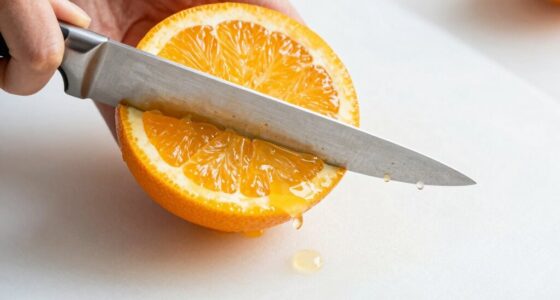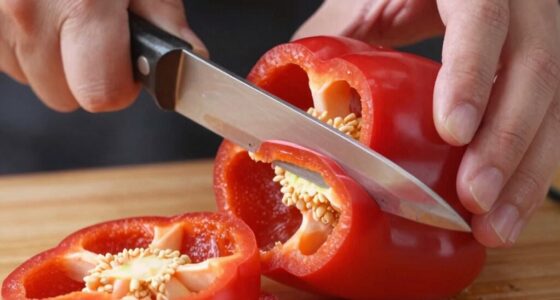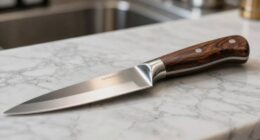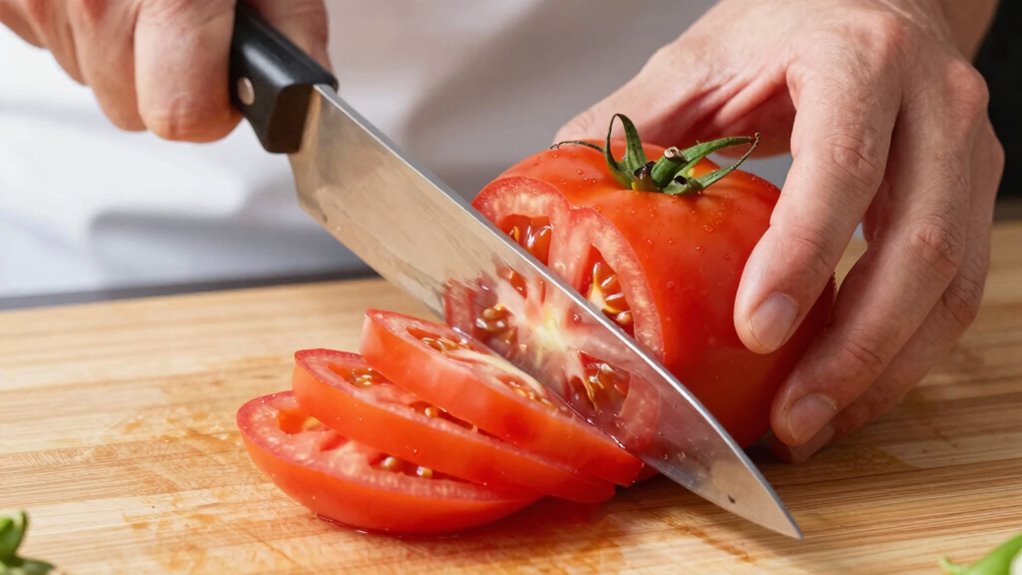

To slice straight every time, start with a sharp knife and a sturdy, flat cutting board. Grip the knife securely using a pinch grip, and keep your fingers curled inward on the guiding hand, with knuckles as a guide. Maintain steady, controlled motions, and practice tracking a straight line. Proper technique and tools make a big difference, so keep practicing—if you stay focused, you’ll master consistent, even slices more easily than you might think.
Key Takeaways
- Use a sharp knife and maintain proper grip to enhance control and accuracy.
- Keep your guiding hand fingers curled inward, using knuckles as a stable guide.
- Work on a steady, non-slip surface to prevent slipping and ensure straight cuts.
- Practice slow, deliberate cuts to develop consistency and improve precision over time.
- Focus on maintaining a steady wrist and controlled motion for even, straight slices.

HOSHANHO Kitchen Knife in Japanese High Carbon Steel, Professional High-Class Chef's Knife 8 inch, Non-slip Ultra Sharp Cooking Knives with Ergonomic Handle
【High-End Japanese Steel Chef's Knife】 HOSHANHO chef's knife is made of Japanese high carbon steel 10Cr15CoMoV, 2x of...
As an affiliate, we earn on qualifying purchases.
Gather the Right Tools for a Precise Cut

To achieve a straight, clean cut, you need the right tools. Start with a sharp knife; dull blades make slicing uneven and dangerous. Regular knife sharpening ensures your blade stays precise, giving you better control and cleaner cuts. Don’t forget to select a good cutting board—preferably wooden or plastic—flat and sturdy enough to hold your ingredients steady. A stable surface prevents slips, helping you guide your knife smoothly. Keep your tools well-maintained and suited to the task, as quality gear makes all the difference. Properly sharpened knives combined with an appropriate cutting board set the foundation for straight, even slices. Investing in these essentials helps you slice confidently and consistently, even if you’re just starting out. Additionally, using proper cutting techniques can further improve your accuracy and safety during slicing. Incorporating ergonomic tools can also reduce hand fatigue and improve precision during extended use.
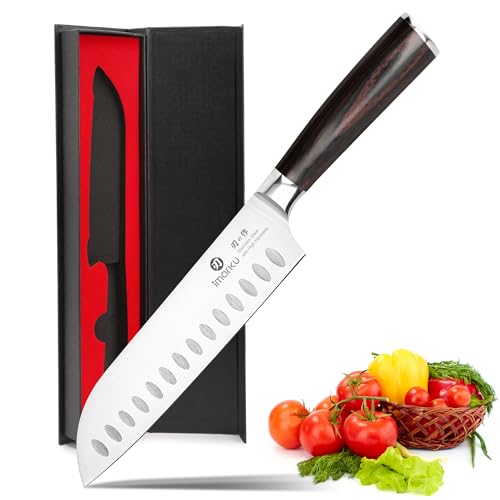
imarku Chef Knife 7 Inch Kitchen Knife Ultra Sharp Santoku Knife - High Carbon Japanese Chefs Knife, Kitchen Gadgets 2025, Apartment Essentials, Birthday Gifts for Him Her, Best Gifts for Women Men
Professional Santoku Knife: This imarku super sharp santoku knife is made of high carbon stainless steel that resists...
As an affiliate, we earn on qualifying purchases.
Prepare Your Workspace and Ingredients
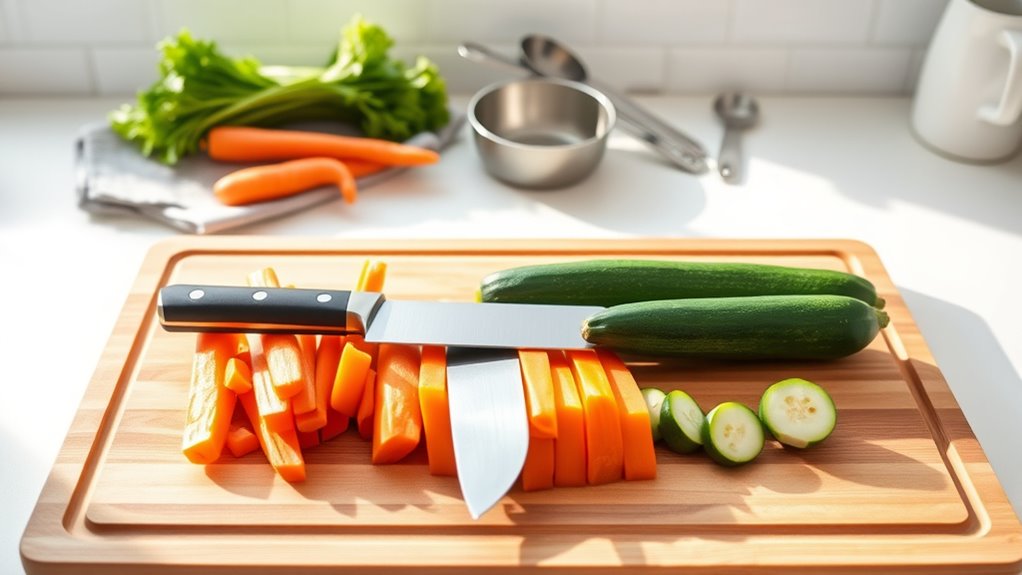
Before you start slicing, preparing your workspace and ingredients is vital. Make certain your kitchen is clean and clutter-free to promote safety and efficiency. Check that your ingredients are fresh; fresh produce slices more easily and evenly. Set up a clean cutting board and organize your knives nearby. Use this table to help with your prep:
| Task | Tip | Benefit |
|---|---|---|
| Clean workspace | Wipe down surfaces before starting | Prevents contamination |
| Ingredient selection | Choose fresh, firm produce | Ensures even slices |
| Proper setup | Arrange tools and ingredients within reach | Speeds workflow |
A tidy, clean workspace paired with fresh ingredients makes straight slicing easier and safer, setting you up for success. Additionally, ensuring proper knife handling techniques can greatly improve your slicing accuracy and safety. Developing consistent cutting methods can help achieve cleaner, more precise slices and improve overall kitchen efficiency. Incorporating visual cues can further assist in maintaining straight cuts, especially for beginners. Also, being aware of the best garage door openers can help secure your home after kitchen tasks are complete.
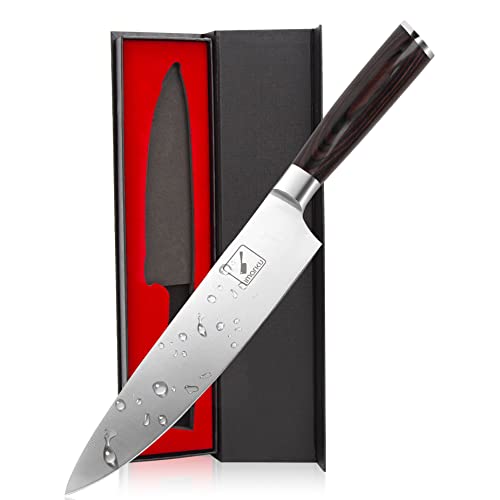
imarku Japanese Chef Knife - Sharp Kitchen Knife 8 Inch Chef's Knives HC Steel Paring Knife, Unique Gifts for Men and Women, Gifts for Mom or Dad, Kitchen Gadgets with Gift Box, Gyutou Knives
High-Carbon Stainless Steel Blade: It is manufactured from high-quality stainless steel that maintains its functionality for a long...
As an affiliate, we earn on qualifying purchases.
Learn Basic Knife Handling Techniques
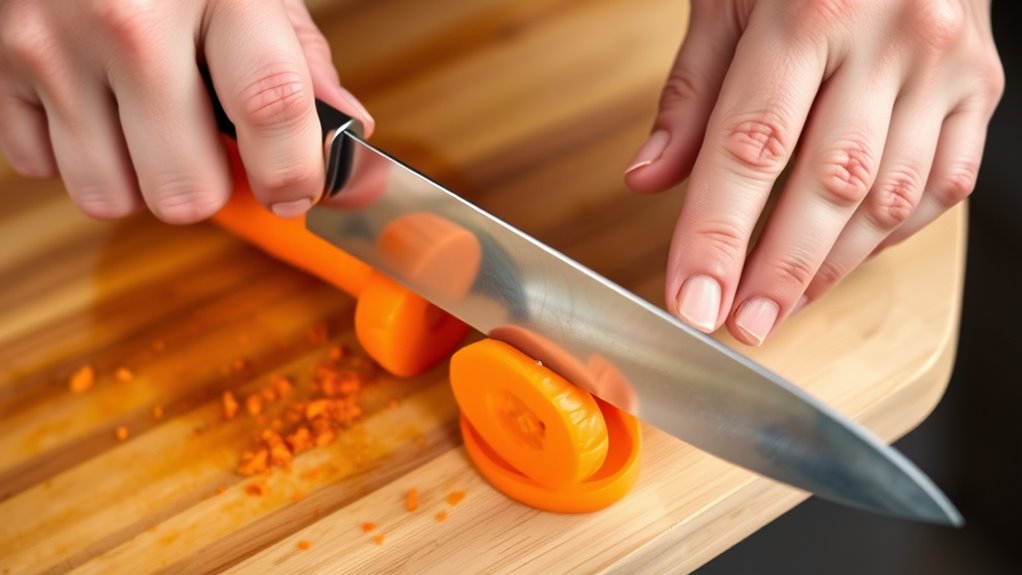
Mastering basic knife handling techniques is essential for safe and efficient slicing. Start by choosing the right knife grip—either the pinch grip or the handle grip—whichever feels more controlled. Keep your fingers curled inward on the hand holding the food, using your knuckles as a guide to prevent cuts. Maintain cutting board safety by securing your cutting surface and avoiding unnecessary movement. Always cut with a stable, controlled motion, applying even pressure. Keep your knife sharp, as dull blades require more force and increase the risk of slips. Practice proper handling consistently to build confidence and precision. Remember, good technique not only speeds up your slicing but also keeps you safe in the kitchen. Incorporating proper knife maintenance ensures your blades stay sharp and effective over time. Additionally, being aware of knife safety tips can further reduce the risk of accidents. Using a vetted home theatre projector can help you create a comfortable environment for practicing your culinary skills at home. Developing a routine that emphasizes consistent technique can significantly improve your slicing accuracy over time. Incorporating technique drills into your practice can help reinforce proper habits and improve your overall skill.

MOSFiATA 8" Super Sharp Professional Chef's Knife with Finger Guard and Knife Sharpener, German High Carbon Stainless Steel EN1.4116 with Micarta Handle and Gift Box
【High Carbon German Stainless Steel Laser-engraved Pattern(Not Damascus Pattern )】 MOSFiATA 8 inch pro chef's knife is made...
As an affiliate, we earn on qualifying purchases.
Use Guides and Hand Positions for Stability
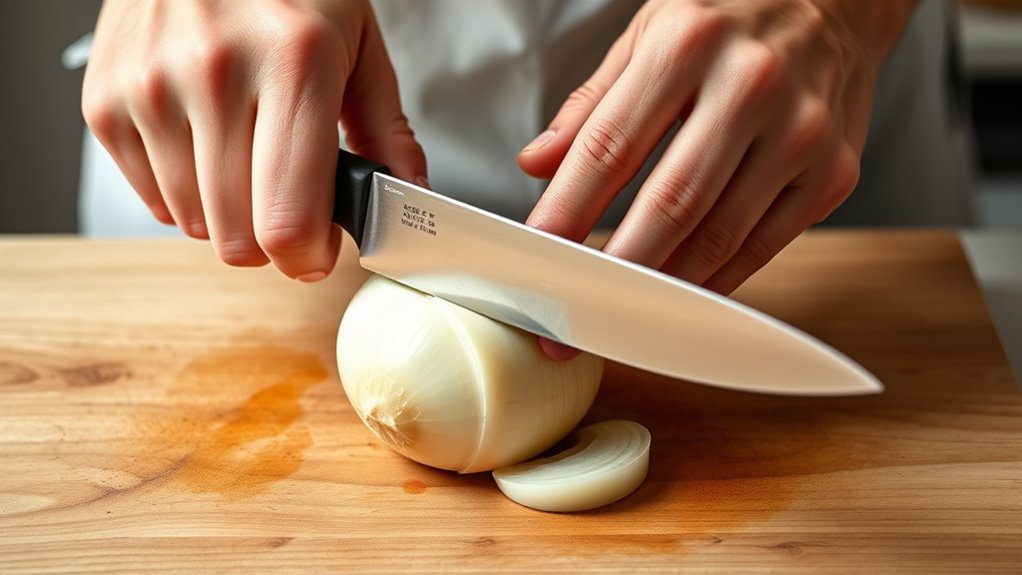
Using guides and proper hand positions is key to maintaining stability while slicing. Your knife grip should be firm but relaxed, allowing control without tension. Position your guiding hand with your fingers curled inward, using your knuckles to guide the side of the knife. This keeps your fingers safe and provides a consistent reference point. Always work on a stable cutting surface to prevent slipping and ensure precise cuts. Placing the item you’re slicing on a non-slip mat or a damp cloth can help. Keep your wrist steady and your grip consistent to avoid jagged or uneven slices. By using these hand positions and guiding techniques, you’ll develop better control, making it easier to slice straight every time. Additionally, choosing the right knife size and style can improve your slicing accuracy and comfort. Incorporating ergonomic designs in your kitchen tools can also reduce fatigue and enhance cutting precision during cutting tasks.
Practice Cutting in a Straight Line
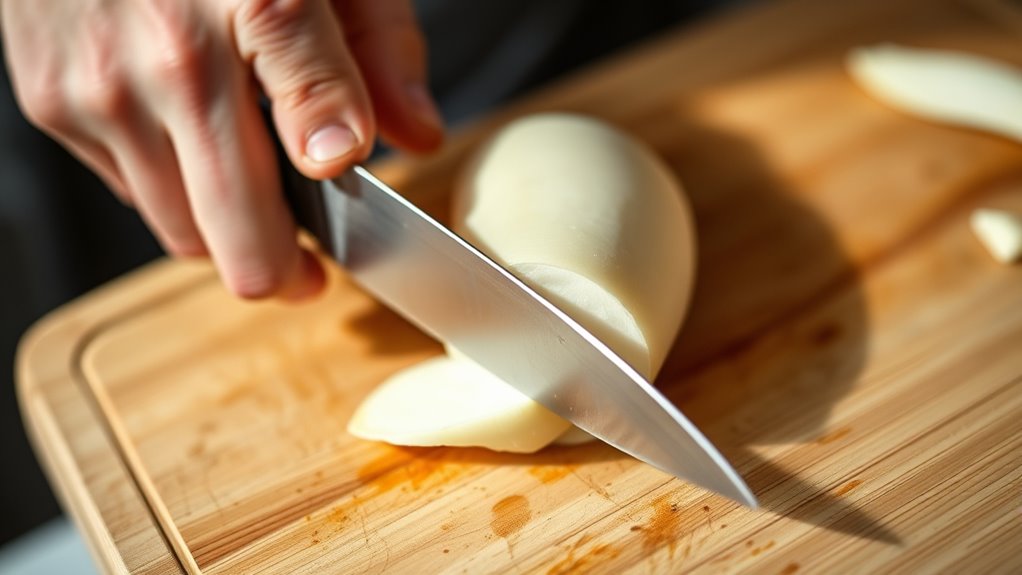
Practicing cutting in a straight line helps build consistency and confidence. Focus on maintaining a steady knife grip, which guarantees control throughout each cut. Adjust your cutting speed; slow and deliberate motions allow better accuracy, while faster cuts can lead to wobbling. To improve, try this table to track your progress:
| Attempt | Knife Grip | Cutting Speed | Straightness | Notes |
|---|---|---|---|---|
| 1 | Firm but relaxed | Slow | Slight wobble | Needs more control |
| 2 | Firm grip | Moderate | Mostly straight | Improve speed |
| 3 | Light grip | Fast | Slight deviation | Focus on stability |
| 4 | Consistent grip | Slow | Straight | Keep practicing |
| 5 | Adjusted grip | Moderate | Excellent | Confidence building |
Additionally, developing a steady hand is essential for maintaining accuracy during each cut. Practicing fine motor skills can also enhance your ability to keep cuts straight. Incorporating proper technique into your routine helps ensure more consistent results over time. Developing muscle memory through repetition is a key component in mastering straight cuts. Engaging in consistent practice routines can further improve your technique over time.
Tips for Maintaining Consistent Thickness
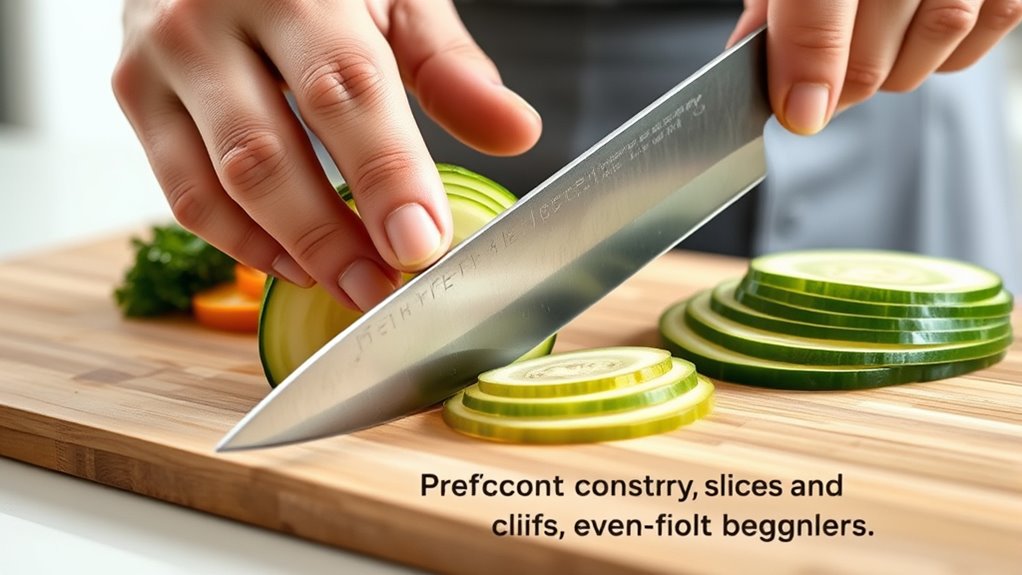
Maintaining consistent thickness while slicing requires careful attention to your knife grip and the cutting surface. Keep a firm yet relaxed grip on the knife to control your cuts precisely. Your knife should stay at a consistent angle to the item, preventing thin or thick spots. Position your cutting surface so it’s stable and level, giving you a steady platform for even slices. Focus on slicing with smooth, continuous motions rather than pressing down hard, which can cause uneven thickness. Use your non-dominant hand to guide the food, keeping it steady and aligned. Regularly check your slices to ensure uniform thickness, adjusting your angle and pressure as needed. Being aware of website performance metrics can help you refine your technique by analyzing your cutting consistency over time. With practice, these habits will help you achieve perfectly even slices every time.
Frequently Asked Questions
What Are the Best Types of Knives for Slicing Straight?
For slicing straight, you’ll want to use sharp, precise knife types like a chef’s knife, slicing knife, or a carving knife. These knives have long, thin blades that make clean, straight cuts. When practicing slicing techniques, opt for a flexible yet sturdy blade to maintain control and accuracy. Keep your knives sharp and use a smooth, consistent motion to achieve straight slices every time.
How Do I Choose the Right Cutting Board Material?
Choosing the right cutting board material helps elevate your culinary experience. Opt for eco-friendly materials like bamboo or recycled wood, which are gentle on your knives and environmentally conscious. Consider ease of cutting board maintenance; smooth surfaces are easier to clean and sanitize. Avoid overly soft or hard surfaces to prevent knife damage. By selecting thoughtfully, you guarantee both longevity for your tools and a sustainable kitchen environment.
Can I Improve My Slicing Skills With Practice Drills?
Yes, you can definitely improve your slicing skills with practice drills. Focus on precision techniques like controlled, consistent movements and proper grip. Incorporate sharpening methods to keep your knife edges ideal, which makes slicing smoother and more accurate. Repeating specific drills helps develop muscle memory, so your slices become straighter and more precise over time. Regular practice with these techniques will boost your confidence and slicing accuracy.
What Safety Precautions Should I Follow While Slicing?
Imagine a sharp knife gliding smoothly through vegetables, the blade’s edge gleaming, ready to cut. Always prioritize kitchen safety by handling knives carefully, keeping your fingers tucked, and cutting away from your body. Regularly maintain your knife’s sharpness, as dull blades require more force and risk slipping. Store knives securely, and wash them separately. By practicing proper knife maintenance and adhering to safety tips, you prevent accidents and keep your kitchen a safe space.
How Do Different Ingredients Affect Slicing Techniques?
Different ingredient textures markedly impact your slicing techniques. For example, firm vegetables like carrots require steady, even pressure to maintain slicing precision, while softer items like tomatoes need gentle, controlled cuts to avoid crushing. Recognizing these textures helps you adjust your grip and slicing speed, ensuring consistent slices. By paying attention to ingredient textures, you improve your control, resulting in cleaner, more precise cuts every time.
Conclusion
Mastering straight slices is like guiding a river’s flow—steady hands and clear focus lead the way. With the right tools, proper technique, and a little practice, you’ll carve through ingredients as smoothly as a sculptor chisels marble. Remember, even the greatest chefs started with simple cuts. Stay patient, keep practicing, and soon your slices will be as precise as a painter’s brushstroke—beautiful, consistent, and effortlessly straight.