
To cut scallions like a pro without crushing them, use a sharp, well-maintained knife and hold the scallions with a claw grip for safety. Carefully slice from the white bulb to the green tops with a gentle, rocking motion, maintaining a consistent angle. Keep your knife in contact with the cutting board and avoid applying too much force. Mastering these techniques will help you achieve perfect slices every time—continue to explore for more expert tips.
Key Takeaways
- Use a sharp, well-maintained knife to ensure clean, precise slices without crushing scallions.
- Hold scallions with a claw grip, curling fingers inward for safety and control.
- Slice with a gentle, rocking motion at a consistent 20-30 degree angle for even, thin cuts.
- Keep the blade in contact with the cutting board and avoid applying excessive force during slicing.
- Wash and thoroughly dry scallions before cutting to prevent slipping and ensure clean, uniform slices.
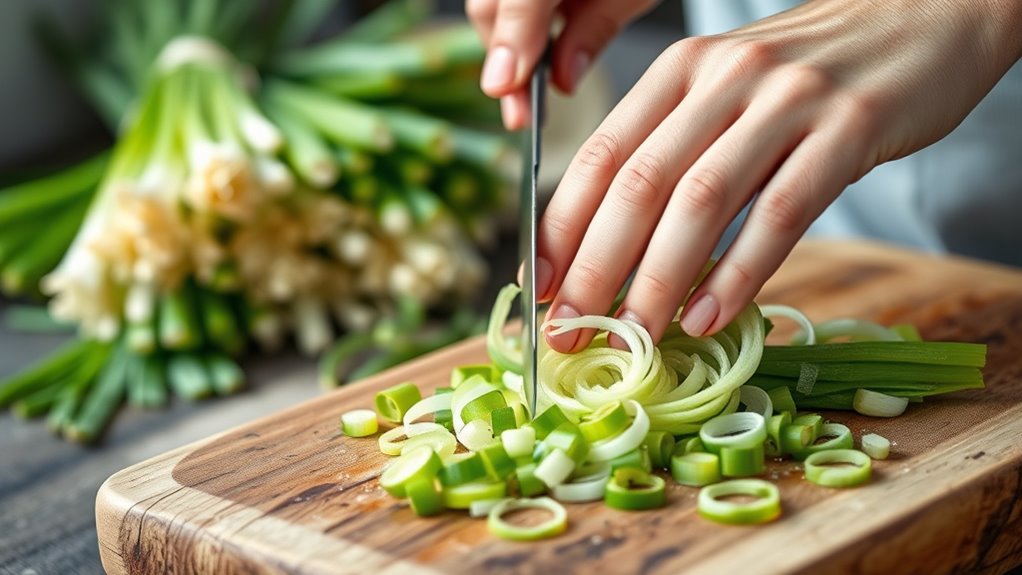
Wondering how to cut scallions properly? The key lies in mastering the right knife techniques while using the best kitchen tools. When you handle scallions, you want clean, even slices that enhance your dishes without crushing or damaging the delicate green tops. To achieve this, start by selecting an appropriate knife—preferably a sharp chef’s knife or a paring knife. A well-maintained, sharp blade ensures you can slice smoothly without applying excessive force, which often leads to crushing the scallions instead of cutting through them.
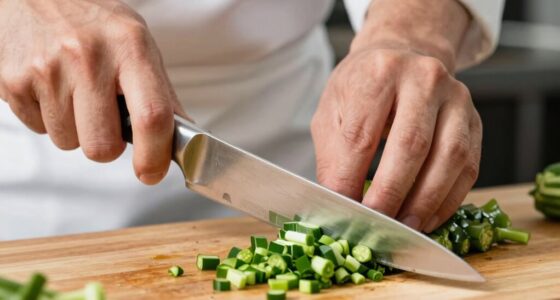
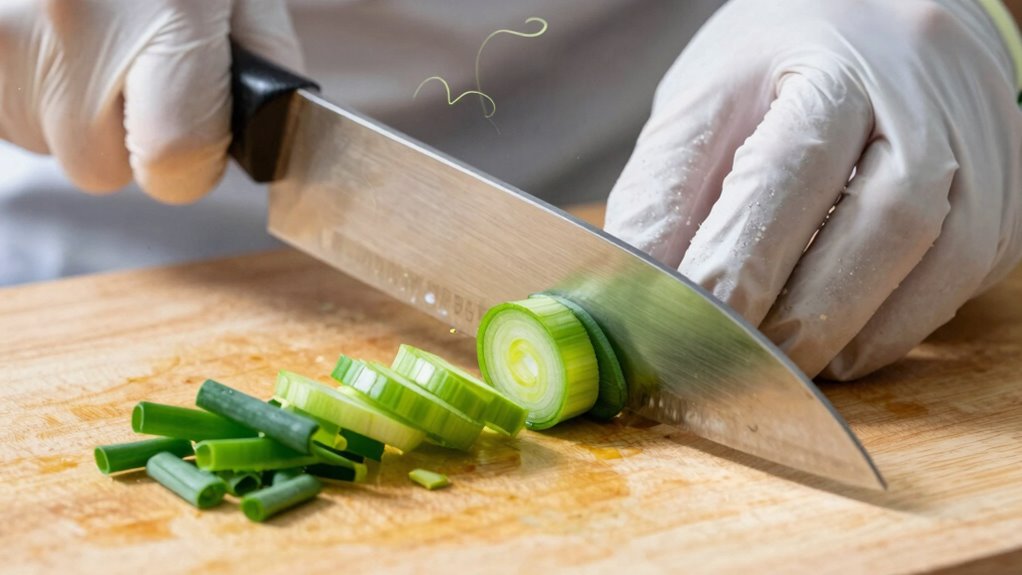
Before you begin, wash the scallions thoroughly to remove any dirt or grit. Trim off the root ends and any wilted or damaged parts of the green tops. For uniform slices, hold the scallion securely with your non-dominant hand, curling your fingers inward to create a claw grip. This technique keeps your fingertips safe and allows you to guide the knife precisely. Using controlled, gentle motions, make even cuts across the scallion’s length, working from the white bulbous end through to the vibrant green tips. Remember, the goal is to use a slicing motion rather than pressing down hard, which can crush the tender parts.
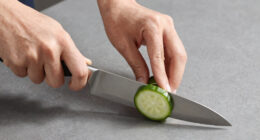
Hold the scallion with a claw grip and slice gently from white bulb to green tips.
When it comes to knife techniques, it’s all about finesse. Use a rocking motion with your wrist to glide the blade through the scallion, maintaining contact with the cutting board at all times. This technique provides cleaner cuts and reduces the risk of crushing. Keep the knife angle consistent—about 20 to 30 degrees—to ensure thin, even slices. As you get more comfortable, you can adjust your grip and motion to increase speed without sacrificing precision.
Your choice of kitchen tools makes a big difference. A sharp, well-balanced knife offers better control and requires less force, making the process safer and more efficient. Some cooks prefer using a serrated knife for scallions, especially if the green tops are thick or tough, but generally, a straight-edged chef’s knife performs best for fine slicing. Always keep your knives sharpened regularly to make cutting easier and to prevent accidents caused by slipping.
Practicing these knife techniques with the right kitchen tools will make slicing scallions feel natural and effortless. Over time, you’ll develop a steady hand that can produce uniform, thin slices perfect for garnishing salads, soups, or stir-fries. The key is patience and precision—by focusing on your technique and using sharp, quality tools, you’ll cut scallions like a pro, avoiding crushing and damaging those beautiful, flavorful green stalks.

DDF iohEF Kitchen Knife, Chef's Knife In Japanese Stainless Steel Professional Santoku Cooking Knife, 7 Inch Non-slip Ultra Sharp Knife with Ergonomic Handle
【Premium Japanese Stainless Steel Chef's Knife】: This chef's knife is made of professional Japanese stainless steel with a…
As an affiliate, we earn on qualifying purchases.
As an affiliate, we earn on qualifying purchases.
Frequently Asked Questions
Can I Use a Food Processor to Cut Scallions?
You can use a food processor to cut scallions, but be cautious about food processor safety. Overprocessing can turn scallions into mush, so use the pulse function and short bursts. For best scallion preparation tools, a sharp knife is ideal, but if you prefer a food processor, make sure it’s clean and dry. This method saves time, but always watch to avoid crushing or over-chopping your scallions.
What’s the Best Way to Store Leftover Scallions?
Think of scallion storage as keeping a treasure safe. To preserve leftover scallions, wrap them loosely in a damp paper towel and place them in a plastic bag or airtight container. Store in the crisper drawer of your fridge, where they stay fresh longer. Proper leftover preservation prevents wilting and keeps your scallions vibrant, ready to add flavor to your dishes whenever you need them.
How Do I Prevent Scallions From Slipping While Cutting?
To prevent scallions from slipping while cutting, you should use a proper knife grip, gripping the handle firmly and securely. Keep your non-dominant hand in a claw shape to hold the scallions, guiding the knife safely. Make certain your cutting surface is stable and flat. By maintaining a steady grip and using a stable cutting surface, you’ll have more control, making the process safer and more precise.
Are There Any Health Benefits to Eating Scallions?
Eating scallions boosts your health with their impressive nutritional benefits, like vitamins A, C, and K, which help support your immune system. Imagine your body strengthening each time you add these vibrant green bulbs to your meals. Scallions also contain antioxidants that fight free radicals, promoting overall wellness. Incorporating scallions into your diet is a simple, flavorful way to support immune health and enjoy a tasty, nutrient-rich boost.
Can I Use the Same Technique for Different Types of Onions?
Yes, you can use similar knife techniques for different onion varieties, but modify your approach based on their size and texture. For example, use a sharp knife and precise slicing for softer onions like red or yellow, while tougher onions like shallots may require a bit more pressure. Always keep your knife sharp and use proper grip to guarantee safety and even cuts, regardless of the onion type.

Intelitopia Complete Knife Sharpening Stone Set – Dual Grit Whetstone 400/1000 3000/8000 Knife Sharpener with Leather Strop, Flattening Stone, Bamboo Base, 3 Non-slip Rubber Bases & Angle Guide
【Complete Knife Sharpening Stone Kit】You don't need to be a Pro to sharpen your blades, all you need…
As an affiliate, we earn on qualifying purchases.
As an affiliate, we earn on qualifying purchases.
Conclusion
Now you’re ready to cut scallions like a pro, without crushing them. Remember, keep your knife sharp and use a gentle rocking motion for clean, even slices. Imagine the scallion as a tiny tree—start from the root and work your way up, slicing from top to bottom. With these tips, your scallions will look professionally cut every time, adding perfect flair to your dishes without any crushed bits. Just practice, and you’ll nail it!

Stainless Steel Green Onion Slicer 2 PCS, Multi-Blade Kitchen Herb Cutter, Professional Scallion Shredding Tool Shred Silk The Knife, Upgrade Stainless Steel Chopped Green Onion Knife Vegetable
VERSATILE DESIGN: Set includes 2 professional-grade stainless steel slicers with multiple sharp blades for precise cutting of green…
As an affiliate, we earn on qualifying purchases.
As an affiliate, we earn on qualifying purchases.
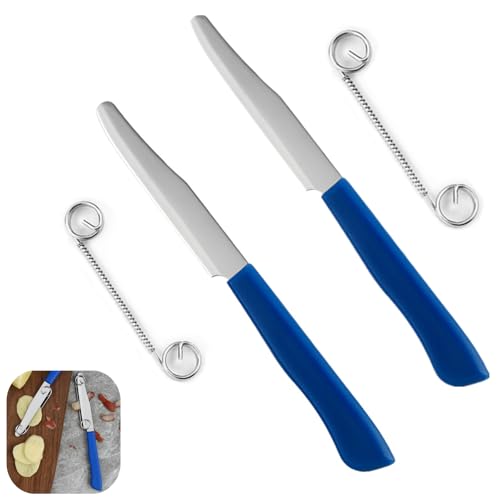
2 Pcs Julienne Peeler Vegetable Peeler, Stainless Steel Vegetable Julienne Peeler and Slicer, Quick Slicing Knife Household Spring Fruit Knife, Veggie Peelers with Removable Spring
Revolutionize Your Kitchen with the Ultimate 3-in-1 Julienne Peeler: Experience the ultimate convenience in food prep with our…
As an affiliate, we earn on qualifying purchases.
As an affiliate, we earn on qualifying purchases.