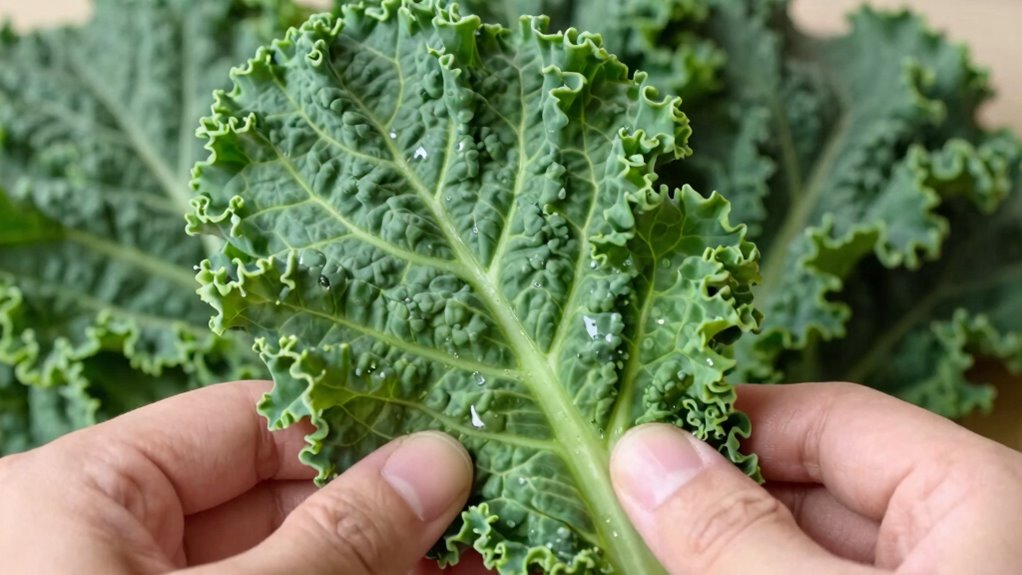

To de-stem kale without tearing the leaves, hold the kale by the stem with one hand and pinch the leaf at the base of the stem with your other hand. Gently bend the leaf backward, allowing it to detach naturally from the stem with minimal force. This quick, gentle motion keeps the leaves intact and makes prep easier. If you want to master this simple technique and save time, there’s more to discover below.
Key Takeaways
- Hold the kale leaf near the bottom of the stem with one hand for stability.
- Pinch the base of the stem with your other hand to gently detach the leaf.
- Gently bend the leaf backward to encourage the stem to release naturally.
- For tough stems, trim or discard with kitchen scissors instead of tearing.
- Use a smooth, controlled motion to prevent tearing or damaging the leaf during removal.
De-stemming kale is a simple step that can considerably improve the texture and flavor of your dishes. Once you’ve picked out fresh, vibrant leaves, the next step is removing the tough stems. Doing this efficiently saves you time and makes your kale more enjoyable to eat, especially in healthy recipes where the texture matters. Plus, knowing how to de-stem kale properly helps you store it better and keeps it fresh longer, so you can enjoy it in salads, smoothies, or sautéed dishes throughout the week. Proper kale preparation is essential for maximizing flavor and nutrients in your meals.
De-stemming kale improves texture, flavor, and storage, making it easier and more enjoyable to incorporate into your meals.
To start, hold a kale leaf by the stem with one hand, gripping it firmly near the bottom. With your other hand, pinch the leaf at the base of the stem near the leaf blade. Gently bend the leaf backward, and you’ll notice that the leaf naturally separates from the stem. This method is quick and gentle, preventing tears or damage to the leaf. As you do this, you’ll find the stem easily detaches, leaving behind only the tender, leafy part. If the stem feels particularly tough or woody, you might want to trim off the very end or discard it altogether. Removing the stems before storing kale allows you to keep the leaves fresh longer and makes meal prep faster later on.
When it comes to kale storage, removing the stems plays a crucial role. Stems tend to hold moisture, which can lead to quicker spoilage if left attached. Once de-stemmed, pile the leaves loosely in a plastic bag or airtight container lined with a paper towel. This helps absorb excess moisture and keeps the leaves crisp. Properly stored, kale can last up to a week, giving you plenty of time to incorporate it into your healthy recipes. Whether you’re tossing kale into a salad, blending it into a smoothie, or sautéing it with garlic and olive oil, de-stemming first ensures a more uniform texture and better flavor.
Mastering this simple technique means you spend less time tearing leaves apart or dealing with chewy, fibrous stems in your dishes. It streamlines your meal prep process and encourages more frequent consumption of kale, which is packed with nutrients. Plus, by storing kale correctly after de-stemming, you maximize its freshness and nutritional value. Whether you’re aiming for quick snacks or elaborate healthy recipes, the ease of de-stemming kale makes cooking more enjoyable and efficient. Once you get the hang of it, you’ll wonder why you ever hesitated to prepare kale this way — it’s a small step that makes a big difference in your kitchen.

Herb Stripper 9 holes, Luxiv Stainless Steel Kitchen Herb Stripping Tool Loose Leaf Kale Razor Metal Leaf Pealer for Kale, Chard, Collard Greens, Thyme, Basil, Rosemary
Safe and Durable: Herb stripper is made of food-grade 430 stainless steel, and safe PP protection cover. Anti-rust…
As an affiliate, we earn on qualifying purchases.
As an affiliate, we earn on qualifying purchases.
Frequently Asked Questions
Can I De-Stem Kale With a Knife Instead of My Hands?
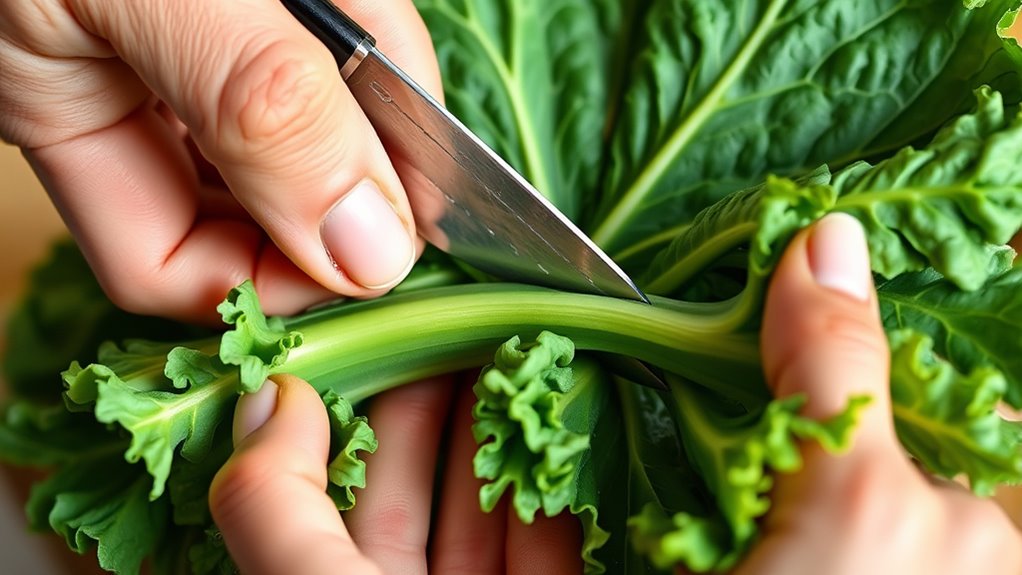
Yes, you can de-stem kale with a knife instead of your hands. For knife de-stemming, hold the kale firmly by the leaves and slide the knife along the stem, cutting it away smoothly. This method is quick and effective, especially if you have a lot of kale to prepare. Just be careful with the knife to avoid injuries, and you’ll efficiently remove the kale stems without tearing the leaves.
What Is the Best Way to Store Kale After De-Stemming?
Think of kale preservation as locking in a treasure chest of freshness. After de-stemming, store your kale in an airtight storage container to keep it crisp and vibrant. Wrap the leaves in a damp paper towel, then place them in the container, sealing out air and moisture. Keep it in the fridge’s crisper drawer, where cool, steady conditions preserve the kale’s lively flavor and texture for up to a week.
How Do I De-Stem Kale Quickly for Large Batches?
To de-stem kale quickly for large batches, grab a sharp kitchen shears or a paring knife to trim the stems efficiently. Hold a bunch of kale by the stem end and run your tool along the stem to strip the leaves away fast. This method streamlines the kale preparation process, saving you time and effort, especially when handling big quantities for salads, smoothies, or cooking.
Is It Necessary to De-Stem Kale for All Recipes?
Remember, “The proof of the pudding is in the eating.” You don’t always need to de-stem kale for every recipe, especially if you’re using it in smoothies or soups. For salads or sautéed dishes, removing the stems improves texture and taste. Use these kale preparation tips to decide when de-stemming is necessary. In culinary uses of kale, de-stemming enhances the overall flavor and makes your dishes more enjoyable, but it’s not always required.
Can Frozen Kale Be De-Stemmed Easily?
Yes, frozen kale can be de-stemmed easily with the right preparation tips. Thaw it slightly so the leaves soften, making the stems easier to grip and tear away. You can also run your fingers along the stems to loosen leaves, or use kitchen scissors for quick removal. Keep in mind, frozen kale may be more fragile, so handle it gently to avoid tearing the leaves.

Chef'n LooseLeaf Kale, Chard, Collard Greens and Herb Stripper
TIME SAVER: The LooseLeaf strips a variety of leaves from their stems in seconds, from big leafy greens…
As an affiliate, we earn on qualifying purchases.
As an affiliate, we earn on qualifying purchases.
Conclusion
Now that you know how to de-stem kale effortlessly, you’ll find cooking and eating it much more enjoyable. Imagine preparing a vibrant kale salad for friends, easily removing stems without tears or fuss. For example, Sarah tried this method and loved how quick and neat her prep was, making her dinner both healthy and stress-free. Once you master this simple trick, kale becomes a delicious, hassle-free addition to any meal—so go ahead, enjoy your fresh, tasty greens!

Chef'n Herb Scissors with Stainless Steel Blades – Sharp Multipurpose Kitchen Scissors for Chopping Fresh Herbs, Kale, Greens – Essential Cooking Tool with Comfortable Handle
Designed for Herbs & Greens: These kitchen scissors are crafted to handle fresh herbs, kale, and leafy greens…
As an affiliate, we earn on qualifying purchases.
As an affiliate, we earn on qualifying purchases.

SILIVO Fruit Storage Containers for Fridge (3 Pack) – 1.5L Produce Saver Containers for Refrigerator with Removable Drain Tray Keep Fresh for Produce, Bacon, Fruits and Vegetables
Keep Produce Fresh Longer: Produce containers for fridge with lids helps prevent spoilage, keep fruits and vegetables crisp…
As an affiliate, we earn on qualifying purchases.
As an affiliate, we earn on qualifying purchases.