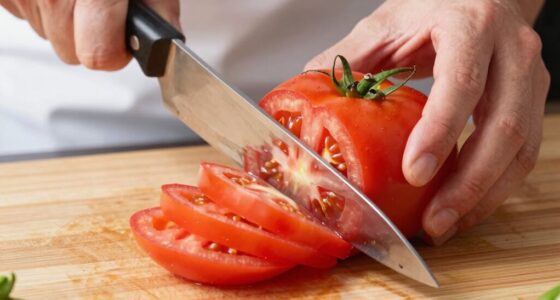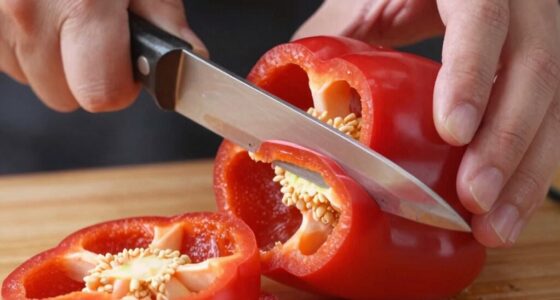
To cut faster without risking injury, master a proper grip that’s firm but relaxed, and guarantee your blades stay sharp to cut effortlessly. Develop a steady rhythm by practicing controlled, consistent strokes, and focus on smooth, deliberate movements. Keep your workspace organized so everything is within easy reach, and always follow safety habits like keeping fingers tucked away and wearing protective gear. Stick with these techniques, and you’ll discover the true speed and safety that come from proper technique.
Key Takeaways
- Keep knives sharp and well-maintained to ensure smooth, efficient cuts with less force.
- Develop a steady cutting rhythm using tools like a metronome for consistent speed and control.
- Use proper ergonomic techniques, including a stable stance and fingers tucked away, to prevent injuries.
- Organize your workspace with accessible tools and designated zones to reduce movement and increase efficiency.
- Focus on safety habits, such as correct hand positioning and protective gear, to cut faster without risking cuts.
Master the Proper Grip and Knife Handling Techniques
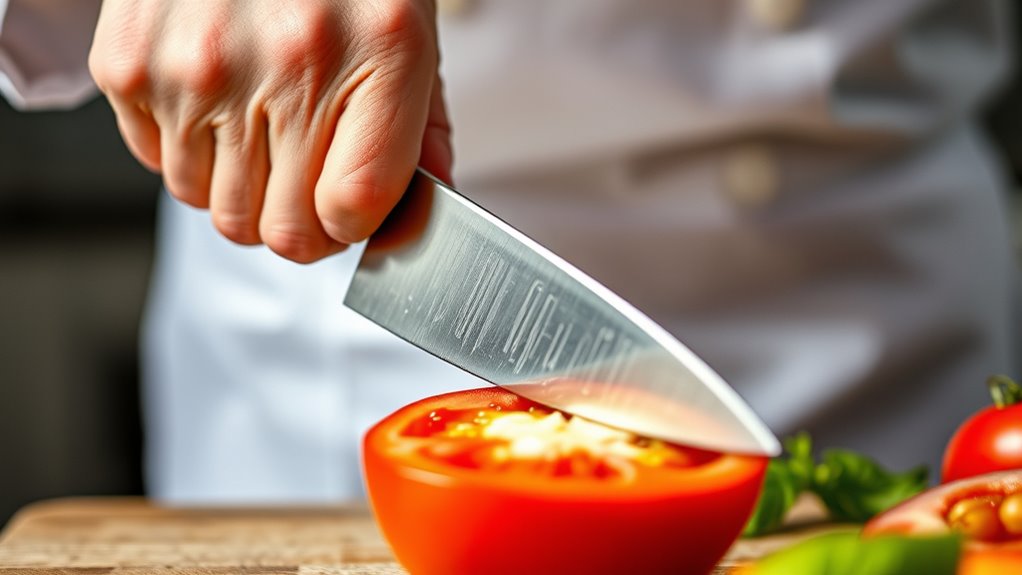
To cut faster and more efficiently, you need to master the proper grip and knife handling techniques. Your grip pressure should be firm enough to maintain control but not so tight that it causes fatigue. Find a comfortable hold that allows fluid motion without unnecessary tension. Pay attention to your cutting angles; a consistent, sharp angle ensures cleaner cuts and smoother slices. Keep the knife steady and aligned with your target, avoiding awkward wrist movements. Practice maintaining a relaxed grip while applying just enough pressure to guide the knife through ingredients. Proper grip pressure and controlled cutting angles help you move swiftly without sacrificing precision or safety. Additionally, using a durable survival knife designed for precision can enhance your efficiency. Developing a proper cutting technique builds muscle memory that allows for faster, more confident cuts. Being aware of cutting ergonomics can help prevent fatigue and injury, allowing you to maintain speed over longer periods. Incorporating techniques for safe cutting ensures you can work quickly without risking cuts or strain. Consistently practicing these methods will also improve your overall cutting speed, making your food prep more efficient. Mastering these basics sets a strong foundation for faster, more confident cutting.
Use the Right Knife for the Task
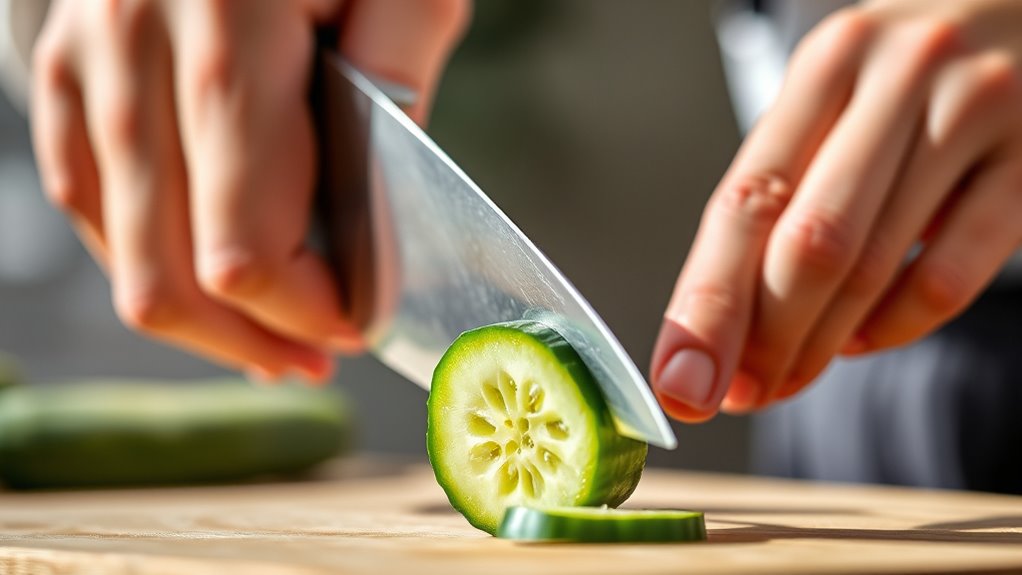
Using the right knife can considerably speed up your prep work. Keep your knives sharp because dull blades slow you down and increase effort. Match each knife to its specific task to cut efficiently and safely. Proper piercing care and hygiene helps prevent infections that could delay your work. Additionally, selecting the appropriate tip size for your spray gun ensures a smoother finish and reduces the need for rework, ultimately saving you time. Consistent auditory feedback during practice can also enhance your technique and efficiency. Being aware of blade maintenance routines further ensures your tools perform optimally and prolong their lifespan.
Sharpness Matters More
Have you ever noticed how a dull knife makes cutting more difficult and less precise? Sharpness is key to faster, safer cuts. When your knife stays sharp, you benefit in several ways:
- Blade longevity: A sharp knife causes less stress, extending its lifespan.
- Efficiency: Sharp blades cut smoothly, reducing effort and speed up your work.
- Sharpening frequency: Regular sharpening keeps your knife performing at its best, preventing dullness that slows you down.
- Understanding Free Floating systems can help you select the best maintenance routine for your knives, ensuring consistent sharpness. Additionally, utilizing European cloud servers can provide the reliable infrastructure needed to support your maintenance and operational needs efficiently.
Using a dull knife forces you to apply more pressure, increasing fatigue and risk. Investing in maintaining sharpness ensures cleaner cuts, saves time, and improves safety. Remember, a well-sharpened knife is your fastest tool—less effort, more precision.
Match Knife to Task
Choosing the right knife for each task can considerably improve your efficiency and the quality of your cuts. When you match your knife to the task, you benefit from better knife ergonomics, reducing strain and increasing control. For example, use a smaller paring knife for intricate work, and a larger chef’s knife for chopping and slicing. Properly selecting knives helps you maintain a good cutting posture, keeping your wrist straight and reducing fatigue. This not only speeds up your work but also minimizes the risk of accidents. Always assess the task and choose a knife designed for it, rather than forcing a single knife to do everything. The right match enhances your speed, comfort, and safety, making your cutting more precise and less tiring. Being mindful of cutting posture ensures you stay relaxed and focused, which can boost both safety and efficiency. Additionally, understanding knife types and their uses can help you make better choices and work more confidently. Taking the time to learn proper knife handling techniques can further improve your speed and safety in the kitchen.
Develop a Consistent and Efficient Cutting Rhythm
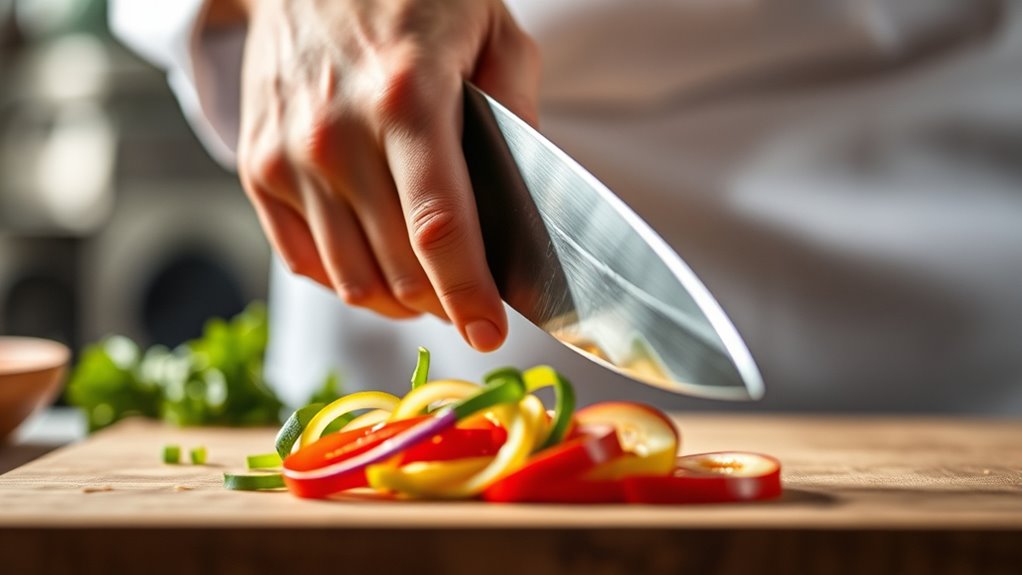
To cut more efficiently, establishing a consistent and smooth rhythm is essential. Your cutting cadence should become natural, reducing hesitation and unnecessary adjustments. Focus on maintaining a steady pace that matches the task at hand. To develop this, try these steps:
- Find a comfortable rhythm by practicing slow, deliberate cuts first.
- Gradually increase your cutting speed while keeping the same cadence.
- Use a metronome or count out loud to lock in your rhythm and ensure consistency.
A consistent rhythm helps you stay controlled and precise, preventing mistakes or slips. When your cutting cadence becomes second nature, you’ll cut faster without sacrificing safety or accuracy. This rhythm becomes your foundation for safer, more efficient cutting.
Practice Proper Cutting Techniques to Increase Speed
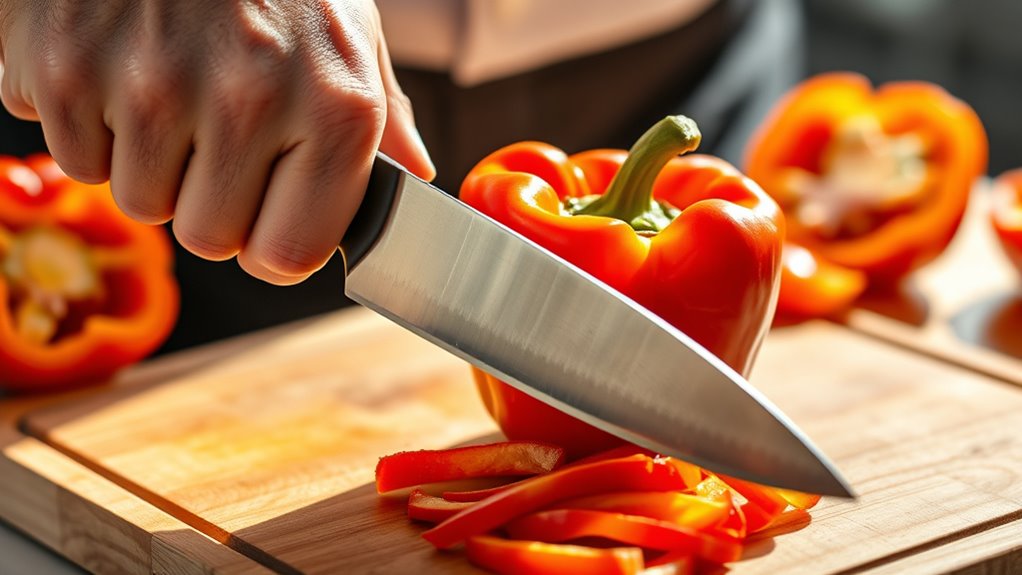
Practicing proper cutting techniques is essential for increasing your speed without sacrificing safety or accuracy. Start by establishing a comfortable cutting stance that gives you stability and control. Keep your feet shoulder-width apart and slightly bend your knees for better balance. Your knife grip should be firm but relaxed, with a secure hold that allows fluid movement. Focus on a consistent motion, using your entire arm rather than just your wrist, to maintain steady, controlled cuts. Keep your fingers tucked in and away from the blade to prevent injuries. Practice slicing with deliberate, smooth strokes, gradually increasing your speed as you become more confident. Proper technique minimizes fatigue and reduces the risk of accidents, enabling you to cut faster with precision. Additionally, maintaining sharp blades reduces effort and improves cutting efficiency.
Keep Your Knives Sharp for Safer, Faster Cuts
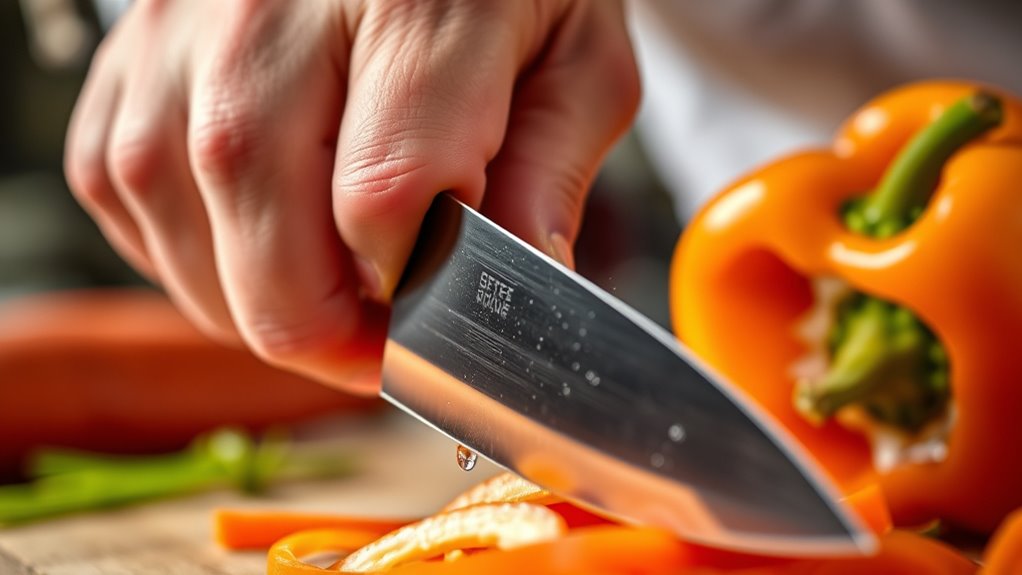
Have you ever noticed how a dull knife slows down your prep work and increases the risk of accidents? Keeping your knives sharp is essential for safer, faster cuts. Proper knife maintenance guarantees your blades stay effective and reduces strain on your hands. To maximize cutting ergonomics and safety, follow these tips:
- Regularly hone your knives to maintain a sharp edge.
- Use a good-quality sharpening stone or tool to refresh dull blades.
- Store knives properly to prevent dulling and damage.
- Organization habits can help you remember to perform regular knife maintenance routines.
Sharp knives require less force, allowing you to cut more precisely and comfortably. This not only speeds up your prep work but also minimizes the risk of slips and cuts. Consistent knife maintenance keeps your tools in top condition, making every cut quicker and safer.
Organize Your Workspace for Maximum Efficiency
To cut faster, you need a workspace that works with you, not against you. Clear out clutter, arrange your tools for quick access, and create dedicated zones for different tasks. These simple steps keep your workflow smooth and your cuts swift. Additionally, maintaining sharp knives ensures cleaner cuts and reduces the risk of injury, helping you work more efficiently. Incorporating ergonomic tools can further improve your cutting speed and comfort. Optimizing your work environment minimizes unnecessary movements and distractions, allowing you to focus entirely on your task. Paying attention to workspace organization ensures every tool is in its place, so you spend less time searching and more time cutting. Moreover, understanding tool maintenance helps prolong the lifespan of your equipment and keeps it performing at its best.
Clear Your Clutter
Clearing your clutter is the first step toward creating an efficient workspace that helps you cut faster. A tidy area boosts focus and reduces mistakes, especially when it comes to ingredient prep and maintaining good kitchen aesthetics. To get started:
- Remove unnecessary items from your workspace, keeping only essentials within reach.
- Organize tools and ingredients so they’re logically arranged for quick access.
- Clean surfaces thoroughly to prevent cross-contamination and create a visually appealing environment.
- Practice consistent documentation and labeling to streamline your workflow and ensure nothing gets misplaced.
- Incorporate essential oils for focus, such as peppermint or lemon diffused into your workspace, to enhance alertness and concentration.
- Understanding best storage practices can help maintain an organized environment and prevent clutter from accumulating over time. Additionally, implementing clutter control techniques can sustain your organized space and improve overall efficiency.
- Applying visual organization methods, like color coding or labeled containers, can further optimize your workspace and reduce search time.
Optimize Tool Placement
Are your tools arranged for quick access? Proper placement can drastically improve your cutting speed. Keep your most-used tools within easy reach, ideally close to your workspace. Use ergonomic handles to reduce fatigue and improve control, allowing for smoother cuts. Organize tools so that finger positioning stays natural and comfortable, minimizing unnecessary movement. Place scissors, knives, and other cutting tools in a consistent spot, so you don’t waste time searching. Consider angled or dedicated holders to keep tools upright and visible. Clear organization minimizes interruptions, keeps your flow steady, and helps you maintain precise finger positioning. When everything is within arm’s reach and ergonomically arranged, you’ll cut faster and safer—speed and efficiency become second nature.
Designate Work Zones
Have you ever noticed how cluttered workspaces slow you down? Organizing your workspace into designated work zones can boost your speed and safety. Start by creating clear zones for your cutting area, tools, and supplies. This helps you:
- Keep everything within reach in the cutting area, reducing unnecessary movement.
- Assign specific tools to their own work zone to avoid searching.
- Maintain a clean, clutter-free environment that minimizes distractions.
Designate each zone clearly, so you always know where everything belongs. This setup prevents your work from becoming chaotic, allowing you to focus on your cut and finish faster. A well-organized workspace with dedicated work zones maximizes efficiency and keeps you safe from accidental cuts.
Incorporate Safety Habits to Prevent Accidents
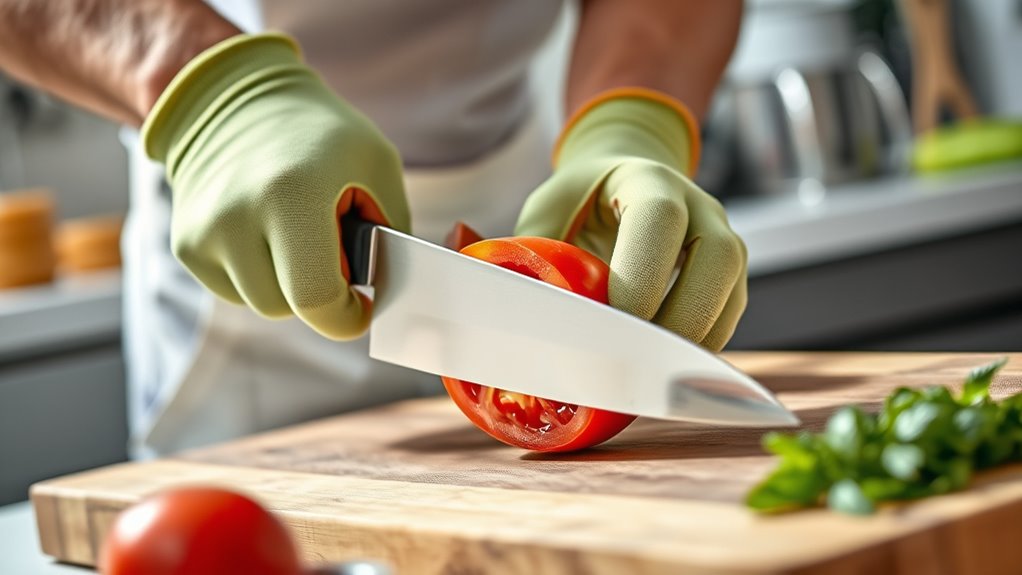
To prevent accidents and guarantee a safer cutting process, you need to develop and consistently follow safety habits. Always verify proper hand positioning to keep your fingers away from the blade’s path. Use your non-cutting hand to guide the material securely, but never place your fingers in the cutting line. Wearing protective gear, like cut-resistant gloves and safety glasses, adds an extra layer of safety. Before starting, double-check your tools for stability and sharpness, and keep your workspace clear of clutter. Stay focused, avoid distractions, and take your time with each cut. Developing these habits minimizes the risk of injury and helps you maintain a faster, more efficient workflow without compromising safety.
Frequently Asked Questions
How Can I Improve My Cutting Speed Without Sacrificing Safety?
To improve your cutting speed safely, focus on maintaining a proper knife grip that offers control and stability. Practice precise, confident movements to enhance cutting precision, which naturally increases speed. Use smooth, consistent motions and avoid rushing, as this reduces the risk of accidents. With steady practice, you’ll find your speed improves without compromising safety, all while keeping your cuts clean and accurate.
What Are Common Mistakes That Slow Down Cutting Speed?
Ever wonder why your cuts take longer than they should? Poor blade alignment and excessive grip pressure slow you down. Keep your blade straight and steady, ensuring smooth, efficient cuts. Loosen your grip to prevent fatigue and maintain control, instead of squeezing tightly. These mistakes create resistance and wobbling, reducing speed. Focus on proper blade alignment and a relaxed grip to cut faster without sacrificing safety and precision.
How Does Knife Weight Affect Cutting Efficiency?
Knife weight considerably impacts your cutting efficiency by affecting balance and control. A well-balanced knife feels lighter in your hand, allowing smoother, faster cuts. Heavier knives can improve power but may tire your hand, reducing precision. Make certain your knife has proper blade sharpness, so less force is needed, and the weight aids rather than hinders your technique. When your knife is balanced and sharp, you’ll cut faster without risking mistakes or fatigue.
Can Different Cutting Techniques Increase Speed Safely?
Did you know that using the right cutting edge technique can boost your speed by up to 30%? Yes, different cutting techniques can increase speed safely when you focus on maintaining blade sharpness and proper hand positioning. By adopting precise, controlled motions, you reduce the risk of injury and improve efficiency. Keep your blade sharp, use smooth, confident strokes, and you’ll cut faster without sacrificing safety or control.
How Do I Train My Hand to Cut Faster Consistently?
To train your hand to cut faster consistently, focus on maintaining a proper knife grip that offers control and stability. Practice finding a steady cutting angle, which helps you move smoothly through the food without unnecessary adjustments. Repetition builds muscle memory, so consistently perform controlled cuts, gradually increasing speed while keeping safety in mind. Over time, your hand will develop the coordination and confidence needed for faster, safer cuts.
Conclusion
By mastering proper grip techniques, keeping your knives sharp, and organizing your workspace, you can cut faster without risking injury. Did you know that a dull knife is responsible for over 80% of kitchen cuts? Staying safe while increasing your speed is all about consistency and good habits. Practice regularly, stay focused, and you’ll find that real speed comes from confidence and control—making your prep faster and safer every time.