
To prevent delicate herbs from turning dark when cutting, handle them gently and use sharp, clean tools. Make quick, confident cuts with a rocking motion, just above the leaves, to avoid crushes that cause bruising and discoloration. Keep your movements smooth and avoid applying unnecessary pressure. Proper technique and tools make a big difference, and mastering these tips will help you preserve their vibrant color and flavor—more helpful advice is just ahead.

Get kitchen gear delivered free — and shop member deals
- Fast, free delivery on millions of items
- Access to Prime Big Deal Days deals on October 6–7
- Prime Video, Amazon Music and more included
Key Takeaways
- Use a sharp, high-quality knife or scissors for clean cuts and minimal tissue damage.
- Cut quickly and confidently with a rocking motion to reduce browning.
- Handle herbs gently to avoid bruising, which can accelerate darkening.
- Cut just above the leaves, avoiding crushing or tearing stems.
- Work in a cool environment to slow enzymatic reactions causing discoloration.
Have you ever struggled to cut delicate herbs without crushing or bruising them? It’s a common challenge, especially when you want to preserve their fresh, vibrant flavor. Properly handling these herbs not only guarantees they look appealing but also keeps their essential oils intact, which is key to flavor preservation. One of the best ways to maintain their bright color and robust aroma is to understand how to cut them carefully, taking into account their tender nature and how they respond to different techniques.
Handling delicate herbs with care preserves their vibrant color and flavor.
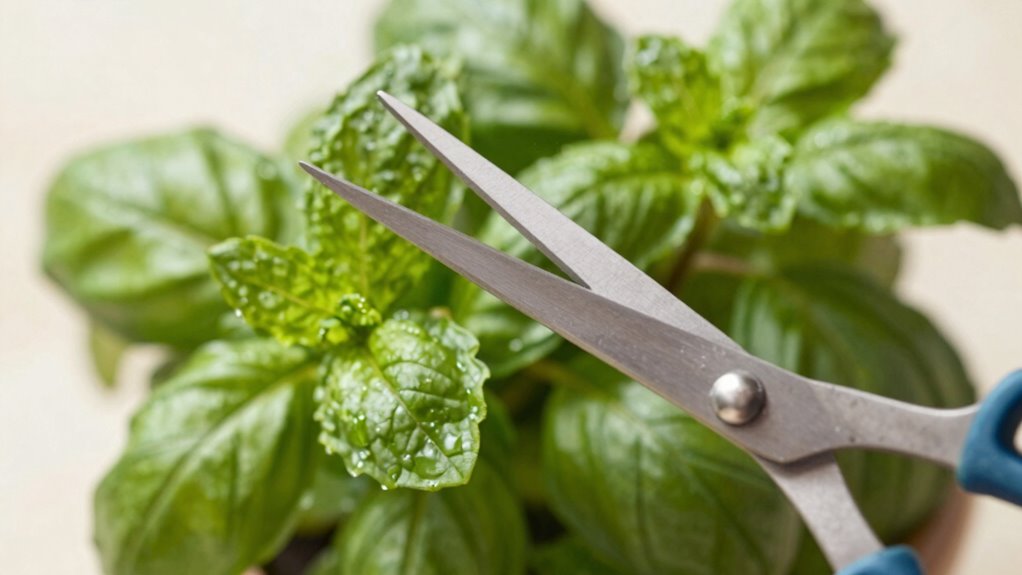
When it comes to herb drying, gentle handling is vital. If you plan to dry herbs for later use, start by harvesting them at the right time—preferably in the morning when their essential oils are most concentrated. Once harvested, rinse the herbs gently with cool water, then pat them dry thoroughly. This preparation minimizes bruising and prevents mold during drying. When it’s time to cut, use sharp scissors or a very sharp knife to avoid crushing the delicate leaves. Dull blades tend to tear or bruise herbs, which can lead to discoloration and loss of flavor. Cutting with precision helps to preserve their natural oils and vibrant green color, ensuring that your dried herbs retain maximum flavor even after storage.
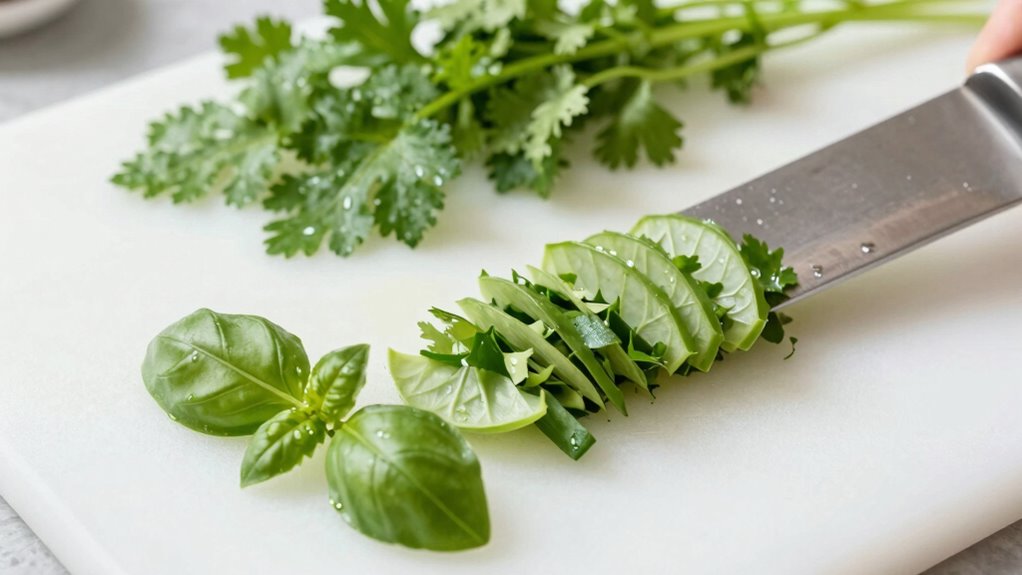
To keep the herbs looking fresh and avoid turning dark, make your cuts quickly and confidently. When chopping, use a rocking motion with your knife, keeping the blade sharp and moving smoothly through the herbs. If you’re only snipping leaves, hold the stems gently with your fingertips and cut just above the leaves, avoiding any unnecessary pressure that could crush the foliage. This approach keeps the herbs intact and prevents darkening caused by bruising or oxidation. If you’re preparing herbs to be dried later, consider hanging small bunches upside down in a warm, dry, well-ventilated area. This method promotes even drying and helps lock in the flavor, ensuring your herbs remain flavorful and colorful for months. Additionally, understanding how herb response to cutting techniques influences their appearance can help you refine your approach for best results. Being aware of herb tissue structure can also guide you in choosing the best cutting method, leading to less damage and better preservation of their natural qualities.
Using the right tools and techniques, such as sharp blades, is crucial because they reduce the risk of damaging the delicate tissues of herbs. A gentle, confident approach combined with the right tools and technique will help prevent oxidation and discoloration, ensuring your herbs stay fresh and vibrant longer. It’s also helpful to understand how proper herb handling minimizes unnecessary stress on the herbs, preserving their flavor and appearance. Ultimately, careful handling during cutting and drying not only preserves the herbs’ appearance but also their essential flavor profile. When you pay attention to the tools you use and your technique, you’ll find that your herbs stay vibrant, fragrant, and full of flavor—ready to elevate any dish you prepare. Proper herb drying combined with gentle cutting techniques is your best strategy for maintaining the bright, fresh taste of your delicate herbs long after harvest.
As an affiliate, we earn on qualifying purchases.
Frequently Asked Questions
Can I Use a Food Processor to Chop Delicate Herbs?
Yes, you can use a food processor to chop delicate herbs, but do so carefully to avoid bruising or turning them dark. Use pulses instead of continuous processing to maintain herb integrity. This method helps with herb drying and flavor preservation, ensuring your herbs stay vibrant and flavorful. For best results, chop herbs just before using or drying them, and handle them gently to maintain their delicate texture and aroma.
What’s the Best Knife for Cutting Fragile Herbs?
Imagine slicing through a whisper of green, where a gentle touch preserves its fragile beauty. The best knife for cutting delicate herbs is a sharp, serrated or fine-edged paring knife, which minimizes crushing. Keep your knife sharpened regularly to maintain precision, and consider herb drying techniques to retain flavor. With a keen blade, you’ll effortlessly chop herbs without bruising or darkening, elevating your culinary finesse.
How Do I Store Herbs After Cutting to Prevent Discoloration?
After cutting herbs, you should store them properly to prevent discoloration. Wrap them loosely in a damp paper towel, then place them in an airtight container or a glass jar with a lid. Use herb drying techniques like hanging or air-drying if you plan to preserve them long-term. These herb preservation methods keep herbs fresh and vibrant, ensuring they maintain their color and flavor until you’re ready to use them.
Is It Better to Wash Herbs Before or After Cutting?
It’s better to wash herbs after you cut them. Washing before cutting can introduce excess moisture, which may lead to quicker spoilage and discoloration. For herb drying and preservation, gently rinse herbs just before use or drying, then pat them dry thoroughly. This way, you remove dirt without compromising their quality, keeping them vibrant and fresh for longer. Proper handling guarantees your herbs stay flavorful and colorful.
How Long Do Freshly Cut Herbs Stay Vibrant?
Freshly cut herbs typically stay vibrant for about a week if you practice proper herb preservation. Their color retention depends on storage methods—keeping them in water or airtight containers helps maintain their bright hues longer. While they may slowly lose their freshness over time, acting quickly guarantees your herbs stay lively and flavorful. To maximize their vibrancy, trim the stems and store them in a cool, moist environment to prolong their color and freshness.
high-quality chef's knife for herbs
As an affiliate, we earn on qualifying purchases.
As an affiliate, we earn on qualifying purchases.
Conclusion
So, next time you’re slicing those delicate herbs, remember—by handling them with care and a gentle touch, you might just prevent them from turning into a sad, dark mess. It’s almost ironic how the tiniest effort can make all the difference, isn’t it? Instead of battling wilted herbs, try your hand at gentle precision. After all, who knew that the secret to fresh-tasting herbs is simply not being too enthusiastic? Happy herb cutting!
As an affiliate, we earn on qualifying purchases.
As an affiliate, we earn on qualifying purchases.
Halloween Picks
halloween
As an affiliate, we earn on qualifying purchases.