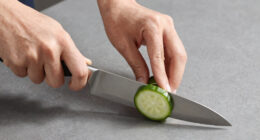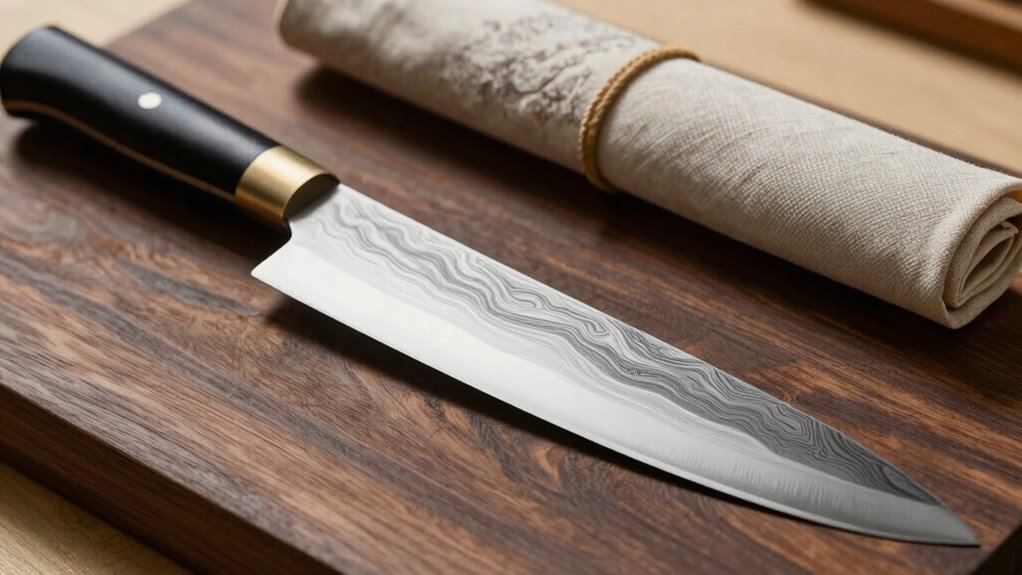

Traditional Japanese knives are highly specialized tools crafted with precision, offering different styles for various tasks like slicing fish, vegetables, or bones. They feature single or double bevels, unique shapes, and high-quality steel blades that require careful maintenance. Handle designs and materials also impact comfort and control. When choosing one, consider your cooking needs and how much effort you’re willing to invest in proper care—more details await if you look further.
Key Takeaways
- Understand the different types (Gyuto, Santoku, Nakiri, Yanagiba, Deba) and their specific culinary uses.
- Know the distinctions between single and double bevel blades for precision and versatility.
- Consider blade materials like VG10 or tamahagane for durability and edge retention.
- Choose handle styles and materials that offer comfort, control, and proper maintenance.
- Proper care, honing, and storage are essential to maintain sharpness and extend the knife’s lifespan.
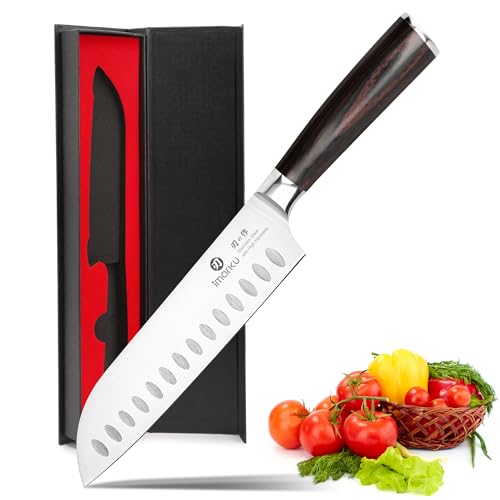
imarku Chef Knife 7 Inch Kitchen Knife Ultra Sharp Santoku Knife - High Carbon Japanese Chefs Knife, Kitchen Gadgets 2025, Apartment Essentials, Birthday Gifts for Him Her, Best Gifts for Women Men
Professional Santoku Knife: This imarku super sharp santoku knife is made of high carbon stainless steel that resists...
As an affiliate, we earn on qualifying purchases.
Understanding the Different Types of Japanese Knives
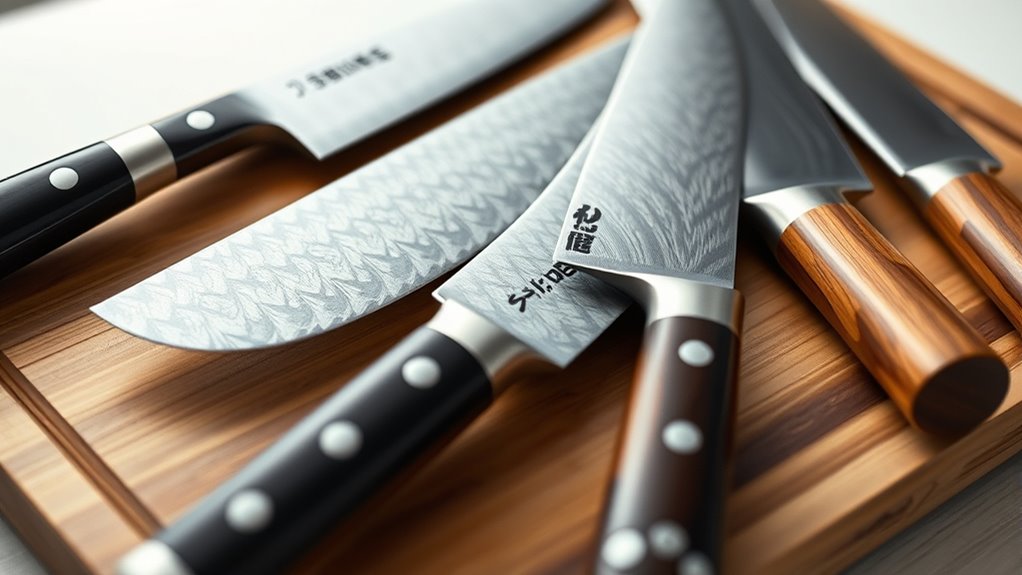
Japanese knives come in a variety of shapes and sizes, each designed for specific tasks in the kitchen. You’ll find the Gyuto, which is versatile and works well for slicing, dicing, and chopping. The Santoku is shorter and ideal for handling vegetables, fish, and meats with a swift up-and-down chopping motion. Nakiri features a flat, square blade perfect for vegetable prep and julienning. For delicate fish work, the Yanagiba offers a long, thin single-bevel blade for sashimi. The Deba is heavier, designed for filleting fish and cutting through bones. Each knife’s shape and size serve a unique purpose, helping you perform tasks more efficiently and with greater precision. Choosing the right knife depends on your specific cooking needs and style.
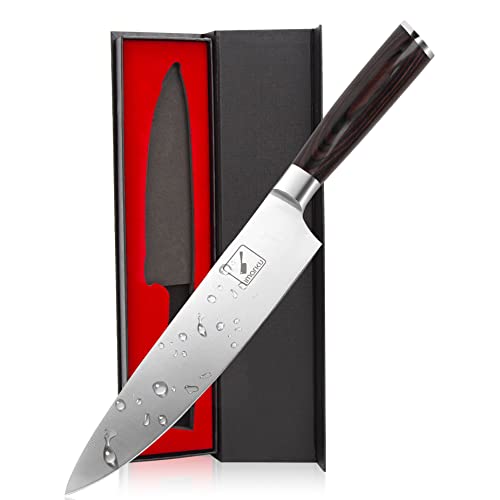
imarku Japanese Chef Knife - Sharp Kitchen Knife 8 Inch Chef's Knives HC Steel Paring Knife, Unique Gifts for Men and Women, Gifts for Mom or Dad, Kitchen Gadgets with Gift Box, Gyutou Knives
High-Carbon Stainless Steel Blade: It is manufactured from high-quality stainless steel that maintains its functionality for a long...
As an affiliate, we earn on qualifying purchases.
The Unique Features of Single Bevel and Double Bevel Blades
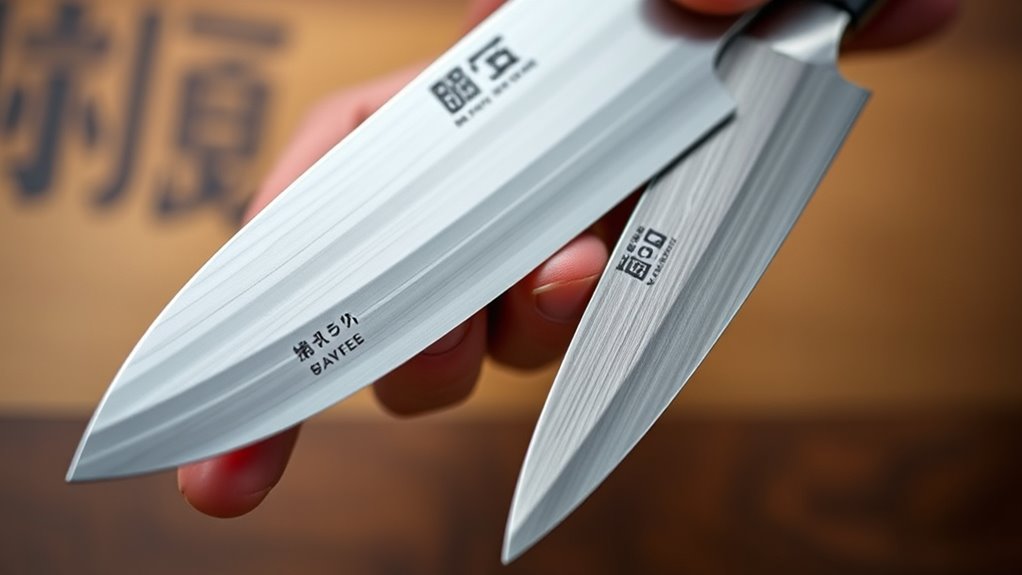
Single bevel blades are designed with a beveled edge on only one side, which allows for incredibly precise and controlled cuts, especially in delicate tasks like filleting fish or making intricate vegetable garnishes. This design offers a clean, smooth cut with minimal resistance, giving you excellent control over your slicing. The single-bevel angle also helps create thin, uniform slices, essential for presentation and texture. In contrast, double bevel blades are sharpened on both sides, providing balanced weight and versatility, making them suitable for a wider range of tasks. Double bevel knives are easier to handle for general use and require less specialized sharpening. Overall, single bevel blades excel in precision work, while double bevel blades offer flexibility and ease for everyday cooking. Additionally, the blade angle plays a significant role in determining cutting precision and ease of use for different tasks. Properly sharpening techniques are essential to maintain their performance and longevity, especially for single bevel blades that require more careful maintenance.

HOSHANHO Kitchen Knife in Japanese High Carbon Steel, Professional High-Class Chef's Knife 8 inch, Non-slip Ultra Sharp Cooking Knives with Ergonomic Handle
【High-End Japanese Steel Chef's Knife】 HOSHANHO chef's knife is made of Japanese high carbon steel 10Cr15CoMoV, 2x of...
As an affiliate, we earn on qualifying purchases.
Blade Shapes and Their Specific Uses in the Kitchen

Different blade shapes are designed to optimize specific cutting techniques and tasks in the kitchen. The shape of the blade influences precision, efficiency, and safety. For example, a Gyuto’s long, slender profile excels at slicing and dicing, while a Nakiri’s flat edge is perfect for vegetable chopping. A Yanagiba’s narrow, single-bevel blade is ideal for sashimi, and a Deba’s thick spine handles bones and heavy-duty tasks. Proper sizing and load‑planning ensures the knife performs safely and effectively for each task. Additionally, understanding blade geometry can help you select the right knife for your particular culinary needs. Recognizing how blade shape impacts the cutting motion can also improve your overall technique and safety in the kitchen. Being aware of blade maintenance is also essential to preserve the edge and longevity of your knives. To maximize your knife’s performance, it’s important to consider blade sharpening techniques, which play a crucial role in maintaining a sharp, effective edge over time.

Japanese Chef Knife, 8 Inch Damascus Kitchen Knife with VG10 Steel, Handcrafted Sharp Knife with Ergonomic Handle, Cooking Knives for Home Chefs, Cooking Gifts for Men and Women
【Premium Damascus Chef Knife with VG-10 Steel Core】Our Japanese knives feature a VG-10 steel core (60 HRC) for...
As an affiliate, we earn on qualifying purchases.
The Craftsmanship Behind Traditional Japanese Knife Construction
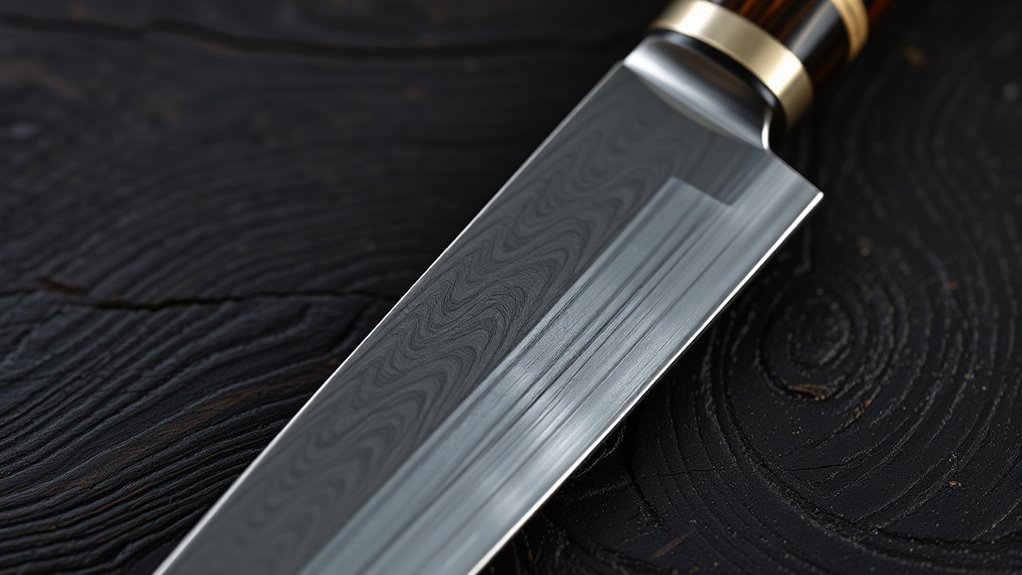
The artistry behind traditional Japanese knife construction reflects centuries of craftsmanship and meticulous attention to detail. You’ll notice that each blade is carefully forged, often by hand, using high-quality steels like tamahagane or VG10. These steels are hammered and repeatedly tempered to achieve exceptional hardness and flexibility, ensuring a razor-sharp edge that lasts. The blades are shaped with precision, featuring subtle tapers and a flat profile for ideal control. Single-bevel edges are ground on one side with a chisel-like finish, allowing for precise cuts and delicate work. The process involves skillful polishing and honing, which enhances the blade’s sharpness and aesthetic appeal. This craftsmanship results in a knife that’s not only functional but also a tribute to centuries-old traditions. Proper care and maintenance, including regular honing and correct storage, are essential to preserve the integrity of these finely crafted blades, and ensure their longevity. Regular maintenance routines, such as proper honing techniques, help sustain the blades’ cutting performance over time. Understanding the traditional forging methods can deepen appreciation for their superior quality and durability, and the artistry that goes into each unique piece.
Handle Designs and Materials for Optimal Grip and Comfort
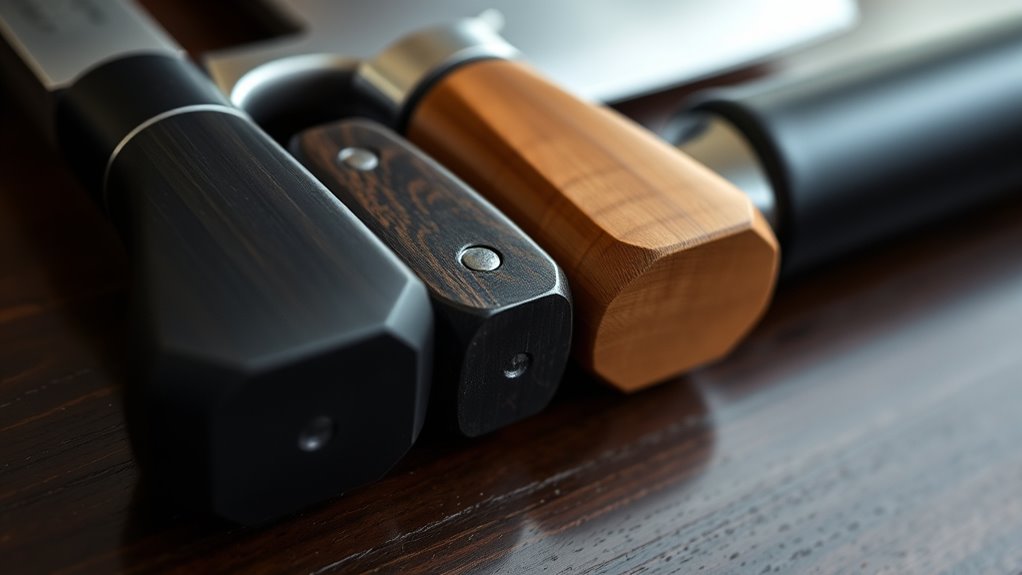
Handle designs and materials play a crucial role in ensuring you get a comfortable and secure grip during precise cutting tasks. Traditional Japanese handles come in oval, circle, and D-shape styles, each offering different ergonomic benefits. Octagonal or rounded wooden handles are common in single-bevel knives, providing a natural grip suited for detailed work. Wa-style handles are popular because they fit the Japanese pinch grip, giving you better control and balance. Materials like hardwoods—such as magnolia, ho, or mahogany—are durable and feel warm in your hand. The weight and shape of the handle influence fatigue and precision, so choosing one that matches your hand size and cutting style is essential for comfort and safety during extended use. Additionally, handle materials can affect the overall balance and maneuverability of the knife, impacting your cutting efficiency. Understanding ergonomic design principles helps in selecting a handle that reduces strain and enhances control during prolonged use. Moreover, selecting a handle with energy-efficient features can contribute to a more sustainable and comfortable cooking experience. Properly designed handles can also minimize hand fatigue, making them suitable for extended culinary tasks.
The Importance of Blade Steels and Maintenance Practices
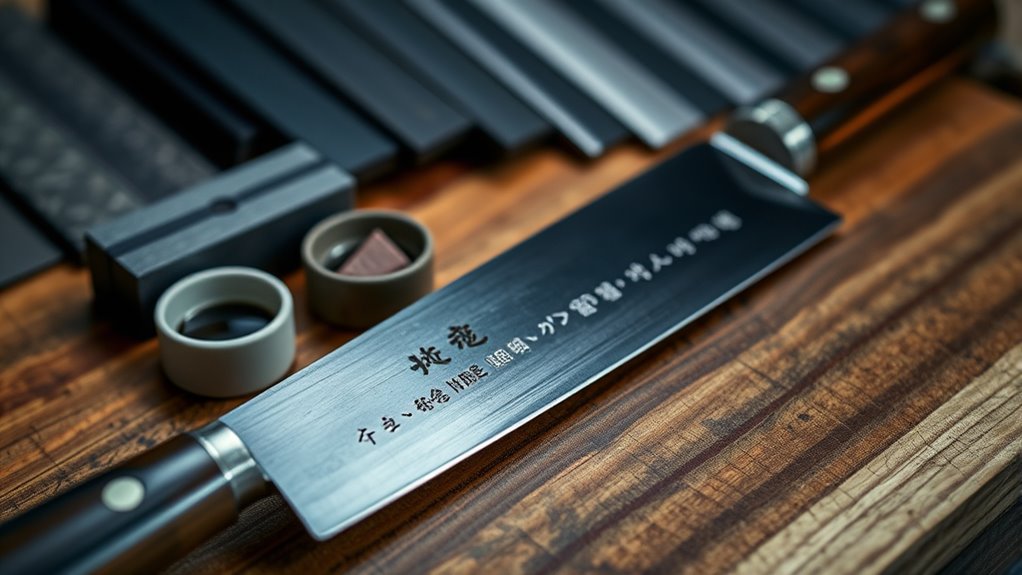
Blade steels determine how well your Japanese knives keep their sharpness and how easy they are to maintain over time. Choosing the right steel influences durability, edge retention, and corrosion resistance. To care for your blades properly, consider these key practices:
Choosing the right steel ensures your Japanese knives stay sharp and easy to maintain over time.
- Regular honing with a fine stone or ceramic rod to realign the edge.
- Occasional sharpening with specialized stones, especially for single-bevel blades.
- Proper cleaning and drying after use to prevent rust and corrosion.
- Storing knives safely in a knife block or on a magnetic strip to avoid dulling the edge.
- Understanding blade hardness can help you select a steel that balances sharpness and ease of maintenance, especially when considering high-hardness steels like those similar to Tamahagane. Additionally, being aware of edge retention can guide you in choosing steels that hold their sharpness longer under regular use. Recognizing the importance of corrosion resistance is essential, particularly for knives used in humid environments or for everyday tasks. High-hardness steels like those similar to Tamahagane provide excellent edge retention but require diligent maintenance. Handmade blades are balanced for specific tasks, making proper care essential for longevity. Moreover, selecting steels with toughness can reduce the risk of chipping or breaking during heavy use, ensuring the longevity of your investment. Considering shock resistance is also beneficial, especially for those who use their knives intensively or for heavy-duty cutting, as it helps prevent accidental damage to the blade.
Specialized Knives for Specific Culinary Tasks
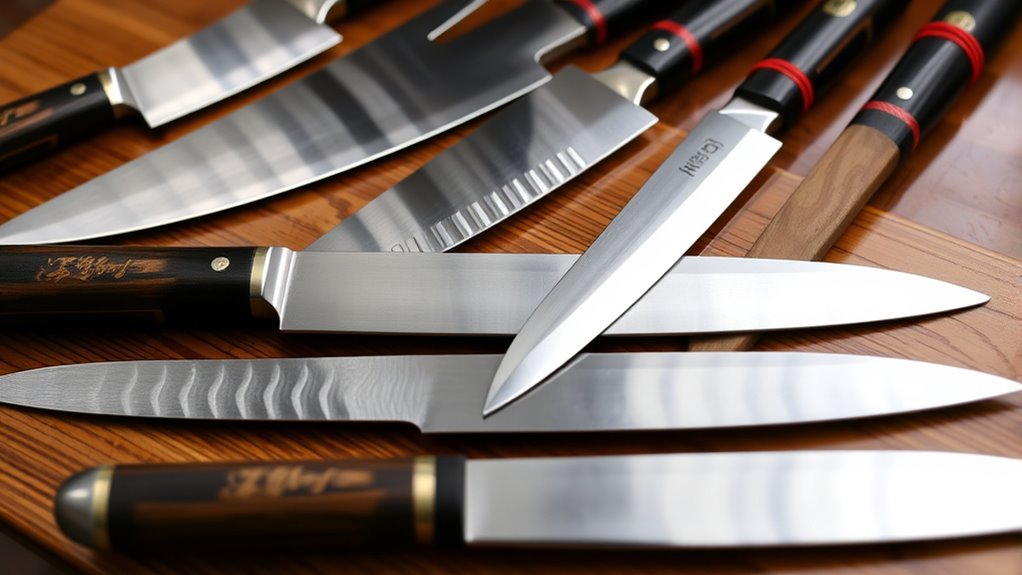
Japanese knives are meticulously designed for specific culinary tasks, ensuring you achieve ideal results with each cut. For example, the Yanagiba’s long, thin single-bevel blade excels at slicing sashimi with minimal pressure, creating clean, precise cuts. The Usuba is perfect for vegetable work, especially for delicate techniques like katsuramuki peeling or julienne strips, thanks to its flat, square edge. The Deba’s thick spine and sturdy blade handle heavy-duty tasks, like filleting fish and cutting through bones. The Honesuki’s triangular shape makes poultry deboning straightforward and efficient. Each specialized knife features unique blade geometry, bevels, and handles tailored to its purpose, helping you optimize your techniques and achieve professional-level results in your culinary pursuits. Understanding craftsmanship can help you select the right tool for your needs and ensure the longevity of your knives.
Tips for Selecting the Right Japanese Knife for Your Needs
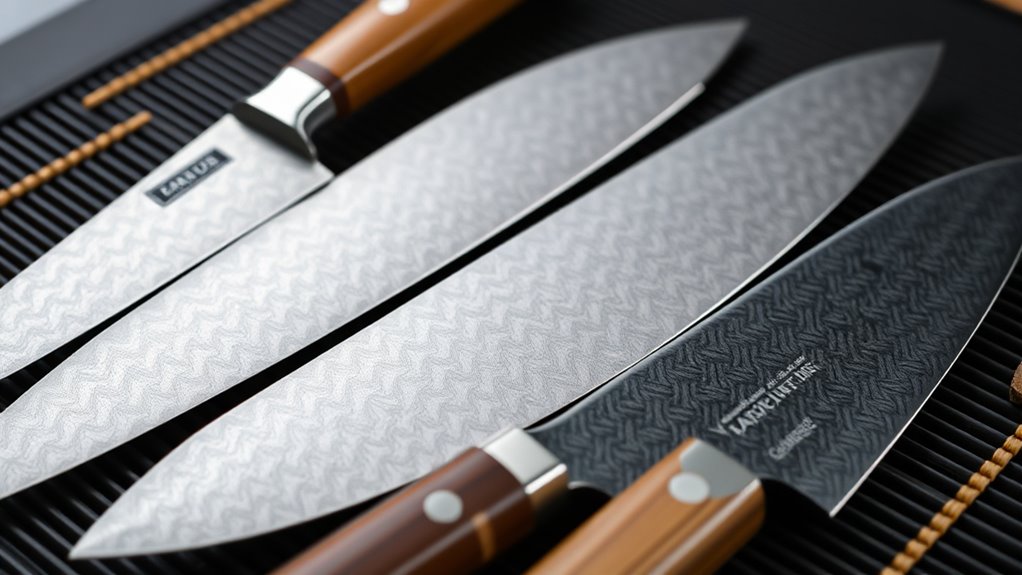
When selecting a Japanese knife, consider the blade type and bevel to match your cutting style and the tasks you’ll perform most often. Think about the handle shape and grip to guarantee comfort and control during extended use. Finally, match the knife’s intended culinary tasks with the right blade length and design for ideal precision and efficiency. Additionally, understanding quality assessment can help you choose a durable and well-crafted knife that will improve your cooking experience. Recognizing the importance of material durability can guide you toward a knife that maintains sharpness and withstands regular use over time. Being aware of thermal behavior can also assist in selecting a knife that responds well to different cutting conditions and maintains its performance. Moreover, being informed about regulatory standards ensures you select a knife that meets safety and quality benchmarks. Considering manufacturing techniques can further influence the overall quality and performance of the knife you choose.
Blade Type and Bevel
Choosing the right knife depends largely on the type of cuts you need to make and the tasks you perform most often. Blade type and bevel influence precision, ease, and versatility.
- Single bevel blades are sharpened on one side, ideal for precise tasks like sashimi or vegetable peeling, providing clean, accurate cuts.
- Double bevel blades sharpen on both sides, offering flexibility for general slicing, dicing, and chopping.
- Blade profile affects control; flatter blades excel at straight cuts, while curved blades are better for rocking motions.
- Blade thickness impacts strength and thinness; thinner blades produce delicate slices, thicker blades handle tougher ingredients or bones.
Choose based on your preferred cutting style and the types of ingredients you handle most often.
Handle and Grip Style
Selecting the right handle and grip style can considerably enhance your comfort and control during use. Japanese knives come with various handle shapes, like oval, D-shape, or round, each offering a different feel. Wa-style handles are popular for their ergonomic design, fitting naturally into your pinch grip, giving you better precision. Octagonal or rounded wooden handles are traditional and provide a secure grip, especially for single-bevel knives. Consider how you hold your knife—if you prefer a lighter feel or need more control for delicate cuts, your choice of handle impacts these factors. Materials like hardwood add durability and a traditional aesthetic. Ultimately, a handle that feels comfortable in your hand allows for better maneuverability and reduces fatigue during extended use.
Intended Culinary Tasks
Understanding the specific culinary tasks you perform is essential to selecting the right Japanese knife. Different knives excel in different roles, so consider what you’ll mainly prepare.
- If you slice sashimi or fish fillets, a long, thin Yanagiba creates clean, precise cuts.
- For vegetables like carrots or daikon, a Nakiri offers a flat edge for straight, effortless cuts.
- When handling poultry or meat with bones, a Deba provides durability and strength.
- For general chopping, dicing, and mincing, a versatile Gyuto serves well with its balance of length and control.
Matching your tasks with the knife’s design ensures efficiency, reduces fatigue, and improves your results. Choose wisely based on your typical culinary activities to get the most from your Japanese knives.
Caring for and Sharpening Your Japanese Knives Properly

Properly caring for and sharpening your Japanese knives is essential to maintaining their precision and longevity. Always hand wash your knives with mild soap and dry them immediately to prevent rust and corrosion. Avoid dishwasher use, as harsh detergents and high heat can damage the blades. Store your knives in a knife block, on a magnetic strip, or with blade guards to protect the edges. Regular honing with a ceramic or leather strop helps realign the edge, keeping it sharp between sharpenings. When sharpening, use a whetstone suited for single-bevel or double-bevel blades, maintaining the correct angle—typically around 15° for Japanese knives. Take your time, sharpen slowly, and only remove a small amount of steel each session to preserve the blade’s shape and sharpness.
Frequently Asked Questions
How Do I Identify a High-Quality Japanese Knife?
To identify a high-quality Japanese knife, look for craftsmanship details like a perfectly sharpened edge and a balanced weight. Check the steel, which should be high-hardness and durable, often forged through hammering. Feel the handle for comfort and grip, and inspect the blade for consistent, clean grind lines. Handmade knives with detailed finishing and reputable brands usually indicate top quality. Remember, a good Japanese knife feels precise and effortless in your hand.
Are Single-Bevel Knives Suitable for Left-Handed Users?
Single-bevel knives are generally designed for right-handed users, with the bevel on one side. If you’re left-handed, they might feel awkward or uneven to sharpen and use. However, some manufacturers make left-handed versions with the bevel on the opposite side. You should look for those if you prefer a single-bevel knife, or consider a double-bevel knife, which suits both hands equally and offers more versatility.
What Is the Typical Lifespan of a Japanese Blade With Proper Maintenance?
With proper care, a Japanese blade can last decades, with some legendary knives still cutting after 50 years or more. Regular honing, correct cleaning, and storing in a dry place are key. Using appropriate sharpening stones and avoiding dishwasher use help maintain its edge. If you treat it well, your knife won’t just serve you for years—it can become a lifelong kitchen companion, retaining sharpness and value through the years.
Can Traditional Japanese Knives Be Used for Western-Style Cooking?
Yes, you can use traditional Japanese knives for Western-style cooking. They excel at precise slicing and thin cuts, making them perfect for tasks like dicing vegetables or carving meat. Just keep in mind that their sharpness and single-bevel edges require careful handling and maintenance. If you adapt your technique slightly, these knives will serve you well across various culinary styles, offering excellent control and efficiency.
How Often Should I Sharpen My Japanese Knives for Optimal Performance?
You should sharpen your Japanese knives as often as you change the oil in your car—frequently, if you want top performance. Since these blades are razor-sharp and delicate, honing them every few uses maintains their precision intact. Don’t wait until they struggle with slicing; regular maintenance ensures your knives cut like new, saving you time and frustration. So, embrace the routine, and your blades will thank you.
Conclusion
Choosing the right Japanese knife is like selecting a trusted sword—precision and craftsmanship matter. By understanding the different types, blade styles, and materials, you’ll wield a tool that elevates your cooking. Treat it with care, sharpen it regularly, and it will serve you like a loyal samurai—ready for any culinary challenge. Embrace this knowledge, and your kitchen will become your own dojo of mastery.