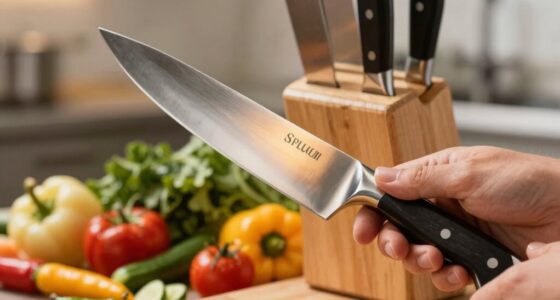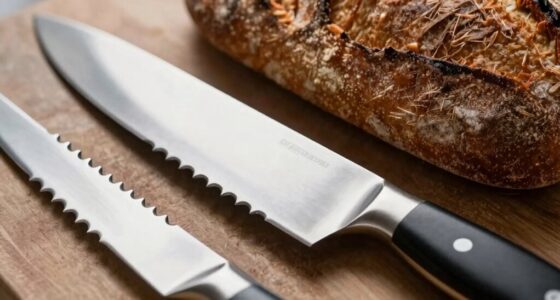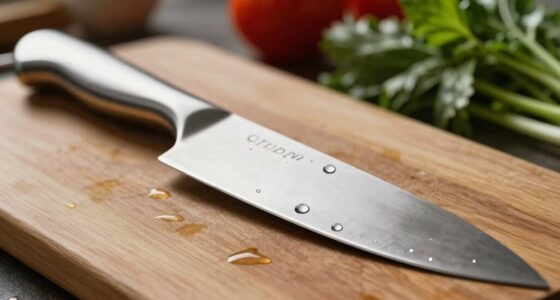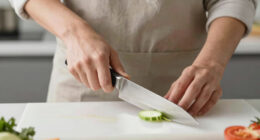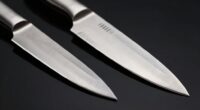
If you’re choosing between single-bevel and double-bevel knives, consider your kitchen tasks. Single-bevel blades excel in precision work like fish filleting and delicate vegetable slicing, but require careful handling and maintenance. Double-bevel knives are more versatile, durable, and easier to handle for chopping, slicing, and everyday use. Understanding these differences helps you pick the right tool for your needs, and if you keep exploring, you’ll discover more about their ideal applications.
Key Takeaways
- Single-bevel knives excel in precise, delicate tasks like filleting fish and detailed vegetable work.
- Double-bevel knives are versatile, suitable for chopping, slicing, and general kitchen tasks.
- Single-bevel blades require careful handling and maintenance for optimal performance.
- Double-bevel blades offer durability and easier handling for everyday use.
- Choose based on the need for precision (single-bevel) or durability and versatility (double-bevel).

When choosing a knife, understanding the difference between single-bevel and double-bevel blades is essential, as it can substantially impact your cutting performance. One of the key factors to contemplate is blade durability, which influences how long your knife stays sharp and effective. Single-bevel knives tend to have a thinner, more refined edge, which can make them more prone to damage if used improperly. However, when kept sharp, they offer excellent edge retention, ensuring you can perform precise cuts over time. Double-bevel knives, on the other hand, are generally more robust because their symmetrical edge distributes force evenly on both sides. This symmetry enhances blade durability, making them better suited for everyday tasks that involve a lot of slicing or chopping. Their edge retention might not be as fine-tuned as a single-bevel’s, but they hold their edge well enough for most kitchen applications.
Single-bevel knives offer precise cuts but require careful handling; double-bevel blades are more durable for everyday kitchen tasks.
Your choice between these two types should also depend on the specific use case. If you’re preparing delicate fish or vegetables, a single-bevel knife can provide cleaner, more precise cuts due to its thinner, sharper edge. Its design allows for more controlled slicing, which is especially valuable in fine culinary work. However, because of its characteristics, a single-bevel blade requires more careful handling and maintenance to prevent damage and maintain ideal edge retention. It’s less forgiving if you use it on tougher ingredients or apply uneven pressure, which can compromise blade durability over time.
Double-bevel knives excel in versatility. Their balanced construction makes them suitable for a wide range of kitchen tasks, from chopping vegetables to slicing meats. They are generally sturdier and more forgiving, which helps preserve their edge longer under typical kitchen conditions. Their durability means you won’t need to sharpen them as frequently, and their consistent edge retention ensures reliable performance. Plus, since they’re easier to use and maintain, they’re often the preferred choice for home cooks who want a dependable, all-purpose knife. Additionally, blade geometry plays a crucial role in how each type performs and how comfortable they are to handle during various cutting techniques.
Ultimately, your decision hinges on what you prioritize—precision and finesse or durability and ease of maintenance. Single-bevel blades are ideal if you’re into detailed work and can handle their specific maintenance needs. Double-bevel blades suit those looking for durability, versatility, and lower maintenance. Both types have their strengths, but understanding their differences helps you pick the right tool for your kitchen needs, ensuring your knives perform well and last longer.

SHANGDAO 7-inch Deba Knife, Single Bevel German Stainless Steel Japanese Knife, Fish Fillet Knives for Fish Cutting with Wooden Handle, Gift Box
【Premium Deba Knife】Deba knife is a traditional type japanese kitchen knife used for slaughtering poultry ,cutting fish and…
As an affiliate, we earn on qualifying purchases.
As an affiliate, we earn on qualifying purchases.
Frequently Asked Questions
Can a Single-Bevel Knife Be Used for Everyday Tasks?
Yes, you can use a single-bevel knife for everyday tasks. It offers excellent blade sharpness, making slicing and detailed cuts easier. However, keep in mind that its edge durability might be slightly less than double-bevel knives, especially if used on tougher materials. Regular honing and proper care will help maintain its sharpness and performance, ensuring it remains a reliable tool for your daily kitchen needs.
Which Knife Type Requires Less Maintenance, Single or Double-Bevel?
A single-bevel knife requires less maintenance because it generally holds its edge longer, making knife sharpening easier and less frequent. Its design allows for better edge retention, so you won’t need to sharpen it as often. Double-bevel knives often need more frequent sharpening since their symmetrical edge can dull faster. If you want low-maintenance knives, go for single-bevel types, as they keep their sharpness with less effort.
Are Double-Bevel Knives More Versatile Than Single-Bevel Knives?
Yes, double-bevel knives are more versatile because they allow for precision cutting on both sides, making them suitable for a wide range of tasks. Their ergonomic design offers better control and comfort, especially if you’re working on various ingredients. This flexibility makes double-bevel knives ideal for everyday kitchen use, giving you the ease to handle different cuts efficiently without constantly switching tools.
How Does the Weight Differ Between Single and Double-Bevel Knives?
Like a knight’s armor, the weight of your knife affects your cutting skill. Double-bevel knives tend to be slightly heavier, offering better blade balance and stability, thanks to their symmetrical design. Single-bevel knives are lighter, emphasizing ergonomic design for precise cuts. This difference influences how comfortable you feel during extended use, making your choice about weight a key factor in your overall kitchen performance.
Is There a Safety Difference When Handling Single Versus Double-Bevel Knives?
You’ll find that safety differences between single and double-bevel knives mainly come down to blade sharpness and grip ergonomics. Single-bevel knives are often sharper on one side, so you need extra caution to avoid slips. Their grip ergonomics can also influence control. Double-bevel knives tend to be easier to handle safely because their balanced blade and symmetrical grip give you better control, reducing the risk of accidents during use.

KEEMAKE Deba Knife 6 inch, Double Bevel Japanese 440C Stainless Steel Fish/Fillet Knife with G10 Bolster Octagonal Wood Handle
【PREMIUM MATERIAL】KEEMAKE KIKU series Japanese deba knife is crafted out of premium Japanese 440C high carbon stainless steel…
As an affiliate, we earn on qualifying purchases.
As an affiliate, we earn on qualifying purchases.
Conclusion
Ultimately, choosing between a single-bevel and double-bevel knife depends on your cooking style. Did you know that around 70% of professional chefs prefer double-bevel knives for their versatility? If you’re looking for a tool that adapts to various tasks, double-bevel might suit you best. But if precision and traditional craftsmanship matter more, a single-bevel could be your go-to. Whichever you choose, understanding their strengths will help you cut with confidence every time.

Quick Slicing Knife, New 3 in 1 Multifunctional Fruit Peeling Knife with Removable Spring, Kitchen Household Sharp Stainless Steel Fruit and Vegetable Fruit Slicing Knife (2pcs)
【3 in 1 Multifunctional Fruit Peeling Knife 】The Multifunctional three-purpose fruit knife is a versatile kitchen tool that…
As an affiliate, we earn on qualifying purchases.
As an affiliate, we earn on qualifying purchases.
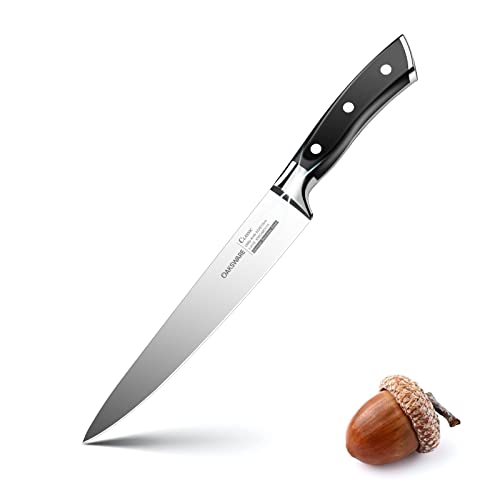
OAKSWARE 5.5-Inch Kitchen Utility Knife, German Stainless Steel, Full Tang, Paring Knife Kitchen Knife Chef Knife for Cutting, Peeling, Slicing Fruit, Vegetables, Bread and Meat
Professional Quality: The blade is made of high-quality German 1.4116 X50CrMOV15 stainless steel. After manual grinding, precision forging…
As an affiliate, we earn on qualifying purchases.
As an affiliate, we earn on qualifying purchases.