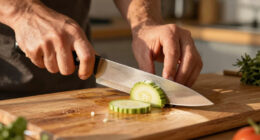
A one-knife kitchen works well when you focus on simple tasks like chopping vegetables, slicing bread, or preparing meats, thanks to a versatile, well-maintained chef’s knife. It reduces clutter, boosts safety, and makes your workflow efficient. However, it falls short for specialized tasks like filleting fish or julienning vegetables, where specific knives excel. To master the approach and know when to adapt, keep exploring these tips for a smooth, safe experience.
Key Takeaways
- A one-knife system works well with simple, everyday tasks but struggles with specialized jobs like filleting or julienning.
- Proper knife maintenance and ergonomic design are essential for safety, efficiency, and comfort in a one-knife setup.
- Overusing a single knife for all tasks can lead to frustration, decreased safety, and compromised cutting precision.
- The system is most effective when the knife is well-balanced, sharp, and suited to general kitchen tasks.
- Recognizing task limitations and incorporating additional tools when needed ensures safety and optimal results.
Have you ever considered how simplifying your kitchen tools can transform your cooking experience? Embracing a one-knife approach means relying on just a single, versatile chef’s knife for most tasks, which can streamline your workflow and reduce clutter. But for this system to work effectively, proper knife maintenance is essential. You need to keep your knife sharp and well-honed, which not only makes cutting easier and safer but also guarantees precision. Dull knives force you to exert more pressure, increasing the risk of slips and accidents. Regular sharpening and honing maintain the edge and extend the life of your knife, making it more reliable across different tasks. Ensuring your knife is well-maintained also involves understanding knife ergonomics, which plays a significant role in how comfortably and safely you can work with your tool. Additionally, understanding cutting techniques can help you maximize the utility of your single knife and prevent unnecessary wear. Focusing on proper knife storage can also help maintain blade sharpness and prevent accidents in the kitchen. Incorporating conservation practices into your routine can further enhance the longevity of your tools and reduce waste.
Maintaining a sharp, well-honed knife ensures safer, more precise cooking with less effort.
When you focus on a single knife, kitchen ergonomics play a significant role. The right handle shape, weight, and balance allow you to maneuver comfortably, minimizing fatigue during prolonged prep. An ergonomically designed knife reduces strain on your wrist and hand, enabling better control and making intricate cuts easier. Since you depend on this one tool, investing in a well-balanced, comfortable knife becomes vital. When your knife fits your hand well and feels natural, your cooking becomes more precise and enjoyable. Proper knife maintenance also supports kitchen ergonomics; a sharp knife requires less force, and a balanced tool reduces unnecessary strain. Furthermore, the cost of quality knives can be justified by their durability and performance, especially when using a single knife for all tasks.
However, the one-knife system doesn’t work equally well for all culinary tasks. Certain techniques, like filleting fish or julienning vegetables, may be awkward or inefficient with just one knife. While a versatile chef’s knife can handle many chores, specialized knives often make specific jobs safer and more precise. Trying to force a single knife into all roles can lead to frustration, compromised technique, or even injury, especially if the knife isn’t suited for delicate or intricate work. Additionally, if your chosen knife isn’t maintained properly, dullness or imbalance can compromise safety and ease of use, defeating the purpose of simplification. Recognizing when to incorporate additional tools is essential to maintaining efficiency and safety in your kitchen.
Ultimately, a one-knife kitchen can be a rewarding minimalist approach, but it requires discipline and attention to detail. You need to maintain your knife diligently and prioritize ergonomic design to guarantee comfort and safety. Recognize its limitations for certain tasks, and be prepared to adapt or incorporate additional tools when necessary. When done right, this approach can make your cooking more efficient, less cluttered, and more focused. But if you ignore knife maintenance or push a single knife beyond its intended scope, the system quickly falls apart, leaving you frustrated and less confident in your cooking.

Victorinox Fibrox Pro Chef’s Knife, 8 Inch, High Carbon Stainless Steel Blade, Non-Slip Fibrox Handle, Dishwasher Safe, Black
For home chefs & professionals. This Fibro Pro chef's knife has been the top choice of both home…
As an affiliate, we earn on qualifying purchases.
As an affiliate, we earn on qualifying purchases.
Frequently Asked Questions
Can a One-Knife Kitchen Handle All Cuisines Effectively?
A one-knife kitchen can handle many cuisines effectively thanks to its versatility in design. It’s great for basic tasks across diverse culinary traditions, offering cultural adaptability. However, you might find it limiting for specialized techniques or ingredients that require specific knives. While it simplifies your space, consider whether your cooking style demands more specialized tools for ideal results. Overall, it’s practical but may need supplementation for certain cuisines.
How Often Should I Sharpen My Single Kitchen Knife?
You should sharpen your knife every few months, depending on how often you cook. Regular sharpening maintains knife ergonomics and guarantees smooth cutting. Use proper sharpening techniques, like honing or using a whetstone, to keep the edge sharp without damaging the blade. Pay attention to how your knife performs; if it feels dull or requires more force, it’s time to sharpen again, usually every 3-6 months for frequent cooks.
Are One-Knife Kitchens Suitable for Professional Chefs?
Think of a one-knife kitchen like a Swiss Army knife for a professional chef—compact but surprisingly versatile. While it’s great for basic tasks, it falls short in catering to the culinary versatility demanded in professional kitchens. Most pros prefer multi-purpose tools to handle complex dishes efficiently. So, unless you’re doing simple prep work, a single knife might limit your creativity and speed, making it less suitable for high-level culinary demands.
What Safety Precautions Are Necessary With a Single Knife?
You should always handle your single knife with care, keeping it sharp to reduce slips. Store it properly in a knife block or on a magnetic strip to prevent accidents. Use a sturdy, non-slip cutting board made of wood or composite materials to guarantee stability and safety during cutting. Always cut away from your body, and wash the knife carefully after use. These precautions help prevent injuries and maintain your knife’s condition.
How Do I Clean and Maintain My One-Knife Setup?
Did you know that proper knife maintenance can extend its life by up to 50%? To clean your one-knife setup, hand wash it with warm, soapy water immediately after use—never put it in the dishwasher. Dry it thoroughly and store it safely in a knife block or magnetic strip to prevent damage. Practice safe cutting techniques to keep the blade sharp and avoid accidents, ensuring your knife stays in top condition.

Intelitopia Complete Knife Sharpening Stone Set – Dual Grit Whetstone 400/1000 3000/8000 Knife Sharpener with Leather Strop, Flattening Stone, Bamboo Base, 3 Non-slip Rubber Bases & Angle Guide
【Complete Knife Sharpening Stone Kit】You don't need to be a Pro to sharpen your blades, all you need…
As an affiliate, we earn on qualifying purchases.
As an affiliate, we earn on qualifying purchases.
Conclusion
So, next time you’re tempted to believe that a single knife can conquer all your culinary chaos, remember: even the mightiest sword has its limits. Sure, you’ll impress friends with your minimalist approach—until you realize your “one-knife wonder” leaves your dishes a hot mess. Embrace the chaos, or at least keep a backup. After all, a kitchen without a backup plan is just a recipe for disaster—delicious, but disastrous.

Wruhamd 2 Pcs Meat Cleaver Knife Set, Effort Saving Meat Cleaver for Cutting Meat Vegetable, Sharp Carbon Steel Cooking Viking Knife with Leather Sheath for Kitchen, Camping, Outdoor Cooking, BBQ Gift
【Forged for Performance, Designed for Ease】We honor and advance traditional hand‑forging craftsmanship. Each blade in this 2 pcs…
As an affiliate, we earn on qualifying purchases.
As an affiliate, we earn on qualifying purchases.

Coninx Acacia Wood Kitchen Knife Block – 15 Slots Knife Holder – Professional Quality Wood Knife Organizer – Secure Knife Stand To Keep Knives Neat & Sharp – Knife Blocks for Kitchen Knife Storage
THE FIT-IT-ALL KITCHEN KNIFE HOLDER: The 15 universal slots of various sizes on this visually small knife block…
As an affiliate, we earn on qualifying purchases.
As an affiliate, we earn on qualifying purchases.