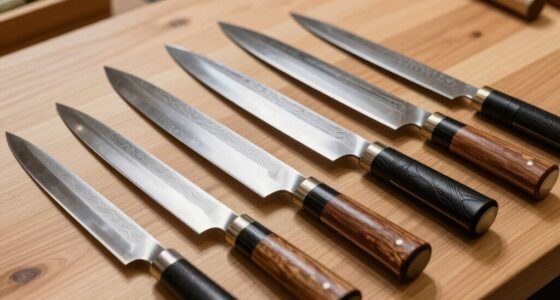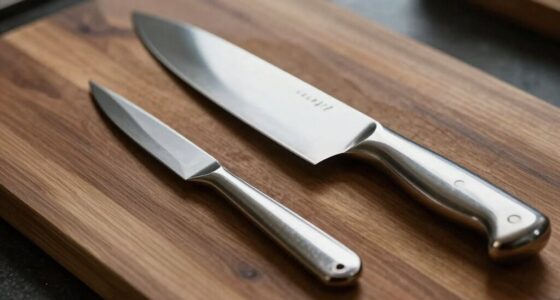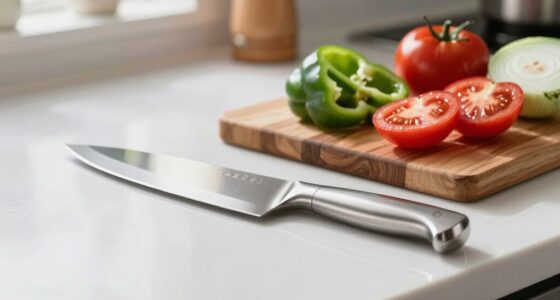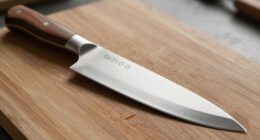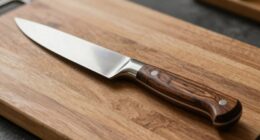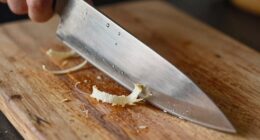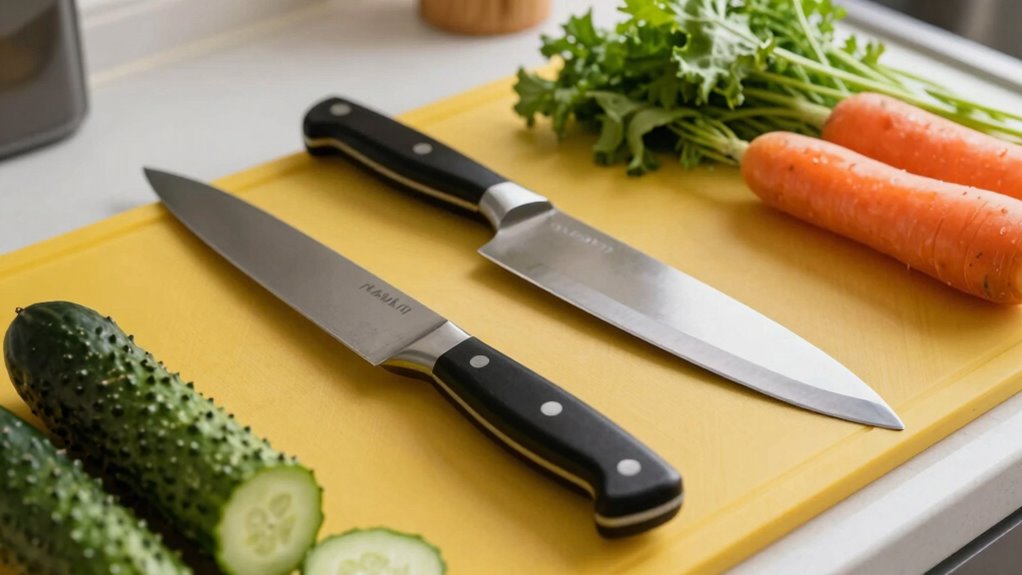
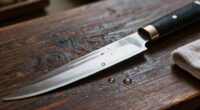
Choosing between a Nakiri and a Santoku depends on how you prefer to prepare vegetables. Nakiri features a straight, rectangular blade perfect for precise, straight cuts and is lightweight, making quick work of chopping and dicing. Santoku is more versatile with a slightly curved blade, suitable for various tasks including slicing meats and herbs. If you want sharper detail, Nakiri suits you best; for balance and flexibility, go with Santoku. Keep exploring to find the perfect fit.
Key Takeaways
- Nakiri features a straight, rectangular blade ideal for precise, straight vegetable cuts, while Santoku offers versatility for slicing, dicing, and rocking motions.
- Nakiri’s thin, lightweight blade provides clean, delicate cuts perfect for vegetables, whereas Santoku’s thicker blade handles a wider range of ingredients.
- Handle styles differ: Nakiri often has traditional Japanese wood handles, while Santoku usually features ergonomic Western-style grips for comfort.
- For vegetable prep, Nakiri excels at quick, uniform slicing with minimal effort, whereas Santoku offers finesse for varied cutting techniques.
- Blade material and geometry impact sharpness, durability, and maintenance, influencing long-term performance in vegetable-focused tasks.

HOSHANHO 7 Inch Nakiri Knife, Japanese High Carbon Stainless Steel Chef Knife, Multipurpose Meat Vegetable Sharp Kitchen Knife with Ergonomic Pakkawood Handle
【Ultra Sharp Blade】 Each Japanese nakiri knife is hand-polished by experts to achieve a sharp 15 degree edge…
As an affiliate, we earn on qualifying purchases.
As an affiliate, we earn on qualifying purchases.
Comparing Blade Shapes and Profiles
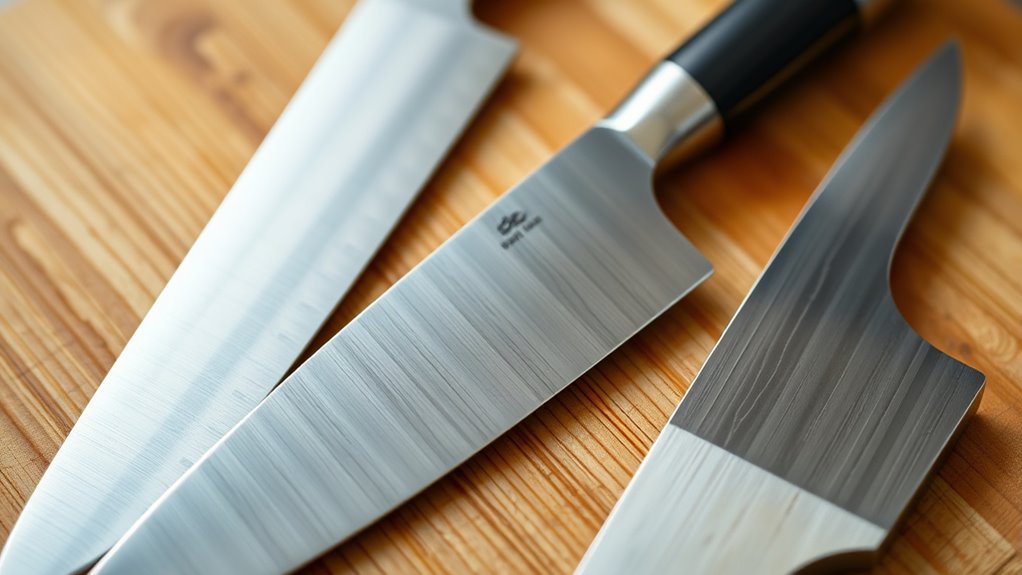
When comparing blade shapes and profiles, you’ll notice that the Santoku features a shorter, more curved blade with a semi-flat edge and rounded or sheep’s foot tip, making it versatile for slicing and rocking motions. Its blade typically measures 12-18cm (5-7 inches) and tapers gently toward the tip, which is rounded for safety and control. The flat edge allows smooth slicing, while the slight curve facilitates a rocking motion. In contrast, the Nakiri has a long, rectangular profile, usually 15-18cm (6-7 inches), with a straight, gun-barrel edge and a squared tip. Its flat, thin blade is designed for precise, straight push cuts, ideal for vegetables. The blade shapes reflect their specialized functions: Santoku for versatility, Nakiri for vegetables and straight cuts. Understanding the blade geometry helps cooks choose the right knife for optimal control and efficiency in vegetable prep, especially when considering ergonomic design for extended use.
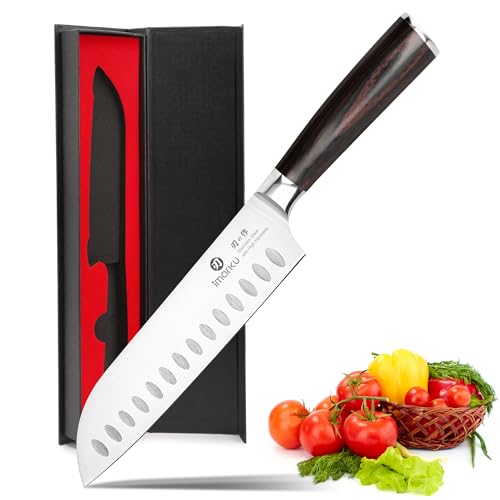
imarku Chef Knife 7 Inch Kitchen Knife Ultra Sharp Santoku Knife – High Carbon Japanese Chefs Knife, Kitchen Gadgets 2025, Apartment Essentials, Birthday Gifts for Him Her, Best Gifts for Women Men
Professional Santoku Knife: This imarku super sharp santoku knife is made of high carbon stainless steel that resists…
As an affiliate, we earn on qualifying purchases.
As an affiliate, we earn on qualifying purchases.
Differences in Weight and Balance
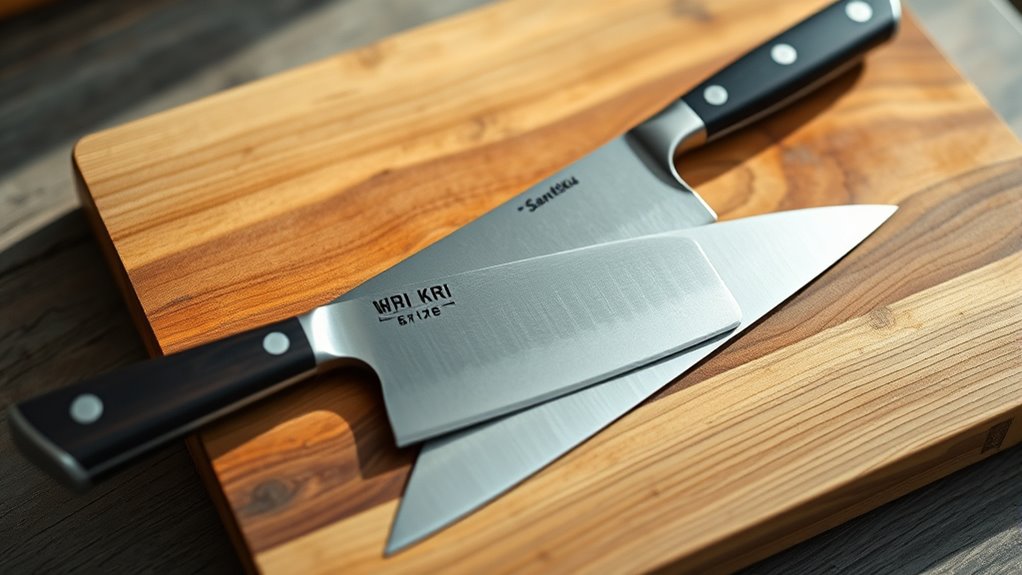
The weight and balance of a knife considerably influence how easy it is to control during cutting tasks. A well-balanced knife feels natural in your hand, reducing fatigue and increasing precision. A Santoku typically weighs between 155-227 grams, with added mass at the handle for stability during forceful cuts. It’s lighter toward the tip, offering excellent maneuverability. Conversely, a Nakiri is lighter, around 4-6 ounces, with the front heavier due to its uniform rectangular profile. Its weight distribution favors chopping, making it easier for repetitive vegetable cuts. To visualize:
| Knife Type | Weight Range | Balance Focus |
|---|---|---|
| Santoku | 155-227 grams | Stability, control in slicing |
| Nakiri | 4-6 ounces | Ease in chopping, front-heavy |
| Both | Varies slightly | Designed for specific tasks |
Additionally, the weight distribution of each knife enhances its suitability for different vegetable preparation techniques. Understanding the center of gravity helps in selecting the optimal knife for various cutting styles, especially when focusing on vegetable work.
HOSHANHO 7 Inch Nakiri Knife, Japanese High Carbon Stainless Steel Chef Knife, Multipurpose Meat Vegetable Sharp Kitchen Knife with Ergonomic Pakkawood Handle
【Ultra Sharp Blade】 Each Japanese nakiri knife is hand-polished by experts to achieve a sharp 15 degree edge…
As an affiliate, we earn on qualifying purchases.
As an affiliate, we earn on qualifying purchases.
Suitable Cutting Techniques for Each Knife
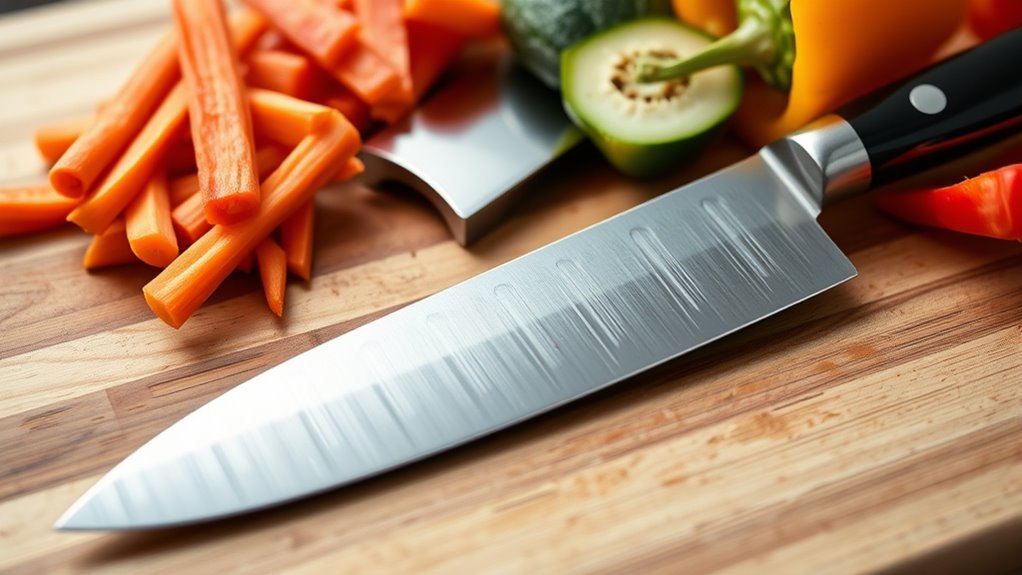
Each knife is best suited for specific cutting techniques that maximize its design strengths. With a Nakiri, you’ll excel at straight up-and-down or push-cutting motions perfect for vegetables. Its flat, rectangular blade makes precise, uniform slices with minimal effort. The Nakiri’s thin edge is ideal for clean, delicate cuts, such as julienne or brunoise. Additionally, mastering proper technique ensures you can work efficiently and safely with this knife. Proper cutting posture and grip also enhance control and reduce fatigue when using the Nakiri. Maintaining sharpness is crucial for achieving optimal results and prolonging the knife’s lifespan. Regular sharpening techniques help preserve the blade’s edge and performance over time. Understanding blade geometry further enhances your ability to select the right motions for specific foods. Meanwhile, the Santoku shines with rocking or push-cutting techniques, suitable for slicing meats, herbs, and vegetables alike. Its curved spine facilitates a smooth rocking motion, giving you control and versatility. The Santoku’s thinner tip allows for detailed work, while its broader blade handles a variety of ingredients. Both knives demand different techniques to access their full potential, but mastering these methods guarantees efficient, precise prep.

DDF iohEF Kitchen Knife, Chef's Knife In Japanese Stainless Steel Professional Santoku Cooking Knife, 7 Inch Non-slip Ultra Sharp Knife with Ergonomic Handle
【Premium Japanese Stainless Steel Chef's Knife】: This chef's knife is made of professional Japanese stainless steel with a…
As an affiliate, we earn on qualifying purchases.
As an affiliate, we earn on qualifying purchases.
Best Culinary Uses and Applications
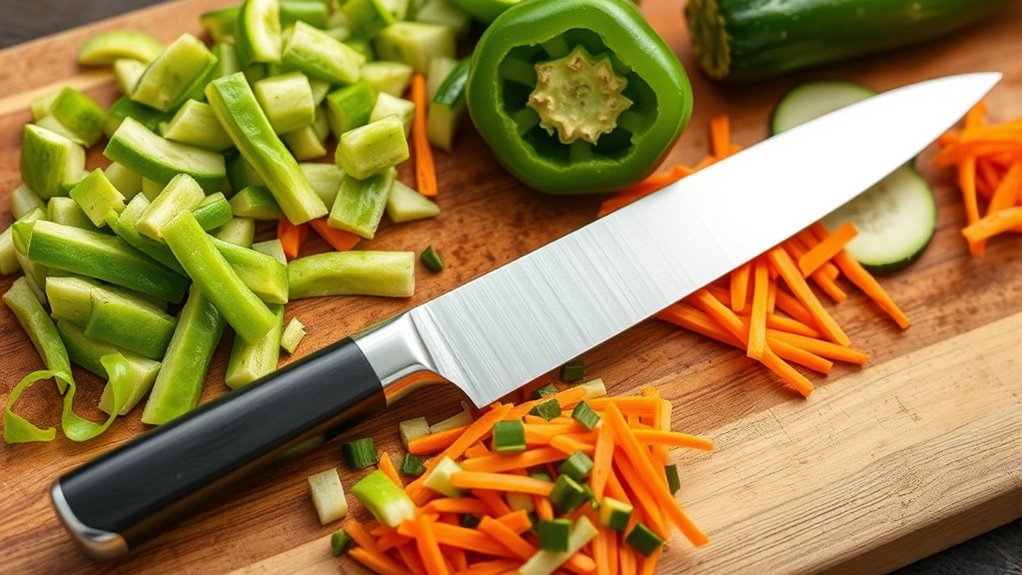
Nakiri knives excel in vegetable-focused tasks, making them ideal for precision slicing, dicing, and mincing of produce like carrots, cucumbers, and herbs. Their straight, rectangular blades let you push down for clean, uniform cuts, especially with delicate or slippery vegetables. Use a push-cutting motion to achieve thin slices or fine brunoise without rocking the blade. Nakiris are perfect for preparing salads, stir-fries, and garnishes, where even thickness matters. They excel at chopping large quantities of vegetables quickly and efficiently. Because of their lightweight design, you’ll find it easier to handle repetitive chopping tasks comfortably. While they’re primarily vegetable specialists, you can also use them for fruits like apples or pears, but they’re less suitable for meats or bones. Ensuring that your ingredients are free from cross-contamination risks and properly sourced can further enhance your culinary experience. Additionally, understanding your knife’s design and purpose helps optimize your cutting techniques and safety. Being aware of proper knife maintenance also ensures your nakiri remains sharp and effective over time. Developing proper grinding and sharpening techniques can help maintain optimal performance and extend the lifespan of your knife.
Material Composition and Durability Factors
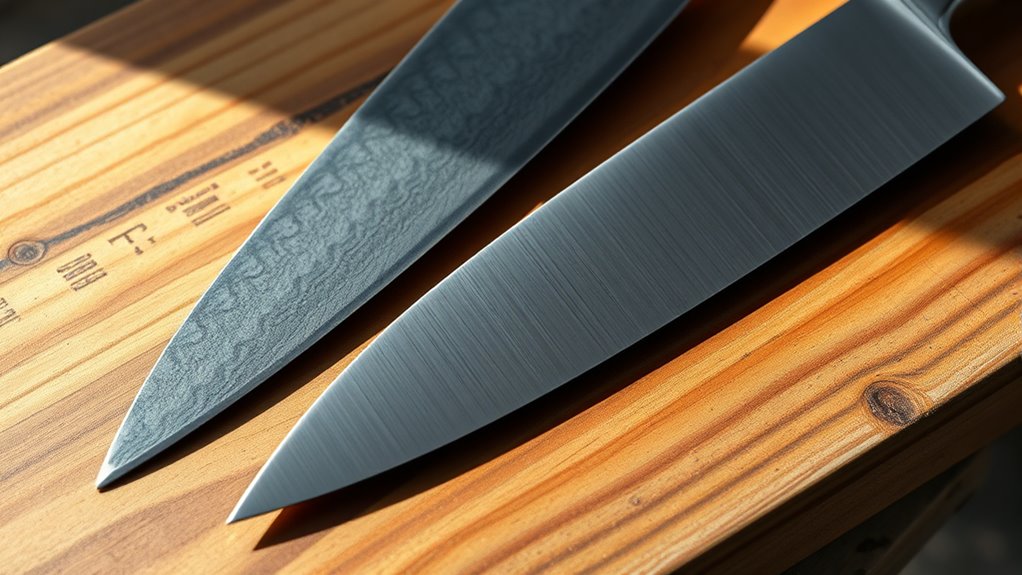
When choosing between a Nakiri and a Santoku, understanding their steel types and quality is key to evaluating durability. You’ll find that Santoku blades often use thicker steel for strength, while Nakiri blades feature thinner steel for precise cuts. Blade thickness also impacts strength, with thicker blades offering more robustness and thinner blades providing cleaner, more delicate slices. Additionally, reputable brands known for quality and durability typically select high-grade steels to ensure longevity and performance. The type of steel used can also influence how well the knife resists corrosion and maintains its sharpness over time, further affecting overall blade longevity. Selecting a steel with good edge retention can significantly extend the functional lifespan of your knife.
Steel Types and Quality
Steel quality plays a crucial role in determining the performance and durability of nakiri and santoku knives. The type of steel affects how well the knife holds an edge, resists chipping, and withstands corrosion. High-carbon steels like VG10 or SG2 provide excellent edge retention and sharpness but may require more maintenance. Damascus steel combines multiple layers for strength and aesthetic appeal, enhancing durability. Stainless steels such as 440A or AUS-8 offer corrosion resistance, making them easier to care for. Thicker, reinforced spines in some santoku knives add strength, while thinner nakiri blades prioritize precision. Overall, choosing high-quality steel ensures your knife remains sharp longer, performs efficiently, and endures daily use without compromising its integrity. Steel types and quality significantly influence how well the knife performs over time.
Blade Thickness and Strength
Blade thickness considerably influences a knife’s strength and durability, especially when it comes to material composition. Thicker blades, like those found in Santoku knives, offer greater resilience against chipping and bending, making them ideal for tougher cuts and heavier use. Their robust construction, often with a thicker spine, ensures durability and stability during forceful chopping or slicing. In contrast, Nakiri blades are thinner and lighter, designed for precision vegetable work. While this enhances sharpness and ease of slicing, it can reduce overall strength and susceptibility to damage if misused. Materials also play a role; high-quality steels like Damascus or carbon steel improve durability regardless of thickness. Additionally, blade geometry impacts how force is distributed across the edge, influencing how well the blade withstands stress during use. Proper maintenance, including blade sharpening, can also help preserve the integrity and longevity of your knives. For optimal performance, understanding the material composition can guide you toward a knife that balances strength, flexibility, and cutting precision for your specific needs. Ultimately, your choice depends on balancing blade strength with the finesse required for your specific prep tasks. Free Floating techniques can also help in maintaining the longevity of your blades by reducing unnecessary stress during usage.
Handle Styles and Cost Considerations
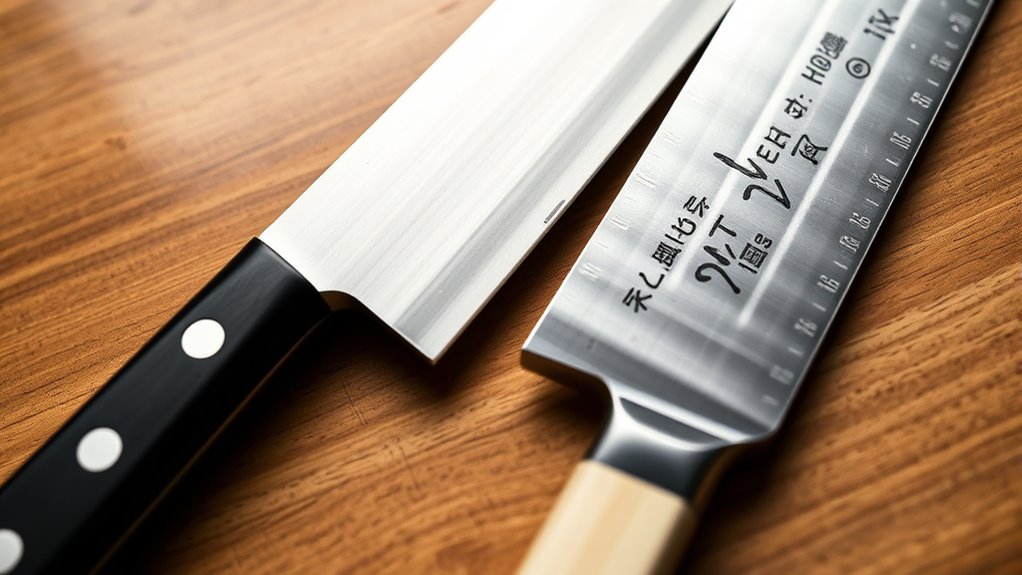
Handle styles markedly influence both the comfort and aesthetic appeal of Nakiri and Santoku knives. You’ll notice that Nakiri handles are typically Japanese-style, often made from wood or pakkawood, offering a traditional look and a firm grip. Nakiri handles often feature traditional craftsmanship, which contributes to their distinctive appearance and feel. Additionally, the choice of handle material affects the knife’s overall balance and ease of use. The ergonomic design of Santoku handles is intended to reduce hand fatigue during prolonged cutting tasks. Santoku handles tend to be Western-style, with ergonomic, non-slip grips made of stainless steel, resin, or composite materials, designed for comfort during extended use. Handle material also impacts the overall durability and maintenance requirements of the knife. Proper handle selection can also influence the cost considerations associated with each type of knife.
Making the Right Choice for Vegetable Preparation
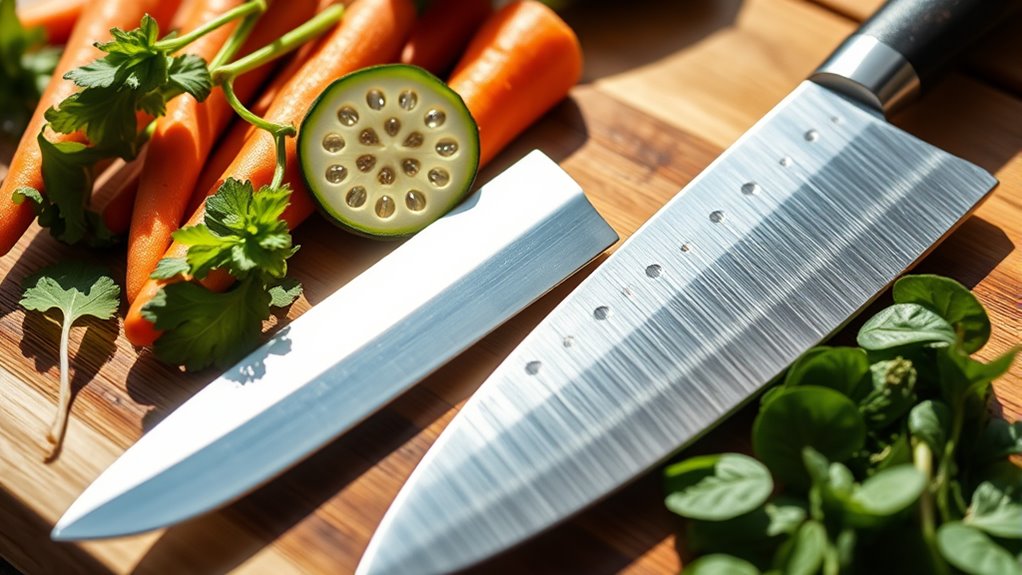
Choosing the right knife for vegetable prep depends on how you like to work in the kitchen and the types of cuts you prefer. If you favor straight, precise slices with minimal effort, a Nakiri is ideal due to its rectangular, flat blade and push-cut motion. It excels at chopping vegetables quickly and uniformly, making it perfect for preparing salads, stir-fries, and fine mincing. On the other hand, if you prefer versatility and more control, a Santoku offers a broader range of techniques, including slicing and rocking cuts. Its thinner blade and curved tip allow for more fluid movement, handling not just vegetables but also herbs, fish, and boneless meats. Your choice depends on whether you prioritize simplicity and efficiency or adaptability and finesse. Additionally, the blade geometry of each knife influences how comfortable and effective they are for different cutting styles. Understanding the material composition of the blades can also impact their durability and ease of maintenance, which is an important consideration for long-term use. Recognizing the ergonomic design features can further enhance comfort during extended use, especially for intricate vegetable preparations.
Frequently Asked Questions
Can a Nakiri Replace a Santoku for General Kitchen Tasks?
Yes, a nakiri can replace a santoku for general kitchen tasks, especially if you mainly prep vegetables. Its straight, rectangular blade makes chopping, slicing, and mincing straightforward, and it’s lightweight for comfortable use. However, it may lack the versatility of a santoku, especially for handling proteins or more delicate cuts. If you prioritize vegetable prep, a nakiri works well; for broader tasks, a santoku offers more flexibility.
Are There Specific Vegetables Better Suited for Each Knife?
You’ll find that a nakiri excels with leafy greens, firm vegetables like carrots, and vegetables requiring straight, clean cuts, thanks to its straight edge and push-cut technique. The santoku, however, handles softer vegetables like tomatoes or delicate herbs better, due to its thinner, versatile blade suited for slicing and rocking motions. Both knives work well for vegetables, but choosing depends on whether you prefer straight, precise cuts or smoother, versatile slicing.
How Does the Sharpening Process Differ for Nakiri and Santoku?
You sharpen a Nakiri and Santoku differently because of their blade shapes. For a Nakiri, use a gentle, consistent angle, and focus on maintaining the flat edge to keep its straight profile. For a Santoku, sharpen at the same angle, but with more attention to the curved edge, ensuring even contact. Use a whetstone or honing rod for both, but adjust your technique to preserve each knife’s unique shape and purpose.
Is One Knife More Ergonomic for Prolonged Vegetable Prep?
If you’re planning to spend hours wielding a vegetable knife, you’ll want to pick the one that’s ergonomically designed for marathon sessions. The Nakiri’s lightweight, straight handle and balanced weight make it easier on your hand during prolonged chopping. Meanwhile, the Santoku’s curved handle and slightly heavier tip might make you feel like you’re in a culinary marathon—just with more wrist strain. Choose wisely, or prepare for a chef’s cramp!
What Maintenance Tips Ensure Longevity for Both Knives?
To keep both knives lasting longer, you should hand wash them immediately after use and dry thoroughly to prevent rust. Regularly hone the blades with a honing steel, and occasionally sharpen them with a whetstone or professional sharpener. Store your knives properly in a knife block or on a magnetic strip to protect the edges. Avoid cutting on hard surfaces like glass or stone to prevent dulling or chipping.
Conclusion
Choosing between a nakiri and a santoku is like selecting a trusted gardening tool—each has its own strength to help your culinary garden flourish. The nakiri’s straight blade is perfect for precise, clean cuts, while the santoku’s versatile design handles a variety of tasks with ease. By understanding their unique qualities, you can cultivate your skills and harvest the perfect vegetable prep every time. Ultimately, your kitchen’s garden depends on the right tool for your culinary landscape.