
If you’re choosing between a Nakiri and a Santoku, consider their designs and your prep style. A Nakiri’s straight, rectangular blade is perfect for precise vegetable slicing, with less fatigue during long tasks. The Santoku offers a versatile, slightly curved blade that can handle vegetables, proteins, and herbs with ease. Both have different weights and handle styles that impact comfort. Keep exploring to discover how each knife suits your kitchen needs perfectly.
Key Takeaways
- Nakiri features a straight, rectangular blade ideal for precise vegetable slicing and uniform cuts.
- Santoku offers a versatile, rounded blade suited for slicing, dicing, and rocking motions across various ingredients.
- Nakiri’s lightweight design reduces fatigue during extended vegetable prep, while Santoku provides stability for forceful cuts.
- Nakiri blades prioritize sharpness and delicate cuts, whereas Santoku blades are more durable for tougher tasks.
- Handle ergonomics and cost-effectiveness influence comfort and value depending on specific vegetable-focused prepping needs.
Distinctive Blade Shapes and Their Impacts on Prep Work

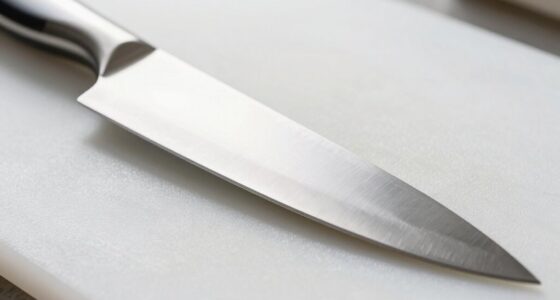
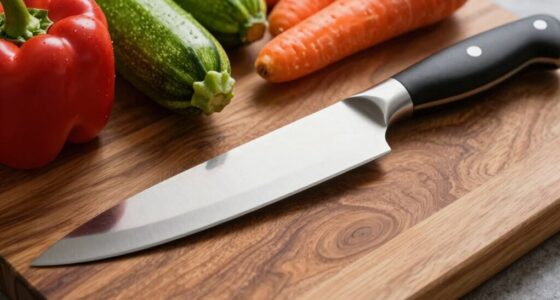
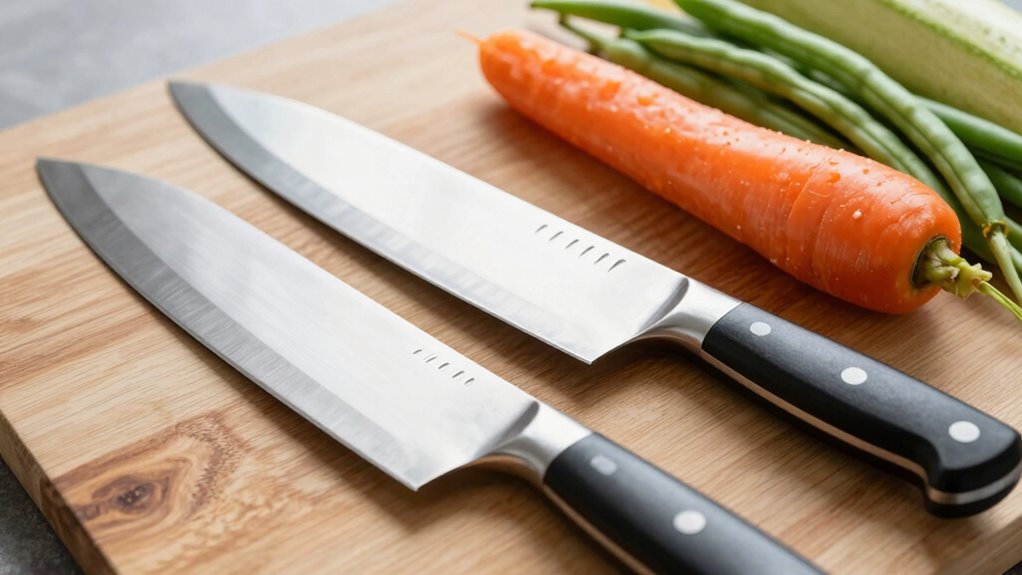
The blade shapes of Nakiri and Santoku markedly influence how you prep ingredients. The Nakiri’s long, rectangular blade with a straight edge allows you to perform precise, straight-down cuts, making it ideal for clean vegetable slices and uniform mincing. Its flat profile ensures consistent thickness, which is perfect for delicate chopping tasks. The blade geometry of each knife contributes to different cutting techniques and efficiencies. Additionally, the Nakiri’s design emphasizes a vegetable-centric approach, making it especially suited for dedicated vegetable preparation. The Nakiri’s blade length supports efficient, straight cuts, reducing fatigue during extended prep work. The Santoku’s shorter, thinner blade with a rounded sheep’s foot tip offers more versatility. Its slightly curved edge supports a rocking motion, enabling smooth slicing and dicing of vegetables, fish, or meats. The curved spine and pointed tip make it easier to maneuver around ingredients, especially for more intricate cuts. Overall, the blade shape dictates your prep style, with Nakiri excelling in straightforward vegetable cuts and Santoku offering flexibility for a wider range of ingredients. Additionally, the blade design of the Santoku allows for a comfortable grip and precise control during various cutting motions, enhancing overall efficiency and safety.
Comparing Weight and Balance for Different Cutting Styles

Your handling and control depend heavily on a knife’s weight and balance, which also influence how fatigued you feel during extended use. A lighter Nakiri offers comfort for long vegetable chopping sessions, while a heavier Santoku provides stability for forceful cuts. Considering your cutting style helps determine which knife minimizes fatigue and maximizes precision. knife ergonomics can help you select a tool that best fits your hand and improves overall comfort. Additionally, understanding fundamental balance points can further refine your choice to match your specific cutting techniques and preferences. Recognizing user preferences in weight and balance can lead to more satisfying and efficient kitchen experiences. For example, experimenting with different herbal traditions might give you insight into how various knife styles can complement specific culinary practices.
Handling and Control
When choosing between a Nakiri and a Santoku, understanding how their weight and balance affect handling is essential for different cutting styles. The Santoku’s balanced weight, typically 155-227 grams, offers stability for forceful cuts and a controlled rocking motion. Its even distribution allows for precision and quick maneuvering. In contrast, the Nakiri’s lighter weight, around 4-6 ounces per handle length, enhances comfort during extended vegetable prep. Its heavier front blade provides stability for straight-down chopping but requires less effort for push cuts. Your choice depends on your preferred technique. Additionally, the ergonomics of the handle play a significant role in reducing fatigue during prolonged use, especially when considering knife balance for different tasks. Proper blade design can further influence how comfortably a knife can be used over extended periods.
Fatigue During Use
Choosing between a Nakiri and a Santoku impacts how quickly and easily you tire during extended chopping sessions. The lighter weight of the Nakiri, around 4-6 ounces, reduces fatigue, especially when you’re chopping vegetables for a long time. Its straight, rectangular blade allows for a comfortable, controlled push-cut, requiring less force. In contrast, the Santoku’s weight, between 155-227 grams, provides stability for forceful cuts but can cause fatigue during prolonged use. Its balanced weight distribution and thinner tip make it easier to maneuver, though it demands more control and effort over time. If you prefer quick, repetitive chopping, the Nakiri’s lighter design minimizes fatigue. For longer periods or more forceful cuts, the Santoku’s stability helps, but you might feel more tired after extended use. Proper blade weight and balance can also influence your comfort and efficiency, especially during extended tasks, and selecting the right knife design is essential for reducing fatigue and increasing efficiency. Additionally, considering ergonomic handle design can further improve comfort and reduce strain during prolonged use.
Optimal Cutting Techniques for Each Knife Type
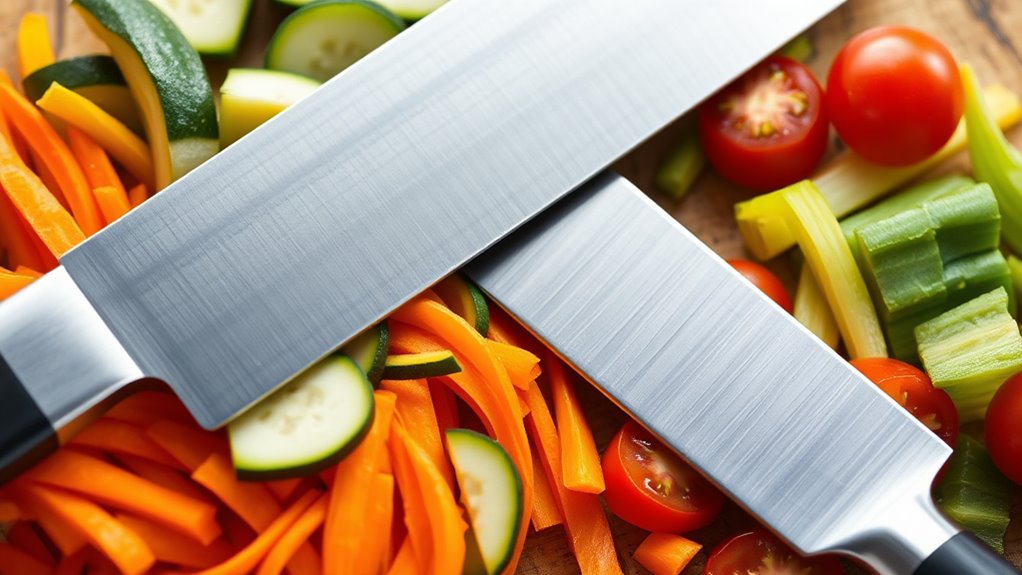
Each knife type is optimized for specific cutting motions that maximize its strengths. With a Nakiri, focus on straight down, vigorous chops for vegetable prep, which ensures clean, uniform cuts without rocking. Its flat edge and straight blade make push-cutting easy and precise. In contrast, the Santoku excels with a rocking or push-cut motion, allowing you to slice, dice, and mince with finesse. Its thinner, curved tip supports delicate cuts and versatile techniques. Understanding the blade geometry helps you choose the right motion for each task and improve your overall efficiency in the kitchen. Additionally, recognizing how cutting techniques influence the effectiveness of each knife can lead to safer and more accurate prep work. Mastering proper cutting motion can also reduce fatigue and improve your knife control. Being aware of optimal cutting techniques can further enhance your precision and safety during food preparation, especially when employing proper knife handling to prevent accidents and ensure consistent results.
Best Culinary Tasks for Nakiri and Santoku

Nakiri excels at precise vegetable preparation, making it your go-to for tasks like slicing, dicing, and julienning produce. Its straight, flat blade allows you to make uniform cuts with minimal effort, perfect for prepping large quantities of vegetables quickly. You’ll find it ideal for finely chopping herbs, creating brunoise, or slicing peppers and zucchinis with clean, straight strokes. The Nakiri’s design keeps the vegetable stable, ensuring consistent thickness and presentation. While it’s primarily a vegetable-focused tool, it can also handle delicate tasks like mincing garlic or ginger with controlled, downward cuts. Additionally, practicing proper knife technique can significantly improve your efficiency and safety when using the Nakiri. Understanding blade geometry can help you select the best knife for different culinary tasks, ensuring optimal performance and safety. Being aware of knife maintenance also extends your tool’s lifespan and keeps it performing at its best, especially for precision vegetable work. Incorporating cutting board safety practices can further enhance your overall kitchen safety and efficiency.
Material Composition and Durability Considerations

When choosing between a Nakiri and a Santoku, understanding their blade materials is key, as it affects durability and edge retention. Santoku knives often use thicker steel, making them more resistant to chipping, while Nakiri blades prioritize sharpness with thinner edges. Proper maintenance and care will make sure both knives perform well and last longer, regardless of their material differences. Incorporating attention to detail in your handling and sharpening routines is essential to maximize the lifespan of your knife. Additionally, selecting the right blade steel can influence how well the knife resists corrosion and maintains its cutting performance over time. Being aware of material composition can also help you choose the most suitable knife for your specific kitchen needs. Understanding the material properties of different steels can further enhance your ability to select a durable and efficient knife.
Blade Material Types
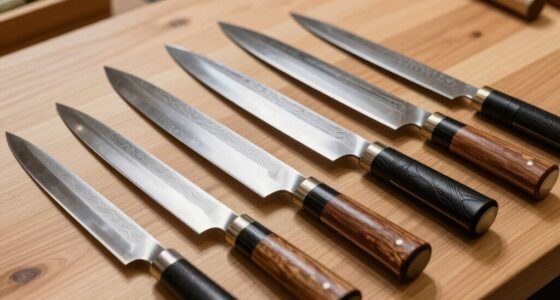
Blade material choices considerably impact the durability, sharpness, and maintenance of your knife. You’ll find options like high-carbon stainless steel, Damascus steel, and traditional carbon steel. High-carbon stainless steel offers excellent edge retention and corrosion resistance, making it versatile for daily use. Damascus steel combines layered patterns with strength, adding aesthetic appeal and durability. Traditional carbon steel is prized for its incredible sharpness but requires frequent maintenance to prevent rust. Each material influences how your knife performs and how much effort you’ll need for upkeep. Key considerations include: Vetted – Berkley Vallone
- Resistance to corrosion and staining
- Ease of sharpening and honing
- Flexibility and toughness of the blade
- Overall lifespan and ability to withstand daily tasks
Durability and Edge Retention
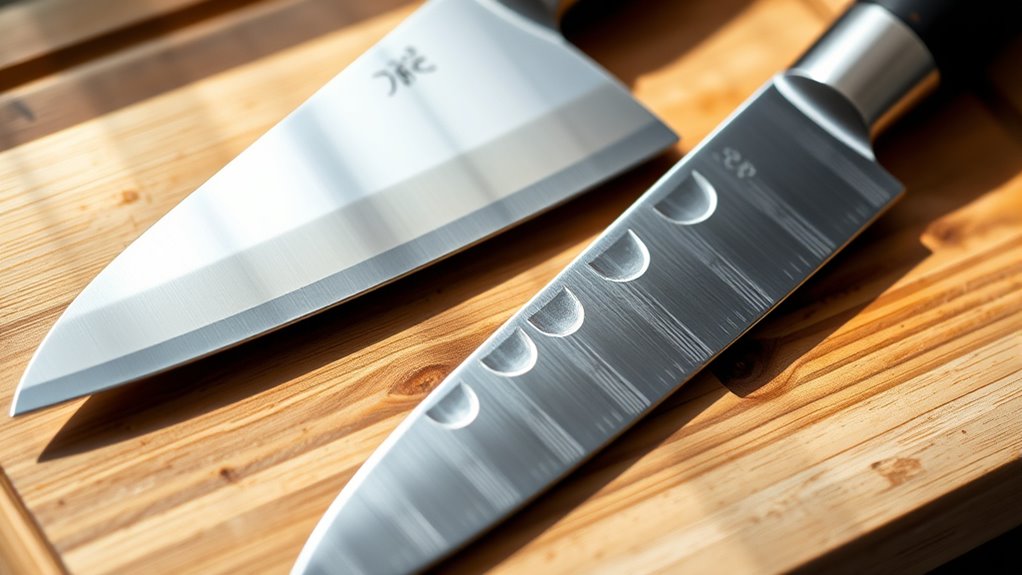
Material composition plays a essential role in a knife’s durability and how well it retains its edge over time. Santoku knives, often made from carbon steel or stainless steel with a thicker spine, resist chipping and maintain their sharpness through tougher tasks like cutting meats. Their fluted blades and curved spines add to their robustness, making them suitable for demanding use. Nakiri knives, crafted from high-quality carbon steel or Damascus steel, prioritize sharpness and precision. Their thin, straight edges excel at clean vegetable cuts but may require more careful handling to prevent dulling. Overall, Santokus tend to be more durable for heavy-duty tasks, while Nakiris excel at maintaining a razor-sharp edge for delicate vegetable work. Your choice depends on balancing durability with precision needs.
Maintenance and Care
Proper maintenance and care are essential to keep both Nakiri and Santoku knives performing their best, especially given their differing materials and construction. You should regularly clean and dry your knives to prevent rust and corrosion, particularly for carbon steel models. Sharpen the blades with a whetstone or appropriate honing tool to maintain their edge. Avoid dishwasher cleaning, which can damage the steel and handle materials. Store your knives safely in a knife block or on a magnetic strip to prevent blade dulling or chipping. Additionally, consider these care tips:
- Use a sharpening stone for precise edge maintenance.
- Avoid cutting on hard surfaces like glass or stone.
- Regularly inspect for signs of wear or damage.
- Use appropriate cutting boards to preserve blade integrity.
Handle Designs and Ergonomics for Extended Use

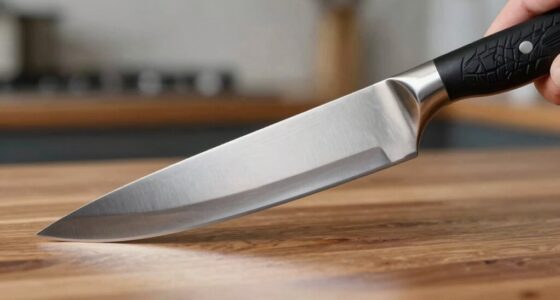
When choosing a Nakiri or Santoku for extended use, handle design and ergonomics play a crucial role in reducing fatigue and improving comfort. A well-designed handle fits your hand securely, minimizing strain during prolonged chopping sessions. Nakiri handles often feature traditional Japanese styles with smooth wood or composite materials, providing a lightweight, balanced feel. Santoku handles tend to be Western-style, with ergonomic curves and textured grips that enhance control. Both handle types should feel comfortable, with balanced weight distribution to prevent wrist fatigue. Consider your grip style—whether you prefer a pinch grip or full hand—since this influences handle shape. Choosing a handle that offers a secure, comfortable grip helps you work longer without discomfort, making your prep more efficient and enjoyable.
Cost Factors and Value in Choosing Your Kitchen Knife

Choosing the right kitchen knife involves evaluating both cost and value to guarantee you get the best performance for your investment. Higher-quality knives often cost more upfront but offer durability, sharpness, and better cutting experience. Cheaper options may save money initially but can require frequent sharpening or replacement, reducing overall value. Consider the materials, craftsmanship, and brand reputation when assessing cost-effectiveness.
Key factors include:
- Material quality and edge retention
- Handle durability and ergonomics
- Blade design suited to your cutting style
- Long-term maintenance and sharpening needs
Balancing these elements helps you choose a knife that fits your budget while delivering consistent, reliable performance in your kitchen. Ultimately, investing in quality can save you money and frustration over time.
Versatility: From Vegetables to Proteins

Both Nakiri and Santoku knives excel in vegetable preparation, but Santoku’s design makes it more versatile for handling proteins and herbs as well. Its shorter, thinner blade and curved shape allow for rocking cuts and precise slices, making it ideal for meats, fish, and herbs. You can easily switch between mincing garlic, dicing vegetables, or slicing boneless chicken without changing knives. The flat edge of the Nakiri limits its use mainly to vegetables, especially for straight-down chopping. Conversely, the Santoku’s multi-purpose design supports various cutting techniques, giving you flexibility in the kitchen. Whether you’re preparing a vegetable medley or delicate fish fillets, the Santoku adapts seamlessly, making it the better choice if versatility across ingredients is your priority.
Maintenance Tips to Keep Your Knives Sharp and Effective
Maintaining the sharpness and effectiveness of your knives requires regular care and proper techniques. To keep your Nakiri or Santoku performing at their best, follow these tips:
- Hone regularly with a sharpening steel to realign the edge and prevent dullness.
- Hand wash your knives immediately after use, avoiding dishwashers that can damage blades.
- Use a proper cutting board like wood or bamboo, avoiding hard surfaces like glass or stone.
- Store safely in a knife block or on a magnetic strip to prevent edge damage.
Frequently Asked Questions
Which Knife Is Better for Beginner Cooks?
You should choose a Santoku as a beginner cook because it’s versatile and easier to handle. Its balanced weight and curved blade make chopping, slicing, and dicing more intuitive, especially for various ingredients like vegetables and meats. Plus, Santokus are generally more affordable and durable, giving you confidence in your skills while allowing room to grow. Its design helps you develop proper technique without feeling overwhelmed.
Can Nakiri and Santoku Be Used Interchangeably?
Think of your kitchen as a symphony, and your knives as versatile instruments. You can use a Nakiri and a Santoku interchangeably, but they’re like different brushes for the same canvas. The Nakiri’s straight blade excels at precise vegetable cuts, while the Santoku’s curved edge handles a broader range, including meats. Swap them with care, knowing each brings a unique note to your culinary harmony.
How Does Blade Thickness Affect Cutting Precision?
Blade thickness directly impacts your cutting precision by influencing control and stability. Thinner blades, like those on a Nakiri, allow for more precise, delicate cuts because they flex less and offer better maneuverability. Thicker blades provide more strength and durability but may reduce finesse, making detailed slicing harder. So, choosing a thinner blade helps you achieve cleaner, more accurate cuts, especially when working with delicate or intricate ingredients.
Are These Knives Suitable for Professional Kitchens?
Sure, these knives are perfect for professional kitchens—if your chefs love precision, versatility, and a touch of elegance. The Santoku’s durability and multi-purpose design handle everything from fish to herbs, while the Nakiri’s straight edge makes vegetable prep a breeze. Just be prepared for the cost and maintenance; these aren’t your average utensils. If your kitchen needs sharp, reliable tools, both knives deliver, even under pressure.
What Maintenance Practices Extend Knife Lifespan?
To extend your knife’s lifespan, regularly hand wash and dry it immediately after use to prevent rust and corrosion. Hone the blade frequently with a honing steel to realign the edge, and sharpen it when it becomes dull using a whetstone or professional sharpener. Avoid dishwasher cleaning, cutting on hard surfaces, or using the knife for tasks beyond its design. Proper storage in a knife block or on a magnetic strip also helps maintain its sharpness.
Conclusion
Choosing between a nakiri and a santoku is like selecting your trusted sword for culinary battles—each has its own strength. As you master their blades, you’ll find yourself carving through ingredients with the grace of a seasoned warrior. Remember, the right knife isn’t just about tools; it’s about releasing your kitchen’s full potential. So, pick wisely, sharpen often, and let your culinary journey unfold like a well-choreographed dance.