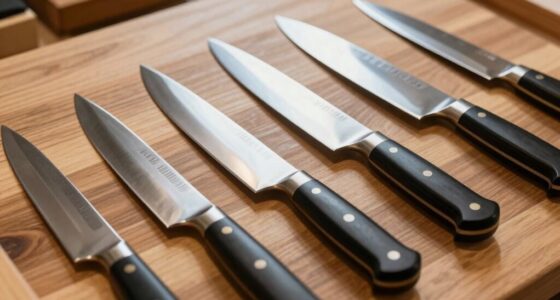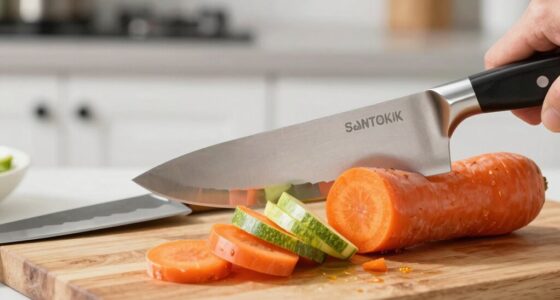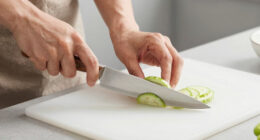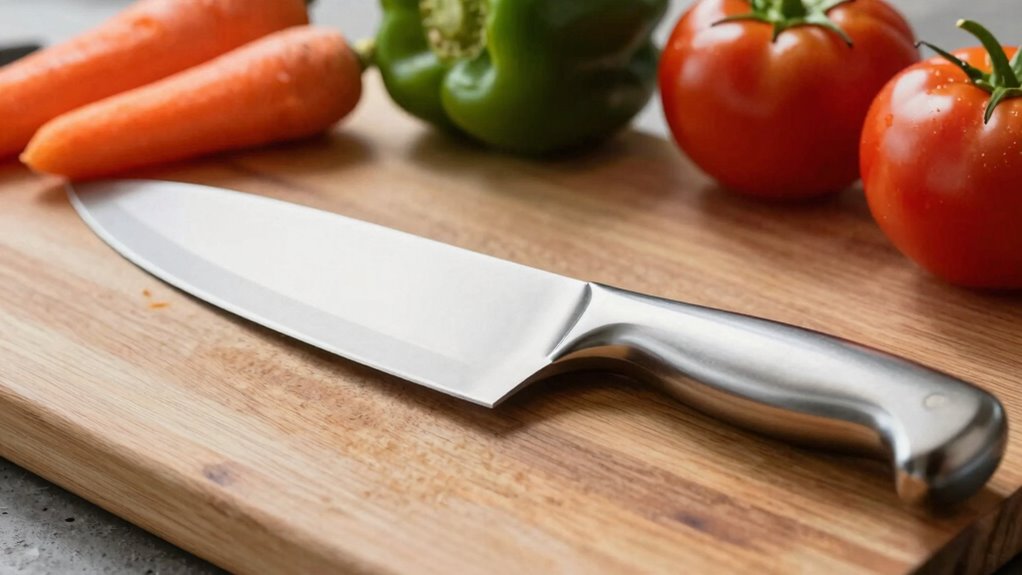
To match a knife shape to your cooking style, consider the tasks you perform most often. For chopping vegetables, a broad, curved chef’s knife makes prep quicker and safer with its rocking motion. If you handle meat or fish delicately, opt for flexible, narrow blades like fillet or utility knives. For bread or soft foods, serrated knives ease cutting with less effort. Choosing the right shape improves safety, control, and efficiency—stick around to learn more about finding your perfect fit.
Key Takeaways
- Identify your primary tasks, such as chopping vegetables or filleting fish, to select the most suitable knife shape.
- Choose a broad, curved blade for versatile chopping and slicing; opt for slender, flexible blades for detailed, precision cuts.
- Use serrated knives for bread and soft baked goods to match their saw-like shape for effective slicing.
- Prioritize maintaining sharpness through proper cleaning, honing, and storage to ensure safety and efficiency.
- Select knives that feel comfortable in your hand to improve control, reduce fatigue, and enhance overall safety during cooking.
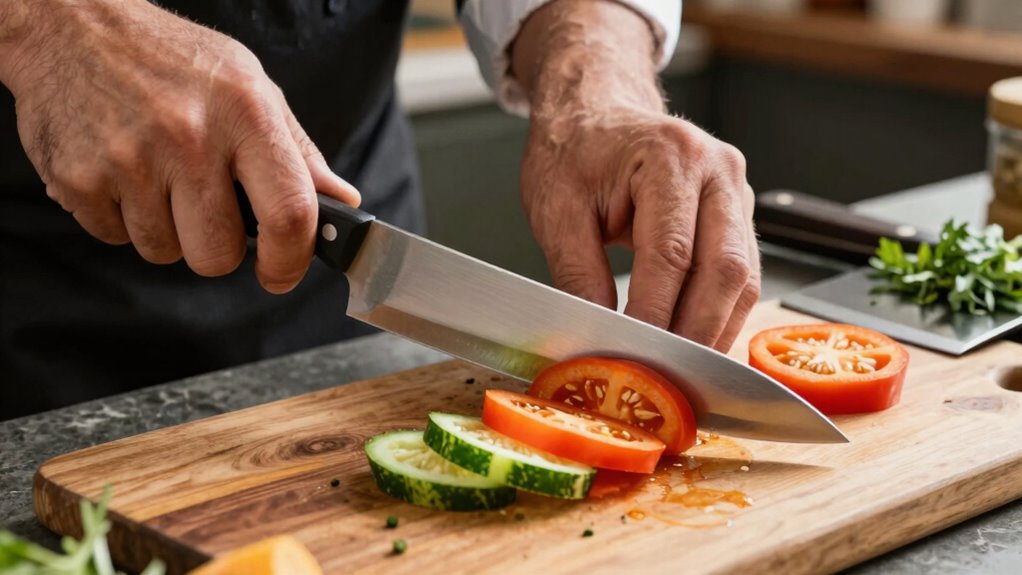
Choosing the right knife shape can considerably enhance your cooking experience, especially when it aligns with your specific culinary style. When you select a knife that suits your techniques, you’ll find prep work easier, more efficient, and safer. The shape of your knife influences how you handle it, so understanding which style best matches your cooking habits is key to improving both your skills and your kitchen safety. Proper knife maintenance is essential here; a well-maintained blade stays sharper longer, reducing the risk of slips and accidents, and making your overall experience smoother.
If you tend to chop vegetables or do a lot of slicing, you’ll benefit from a chef’s knife with a broad, curved blade. Its versatility allows for rocking motions that make chopping faster and more comfortable. A curved edge helps you maintain control, which is crucial for kitchen safety. Keeping this knife sharp through regular honing and proper storage minimizes the chances of slips that can cause injuries. When you take good care of your knives, you avoid unnecessary force during cutting, which also lessens fatigue and reduces the risk of accidents. Understanding the importance of proper knife maintenance can significantly extend the lifespan of your blades and improve safety. Additionally, selecting the right knife shape for your tasks can make a noticeable difference in your comfort and precision. To further optimize your safety, consider ergonomic knife designs that reduce strain during prolonged use. Incorporating these ergonomic features can help prevent repetitive strain injuries, especially during extended cooking sessions.
For precision tasks like filleting fish or slicing thin meats, a flexible, narrow blade such as a fillet or utility knife might be your best choice. These shapes allow for delicate cuts and detailed work, with less pressure needed. Since these knives are often used for intricate cuts, maintaining their sharpness is vital. Dulling blades require more force, increasing the chance of slipping and injury. Regular knife maintenance—cleaning, honing, and proper storage—helps keep these specialized blades performing at their best, making detailed work safer and more efficient. Recognizing the importance of proper knife care can help you avoid unnecessary accidents and prolong the life of your blades.
If you frequently work with bread or soft, baked goods, a serrated bread knife suits your needs. Its saw-like edge grips and cuts through crusts without crushing the interior. The serrated shape minimizes the effort needed, which means less strain and less chance for accidents. Proper knife maintenance for serrated knives involves gentle hand washing and avoiding the dishwasher, which can dull the teeth. A well-maintained serrated knife stays sharp longer, providing safer, cleaner slices. Ensuring your knives are stored safely and correctly also plays a crucial role in maintaining their longevity and safety.
Ultimately, matching your knife shape to your cooking style isn’t just about convenience—it’s about safety and efficiency. When your knives feel right in your hand and are properly maintained, you’re less likely to experience slips or fatigue. This combination of the right shape and good maintenance creates a safer kitchen environment, allowing you to focus on your craft without worry. Take the time to select and care for the knives that fit how you cook, and you’ll notice a marked improvement in your culinary confidence and safety.

MOSFiATA 8" Super Sharp Professional Chef's Knife with Finger Guard and Knife Sharpener, German High Carbon Stainless Steel EN1.4116 with Micarta Handle and Gift Box
【High Carbon German Stainless Steel Laser-engraved Pattern(Not Damascus Pattern )】 MOSFiATA 8 inch pro chef's knife is made…
As an affiliate, we earn on qualifying purchases.
As an affiliate, we earn on qualifying purchases.
Frequently Asked Questions
What Are the Differences Between Western and Asian Knife Styles?
Western knives typically feature a curved blade for rocking cuts, emphasizing knife ergonomics for comfort during chopping, while Asian knives often have a straight or slightly curved edge suited for precise slicing and push cuts. Cultural influences shape their design—Western styles prioritize versatility, whereas Asian knives focus on delicate, controlled movements. Your choice depends on how you prefer to hold and maneuver your knife, aligning with your cooking style and ergonomic comfort.
How Do Knife Materials Affect Cutting Performance?
Knife materials directly impact cutting performance, especially regarding blade durability and material maintenance. High-carbon stainless steel offers excellent edge retention and durability, making your cuts cleaner and easier. However, it requires regular sharpening and careful cleaning to prevent rust. On the other hand, ceramic blades stay sharp longer and need less maintenance but are more brittle and prone to chipping. Choose based on your cooking style and willingness to maintain your tools.
Can I Use One Knife for All Cooking Tasks?
You can use a multi-purpose knife for most cooking tasks, but a single knife might not be ideal for everything. Relying on one knife limits your efficiency, especially with intricate or specialized cuts. To master single-handed techniques and streamline your prep, invest in a versatile, well-balanced multi-purpose knife. This approach helps you handle various ingredients smoothly, but for precision work, having a specialized knife can make a noticeable difference.
How Often Should I Sharpen or Replace My Knives?
Like a trusty steed, your knife needs regular care. You should sharpen your knives every 1-3 months, depending on usage, to maintain their edge. Keep an eye on knife maintenance—if slicing feels rough or the blade dulls quickly, it’s time to sharpen or replace. Usually, if a knife feels dull even after sharpening, it’s time for a replacement. Proper care keeps your knives performing at their best.
What Safety Tips Should I Follow When Handling Sharp Knives?
When handling sharp knives, prioritize knife safety by always using proper handling techniques. Keep your fingers tucked in to avoid cuts, and hold the knife firmly with a secure grip. Use a stable cutting surface and cut away from your body. Never try to catch a falling knife, and store knives safely when not in use. These handling techniques minimize accidents and keep you safe while cooking.

Cutluxe Fillet Knife for Fish & Meat – 7" Razor Sharp Boning Knife – Flexible High Carbon German Steel, Full Tang Ergonomic Handle Design, Grilling Gifts for Men – Artisan Series
PREMIUM PERFORMANCE – Perfectly engineered fish fillet knife tapered to a razor-sharp edge for effortless filleting, de-boning, trimming,…
As an affiliate, we earn on qualifying purchases.
As an affiliate, we earn on qualifying purchases.
Conclusion
Choosing the right knife shape truly enhances your cooking experience, making prep easier and safer. Some might think investing in multiple knives is unnecessary, but having the right one for each task saves time and reduces fatigue. Don’t settle for a one-size-fits-all approach—your dishes will benefit from the precision and comfort tailored to your style. Trust me, a well-matched knife isn’t just an upgrade; it’s a game-changer in your kitchen routine.

Orblue Serrated Bread Knife with Upgraded Stainless Steel Razor Sharp Wavy Edge – Bread Cutter Ideal for Slicing Homemade Bagels, Cake (8-Inch Blade with 5-Inch Handle)
ULTRA-SHARP, CUTS EFFORTLESSLY: The Orblue Serrated Bread Knife blade has an ultra-sharp serrated edge that grips and effortlessly…
As an affiliate, we earn on qualifying purchases.
As an affiliate, we earn on qualifying purchases.

Astercook Knife Set, 13 Pieces Kitchen Knives Set with Healthy Anti-Rust Coating, Dishwasher Safe, Stainless Steel Chef Knife Sets with 6 Blade Guards, Perfect Holiday Gifts for Kitchen
Multipurpose Knife Set: This kitchen knives set includes 8" Chef Knife, 8" Slicing Knife, 7" Santoku Knife, 8"…
As an affiliate, we earn on qualifying purchases.
As an affiliate, we earn on qualifying purchases.