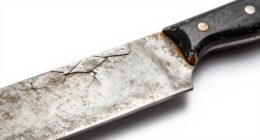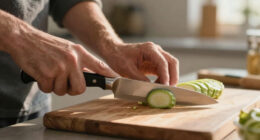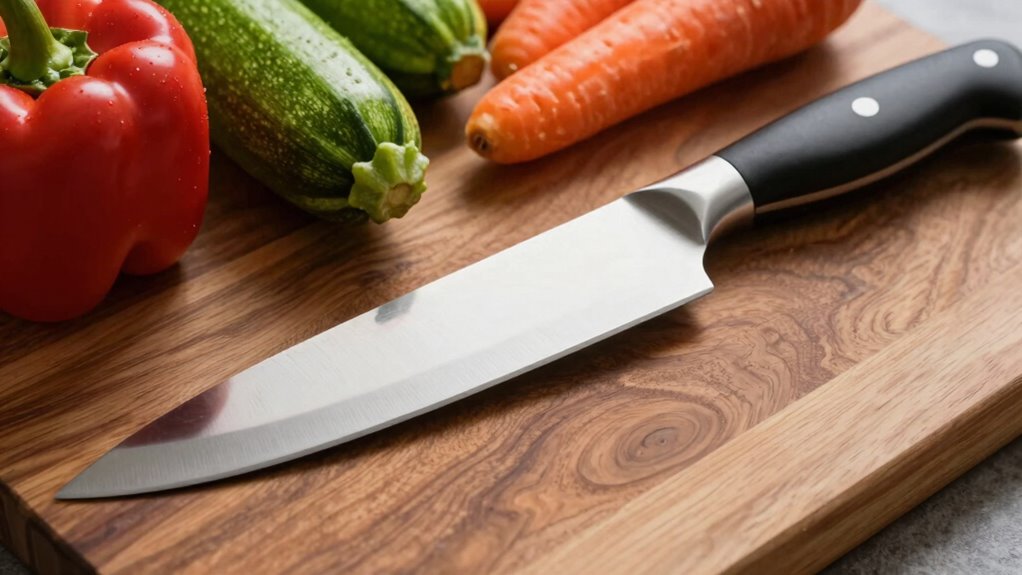

If you’re left-handed, a “lefty” kitchen knife can markedly improve your control, safety, and cutting precision by matching the blade bevel and handle design to your natural hand movements. While some left-handed cooks adapt with standard tools, investing in a specialized left-handed knife offers better comfort, reduced fatigue, and cleaner cuts, especially for complex tasks. To discover whether a lefty knife is right for you and how it can enhance your cooking, explore further.
Key Takeaways
- Left-handed knives often feature single-bevel blades ground on one side for precise, focused cuts, enhancing control for left-handed users.
- Ergonomically designed left-handed handles improve grip security and reduce fatigue during extended use.
- Ambidextrous or neutral knives can suit both hands, offering versatility without needing a specialized left-handed knife.
- Properly designed tools increase safety by reducing slips and improve cutting accuracy, justifying the need for “lefty” knives in complex tasks.
- For regular or professional use, investing in a dedicated left-handed knife can significantly improve comfort, efficiency, and overall cooking experience.
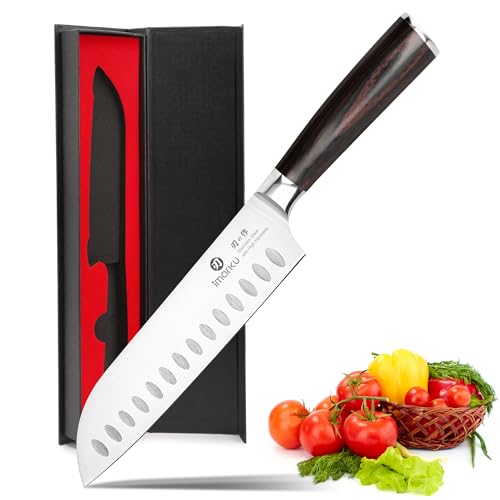
imarku Chef Knife 7 Inch Kitchen Knife Ultra Sharp Santoku Knife - High Carbon Japanese Chefs Knife, Kitchen Gadgets 2025, Apartment Essentials, Birthday Gifts for Him Her, Best Gifts for Women Men
Professional Santoku Knife: This imarku super sharp santoku knife is made of high carbon stainless steel that resists...
As an affiliate, we earn on qualifying purchases.
Understanding the Prevalence of Left-Handedness
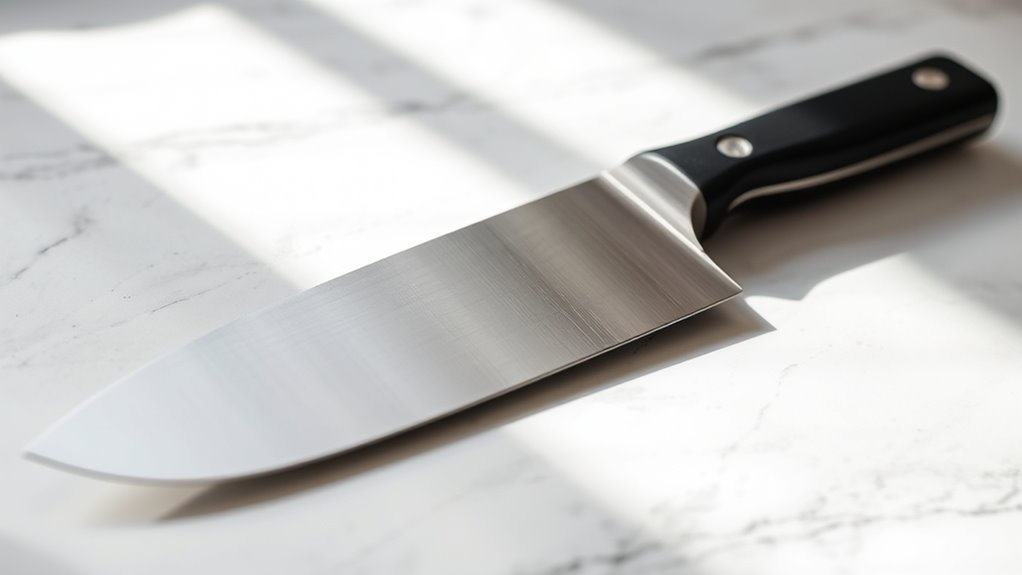
Understanding the prevalence of left-handedness is essential because a significant portion of the population, roughly 10-30%, uses their left hand as their dominant hand. This means a sizable group faces daily challenges with products and tools primarily designed for right-handed users. In the kitchen, this can affect everything from knives to gadgets, often leading to discomfort or inefficiency. Recognizing how common left-handedness is helps you appreciate why specialized tools exist and why they matter. Left-handed individuals often adapt to right-handed designs, but doing so can cause fatigue and reduce precision. Awareness of ergonomic solutions highlights the importance of considering diverse designs that accommodate left-handed users, ensuring tasks are performed comfortably and accurately without unnecessary struggle. Additionally, understanding the design differences between left-handed and right-handed tools can further improve usability and comfort.
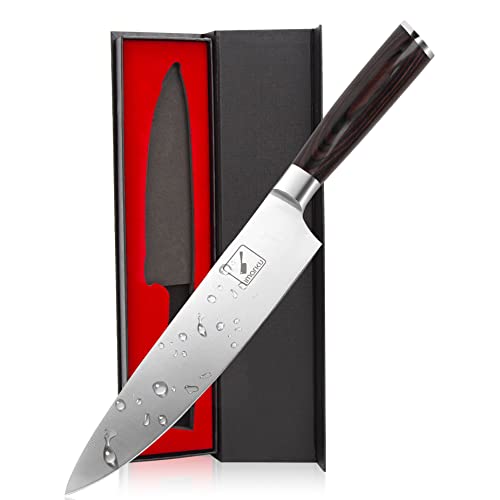
imarku Japanese Chef Knife - Sharp Kitchen Knife 8 Inch Chef's Knives HC Steel Paring Knife, Unique Gifts for Men and Women, Gifts for Mom or Dad, Kitchen Gadgets with Gift Box, Gyutou Knives
High-Carbon Stainless Steel Blade: It is manufactured from high-quality stainless steel that maintains its functionality for a long...
As an affiliate, we earn on qualifying purchases.
How Product Design Typically Caters to Right-Handed Users
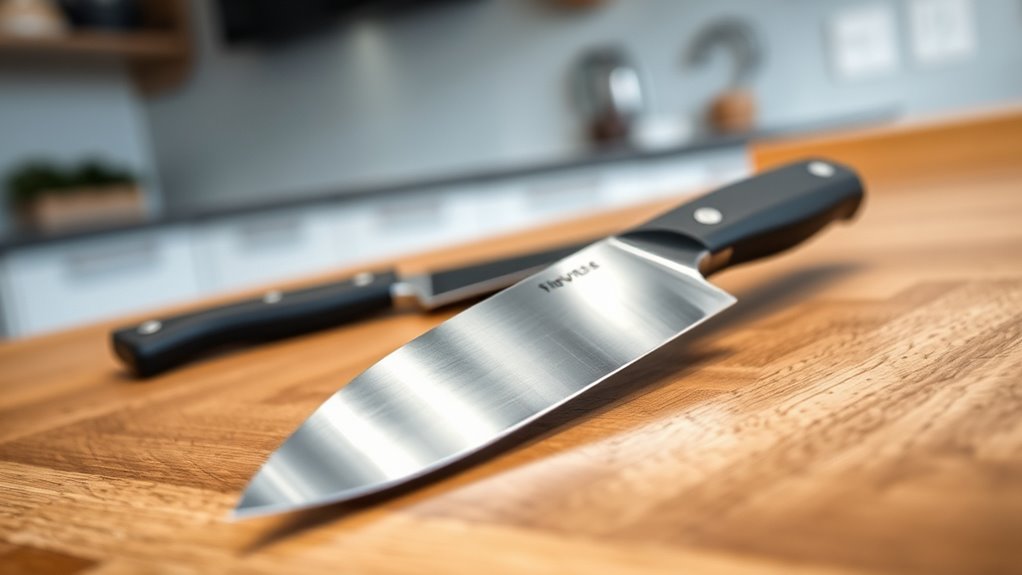
Most kitchen tools are designed with right-handed users in mind, often featuring symmetrical handles that work comfortably for either hand. Double-edged blades are common because they suit both right- and left-handed cutting, but many knives still have a default right-handed bevel. This design choice makes them easier to manufacture and purchase but can hinder left-handed users’ performance. Additionally, color accuracy in product design can influence how well a tool meets user needs across different handedness. Recognizing ergonomic considerations in design can help create more inclusive kitchen tools that accommodate all users effectively, especially as awareness of user-centered design increases across industries. Incorporating inclusive design principles can further improve usability for left-handed cooks and promote a more equitable kitchen environment.
Symmetrical Handle Shapes
Product designs often feature symmetrical handle shapes to cater primarily to right-handed users, ensuring the tool feels balanced and natural in their grip. These handles are shaped evenly on both sides, allowing right-handed users to hold and maneuver the knife comfortably without feeling off-center. This symmetry simplifies manufacturing and reduces costs, making the knives more widely available and affordable. However, for left-handed users, this design can feel awkward or less secure, as the handle doesn’t conform to the natural contours of their grip. Symmetrical handles prioritize ease of production and broad compatibility, but they don’t account for the ergonomic differences between dominant hands. As a result, left-handed users often find these handles less comfortable during extended use. Ergonomic design considerations play a crucial role in how comfortable and effective a knife feels during prolonged use. Additionally, ergonomic features such as contoured grips can significantly improve comfort for left-handed individuals, highlighting the importance of tailored product design. Incorporating ergonomic principles can lead to more inclusive and user-friendly kitchen tools for everyone, especially when considering handedness-specific design modifications. Moreover, understanding user comfort is essential for developing tools that reduce fatigue and improve safety for all users.
Double-Edged Blade Design
Double-edged blades are designed to cut effectively from either side, making them versatile tools for many users. However, their symmetrical shape often masks subtle differences that favor right-handed users. When manufacturers craft these blades, they typically grind the bevels on both sides evenly, ensuring ambidextrous use. This design allows you to switch hands easily, but it can also lead to compromises in precision and comfort for left-handed cooks.
Consider how this might evoke feelings of frustration or limitation:
- * Struggling to see the cutting line clearly *
- * Feeling uneven control during delicate cuts *
- * Experiencing fatigue from compensating hand positions *
- * Worrying about food slipping unexpectedly *
- * Losing confidence in your slicing accuracy *
Default Right-Handed Bevel
Manufacturers typically ground the bevels of kitchen knives on the right side, creating a design that naturally favors right-handed users. This standard setup means the angled edge leans toward the cutting board when held in a right hand, making slicing more efficient and precise. For left-handed users, this can lead to awkward cuts, increased resistance, and less control. Most knives are produced with this right-handed bevel by default, assuming right-handed dominance. While ambidextrous knives exist, they often still feature a symmetrical or right-biased bevel. This default design simplifies manufacturing and keeps costs lower, but it can compromise performance and comfort for left-handed cooks. Understanding this bias helps you decide whether to stick with standard knives or consider specialized left-handed options.

HOSHANHO Kitchen Knife in Japanese High Carbon Steel, Professional High-Class Chef's Knife 8 inch, Non-slip Ultra Sharp Cooking Knives with Ergonomic Handle
【High-End Japanese Steel Chef's Knife】 HOSHANHO chef's knife is made of Japanese high carbon steel 10Cr15CoMoV, 2x of...
As an affiliate, we earn on qualifying purchases.
The Unique Features of Left-Handed Knife Blades
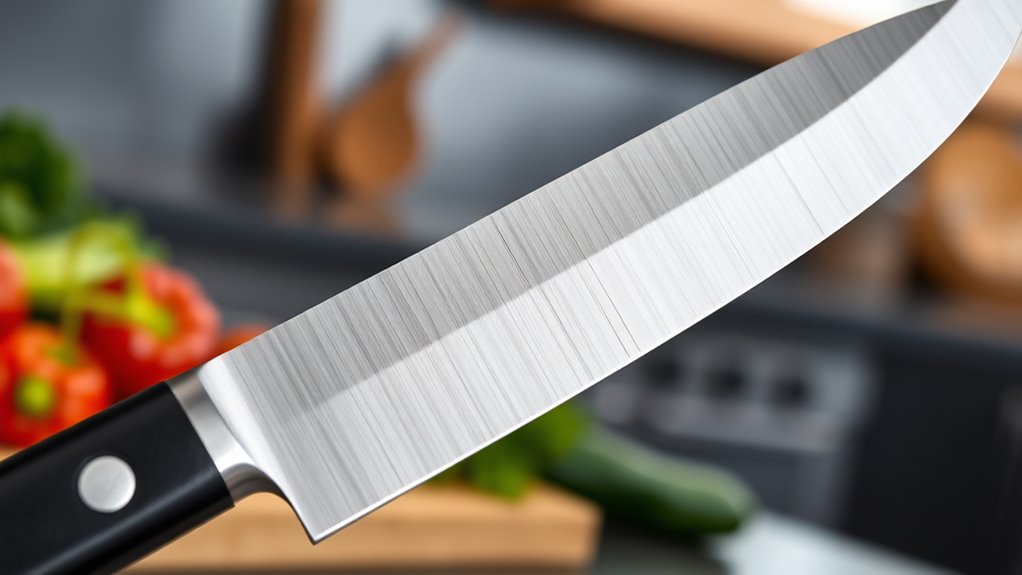
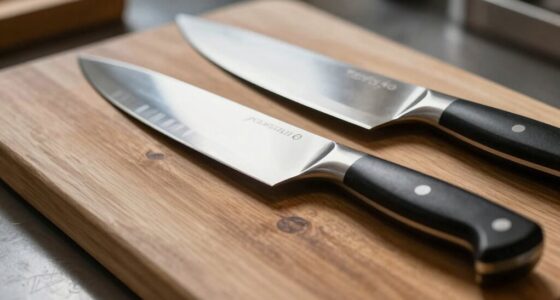
Left-handed knives have bevels ground on the right side of the blade, which makes a noticeable difference in how they cut. This design helps you see the cutting line clearly and applies more precise control during your tasks. By focusing on these features, left-handed blades offer better accuracy and ease of use. Additionally, understanding specialized knife design can help you choose the best tools tailored to your handedness.
Bevel Ground on Right Side
Because the bevel ground on the right side is a defining feature of left-handed knives, it guarantees that the blade’s cutting edge is optimized for left-handed users. This unique grind creates a more natural cutting motion, giving you better control and accuracy. You’ll notice:
- Sharper, cleaner cuts with less effort
- Precise slicing that enhances food presentation
- Reduced resistance, making slicing smoother
- Improved safety by minimizing slips and mishaps
- Comfort in handling, lessening hand fatigue
This design aligns with your natural cutting motion, allowing you to focus on your technique rather than fighting the blade. It’s a tailored feature that boosts confidence, efficiency, and safety in every cut you make. Blade geometry plays a crucial role in how effectively a knife performs, especially for left-handed users.
Maintains Clear Cutting Line
Have you ever struggled to see the precise line of your cut when using a standard knife? Left-handed blades are designed to keep that line clear. Their bevels ground on the right side direct the cut’s edge toward you, making it easier to follow your intended path. This orientation prevents the blade from veering away or causing visual confusion. Imagine this table representing how the blade guides your cut:
| Knife Type | Bevel Side | Cutting Line Clarity | User Experience |
|---|---|---|---|
| Right-Handed | Left side | Less visible, offset | Slightly awkward |
| Left-Handed | Right side | Clear, aligned | Better control |
| Ambidextrous | Symmetrical | Neutral | Versatile |
| Single-Edge | Ground on one side | Precise, focused | Specialized use |
This design helps you maintain a steady, accurate cut every time.
Enhances Precision and Control
The unique blade geometry of left-handed knives directly boosts your cutting precision and control. With blades ground on the right side, you experience cleaner, more accurate cuts without resistance. This design aligns with your natural left-handed motion, allowing you to slice smoothly and confidently. You’ll notice improved food presentation and consistent results, as the blade’s orientation reduces slipping and wobbling. The focused energy lets you cut with more power and precision, especially on delicate tasks like thin slicing or filleting. Plus, the ergonomic handle design supports your grip, minimizing fatigue during extended use.
- Feel more confident with every slice
- Achieve restaurant-quality presentation
- Slice with less effort and more accuracy
- Maintain control even on tricky ingredients
- Enjoy seamless, precise cutting every time

Japanese Chef Knife, 8 Inch Damascus Kitchen Knife with VG10 Steel, Handcrafted Sharp Knife with Ergonomic Handle, Cooking Knives for Home Chefs, Cooking Gifts for Men and Women
【Premium Damascus Chef Knife with VG-10 Steel Core】Our Japanese knives feature a VG-10 steel core (60 HRC) for...
As an affiliate, we earn on qualifying purchases.
Advantages of Ergonomic Handles for Left-Handed Cooks
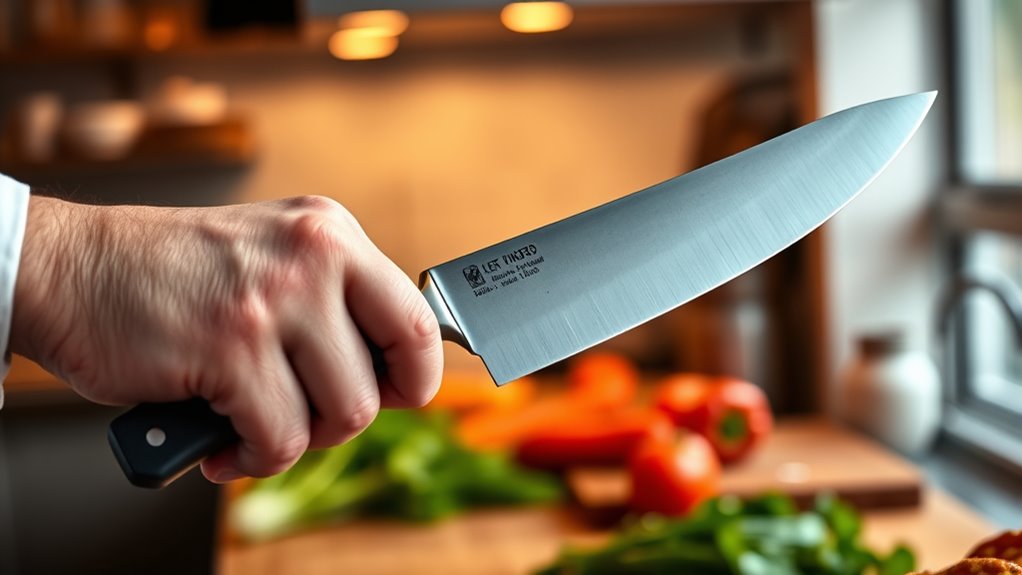
Ergonomic handles designed specifically for left-handed cooks offer significant comfort and control during food preparation. These handles are contoured to fit your left hand’s natural grip, reducing strain and fatigue during extended use. The design promotes better visual and auditory cues that can assist in proper grip placement, enhancing learning and adaptation. When you hold a knife with a handle tailored for left-handed use, you experience better alignment with your wrist and arm, making cutting smoother and more precise. The design minimizes unnecessary pressure points, helping prevent discomfort and repetitive strain injuries. Additionally, ergonomic handles improve your grip security, even when your hands are wet or greasy. This enhanced control allows you to maneuver the knife more confidently, especially during delicate tasks. Proper ergonomic design can also contribute to better overall kitchen safety by reducing the risk of accidents caused by slipping or fatigue. A well-designed handle can also help mitigate hand fatigue during prolonged chopping or slicing sessions. Incorporating ergonomic handles into your kitchen tools can further enhance your comfort and safety. Ultimately, a handle that fits your hand comfortably helps you work more efficiently and reduces the physical stress of prolonged chopping or slicing. Using knives with ergonomic handles is especially beneficial when considering preventing repetitive strain injuries, which are common among frequent cooks.
Performance Benefits of Using Left-Handed Knives

Using a left-handed knife enhances your cutting performance by allowing you to work more accurately and with greater control. This specialized design aligns perfectly with your natural hand motion, helping you make cleaner, more precise cuts. With a left-handed knife, you’ll notice:
- Better visibility of your cutting line
- Reduced blade resistance, requiring less effort
- Increased confidence in delicate slicing tasks
- Consistent food presentation and appearance
- Enhanced focus on technique rather than compensating for blade angle
These benefits lead to more efficient cooking and better results. You won’t struggle against the blade or fight its orientation, making your prep work smoother and more enjoyable. In short, a left-handed knife helps you perform at your best, every single time.
Safety Considerations for Left-Handed Kitchen Tools
Left-handed users must choose their kitchen tools carefully because improper design can increase the risk of accidents. Using right-handed knives or tools not optimized for your grip can lead to slips, uneven cuts, and even injuries. For example, a right-handed single-bevel knife used by a left-hander may cause the blade to catch or slip unexpectedly. Handles that aren’t ergonomically suited for left-handed use can cause fatigue and reduce control, raising the chance of accidents during extended prep work. To stay safe, opt for tools specifically designed for left-handed users or those with ambidextrous features. Always guarantee your grip feels natural, and handle knives with care, especially when applying force. Properly selected and maintained equipment helps you work confidently and reduces the likelihood of mishaps. Additionally, choosing security-optimized tools can help prevent accidents and ensure safer handling during extended kitchen tasks. Being aware of product safety features and selecting tools with these considerations in mind can further enhance your kitchen safety. Incorporating modern safety technology into your kitchen tools can provide extra layers of protection and improve overall safety during food preparation. Regularly inspecting your knives for sharpness and integrity can also greatly reduce the chance of slips and injuries.
The Adaptability of Left-Handed Chefs With Standard Equipment
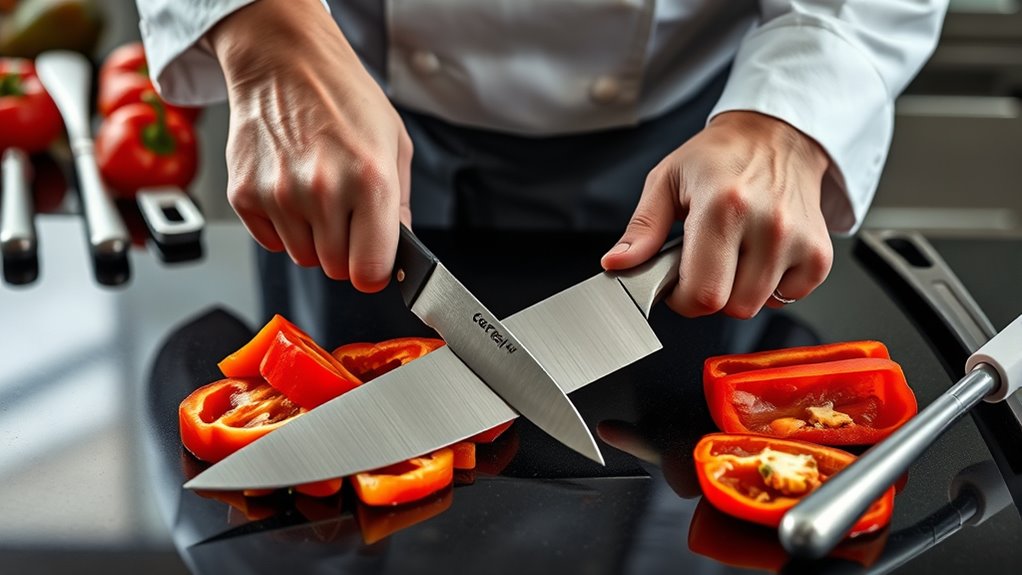
Many left-handed chefs have become highly adaptable with standard, right-handed kitchen equipment, often developing quick instincts and compensatory techniques to work efficiently. Over time, you learn to adjust your grip, angle, and cutting motion to compensate for equipment designed for right-handed use. This adaptability can boost your confidence and skill level.
Consider these aspects:
- You develop a sharper eye for angles and precision
- Your muscle memory improves through repeated practice
- You learn to anticipate blade behavior for smoother cuts
- You become more resourceful in improvising tools
- Your overall technique becomes more flexible and resilient
This flexibility allows you to excel with common tools, reducing the immediate need for specialized knives. Still, understanding your options can enhance your performance and comfort in the kitchen.
When to Consider Investing in a Left-Handed Knife
If you’ve tried using right-handed or ambidextrous knives and still face issues with blade resistance or uneven cuts, a left-handed version may be be the solution. Left-handed knives are especially beneficial if you’re a dedicated cook, often preparing complex dishes, or want to improve safety and efficiency. Recognizing these signs can help you decide when a left-handed knife will truly make a difference. Incorporating blade design considerations into your kitchen tools can further enhance your overall cooking performance, especially if you are aware of how blade design impacts your cutting technique. Additionally, understanding the importance of ergonomic features can help you select tools that reduce fatigue and improve precision during extended use. Exploring sound therapy principles can also assist in creating a focused and calm environment while cooking, making the process more enjoyable and efficient. Being aware of cultural symbols, such as specific designs or motifs, can also influence your choice of kitchen tools to reflect your personal style or heritage.
Making the Right Choice for Your Kitchen Needs
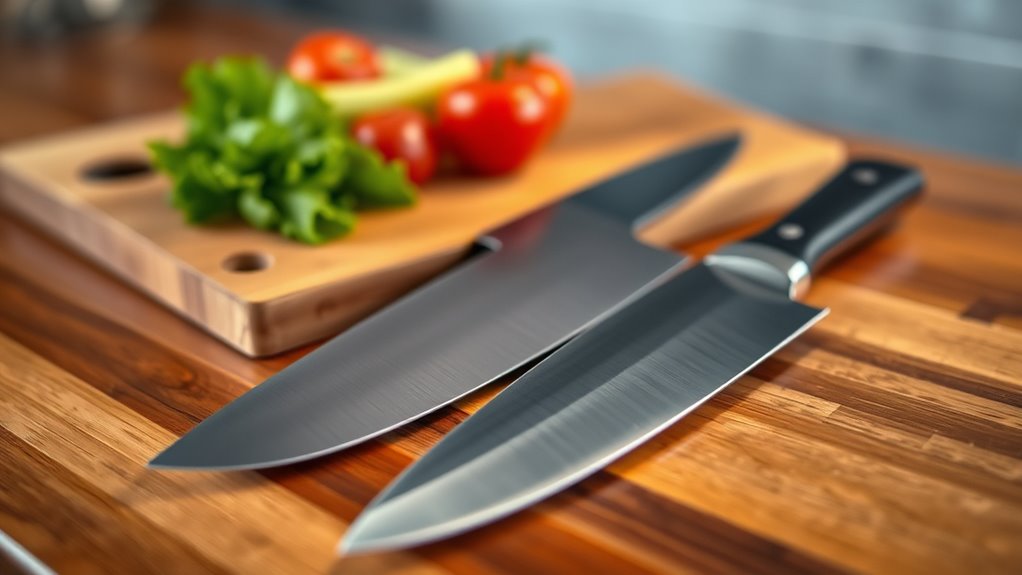
Choosing the right knife for your kitchen depends on your cooking style, hand dominance, and specific tasks. Think about what matters most—precision, comfort, or safety. If you often do detailed slicing or filleting, a left-handed or specialized knife could boost your performance. Consider these factors:
- *Enjoy effortless control and reduced fatigue during long prep sessions*
- *Achieve cleaner cuts that enhance your food’s presentation*
- *Feel confident with a tool designed for your dominant hand*
- *Reduce the risk of slips and accidents with proper ergonomics*
- *Invest in versatility with ambidextrous options when unsure*
- Proper knife design can significantly improve your overall safety and efficiency in the kitchen.
- Understanding ergonomic knife features can help you select tools that fit comfortably and safely in your hand.
Making the right choice means aligning your tools with your needs, so your cooking becomes safer, easier, and more enjoyable. Whether you opt for a left-handed knife or an ambidextrous one, your decision should empower your skills and enhance your experience.
Frequently Asked Questions
Are Left-Handed Knives More Expensive Than Standard Knives?
Yes, left-handed knives tend to be more expensive than standard knives. Since they’re specialized tools designed for a smaller market, manufacturers often charge a premium for their production. You might also find fewer options available, which can drive up costs. However, if you’re left-handed and serious about precision and comfort in your cooking, investing in a left-handed knife could be worth the extra expense for better performance and safety.
Can Right-Handed Knives Be Safely Used by Left-Handed Chefs?
Yes, you can safely use right-handed knives as a left-handed chef, but it might not be ideal. Right-handed knives often have bevels and handles designed for right-handed use, which can cause discomfort, fatigue, and less control. You may find yourself compensating with extra effort, risking slips or uneven cuts. If you cook frequently or want better precision, consider investing in a left-handed or ambidextrous knife for safer, more comfortable performance.
How Long Does It Take to Adapt to a Left-Handed Knife?
Adapting to a left-handed knife is like learning a new dance—you might stumble at first, but with practice, you’ll glide smoothly. Most people take about a week or two to feel comfortable, mastering control and precision. If you’re dedicated and practice regularly, you’ll notice improvements quickly, making your cuts cleaner and more confident. Stick with it, and soon, your left-handed knife will feel like an extension of your hand.
Do Left-Handed Knives Require Special Sharpening Techniques?
Yes, left-handed knives often need special sharpening techniques. Since the bevel is ground on one side, you should sharpen only that side to maintain its designed angle and edge. Using a standard sharpening method on both sides can ruin the blade’s performance. To keep your left-handed knife cutting well, use a sharpening stone or system that focuses on the beveled side, and avoid equal sharpening on both sides.
Are Left-Handed Knives Compatible With All Kitchen Knife Accessories?
Yes, left-handed knives are compatible with most kitchen accessories, but some tools might need adjustments. You’ll find that most sharpening stones, honing rods, and knife guards work seamlessly. However, certain specialized accessories like knife blocks or sheaths may be designed for right-handed blades, so check compatibility before purchase. With a little awareness, you can make certain your left-handed knives fit smoothly into your entire kitchen setup, enhancing your cutting experience.
Conclusion
In the grand kitchen of life, choosing the right knife is like wielding Excalibur—powerful and precise. If you’re left-handed, a dedicated lefty knife can make slicing feel as effortless as a knight drawing his sword from stone. But remember, even if your tools aren’t perfectly aligned, your skill and adaptability matter most. So, weigh your options wisely, and don’t be afraid to carve out your own culinary kingdom—your kitchen, your rules.