To choose the right knife style for daily vegetable prep, consider your tasks and comfort. Use a chef’s knife for chopping, slicing, and dicing larger vegetables—its curved blade offers control and efficiency. A paring knife is best for small, delicate cuts and peeling, while a serrated knife handles tougher skins like zucchini or cabbage. Keeping your knives sharp and well-maintained improves safety and ease. To understand more about selecting the perfect knife for your needs, keep exploring these essential tips.
Get ready for Prime Big Deal Days — try Prime free
Exclusive member deals on October 6–7, plus fast free delivery. Cancel anytime.
As an affiliate, we earn on qualifying purchases.
Key Takeaways
- Assess the types of vegetables you frequently prepare to determine the most suitable knife style.
- Use a chef’s knife for versatile chopping, slicing, and dicing tasks across various vegetables.
- Opt for a paring knife for detailed, delicate cuts and peeling small or intricate items.
- Select a serrated knife for cutting through tough skins and textured surfaces like zucchini or cabbage.
- Maintain all knives with regular sharpening to ensure safety, efficiency, and optimal performance.

Selecting the right knife style is essential for making your kitchen tasks easier and more efficient. When it comes to daily vegetable prep, the type of knife you choose can significantly impact your comfort, speed, and safety. Not all knives are created equal, and understanding the specific features of each style helps you pick the best tool for your needs. Proper knife care, including regular knife sharpening, is key to maintaining the performance of your chosen style, ensuring clean cuts and reducing the risk of accidents caused by dull blades.
Choosing the right knife and keeping it sharp makes vegetable prep safer, easier, and more efficient.
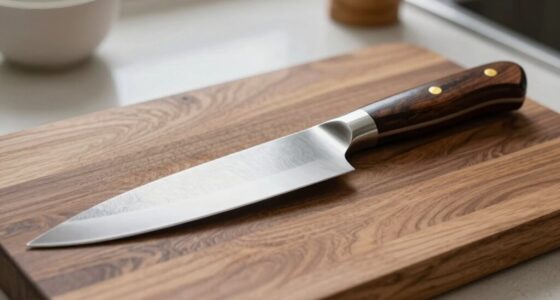
For vegetable prep, a versatile chef’s knife is often your best bet. Its broad, curved blade allows for rocking motions that make chopping, slicing, and dicing quick and effortless. This style is ideal for handling a variety of vegetables, from carrots to peppers, because it offers control and precision while minimizing fatigue. When you keep your chef’s knife sharp and well-maintained, it performs better and stays safer to use. Regular knife sharpening keeps the edge fine, ensuring you don’t need excessive force, which can lead to slips or uneven cuts. Invest in a good sharpening steel or stone, and learn how to sharpen your knife correctly—your vegetables will thank you. Proper knife maintenance is essential for prolonging the lifespan and performance of your blades, as well as ensuring consistent results. Additionally, understanding the different knife safety techniques can help prevent accidents and improve your overall efficiency in the kitchen.
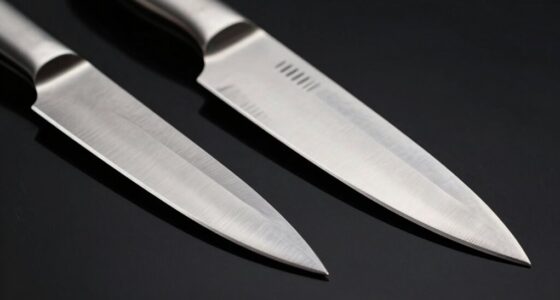
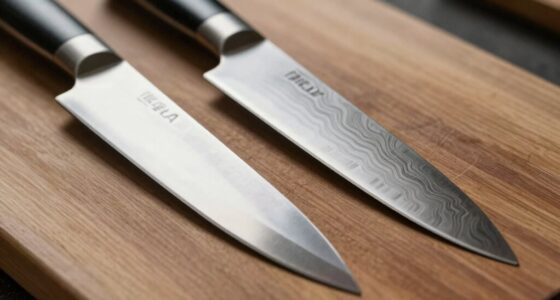
If you’re preparing smaller, delicate items like cherry tomatoes or herbs, consider a paring knife. Its small, pointed blade provides excellent control for intricate cuts and peeling. This knife style is perfect when you need precision, and it’s easier to maneuver in tight spaces. Even with a small blade, knife care remains important—keeping it sharp makes delicate tasks easier and prevents accidental slips. A dull paring knife requires more pressure, increasing the chances of injury, so sharpening should be a regular part of your knife care routine.
For larger vegetables like zucchinis or cabbage, a serrated knife can be handy. Its saw-like edge grips the surface, making it easier to cut through tougher skins without crushing the inside. While serrated knives are less versatile for fine chopping, they excel in slicing through textured surfaces. Remember, even with serrated knives, knife sharpening is crucial to maintain the teeth’s effectiveness. Properly cared-for knives, sharpened regularly, stay sharper longer and make vegetable prep safer and more efficient.
Ultimately, choosing the right knife style for your daily vegetable prep depends on what you find most comfortable and what tasks you do most often. Keep your knives sharp and well-cared-for, and they’ll serve you well. The right combination of style and maintenance transforms vegetable prep from a chore into a smooth, enjoyable process.
As an affiliate, we earn on qualifying purchases.
Frequently Asked Questions
Which Knife Style Is Best for Slicing Soft Vegetables?
For slicing soft vegetables, a paring knife is your best choice because it offers precision and control for delicate textures. Its sharp, narrow blade easily cuts through the tender vegetable without crushing or tearing. To keep your slices smooth, regularly sharpen your paring knife, as dull blades make slicing more difficult and can damage the vegetable’s texture. This guarantees clean, neat cuts every time.
How Does Knife Weight Affect Vegetable Prep?
Knife weight impacts your vegetable prep by affecting control and comfort. A well-balanced knife with the right weight lets you slice smoothly without fatigue, especially when working with firm or dense vegetables. Heavier knives often provide better blade stability and leverage, while lighter ones enhance agility. Make sure your knife’s balance complements your hand strength and blade sharpness, so you can chop efficiently without risking slips or uneven cuts.
Are Specialized Knives Necessary for Everyday Vegetable Chopping?
Specialized knives aren’t necessary for everyday vegetable chopping, especially if you prioritize kitchen safety and proper knife sharpening. A versatile chef’s knife works well for most tasks, offering control and comfort. Keep your knives sharp to guarantee precise cuts and reduce accidents. Regularly sharpen your knives and use the right technique, which minimizes slipping and enhances safety, making specialized knives optional unless you prefer specific tools for particular vegetables or cutting styles.
How Do Handle Materials Impact Grip and Comfort?
Think of handle materials as the armor your hand wears. Handle ergonomics play a vital role—soft, textured grips feel like gentle padding, reducing fatigue, while smooth, durable materials provide steadfast support through daily use. Material durability ensures your knife’s handle withstands moisture and wear, keeping your grip secure. Choosing a handle with the right ergonomics and durable material makes chopping vegetables comfortable, safe, and efficient, turning prep into a smooth, enjoyable task.
Can I Use a General-Purpose Knife for All Vegetable Prep Tasks?
You can use a general-purpose knife for most vegetable prep tasks, but it’s crucial to prioritize knife safety and maintain sharpness through proper sharpening techniques. A sharp knife ensures cleaner cuts, reducing the risk of slips and injuries. While versatile, consider specialized knives for specific tasks like julienning or peeling, which can make prep easier and more efficient. Keep your knives well-maintained for safe, effective vegetable preparation.
As an affiliate, we earn on qualifying purchases.
Conclusion
Choosing the right knife style for daily vegetable prep is like finding the perfect dance partner — it makes your routine smoother and more enjoyable. Trust your instincts, and don’t be afraid to explore different options until you find one that feels just right. With a little patience and a keen eye, you’ll discover a tool that gently guides your hand, turning everyday chopping into a delightful, effortless rhythm. Happy slicing!
As an affiliate, we earn on qualifying purchases.
As an affiliate, we earn on qualifying purchases.
Fall yard work Picks
leaf blowers
As an affiliate, we earn on qualifying purchases.