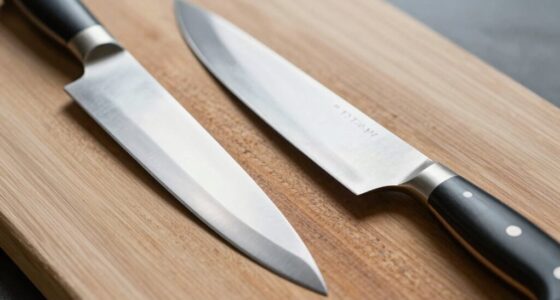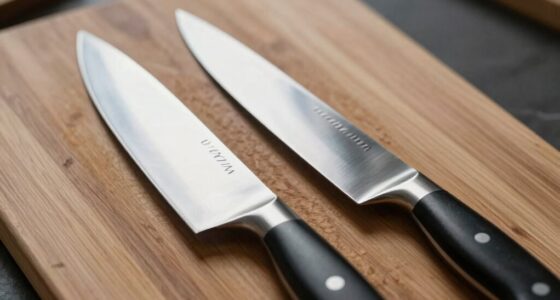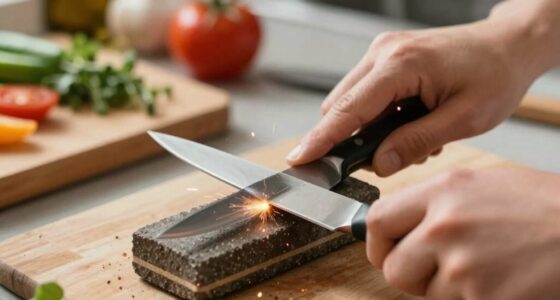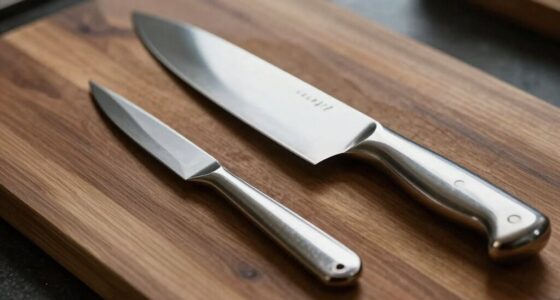
When selecting knives as a culinary student, focus on blades that stay sharp longer and are easy to maintain, ensuring safety and efficiency. Prioritize comfort and control with ergonomic handles and balanced weight for precise cuts. Choose versatile shapes and high-quality materials that resist chipping and corrosion, making your tasks easier. Proper storage and easy sharpening are also key. Keep these skill-first criteria in mind, and you’ll be equipped for success—more tips follow if you continue.
Key Takeaways
- Prioritize blade sharpness, edge retention, and durability for safety, precision, and long-term performance.
- Choose ergonomic, easy-to-maintain handles that provide comfort, control, and minimize fatigue during extended use.
- Select well-balanced knives with appropriate weight and blade shape suited for various culinary tasks.
- Opt for high-quality steel and artistic designs that enhance functionality, aesthetics, and specialty capabilities.
- Focus on versatility, ease of maintenance, and proper storage to ensure safety, longevity, and sustained sharpness.
Blade Sharpness and Edge Retention
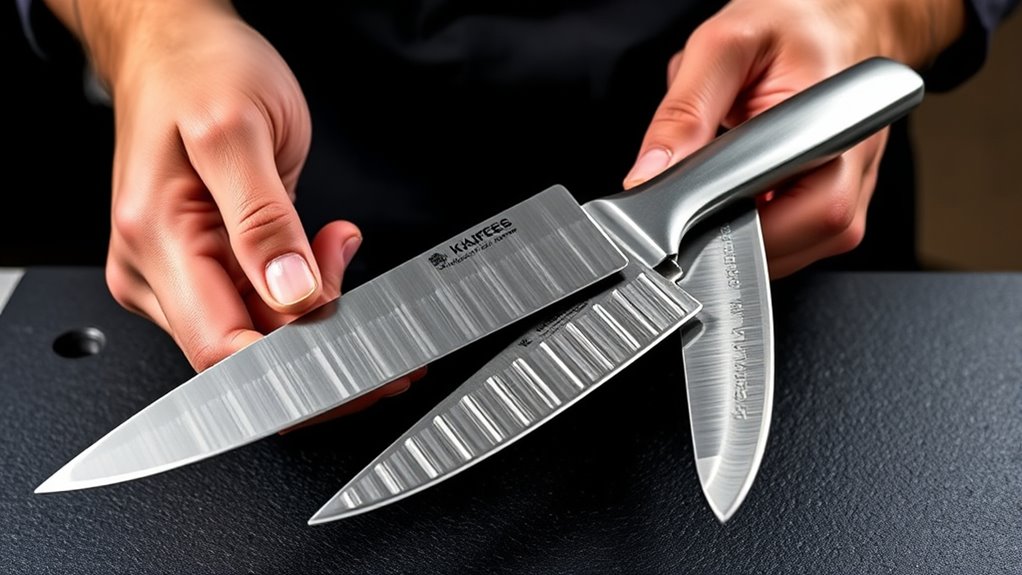
Blade sharpness and edge retention are crucial factors to evaluate when selecting a knife for culinary school. A sharp blade enhances kitchen safety by reducing the need for force, lowering the risk of slips and injuries. It also ensures cleaner cuts, which improve food presentation and consistency. When considering edge retention, think about how long your knife stays sharp after sharpening. A durable edge means fewer interruptions during prep work and less frequent sharpening, saving you time and effort. Proper knife storage is essential to maintain blade sharpness; storing knives in a designated case or on a magnetic strip prevents dulling caused by contact with other utensils. Investing in a high-quality, well-maintained knife promotes safer handling and guarantees it remains sharp and reliable throughout your culinary training.
Handle Comfort and Control
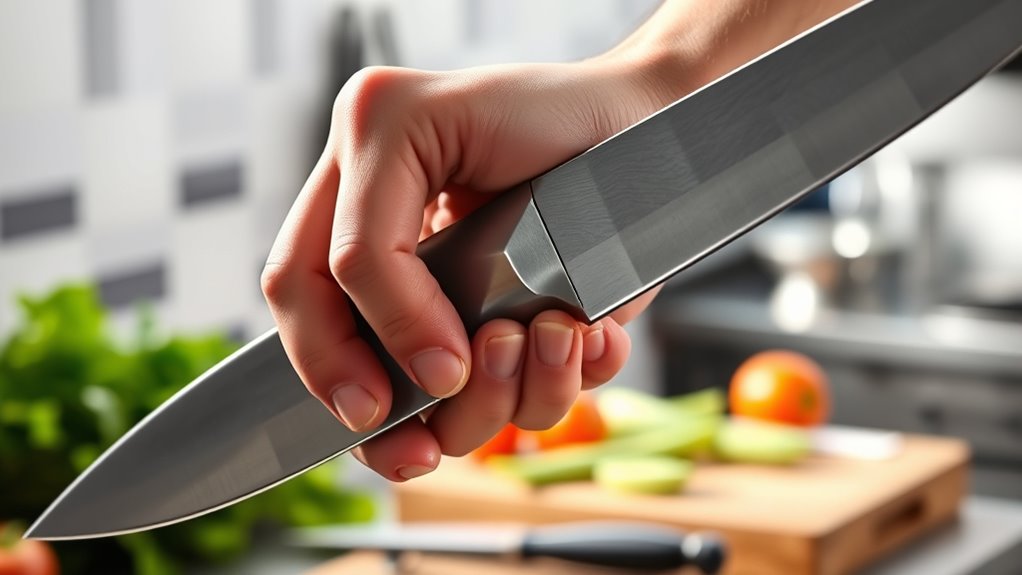
Choosing a knife with an ergonomic grip guarantees it fits comfortably in your hand, reducing fatigue during long prep sessions. A balanced weight distribution gives you better control and precision with each cut. Additionally, a non-slip surface texture helps you maintain a secure grip, even when your hands are wet or greasy.
Ergonomic Grip Design
Have you ever struggled to maintain a steady grip on your knife during busy kitchen tasks? An ergonomic grip design can make a significant difference. Look for handles that fit comfortably in your hand, reducing fatigue and slipping. Proper hand grip techniques involve wrapping your fingers around the handle securely while maintaining control. The handle’s shape, texture, and material influence comfort and safety. Additionally, consider knife storage solutions that keep your knives easily accessible and prevent damage to the handle, preserving its ergonomic features. A well-designed grip reduces strain, enhances precision, and boosts confidence during chopping, slicing, or dicing. Prioritizing ergonomic grip design ensures you can work efficiently and safely, especially during long hours in the kitchen.
Balanced Weight Distribution
A well-balanced knife feels almost effortless to maneuver, allowing you to focus on your task rather than fighting against the tool. Proper weight distribution between the handle and blade gives you greater control and reduces fatigue during extended use. When choosing a knife, consider handle comfort, which can be enhanced with ergonomic designs. Some knives offer color options or decorative engravings, adding a personalized touch while maintaining balance. A balanced knife helps you execute precise cuts with less effort, making it essential for skill development. The handle’s weight should complement the blade, ensuring neither end feels overly heavy. This harmony improves control, accuracy, and comfort, making your culinary tasks more efficient and enjoyable. Prioritize balance to elevate your knife skills and confidence in the kitchen.
Non-slip Surface Texture
A non-slip surface on the handle enhances your grip, giving you better control and confidence during precise cuts. A textured grip ensures your fingers stay securely in place, even when your hands are wet or greasy. Slip resistance is vital for safety and efficiency, preventing accidental slips that could lead to injury or uneven cuts. Look for knives with handles that feature rubberized or textured finishes, as these materials provide superior grip without causing discomfort. A handle with good slip resistance allows you to apply the right amount of pressure comfortably, reducing fatigue over extended use. When selecting a knife, prioritize these features to optimize your control, safety, and overall comfort in the kitchen.
Balance and Weight Distribution

Understanding balance and weight distribution is vital when selecting a culinary knife because these factors directly affect how comfortably and accurately you can handle the tool. A well-balanced knife feels natural in your hand, reducing fatigue during extended use. Heavier blades may provide more power but can cause strain if not properly balanced, while lighter knives improve agility. Proper weight distribution also helps prevent uneven wear that can lead to metal corrosion over time. When considering storage solutions, choose a knife that maintains its balance and avoids unnecessary movement, which can damage the blade or handle. Handling a balanced knife ensures better control and precision, essential for skill development. Ultimately, a balanced, well-weighted knife enhances your safety, efficiency, and comfort in the kitchen.
Blade Material and Durability
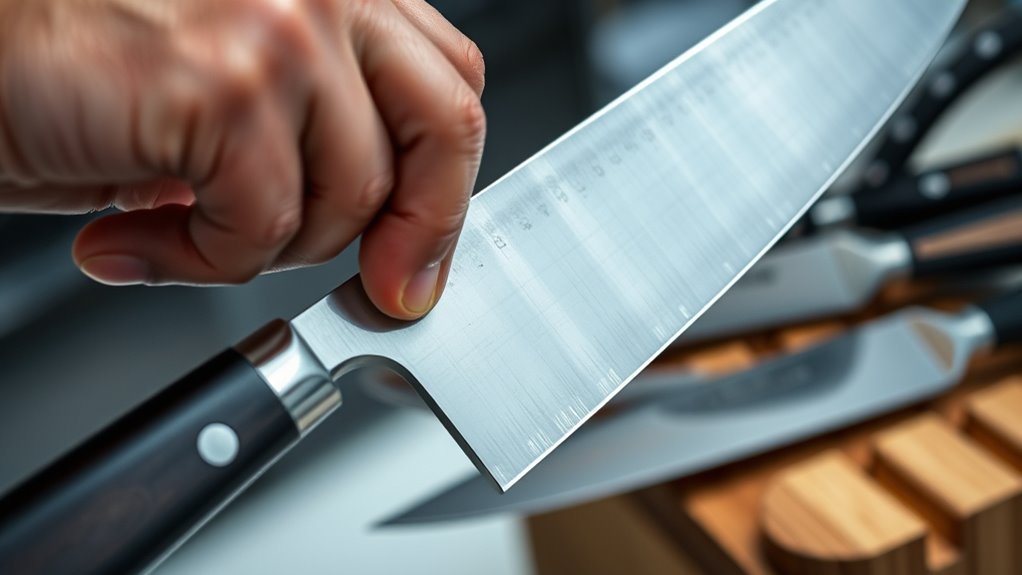
Choosing the right blade material is essential because it determines how well your knife will hold its edge and withstand daily use. High-quality steels like stainless steel resist metal corrosion, maintaining their integrity over time. They also require less maintenance, making them ideal for busy kitchens. Some materials, such as high-carbon steels, offer superior sharpness but can be prone to corrosion if not cared for properly. Durability isn’t just about edge retention; it also involves how well the blade resists chipping or cracking with frequent use. Additionally, blade material influences aesthetic design — polished finishes or matte textures can enhance your knife’s look. Selecting a durable, corrosion-resistant material guarantees your knife remains reliable, sharp, and visually appealing through continuous use in demanding culinary environments.
Versatility and Blade Shape
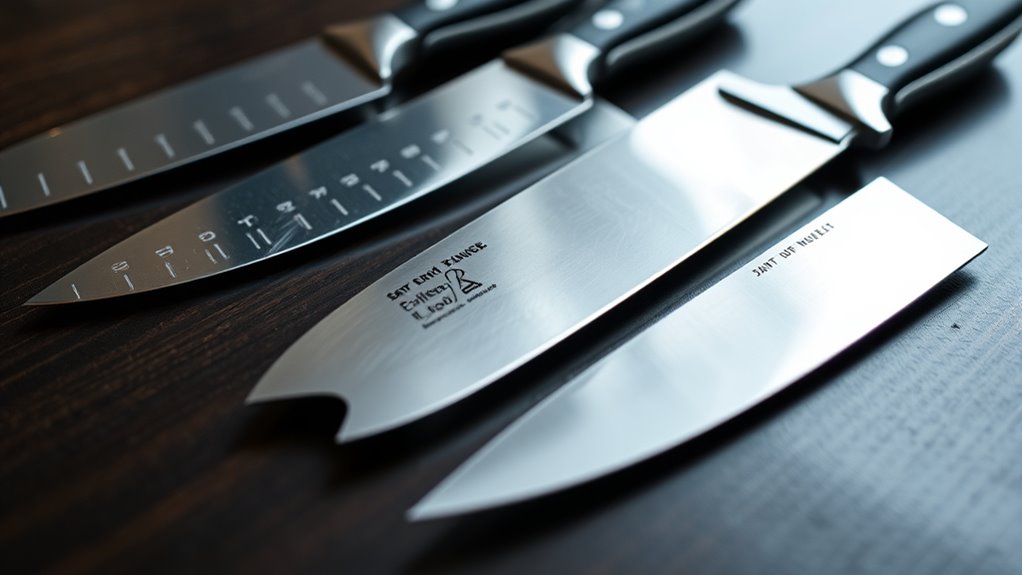
Your knife should handle multiple cutting tasks with ease, so consider blade shapes that offer versatility. A curved blade, for instance, makes rocking cuts smoother and more efficient. Additionally, specialty blades like serrated or fillet options can tackle specific ingredients more effectively.
Multiple Cutting Tasks
Since different cutting tasks require specific blade shapes and sizes, selecting a versatile knife is essential for culinary students. A multi-purpose knife allows you to handle various tasks—from slicing vegetables to carving meats—without switching tools. Focus on a blade shape that balances sharpness and control, making it easier to switch between tasks seamlessly. Additionally, consider the knife aesthetics; a well-designed handle can improve grip and reduce fatigue during extended use. Brand reputation also matters, as reputable brands often produce durable, high-quality blades that maintain their edge longer. Choosing a versatile knife with a reliable reputation guarantees you’re equipped to tackle multiple cutting tasks efficiently, boosting your confidence and skill in the kitchen.
Blade Curvature Benefits
The curvature of a knife blade plays a significant role in enhancing versatility and shaping its overall function. Curved blades enable smooth rocking motions, ideal for chopping, mincing, and creating decorative patterns. This shape allows for better control, especially when working with delicate ingredients. Historically, curved blades often feature decorative patterns and intricate designs, reflecting cultural origins and craftsmanship. The shape also influences how the knife interacts with food, making tasks more efficient. Whether you’re slicing herbs or carving roasts, the curvature adapts to different needs. This versatility stems from the blade’s shape, which can be tailored to various culinary tasks, blending form and function seamlessly.
| Blade Shape | Functionality | Emotional Impact |
|---|---|---|
| Curved | Versatile, rocking cuts | Confidence and mastery |
| Straight | Precise, clean cuts | Precision and control |
| Convex | Safer, smoother cuts | Comfort and trust |
| Concave | Better edge retention | Durability and reliability |
| Decorative patterns | Artistic craftsmanship | Pride and tradition |
Specialty Blade Options
Have you ever wondered how specialty blades can expand your culinary toolkit? These tools offer more than just functionality—they add flair to your presentation. Specialty blades come in unique shapes and sizes tailored for specific tasks, like decorative patterns or intricate cuts. Their versatility allows you to create eye-catching garnishes, enhance plating, and elevate dishes with aesthetic finishes. Some blades feature decorative patterns etched or stamped into the steel, making designs that stand out. Choosing the right specialty blade means considering both its shape and the artistic potential it offers. With these options, you can bring creativity into your kitchen, transforming simple ingredients into visually stunning dishes. Specialty blades aren’t just practical—they’re a way to showcase your skill and attention to detail.
Ease of Maintenance and Sharpening
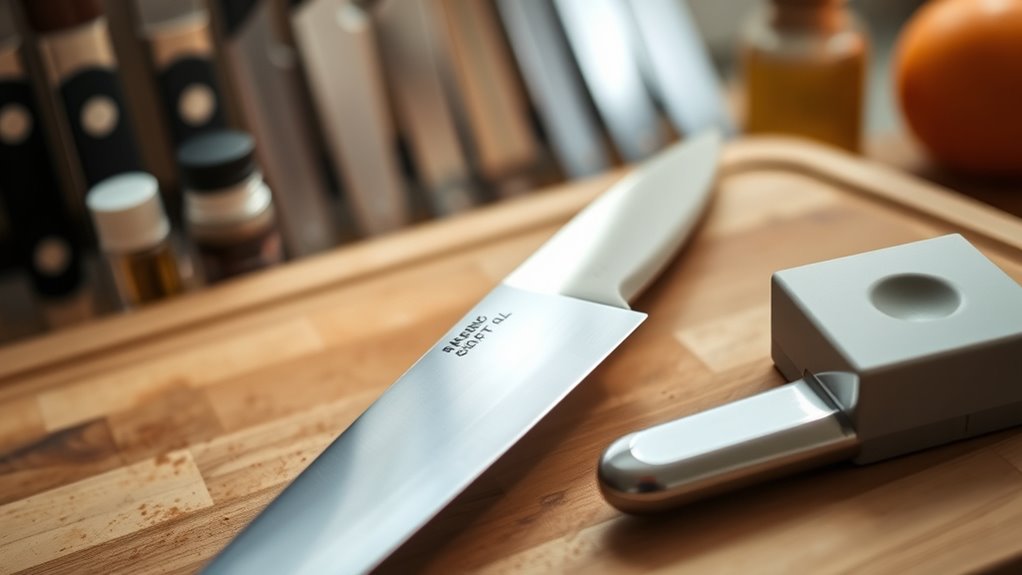
Choosing a knife that’s easy to maintain and sharpen can save you time and frustration in the kitchen. When selecting, consider how simple it is to keep the blade sharp, which affects your safety and efficiency. Here are four key points:
- Opt for knives with high-quality steel that holds an edge longer and is easier to hone.
- Look for storage solutions like magnetic strips or knife blocks that protect blades and make maintenance straightforward.
- Choose knives with color coded handles to quickly identify and reduce cross-contamination, ensuring hygiene during sharpening and cleaning.
- Select knives with durable handles designed for easy cleaning and minimal wear, helping you maintain their appearance and function over time.
Prioritizing these factors ensures your knives stay sharp, safe, and easy to care for.
Frequently Asked Questions
How Do I Choose the Right Knife Size for Beginners?
You should choose a beginner knife that feels comfortable in your hand, typically a 6 to 8-inch blade, as it offers good control. Focus on your knife grip to guarantee stability, and consider blade flexibility for different tasks. A versatile size balances precision and power, making it easier to handle various ingredients. Test different sizes in your hand to find the one that feels natural and suits your developing skills.
What Safety Features Should I Look for in a Culinary Knife?
Your safety is paramount; a knife with a secure, ergonomic grip is like a fortress for your hand. Look for features like textured or non-slip handles, which prevent slips, and choose blades with durable, high-quality material to avoid breakage. A well-designed knife ensures control and reduces accidents, letting you focus on your culinary skills without worry. Prioritize safety features that keep your grip firm and your cuts precise.
Are High-End Knives Worth the Investment for Students?
High-end knives can be worth the investment if you prioritize precision and durability, especially with popular knife brand preferences like Wüsthof or Global. However, if you’re on a tight budget, budget knife options still offer decent quality for learning and practice. Consider how often you’ll use the knives and your skill level before splurging. Ultimately, choose a knife that balances quality with affordability to support your growth in culinary school.
How Does Knife Weight Affect Cutting Efficiency?
You’ll find that knife weight impacts cutting efficiency by affecting balance and handle ergonomics. A well-balanced knife, with proper weight distribution, reduces fatigue and allows for more precise cuts. Heavier knives can provide more control for tough tasks, but if the weight isn’t balanced, it may cause strain. Lightweight knives offer agility, but may lack the stability needed for some cuts. Prioritize a knife with good balance and ergonomic handle design for ideal efficiency.
What Are Common Mistakes to Avoid When Caring for Knives?
You should avoid improper knife care by not neglecting regular knife sharpening, which keeps blades effective and safe. Also, steer clear of storing knives loosely or in drawers where they can get damaged or cause injury. Always use a proper knife block or magnetic strip for storage, and sharpen your knives regularly to maintain their edge. Proper care guarantees longevity and safety, helping you perform your best in the kitchen.
Conclusion
Choosing the right knife is like finding a trusted partner in your culinary journey. When your blade is razor-sharp, comfortable, and balanced, it becomes an extension of your hand—turning chopping into a dance. Durability and ease of maintenance guarantee this partner stays by your side through countless creations. Remember, a well-chosen knife doesn’t just cut ingredients; it cuts through doubt, revealing your true kitchen potential and igniting your passion for cooking.