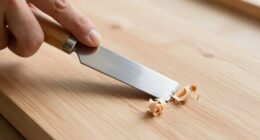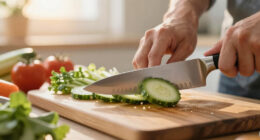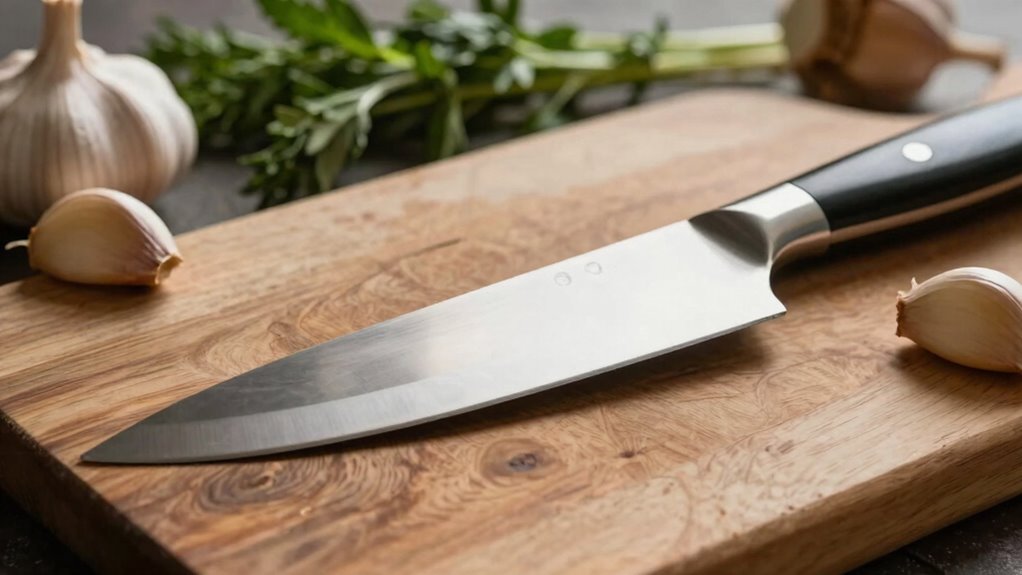

Choosing the right knife profile depends on your cooking tasks. For slicing and dicing, a straight-edged or curved blade works best, providing control and versatility. Serrated knives excel at bread and soft produce, while paring knives are perfect for detail work. Pay attention to handle materials for comfort and safety. Understanding these profiles helps you select the best tool for each task. Keep going to discover how to match your knives perfectly to your cooking needs.
Key Takeaways
- Match straight-edged knives for precise slicing and dicing tasks in most cooking applications.
- Use curved profiles for rocking motions, ideal for chopping herbs or vegetables efficiently.
- Choose serrated blades for bread, tomatoes, and foods requiring a gentle, sawing cut.
- Consider handle materials that provide a comfortable grip for extended use and safety.
- Select knife construction and blade geometry suited to specific tasks for better control and durability.
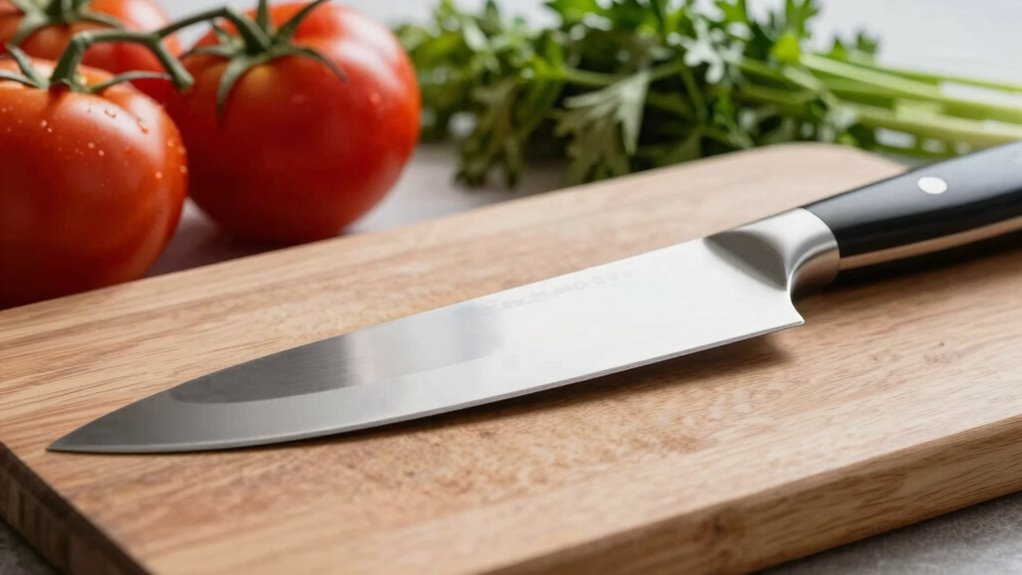
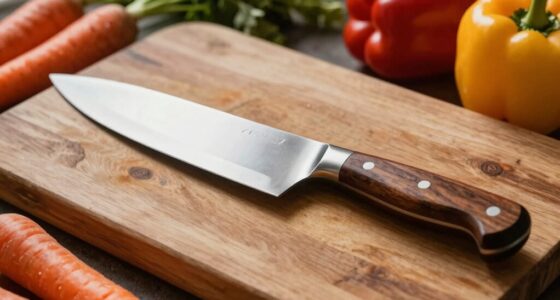
If you’re just starting out with knives, understanding the different profiles can seem overwhelming, but knowing their basics will make choosing and using them much easier. Knife profiles refer to the shape of the blade’s edge and spine, which directly influence how you handle different tasks in the kitchen. Recognizing these profiles helps you pick the right tool for slicing, dicing, chopping, or precision work. For beginners, focusing on common profiles like straight-edged, curved, or serrated blades will give you a solid foundation. These profiles aren’t just about the blade shape; the material of the knife handle also matters. Knife handle materials, such as wood, plastic, or composite, affect comfort, grip, and durability, all of which influence your overall experience and safety in the kitchen. When choosing a knife, consider how the handle feels in your hand and whether it’s easy to maintain over time.
Getting familiar with knife profiles also involves understanding how to care for your knives properly. Knife maintenance tips are essential for keeping the blades sharp and your knives in top shape. Regular honing with a honing rod realigns the edge, while occasional sharpening with a stone or professional service restores the blade’s cutting ability. Proper cleaning is *vital*; hand washing and drying your knives immediately prevents rust and corrosion, especially with high-carbon steel blades. Additionally, understanding knife construction can help you select durable and well-balanced knives that perform better over time. It’s also important to recognize the impact of blade geometry on cutting performance and control. Proper storage in a safe and organized manner—either in a knife block, on a magnetic strip, or in a sheath—avoids dulling the edge and reduces the risk of accidents. Additionally, being aware of knife safety practices can help prevent injuries while handling and using your knives. Investing in high-quality knives with good balance and weight distribution can significantly improve your comfort and control during use.
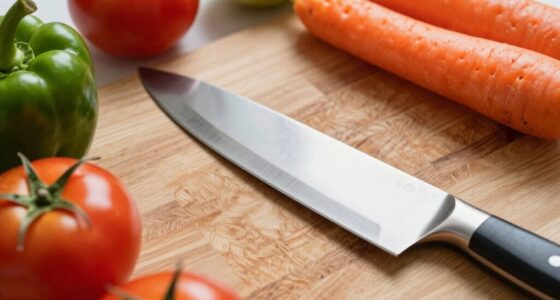
As a beginner, it’s helpful to start with a versatile, straight-edged chef’s knife, which can handle most slicing, chopping, and dicing tasks. Its profile often features a broad blade with a slight curve, making it comfortable and efficient for general use. Once you’re comfortable, you can explore specialized profiles like serrated knives for bread or tomato slicing, or paring knives for detailed work. Remember, the choice of handle materials can greatly influence your comfort and confidence when working with different knife profiles. Handles made of textured plastic or rubber provide a secure grip, especially when your hands are wet or greasy. Over time, practicing proper knife maintenance—keeping your blades sharp and handles clean—ensures your knives stay safe, effective, and enjoyable to use. With this knowledge, you’ll be better equipped to select the right knives for your cooking style and develop skills that make prep work safer and more efficient.

MOSFiATA 8" Super Sharp Professional Chef's Knife with Finger Guard and Knife Sharpener, German High Carbon Stainless Steel EN1.4116 with Micarta Handle and Gift Box
【High Carbon German Stainless Steel Laser-engraved Pattern(Not Damascus Pattern )】 MOSFiATA 8 inch pro chef's knife is made…
As an affiliate, we earn on qualifying purchases.
As an affiliate, we earn on qualifying purchases.
Frequently Asked Questions
How Do I Choose the Right Knife for My Cooking Style?
To choose the right knife for your cooking style, consider your cutting techniques and preferred knife grip. If you favor precise, controlled cuts, a chef’s knife with a comfortable grip works best. For more delicate tasks, opt for a paring knife. Experiment with different knives to see how your grip feels and how well they handle your techniques. This helps make certain you select a knife that improves your efficiency and comfort in the kitchen.
What Materials Are Best for Beginner Kitchen Knives?
Choosing beginner kitchen knives is like picking a trusty sidekick; you want durability and comfort. Opt for knives with resin, wood, or plastic handles, as they’re sturdy and affordable. Look for blades with stamped or full tang edges—they’re easier to maintain and sharpen. These materials guarantee your knife can handle daily tasks, giving you confidence and control in the kitchen.
How Often Should I Sharpen or Replace My Knives?
You should sharpen your knives every few months, depending on how often you cook and the type of knife. Regular knife maintenance, including proper sharpening techniques, keeps your blades in top shape. If you notice your knife no longer slices smoothly or feels dull even after sharpening, it’s time to replace it. Proper care extends your knife’s lifespan, so invest time in honing and sharpening regularly to avoid early replacements.
Can I Use One Knife for All Types of Food Prep?
You can use a multi-purpose knife for most food prep, but it might not be perfect for every task. A specialized blade excels at specific jobs, like filleting fish or carving meat, providing better precision and safety. Relying solely on one knife can lead to inefficient prep or damage to the blade. For versatility and best results, consider having both a good multi-purpose knife and a few specialized blades in your collection.
What Safety Tips Are Essential for Beginners Handling Knives?
Start with safety by practicing proper handling techniques—always cut away from your body, keep a firm grip, and stay focused. Store knives securely to prevent accidents, using knife blocks or magnetic strips. Keep blades sharp; dull knives are dangerous and require more force. Avoid distractions and never try to catch a falling knife. Respect the knife’s edge, and you’ll reduce risks while cooking confidently and safely.

Orblue Serrated Bread Knife with Upgraded Stainless Steel Razor Sharp Wavy Edge – Bread Cutter Ideal for Slicing Homemade Bagels, Cake (8-Inch Blade with 5-Inch Handle)
ULTRA-SHARP, CUTS EFFORTLESSLY: The Orblue Serrated Bread Knife blade has an ultra-sharp serrated edge that grips and effortlessly…
As an affiliate, we earn on qualifying purchases.
As an affiliate, we earn on qualifying purchases.
Conclusion
As you hold your chosen knife, feel the balance and weight settle comfortably in your hand, like a trusted companion ready to slice through ingredients with ease. Remember, the right profile transforms your prep work from a chore into a dance — swift, smooth, effortless. With each cut, you’re forging a connection between skill and confidence, turning raw ingredients into culinary art. Your journey begins here, guided by the perfect knife to shape your flavorful future.

VITUER Paring knife, 4PCS Paring knives (4 Knives and 4 Knife cover), 4 Inch Peeling Fruit and Vegetable Knife, Ultra Sharp Kitchen Knives, German Steel, PP Plastic Handle
PARING KNIFE SET: 8 Piece Paring Knives including 4 of Paring Knives and 4 of Knife Sheath, it’s…
As an affiliate, we earn on qualifying purchases.
As an affiliate, we earn on qualifying purchases.

Intelitopia Complete Knife Sharpening Stone Set – Dual Grit Whetstone 400/1000 3000/8000 Knife Sharpener with Leather Strop, Flattening Stone, Bamboo Base, 3 Non-slip Rubber Bases & Angle Guide
【Complete Knife Sharpening Stone Kit】You don't need to be a Pro to sharpen your blades, all you need…
As an affiliate, we earn on qualifying purchases.
As an affiliate, we earn on qualifying purchases.