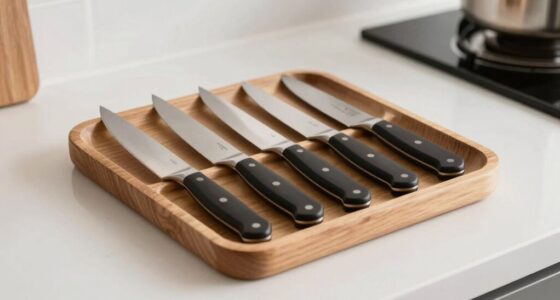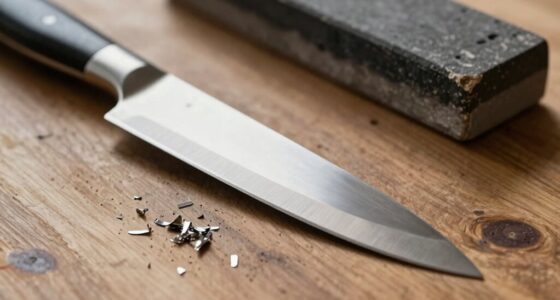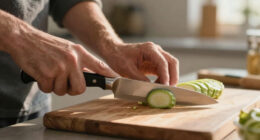
Even if two knives are both labeled as “sharp,” their edge geometry can cause them to cut very differently. Factors like blade angle and grind type play a big role in how effective they are. A sharper angle makes for a finer edge but may dull faster, while a stronger grind improves durability. Understanding these details can help you choose the right knife for each task—so, discover what else affects cutting performance.
Key Takeaways
- Different edge geometries, such as blade angle and grind type, influence how a knife cuts despite both appearing sharp.
- Smaller blade angles (e.g., 15°) create a finer edge, resulting in sharper cutting but less durability.
- Grind types like flat or hollow affect the edge’s sharpness and strength, impacting cutting performance.
- An edge’s technology and material also determine how long it stays sharp and resists dulling.
- Variations in edge design tailored to specific tasks cause two knives to cut differently even if both are sharp.
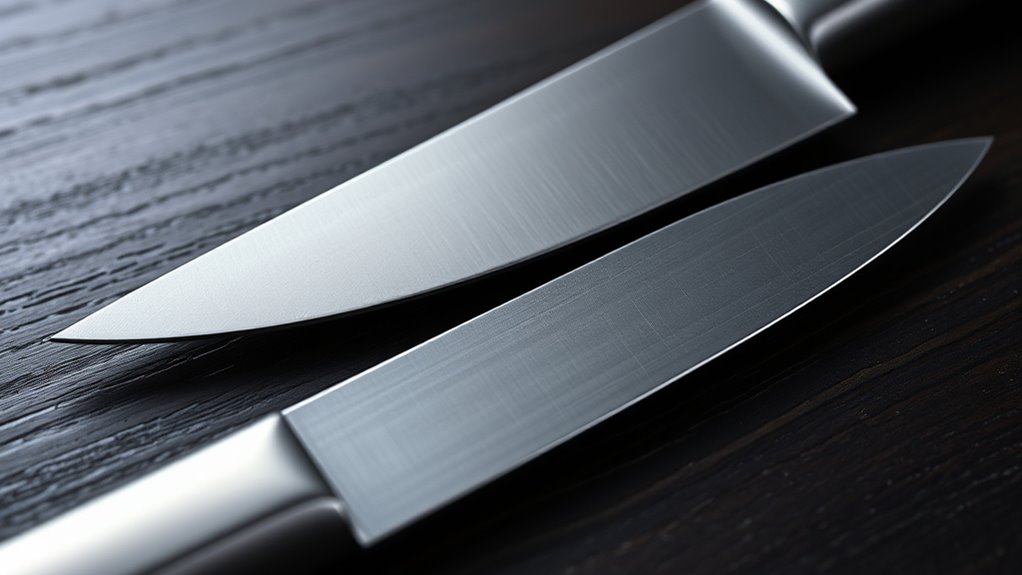
Have you ever wondered what makes the edges of a shape so significant in geometry? It’s actually the same principle that applies when you’re dealing with knives and their cutting performance. The edge’s geometry, especially its blade angle and grind types, plays a vital role in how well a knife cuts through different materials. These factors determine the sharpness, durability, and overall effectiveness of the edge. Understanding how they work together can help you choose the right knife for the job and appreciate why two knives labeled as “sharp” can behave so differently.
Edge geometry, blade angle, and grind types determine a knife’s cutting performance and durability.
The blade angle is one of the most critical aspects of an edge’s geometry. It’s the angle formed between the two sides of the blade when viewed from the edge. A smaller blade angle, such as 15 degrees, creates a more acute edge, which means it’s sharper and can cut more precisely. However, this sharpness often comes at the expense of durability, as a narrower angle is more prone to chipping or dulling quickly. Conversely, a larger blade angle, like 20 or 25 degrees, results in a more robust edge that stands up better to heavy use but might not be as finely tuned for delicate cuts. This balance between sharpness and strength is why understanding the blade angle is essential when selecting a knife; it directly influences how the edge performs in different cutting tasks.
Grind types further influence the edge’s geometry and overall cutting ability. There are several common grind types—such as flat, V, convex, and hollow—that shape the edge differently. For example, a flat grind offers a thin, sharp edge ideal for slicing, while a convex grind creates a rounded edge that’s stronger and more durable, perfect for heavy-duty tasks. Hollow grinds, with their concave shape, produce an extremely sharp edge but tend to be less durable over time. Each grind type affects how the blade’s edge interacts with the material you’re cutting. For instance, a V grind provides a balanced compromise, maintaining sharpness while offering decent durability. Recognizing these grind types helps you understand why two knives with similar blade angles may cut differently, as the grind influences edge geometry, strength, and cutting performance.
In essence, the interplay between blade angle and grind types creates the unique edge geometry of every knife. This combination determines whether a knife excels at fine slicing or heavy chopping. If you want a knife that cuts effortlessly through delicate ingredients, you’ll prefer a sharper blade with a smaller angle and a fine grind. For tougher materials, a sturdier edge with a larger angle and a more robust grind will serve you better. Appreciating these differences helps you choose the right tool for each task, making your cutting experience more efficient and satisfying. Ultimately, understanding the significance of edge geometry demystifies why two seemingly similar knives can cut so differently, empowering you to make smarter decisions in your kitchen or workshop.
Furthermore, advancements in edge technology have led to blades that retain sharpness longer and resist dulling more effectively, which is crucial for maintaining optimal cutting performance over time.

KAWAHIRO Japanese Chef Knife, 8 Inch Hand Forged Razor Sharp VG10 Kitchen Knife for Effortless Meat & Veggie Slicing, Professional Gyuto with Ergonomic Octagonal Handle, Premium Gift Box
【Precision Perfection in Every Slice】Our professional-grade kitchen knife are hand-forged and feature a luxurious black forged finish. The…
As an affiliate, we earn on qualifying purchases.
As an affiliate, we earn on qualifying purchases.
Frequently Asked Questions
How Does Steel Type Affect Edge Performance?
Steel type directly impacts edge performance because different steel compositions and alloy properties determine hardness, flexibility, and corrosion resistance. For example, high-carbon steels hold a sharper edge longer but can be more brittle, while stainless steels offer corrosion resistance but may require more frequent honing. You’ll notice that choosing the right steel depends on balancing these alloy properties to match your cutting needs, ensuring durability and performance.
Can Sharpening Techniques Change the Edge Geometry?
Yes, sharpening techniques can change the edge geometry. For example, using a finer grit stone creates a more refined edge, altering its angle and shape. Different blade materials and manufacturing processes respond uniquely; softer steels may need gentler sharpening, while harder steels hold a sharper edge longer. By adjusting your technique—such as the angle and pressure—you shape the edge’s geometry, impacting cutting performance and durability.
What Role Does Handle Design Play in Cutting Efficiency?
Handle design directly impacts your cutting efficiency by offering an ergonomic grip that reduces fatigue and enhances control. When you choose a handle with good balance optimization, it allows for smoother, more precise cuts, making your task easier and safer. A well-designed handle aligns with your hand’s natural movement, improving comfort and reducing strain during prolonged use, ultimately helping you cut more effectively and with greater confidence.
How Often Should I Sharpen Different Knife Types?
You should sharpen your knives based on their blade material and how often you use them. For high-carbon steel or ceramic knives, sharpen more frequently—every few weeks—since they tend to dull faster. For softer stainless steel blades, every couple of months suffices. Regular honing can extend sharpening intervals, but always pay attention to how your knives perform. Proper sharpening frequency keeps your blades effective and safe to use.
Does Edge Geometry Influence Knife Longevity?
Your knife’s edge geometry dramatically influences its longevity, like a knight’s armor protecting it from wear. With the right edge design, you’ll enjoy better blade durability and easier edge maintenance. A well-crafted edge reduces unnecessary stress, preventing dullness and chipping. So, choosing the proper edge geometry not only keeps your knife sharper longer but also minimizes how often you need to sharpen, saving you time and effort in the long run.

Mercer Culinary M22707 Millennia Black Handle, 7-Inch Granton Edge, Santoku Knife
QUALITY CONSTRUCTION: Knife is crafted with one-piece high-carbon Japanese steel for easy edge maintenance and long-lasting sharpness
As an affiliate, we earn on qualifying purchases.
As an affiliate, we earn on qualifying purchases.
Conclusion
Remember, a sharp edge isn’t just about how fine it is—it’s about its geometry. Understanding the difference in edge angles can make or break your cutting experience. Think of it like a well-tuned race car; small adjustments lead to big gains. So, when choosing or sharpening your knives, pay attention to the edge’s shape. After all, a wise chef knows, “A stitch in time saves nine,” and the same applies to maintaining your blades.

Cutluxe Brisket Knife – 12" Carving & Slicing Knife for Meat & BBQ – Razor Sharp German Steel, Sheath Included, Ergonomic Full Tang Handle Design, Grilling Gifts for Men – Artisan Series
PREMIUM PERFORMANCE – Perfectly engineered slicing carving knife tapered to a razor-sharp edge for effortless carving and slicing…
As an affiliate, we earn on qualifying purchases.
As an affiliate, we earn on qualifying purchases.

Work Sharp Precision Adjust Elite Knife Sharpener – Adjustable Knife Sharpening System – For Hunting, Serrated & Kitchen Knives
INCLUDES 7 ABRASIVES: The seven abrasive grits (220, 320, 400, 600, and 800) diamond, fine ceramic, and leather…
As an affiliate, we earn on qualifying purchases.
As an affiliate, we earn on qualifying purchases.