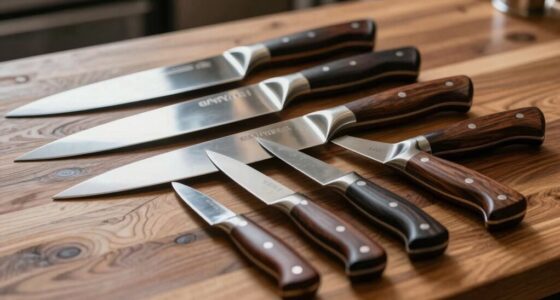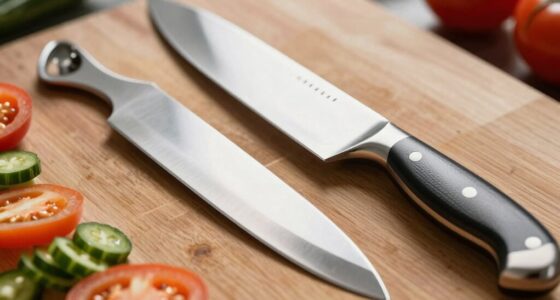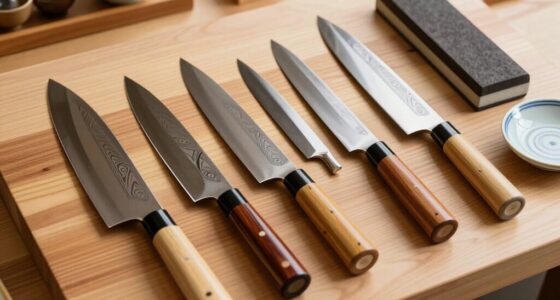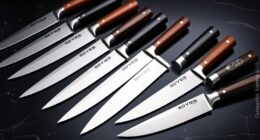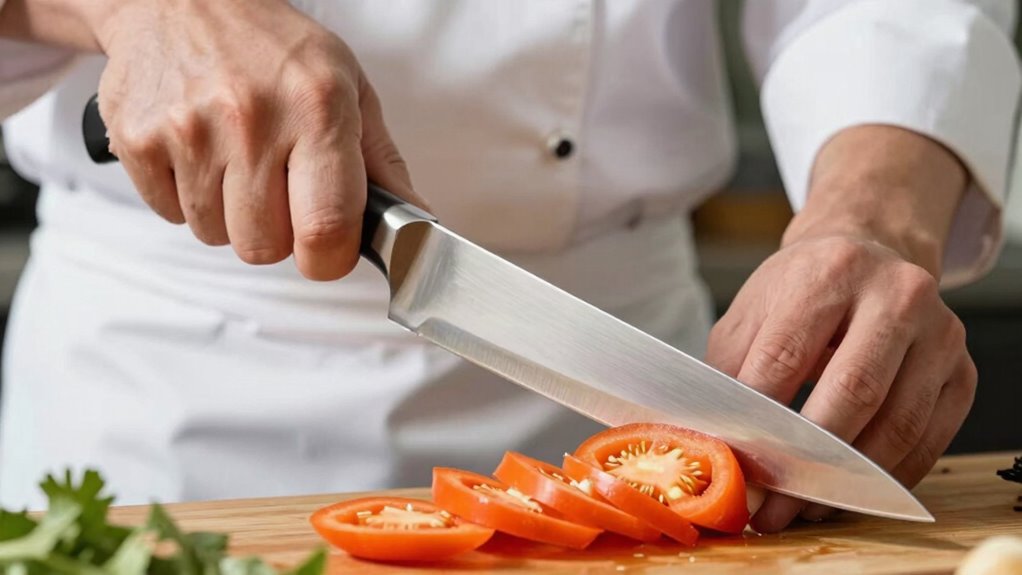

The balance point of a cutting tool is where its weight is evenly distributed along its length, affecting how stable and controlled your cuts feel. When the balance point is well-placed, it makes the tool feel natural and easy to handle, reducing fatigue and improving accuracy. If your tool is front- or back-heavy, you’ll notice more effort and less control. Keep exploring to discover how mastering this can transform your cutting experience.
Key Takeaways
- The balance point is where the tool’s weight is evenly distributed, affecting stability and control during cutting.
- Properly positioned balance point reduces wobble, vibration, and blade drift for more accurate cuts.
- A well-balanced tool minimizes fatigue by aligning weight with your grip and natural hand position.
- Adjusting the balance point or choosing tools with suitable center of gravity improves handling and reduces strain.
- Overall, an optimal balance point enhances control, precision, and comfort, making cutting easier and more efficient.
Understanding the balance point in cutting is essential because it directly influences how your equipment feels and performs. When you’re working with a cutting tool, such as a knife or saw, the balance point determines how the weight is distributed along its length. If the balance point is too far forward or backward, it affects blade stability and how comfortably you can control the tool. A well-balanced implement allows for smoother, more precise cuts because you’re not fighting against the tool’s weight. Instead, you can focus on the quality of your cut, feeling confident that the blade responds predictably to your movements. The correct balance point also minimizes unnecessary strain on your joints and muscles, making it easier to work for extended periods.
The balance point in cutting ensures smoother, more precise control and better blade stability during use.
Blade stability plays a pivotal role here. When the balance point is correctly positioned, the blade remains steady during the cut, reducing wobble or unwanted movement. This stability minimizes fatigue because your muscles don’t need to work as hard to stabilize the tool. When the balance point is off, you might notice increased vibration or a tendency for the blade to drift, which hampers your cutting accuracy and can lead to uneven results. Achieving the right balance point means you get a tool that feels natural in your hand, allowing you to apply consistent pressure without overexerting your grip.
Grip pressure also changes depending on the balance point. If the tool is front-heavy, you tend to tighten your grip to control the blade, which can quickly tire your hand and arm. Conversely, if it’s back-heavy, you might find yourself gripping too loosely, risking loss of control. The ideal balance point helps you maintain a relaxed grip pressure because the weight distribution naturally aligns with your hand’s position. This reduces fatigue and enhances precision because you’re not fighting against the tool’s weight or applying excessive force.
Finding this perfect balance often involves adjusting the tool or choosing one designed with a suitable center of gravity. When you handle a balanced tool, your wrist and arm move more naturally, and your cuts become smoother. You’ll notice less strain and greater control, especially during extended use. Think of it like balancing a broomstick on your finger; when you find the right point, it feels effortless to keep it steady. The same principle applies to cutting tools—an well-adjusted balance point fosters better blade stability and helps you regulate grip pressure, making your work more efficient and less tiring.
Frequently Asked Questions
How Do I Measure My Ski’s Balance Point Accurately?
To measure your ski’s balance point accurately, start by placing the ski on a flat surface and gently flex it to see where it naturally balances. Focus on the ski’s flex pattern and where pressure feels even when you press down. This spot indicates the balance point, which influences edge grip and turning feel. Adjust your stance or bindings if needed to optimize edge grip and overall control based on your balance point.
Can I Adjust the Balance Point on My Existing Skis?
Yes, you can adjust the balance point on your existing skis through ski customization. Think of it as tailoring your gear to match your personal preferences, giving you a more intuitive feel on the snow. By adding or redistributing weight, or modifying the ski’s flex, you shape how your skis respond. Customization allows you to fine-tune your experience, ensuring your skis perform exactly how you want, no matter your style.
How Does the Balance Point Influence Ski Carving Ability?
Your ski’s balance point directly impacts carving ability by affecting how the ski flexes and maintains edge grip. When you’re centered over the ski’s balance point, you’ll find it easier to engage the edges, creating sharp turns. A forward or rearward balance shifts the flex pattern, reducing edge grip and making carving less precise. Adjusting your stance to stay over the balance point enhances control, improves ski flex response, and maximizes edge grip for cleaner, more confident turns.
Does Weight Distribution Affect the Balance Point?
Yes, weight distribution affects your balance point. When you shift weight towards the ski tip, your balance point moves forward, making turns more responsive. Conversely, tail weighting shifts it backward, providing stability but less agility. Properly adjusting your weight distribution helps you control your ski’s balance point, improving carving and turning. Focus on evenly distributing your weight or experimenting with tip and tail weighting to find what feels best for your skiing style.
Is a Higher or Lower Balance Point Better for Beginners?
A lower balance point is better for beginners, like finding the shallow end of a pool where you feel more stable. It helps you adjust your skier stance and ski length comfortably, making turns easier. A lower balance point gives you greater control and confidence, especially when learning to carve. As you progress, you can gradually shift to a higher balance point for more dynamic turns and speed.
Conclusion
Understanding your balance point is like finding the center of a spinning top—you become more in tune with your blade’s rhythm. When you adjust it, your cutting feels smoother, more controlled, and almost effortless. Think of it as tuning a fine instrument; once set right, every slice sings with precision. Embrace this knowledge, and watch your skills sharpen, transforming your cutting experience into a dance where every move flows perfectly—your own ballet of mastery.