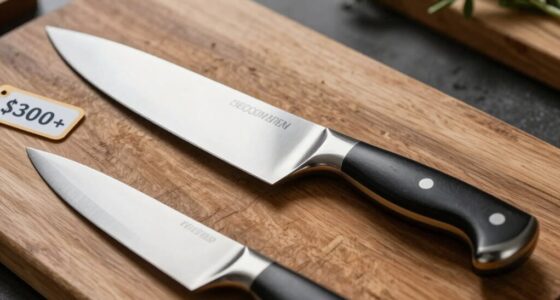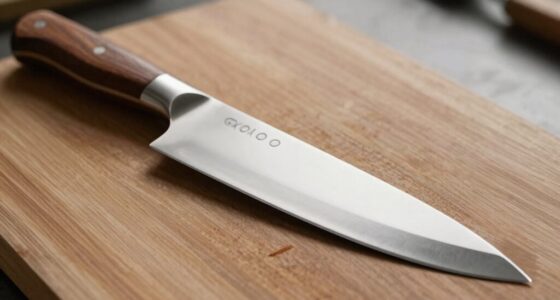
When choosing a kitchen knife, understanding the difference between full tang and partial tang is key. Full tang knives have the blade metal running through the entire handle, offering better balance, strength, and control—great for heavy-duty tasks. Partial tang knives are lighter and easier to maneuver, making them suitable for lighter jobs. Knowing how these designs impact durability and handling helps you pick the right tool; keep exploring to discover which suits your cooking style best.
Key Takeaways
- Full tang knives offer greater durability, stability, and balance, making them ideal for heavy-duty kitchen tasks.
- Partial tang knives are lighter and more maneuverable, suitable for lighter, more precise culinary work.
- Full tang construction provides better weight distribution and ergonomic grip, reducing hand fatigue during extended use.
- Full tang knives typically cost more but offer longer-lasting performance and increased strength.
- The choice depends on cooking needs: full tang for demanding tasks, partial tang for lighter, quick tasks.
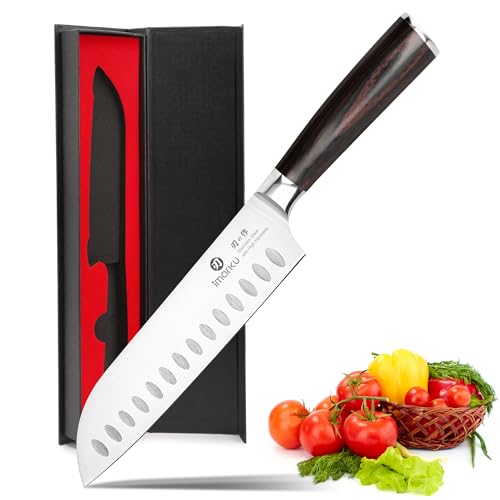
imarku Chef Knife 7 Inch Kitchen Knife Ultra Sharp Santoku Knife - High Carbon Japanese Chefs Knife, Kitchen Gadgets 2025, Apartment Essentials, Birthday Gifts for Him Her, Best Gifts for Women Men
Professional Santoku Knife: This imarku super sharp santoku knife is made of high carbon stainless steel that resists...
As an affiliate, we earn on qualifying purchases.
Understanding the Construction of Kitchen Knives
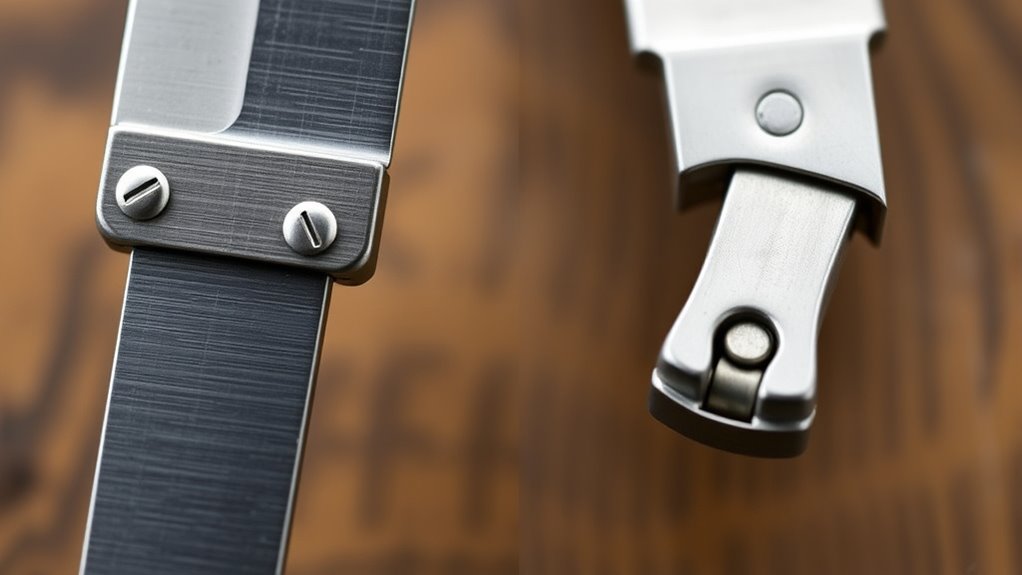
To understand the differences between full tang and partial tang knives, it’s essential to first grasp how kitchen knives are constructed. Knife ergonomics play a key role in comfort and control, influenced by how the handle connects to the blade. Blade materials also matter, affecting durability and sharpness. In full tang knives, the metal extends through the entire handle, providing better balance and strength. Partial tang knives have a shorter metal extension, which can impact stability and durability. Knowing these construction basics helps you choose a knife that feels comfortable and performs well in your kitchen. Additionally, blade construction significantly influences the overall durability and performance of your kitchen tools, making it an important factor in your selection process. Recognizing the importance of blade construction can help you select a knife that offers both durability and ergonomic comfort for your culinary tasks.
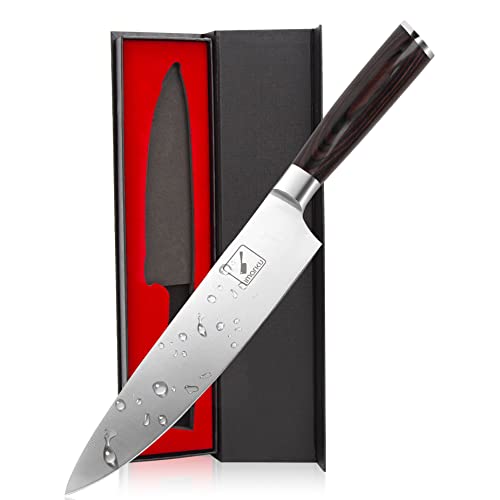
imarku Japanese Chef Knife - Sharp Kitchen Knife 8 Inch Chef's Knives HC Steel Paring Knife, Unique Gifts for Men and Women, Gifts for Mom or Dad, Kitchen Gadgets with Gift Box, Gyutou Knives
High-Carbon Stainless Steel Blade: It is manufactured from high-quality stainless steel that maintains its functionality for a long...
As an affiliate, we earn on qualifying purchases.
What Does Full Tang Mean?
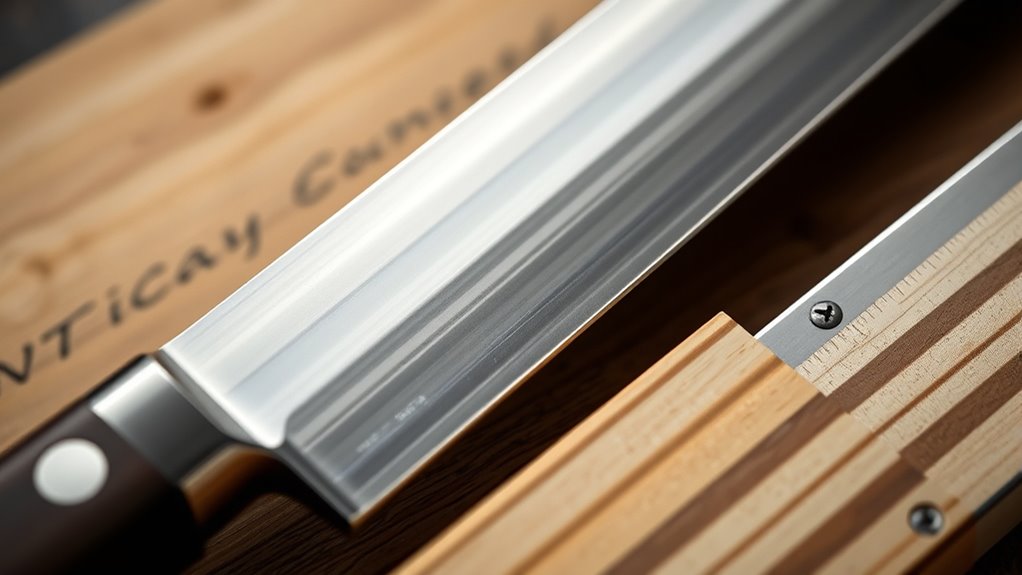
When a knife has a full tang, the blade runs the entire length of the handle, providing a seamless connection. This design offers better balance and control, making your cutting tasks easier and more precise. Plus, it boosts the knife’s durability and strength, so it holds up over time. Understanding knife construction helps you choose tools that will last and perform well in your kitchen. A well‑crafted full tang knife also often features proper handle attachment, which contributes to its overall stability and longevity. Recognizing blade-to-handle integration is key to selecting a high‑quality knife that meets your culinary needs. Additionally, knowing about knife material quality can further impact the longevity and performance of your kitchen tools. Being aware of safe handling practices ensures you use your knives efficiently and reduce the risk of accidents.
Full Length Blade Integration
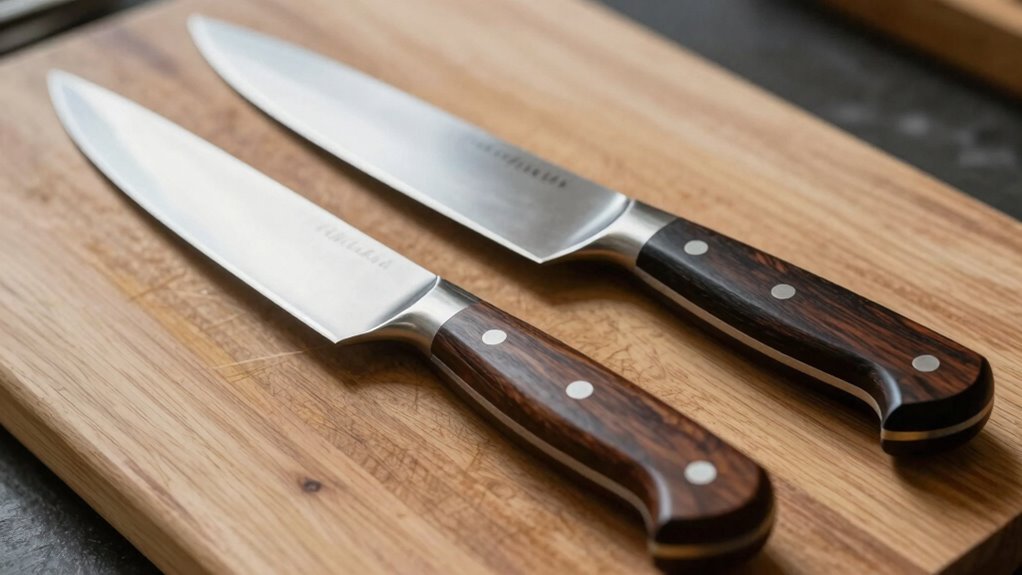
Full tang refers to a knife where the blade extends completely through the handle, creating a single, solid piece of metal from tip to butt. This design guarantees that the blade length seamlessly integrates with the handle attachment, providing durability and strength. Because the full length of the blade is part of the tang, it offers better weight distribution and stability during use. When you grip a full tang knife, you’ll notice how the handle feels securely anchored, reducing wobbling or looseness. This integration means fewer weak points and a more robust tool, especially important for heavy-duty tasks. Full tang construction also contributes to the overall structural integrity of the knife, ensuring it can withstand rigorous use without breaking or bending. Additionally, balance and control are often improved with full tang knives, making them more comfortable for extended use. The durability of a full tang knife makes it a preferred choice for professional chefs and home cooks alike. Incorporating a full tang design can also extend the lifespan of your knife, making it a wise investment. Moreover, knife maintenance becomes easier since a full tang knife typically has fewer components that might loosen over time. Overall, full length blade integration enhances your control and confidence in handling the knife, making it a reliable choice for everyday kitchen work.
Enhanced Balance and Control
Because the blade extends entirely through the handle, a full tang knife offers superior balance and control during cutting tasks. This design helps distribute weight evenly, making it easier to maneuver with precision. With balanced weight distribution, you’ll find chopping, slicing, and intricate cuts feel more natural and less tiring. The ergonomic handles on full tang knives enhance your grip, reducing hand fatigue and increasing comfort during prolonged use. Plus, the seamless integration of the blade and handle adds to the aesthetic appeal, giving your kitchen tools a sleek, professional look. This combination of stability and visual elegance not only improves performance but also provides a satisfying, confident cutting experience every time you cook. Enhanced control is a key benefit of full tang design, contributing to safer and more efficient cooking. Additionally, the durability of full tang knives makes them ideal for heavy-duty kitchen tasks, ensuring longevity and reliable performance over time. A balanced design further contributes to the overall comfort and safety during use. Proper material selection also plays a crucial role in maintaining the integrity and longevity of full tang knives.
Durability and Strength
A full tang knife is inherently more durable and stronger because the blade extends completely through the handle, creating a solid, unified structure. This design distributes force evenly, making it less likely to break or loosen over time. The manufacturing process for full tang knives involves precise forging or stamping, ensuring the handle material is securely integrated with the blade. While knife aesthetics may vary, the full tang’s seamless construction emphasizes robustness, making it ideal for heavy-duty tasks. In contrast, partial tang knives often have weaker points at the handle’s attachment, reducing overall strength. Choosing a full tang knife means investing in durability that withstands frequent use and rigorous kitchen activities without compromising its structural integrity. Additionally, the strength and durability of full tang knives are often associated with net worth and the quality of craftsmanship, reflecting their value and longevity. Proper maintenance and careful use can further enhance the lifespan of a full tang knife, ensuring it remains a reliable tool for years to come. Regular inspection of the handle attachment can also help identify early signs of wear or damage, preserving the knife’s integrity over time. Furthermore, understanding knife construction can help users select the most suitable tool for their cooking needs, especially when choosing knives for heavy-duty tasks.

HOSHANHO Kitchen Knife in Japanese High Carbon Steel, Professional High-Class Chef's Knife 8 inch, Non-slip Ultra Sharp Cooking Knives with Ergonomic Handle
【High-End Japanese Steel Chef's Knife】 HOSHANHO chef's knife is made of Japanese high carbon steel 10Cr15CoMoV, 2x of...
As an affiliate, we earn on qualifying purchases.
The Significance of Partial Tang Design
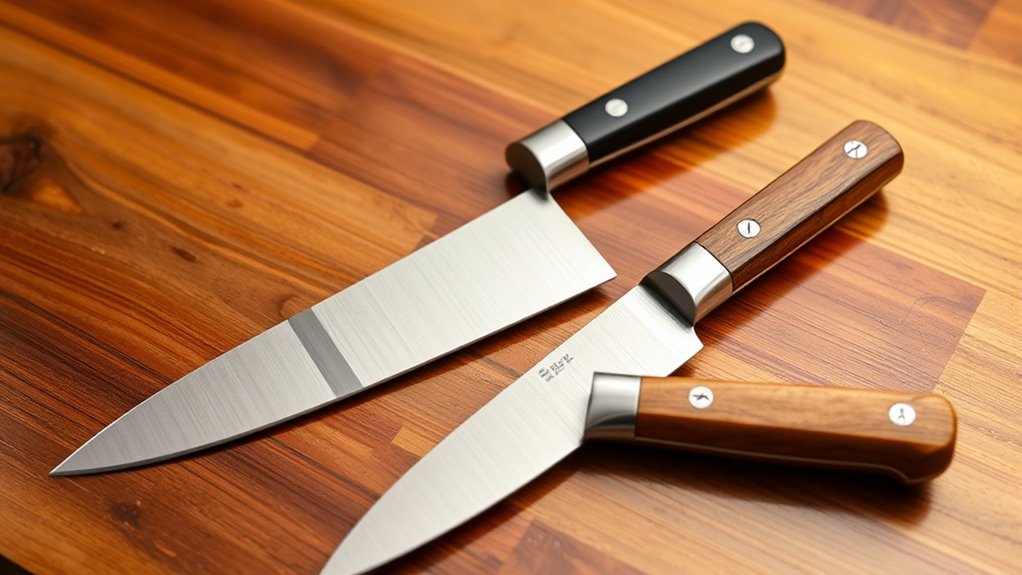
The partial tang design plays a crucial role in balancing strength, ease of manufacturing, and cost. It influences blade aesthetics, giving knives a sleek, streamlined appearance that appeals to many users. Because the tang doesn’t run the full length, manufacturing complexity decreases, making production faster and less expensive. This design also allows for a lighter knife, which can enhance maneuverability in the kitchen. Here’s what to contemplate: Application of the design affects how well the knife performs for different tasks. Additionally, the Gold IRA Markets emphasize transparency and quality standards, which can be paralleled in selecting well-crafted knives. For example, Vetted – My Dogs’ Names highlights the importance of quality and suitability, which can be analogous to choosing the right knife for specific culinary needs. Moreover, understanding blade construction helps in assessing the durability and performance of the knife over time.

Japanese Chef Knife, 8 Inch Damascus Kitchen Knife with VG10 Steel, Handcrafted Sharp Knife with Ergonomic Handle, Cooking Knives for Home Chefs, Cooking Gifts for Men and Women
【Premium Damascus Chef Knife with VG-10 Steel Core】Our Japanese knives feature a VG-10 steel core (60 HRC) for...
As an affiliate, we earn on qualifying purchases.
Comparing Durability and Strength
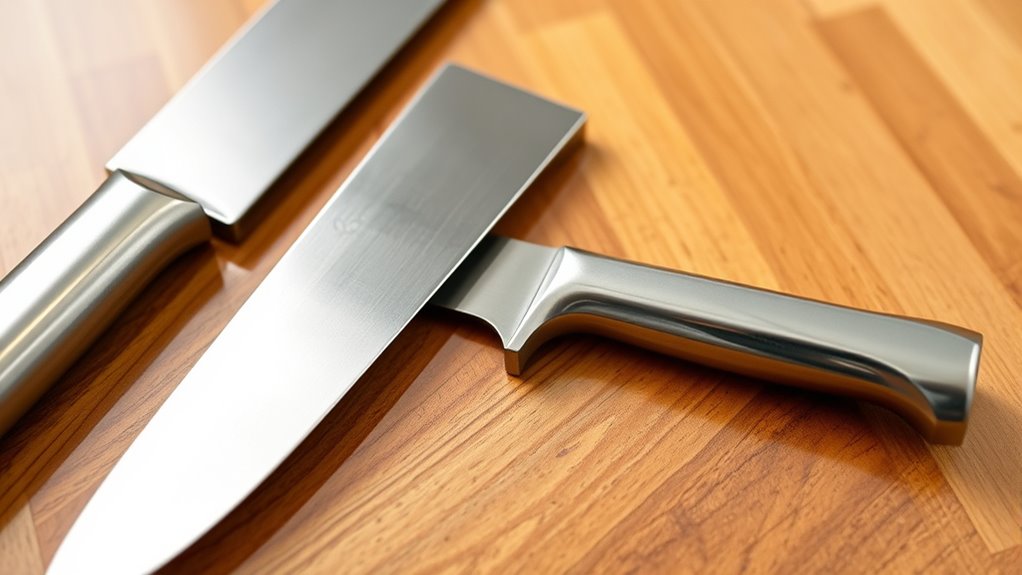
While partial tang designs offer benefits in weight and aesthetic appeal, their durability and strength often differ from full tang counterparts. Full tang knives provide a solid, continuous blade-to-handle connection, resulting in greater strength and stability. Partial tang blades may have more blade flexibility, which can be advantageous for delicate tasks but reduces overall durability under heavy use. Consider the following comparison:
| Feature | Full Tang | Partial Tang |
|---|---|---|
| Durability | High; withstands heavy chopping | Moderate; prone to wear over time |
| Blade Flexibility | Less flexible; more rigid | More flexible, easier to bend |
| Aesthetic Appeal | Classic, seamless look | May feature decorative handles |
In essence, full tang knives excel in durability and strength, making them ideal for demanding kitchen tasks.
Impact on Balance and Handling
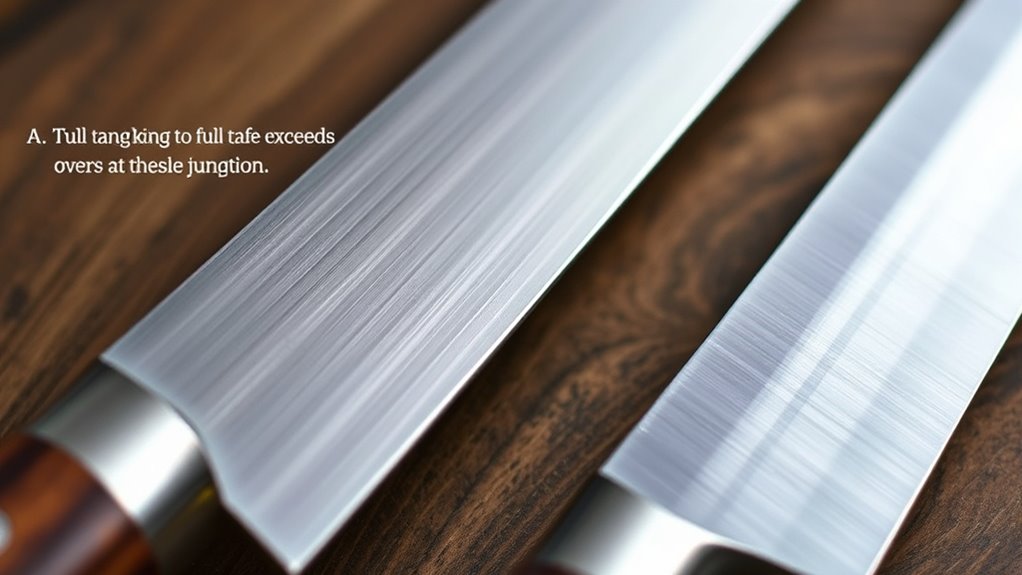
Full tang knives generally offer better balance and handling because their weight distribution is centered along the entire blade and handle, giving you more control during precise cuts. This design enhances ergonomic comfort, reducing hand fatigue during extended use. With better balance, you’ll find it easier to maneuver the knife smoothly and confidently. Additionally, the aesthetic appeal of full tang knives often looks more seamless and professional, boosting your confidence in the kitchen. Consider these points:
- Improved weight distribution for precise control
- Increased ergonomic comfort during prolonged cutting tasks
- Enhanced aesthetic appeal, making your knife look more durable and high-quality
Cost Differences Between Full and Partial Tang Knives
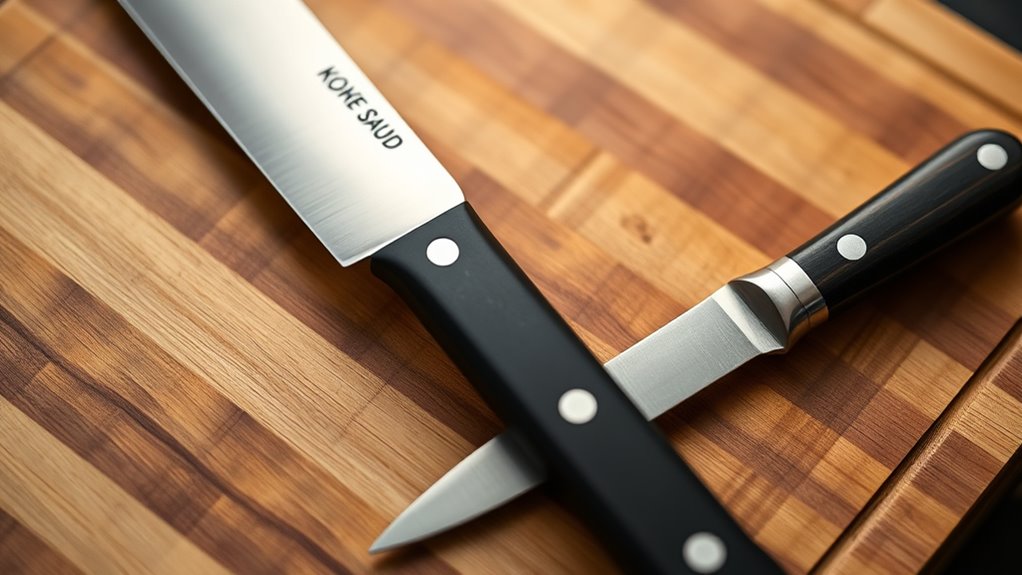
Although full tang knives tend to be more durable and well-balanced, they often come with a higher price tag compared to partial tang knives. This difference mainly stems from manufacturing expenses, which are higher for full tang designs due to additional material and complexity. You might notice that full tang knives generally cost more upfront, but their enhanced durability can justify the investment. To visualize the cost comparison:
| Feature | Partial Tang Knife | Full Tang Knife |
|---|---|---|
| Manufacturing Expenses | Lower | Higher |
| Price Range | $20–$50 | $50–$150 |
| Durability | Moderate | Higher |
Keep in mind, these costs reflect the initial investment, which can influence your long-term value when selecting a kitchen knife.
Best Uses for Full Tang Knives
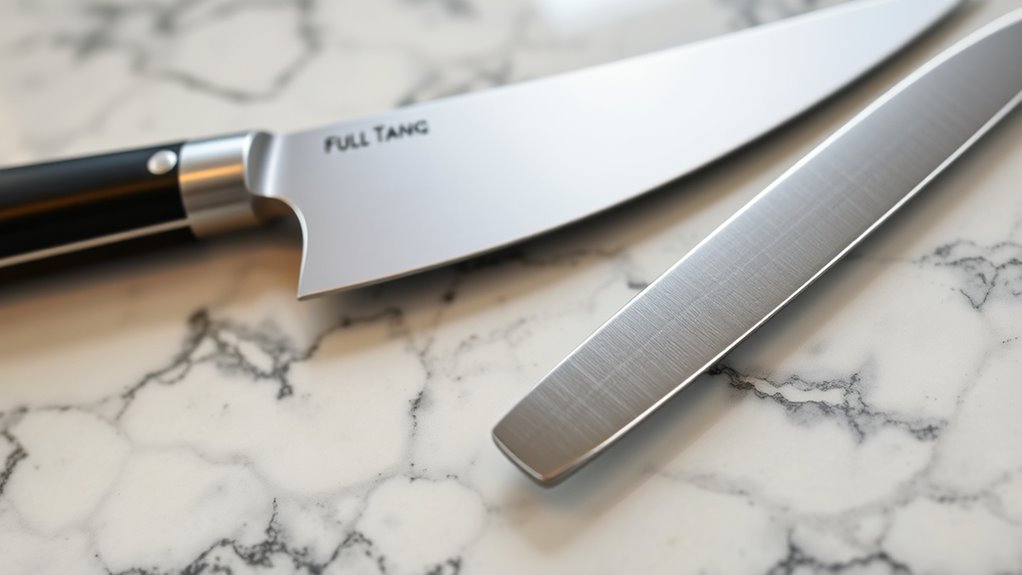
Full tang knives are perfect when you need enhanced durability and strength for tough tasks. They offer superior balance and control, making your work more precise. Consider them for heavy-duty chores like chopping, splitting, or outdoor survival scenarios.
Enhanced Durability and Strength
Because of their solid construction, full tang knives offer exceptional durability and strength, making them ideal for demanding tasks. Their robust design ensures the blade remains intact under pressure, reducing the risk of breakage or wobbling. During the manufacturing process, the full tang is integrated into the handle, enhancing overall stability. This not only boosts performance but also influences knife aesthetics, giving a sleek, seamless look. Here are three reasons why full tang knives excel:
- They withstand heavy chopping and forceful cuts without bending or breaking.
- The durable construction prolongs the knife’s lifespan, saving you money.
- The manufacturing process ensures a consistent, high-quality blade with enhanced strength.
Choosing a full tang knife means investing in durability, strength, and a refined appearance for your kitchen tasks.
Superior Balance and Control
The solid construction of full tang knives provides superior balance and control, making them essential tools for precise cutting. With this design, your grip feels more natural and secure, thanks to ergonomic handles that reduce fatigue during extended use. The aesthetic design of these knives not only enhances their look but also contributes to better manipulation. To illustrate, consider the following:
| Feature | Benefit | Ideal Use |
|---|---|---|
| Ergonomic handles | Comfort and reduced strain | Fine slicing and intricate cuts |
| Full tang | Enhanced stability | Precision tasks |
| Balanced weight | Better control | Artistic presentation cuts |
| Aesthetic design | Stylish appearance | Professional kitchen settings |
This combination guarantees better control, making full tang knives your go-to for accuracy.
Ideal for Heavy-Duty Tasks
Thanks to their solid construction, full tang knives excel at handling heavy-duty tasks that demand strength and durability. Their blade ergonomics provide better control, making tough chores safer and more efficient. The handle materials are often chosen for their robustness, ensuring a secure grip even when working with tough ingredients. Here are three tasks where full tang knives shine:
- Chopping through thick bones or dense vegetables with ease.
- Carving large roasts or hefty cuts of meat without wobbling.
- Prying or levering ingredients, thanks to the balanced weight distribution.
Their sturdy handle materials, like stabilized wood or durable composites, complement the full tang design, enhancing overall stability and comfort during demanding kitchen tasks.
Choosing the Right Tang for Your Cooking Style
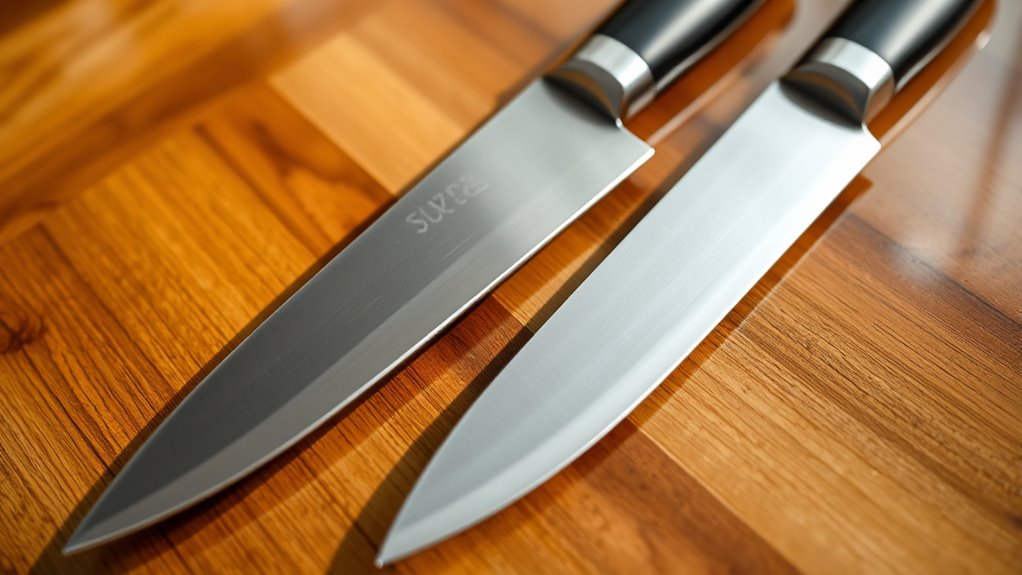
Choosing the right tang depends on how you prefer to cook and the types of tasks you frequently perform in the kitchen. If you prioritize ease of knife maintenance and want a handle that offers better handle ergonomics, a full tang knife might be ideal, providing balance and durability. For tasks requiring precision and comfort during extended use, a well-designed handle with proper ergonomics enhances control. Partial tang knives can be lighter and easier to maneuver, suitable for lighter tasks or those who prefer a less bulky feel. Consider your cooking style and comfort preferences carefully, as the tang influences not just durability but also how secure and comfortable the knife feels in your hand. Selecting the right tang ensures safer, more efficient cooking experiences.
Frequently Asked Questions
How Does Tang Design Affect Knife Maintenance and Sharpening?
Tang design impacts knife maintenance and sharpening by influencing blade durability and sharpening ease. A full tang provides better balance and strength, making it easier to maintain and sharpen without risking breakage. Meanwhile, a partial tang may require more careful handling to preserve its integrity. You’ll find that full tang knives generally stay sharper longer and are easier to sharpen evenly, ensuring consistent performance during your kitchen tasks.
Can Full Tang Knives Be More Prone to Cracking or Breaking?
Yes, full tang knives can be more prone to cracking or breaking if you don’t handle them properly. While they generally offer better handle stability and blade durability, a sudden impact or misuse can cause the tang to crack. To prevent this, avoid dropping the knife or applying excessive force. Proper care and storage help maintain the integrity of your full tang knife, ensuring it stays durable and reliable in your kitchen.
Are Partial Tang Knives Suitable for Professional Culinary Environments?
Sure, partial tang knives are suitable for professional kitchens if you enjoy a thrill ride with your tools. They often lack perfect knife balance, making your task more challenging, and sacrifice aesthetic appeal for a sleek look. While they’re lightweight, they might not handle intense, prolonged use well. If you’re after durability and stability, a full tang knife will serve you better—unless you love living on the edge.
How Does Tang Construction Influence Knife Weight and Fatigue During Use?
Tang construction directly impacts knife weight and fatigue during use. A full tang offers better weight distribution, making the knife feel more balanced and reducing hand fatigue over extended periods. Partial tang knives are lighter but can cause uneven weight distribution, leading to quicker fatigue. If you want to cut comfortably and maintain control, a full tang knife is the better choice for reducing fatigue and ensuring consistent performance.
Is There a Significant Difference in Safety Between Full and Partial Tang Knives?
You’ll notice that full tang knives tend to be safer because their blade balance is more stable, reducing the risk of the handle breaking or slipping. Partial tang knives may have less structural integrity, but proper use and maintenance still keep them safe. Additionally, full tang knives usually have better aesthetic appeal due to their seamless construction. Overall, choosing a full tang knife offers enhanced safety and a sleek look that’s worth considering.
Conclusion
So, now that you know the difference between full and partial tangs, you’re basically a knife expert. Whether you opt for the mighty full tang or settle for a partial, just remember: your kitchen’s fate rests on this tiny metal part. Choose wisely, or risk chopping your way to chaos. Either way, one thing’s certain—your culinary adventures just got a whole lot more interesting. Happy slicing, brave chef!