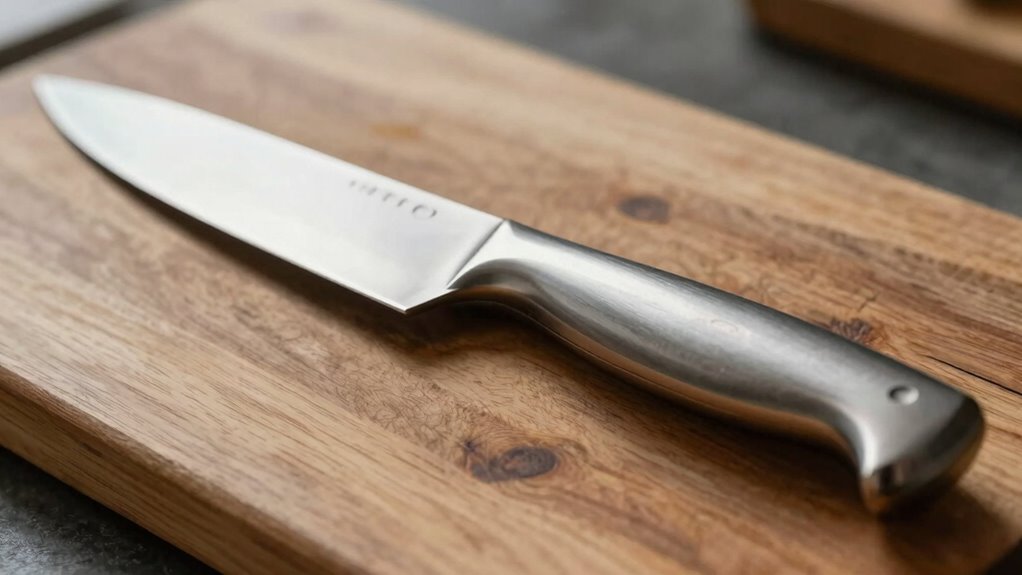

Deciding if a full tang really matters depends on how you plan to use your knife. If you need durability for heavy-duty tasks, a full tang offers better strength, stability, and resistance to breaking under pressure. For lighter jobs or occasional use, a partial tang might suffice and save you money. Think about your budget, the types of tasks you’ll perform, and how much longevity you want from your knife. To find out more, explore what makes full tang a key feature in quality knives.
Key Takeaways
- Assess the knife’s intended use; heavy-duty tasks benefit from full tang durability.
- Consider your budget; full tang knives are typically more expensive but offer increased strength.
- Evaluate handle comfort and balance, which are often better with full tang construction.
- Determine if the aesthetic appeal of full tang aligns with your preferences.
- Prioritize safety and longevity; full tang knives are generally more reliable for demanding tasks.
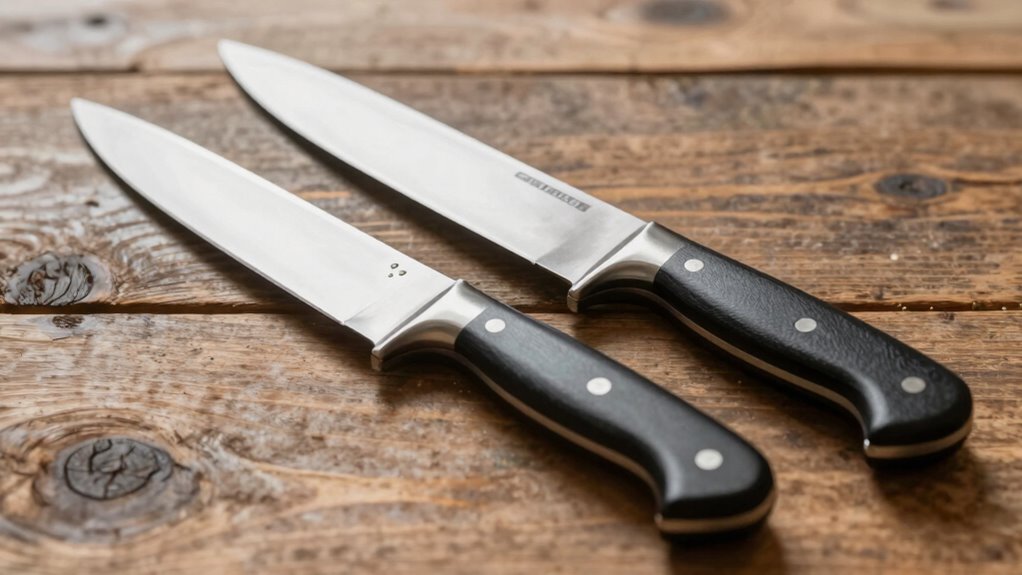
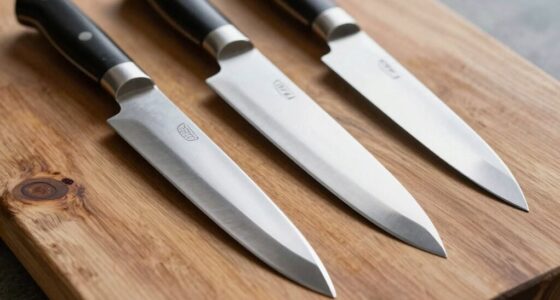
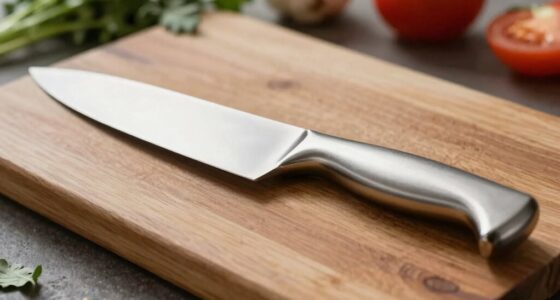
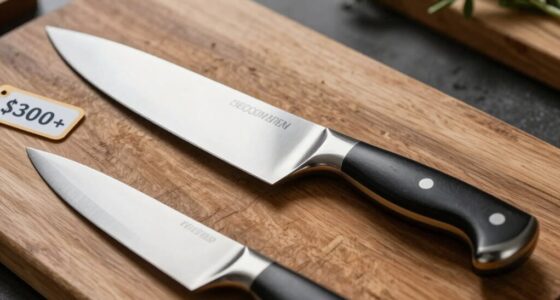
When choosing a knife, you might wonder if a full tang is truly worth prioritizing. The full tang, the metal extending from the blade through the handle, is often considered a hallmark of durability and quality. But before you decide, it’s helpful to understand what it offers and how it impacts your overall experience. One of the first things to consider is blade aesthetics. A full tang knife usually has a more streamlined, uniform appearance because the metal runs continuously through the handle. This can give the knife a sleek, professional look that appeals to many users. However, some knives with partial tangs or hidden tangs can also be attractive, especially if the handle material is decorative or crafted with fine craftsmanship. So, if aesthetics are your main concern, the presence of a full tang might not always be the deciding factor. Additionally, the manufacturing process of full tang knives tends to be more complex, which contributes to their higher cost. The true value of a full tang comes down to how you plan to use the knife. If you’re doing heavy-duty tasks, like chopping through thick vegetables or meat, a full tang provides added stability and strength. It’s less likely to bend or break under pressure, which makes it more reliable for demanding jobs. On the other hand, for lighter tasks or occasional use, a partial tang knife might suffice and save you some money. It’s also important to consider the handle construction, since it affects comfort and balance during use. Moreover, the performance of the knife can be significantly influenced by the tang design, which impacts how well the knife maintains its shape over time. Ultimately, whether a full tang matters to you depends on your priorities. If durability and a cohesive look are essential, and you’re willing to pay a little extra, a full tang knife could be a smart choice. But if you’re more concerned about aesthetics or budget, then you might find that a well-made partial tang knife fits your needs just fine. Consider how you’ll use the knife, what qualities matter most, and how much you’re willing to invest before making your decision. Understanding full tang can help you make a more informed choice based on your specific requirements. Keep in mind that the design and construction of the knife play a crucial role in its performance and longevity.

Amazon Basics Classic 8-inch Full Tang High Carbon Stainless Steel Chef's Knife, Multipurpose Kitchen Knife with Three Rivets, Silver
This 8- inch chef’s knife is a versatile tool for cutting, chopping, dicing, mincing and more
As an affiliate, we earn on qualifying purchases.
As an affiliate, we earn on qualifying purchases.
Frequently Asked Questions
Is a Full Tang Always the Safest Knife Option?
A full tang isn’t always the safest knife option, but it often is. It provides better balance and strength, especially if you’re doing heavy-duty tasks. While blade aesthetics might be less appealing with a full tang, many users prefer its durability. Brand reputation also plays a role—trusted brands tend to produce full tang knives that are safer and more reliable. Ultimately, choose a full tang for increased safety and stability in your kitchen.
How Does Full Tang Impact Knife Weight?
A full tang’s weight can feel like the anchor in a ship, anchoring your knife’s blade balance and handling comfort. It often adds a bit of heft, making the knife more stable but possibly heavier in your hand. This extra weight improves control during precision tasks, but if you prefer a lighter feel, it might impact handling comfort. Ultimately, a full tang balances strength with weight, influencing your overall knife experience.
Are Full Tang Knives More Durable Than Partial Tang?
Yes, full tang knives are generally more durable than partial tang ones because they offer better blade strength and handle stability. The full extension of the metal to the handle provides extra resilience against impacts and heavy use. You’ll notice the knife feels more balanced and robust, making it less prone to breaking or chipping. If durability is your priority, a full tang knife is a smarter choice.
Can Full Tang Knives Be More Expensive?
Yes, full tang knives can be more expensive due to their blade construction and manufacturing costs. The full tang, which runs through the entire handle, requires more material and precise craftsmanship, leading to higher production expenses. You’ll often find these knives priced higher because they offer enhanced durability and balance. When comparing options, consider how much you value the increased strength and longevity that come with a full tang design, despite the higher cost.
Does Full Tang Affect Knife Maintenance or Sharpening?
Full tang design can make knife maintenance and sharpening easier because it offers better handle stability and blade balance. With a full tang, the blade stays more securely aligned, reducing wear on the handle and ensuring consistent sharpening. You’ll find that a full tang knife resists wobbling during use, which helps maintain its edge longer and makes sharpening more straightforward, ultimately extending the knife’s lifespan.
Amazon Basics Classic 8-inch Full Tang High Carbon Stainless Steel Chef's Knife, Multipurpose Kitchen Knife with Three Rivets, Silver
This 8- inch chef’s knife is a versatile tool for cutting, chopping, dicing, mincing and more
As an affiliate, we earn on qualifying purchases.
As an affiliate, we earn on qualifying purchases.
Conclusion
Ultimately, choosing a full tang blade isn’t just about strength; it’s about confidence in your tool. While a full tang offers durability and balance, a well-made partial tang can still serve well in lighter tasks. Think of it like comparing a sturdy truck to a nimble sports car—each has its place. So, decide if you need that extra resilience, or if a lighter, more agile option suits your needs better. Your choice shapes your experience.

Purple Dragon Kukri Fixed Blade Knife With Sheath, 8 Inch Full Tang Heavy Duty Camping Knives – Christmas Gift for Men and Women
Premium Steel & Wood Construction: Crafted from high-carbon steel for excellent hardness and sharpness. The handle is made…
As an affiliate, we earn on qualifying purchases.
As an affiliate, we earn on qualifying purchases.
Amazon Basics Classic 8-inch Full Tang High Carbon Stainless Steel Chef's Knife, Multipurpose Kitchen Knife with Three Rivets, Silver
This 8- inch chef’s knife is a versatile tool for cutting, chopping, dicing, mincing and more
As an affiliate, we earn on qualifying purchases.
As an affiliate, we earn on qualifying purchases.