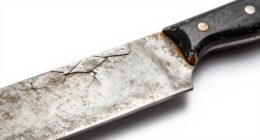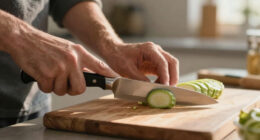
If your chef knife feels sticky, it’s likely due to how the blade’s layered cladding and surface finish interact with food. Poorly finished or rough layers can cause food to stick, increasing resistance when slicing. The quality of the steel, grinding, and honing also impact how smoothly the knife glides. Handle materials and grip play a role too, affecting control and pressure. To understand how these factors work together, keep exploring the details behind knife construction and performance.
Key Takeaways
- Poorly finished or rough cladding creates a sticky surface that causes food to adhere during slicing.
- Layering patterns or improper finishing can increase resistance, making the knife feel “sticky.”
- Surface irregularities and rough edges on the blade elevate drag, reducing cutting smoothness.
- Handle materials lacking grip can cause increased force, contributing to a sticky or uncomfortable feel.
- High-quality, finely finished layered blades with secure handles reduce sticking and improve cutting performance.
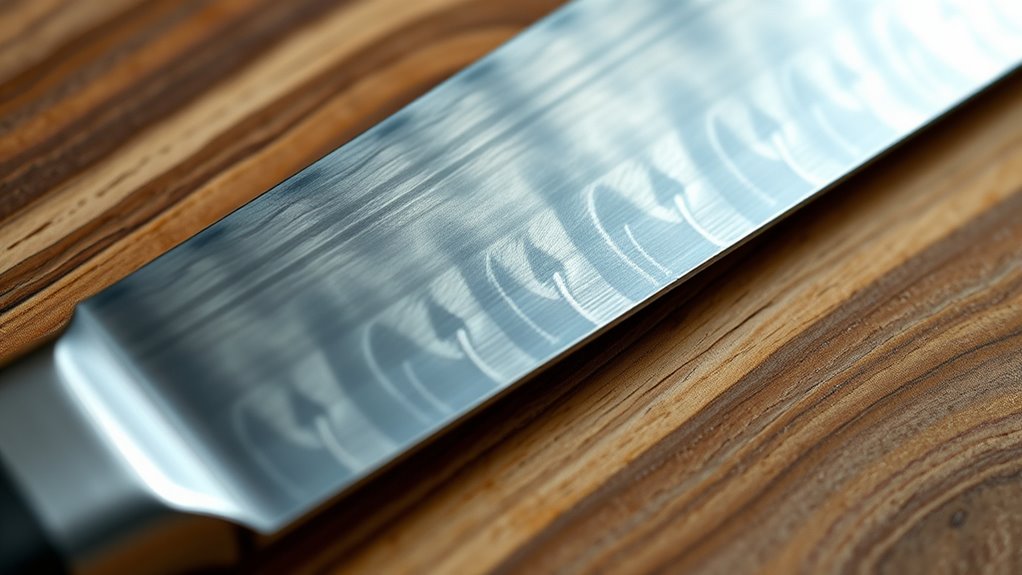
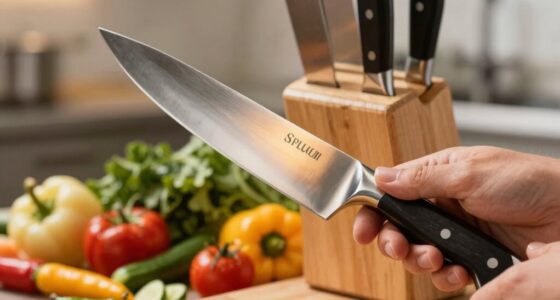
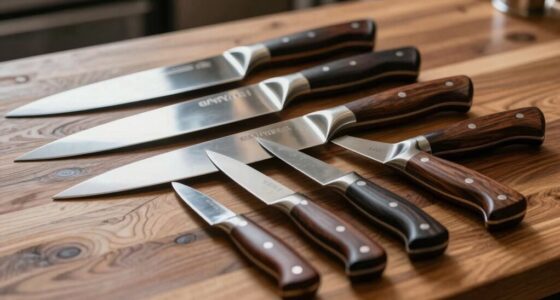
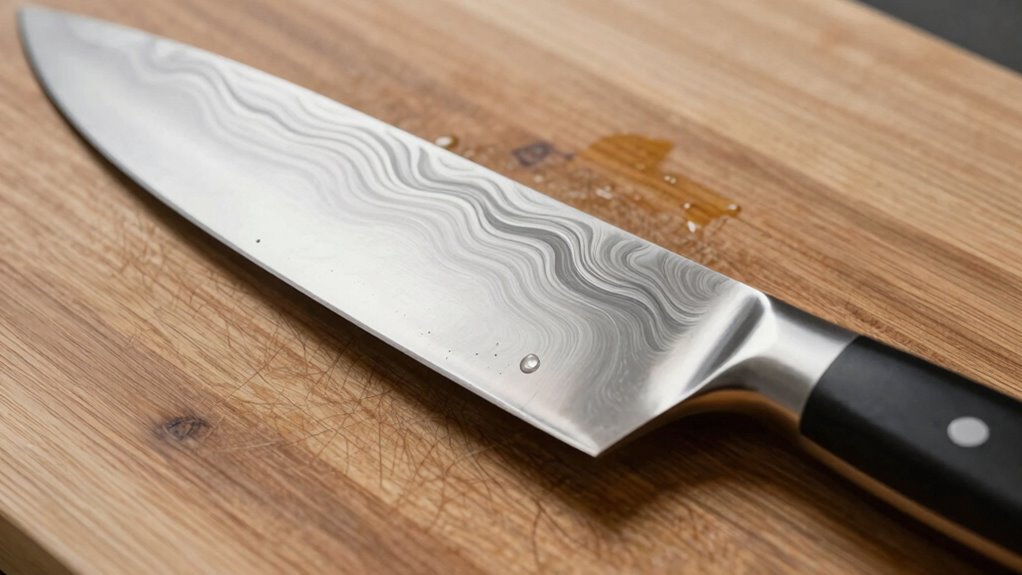
When choosing a chef knife, understanding how cladding and drag affect performance can make a big difference in your kitchen. These factors influence how smoothly your knife cuts and how comfortable it feels during extended use. Cladding refers to the layered construction of a blade, often involving different types of steel fused together. Many high-end knives feature a distinct pattern or color on the blade, known as blade aesthetics, which results from the layering process. While eye-catching, these layers can also impact how the knife interacts with food. If the cladding isn’t finished properly or has rough edges, it can cause a sticky feeling when slicing, making your cuts less precise and more frustrating. Proper finishing of the cladding can help prevent food from sticking and improve overall performance.
Properly finished cladding ensures smooth cuts and reduces food sticking.
Drag, on the other hand, is the resistance you feel as you push the blade through ingredients. Excessive drag can make even simple tasks like slicing vegetables feel laborious. It’s often influenced by the quality of the steel, the grinding process, and how well the blade’s edge is honed. But it’s not just the steel that plays a role; handle materials also contribute to overall performance. A handle made from slippery or low-quality materials can cause you to exert more force, increasing drag and discomfort during use. Conversely, handle materials like pakkawood or textured composites provide better grip and control, reducing fatigue and making your cutting more precise.
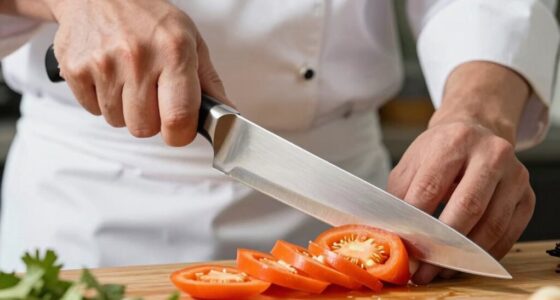
You might notice some knives feeling “sticky” or resistant, especially when cutting moist or sticky foods. This sensation can be caused by the blade’s surface finish, which is tied to how the cladding is applied and finished. A poorly finished cladding layer can cause food to cling more than necessary. Additionally, the interaction between the blade’s aesthetics—such as visible layers or patterns—and the steel’s finish can influence how smoothly the knife glides through ingredients. If the handle materials are smooth or lack grip, you may find yourself applying more force to compensate, which also increases drag and causes that sticky feeling. Understanding the layered construction of blades can help you select knives that perform better with less sticking and resistance.
Choosing a knife with well-finished cladding and carefully selected handle materials can drastically improve your experience. Look for blades with smooth, polished surfaces and layered construction that’s finely finished. Opt for handle materials that offer a secure grip, even when wet. This combination ensures less resistance, less sticking, and more confidence with every cut. Ultimately, understanding how cladding and drag interact helps you pick a chef knife that feels right in your hand—making your kitchen work more efficient and enjoyable.
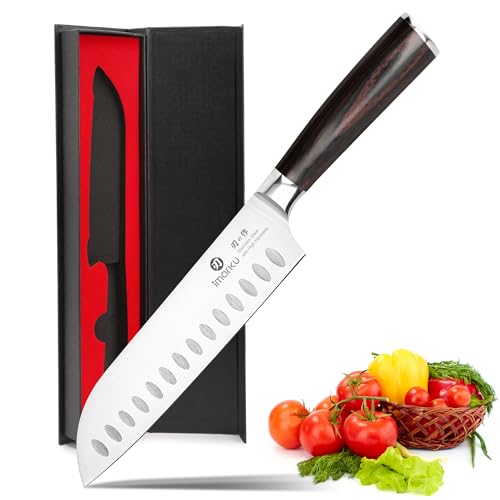
imarku Chef Knife 7 Inch Kitchen Knife Ultra Sharp Santoku Knife - High Carbon Japanese Chefs Knife, Kitchen Gadgets 2025, Apartment Essentials, Birthday Gifts for Him Her, Best Gifts for Women Men
Professional Santoku Knife: This imarku super sharp santoku knife is made of high carbon stainless steel that resists...
As an affiliate, we earn on qualifying purchases.
Frequently Asked Questions
How Does Cladding Affect the Durability of a Chef Knife?
Cladding enhances your chef knife’s durability by protecting the core steel from corrosion and wear, ensuring it stays sharp longer. It also contributes to blade flexibility, making cutting easier without breaking or chipping. Plus, good cladding improves handle ergonomics by allowing lighter, balanced designs, reducing fatigue during extended use. Overall, cladding strengthens the blade, boosts flexibility, and makes handling more comfortable, extending your knife’s lifespan considerably.
Can Cladding Be Repaired if Damaged or Worn Out?
Your damaged cladding isn’t beyond repair; with the right recladding options or cladding replacement, you can restore your knife’s pristine edge and appearance. While it’s not a simple fix like sharpening, expert re-cladding can effectively renew the layered steel surface. Keep in mind, though, that this process can be costly and time-consuming, so weigh the benefits against the possibility of investing in a new, high-quality blade if damage is extensive.
Are There Specific Knife Materials That Reduce Drag Naturally?
Yes, some knife materials naturally reduce drag. Ceramic coatings, for example, create a smooth, non-stick surface that minimizes sticking, while blades with natural lubricants like high-carbon stainless steel also glide effortlessly through food. These materials help prevent sticking and make cutting easier, saving you effort and improving precision. Opt for knives with ceramic coatings or high-quality stainless steel to experience less drag and enjoy a smoother cutting experience.
How Does the Thickness of Cladding Influence Cutting Performance?
Thicker cladding can increase blade flexibility, making the knife more forgiving but potentially less precise. It also impacts edge retention; thinner layers often allow for sharper edges that stay longer. When choosing, consider your cutting style: if you need more control, thicker cladding might be better, but for longevity and sharpness, thinner cladding enhances edge retention without sacrificing performance.
What Maintenance Practices Minimize Sticky or Drag Issues?
Did you know that regular blade polishing can reduce stickiness by up to 30%? To minimize drag issues, you should routinely clean and sharpen your knife, then apply a light lubricant or honing oil on the blade. This maintenance keeps the cutting edge smooth, prevents buildup, and guarantees ideal performance. Remember, proper care not only enhances your knife’s lifespan but also makes slicing effortless and precise.
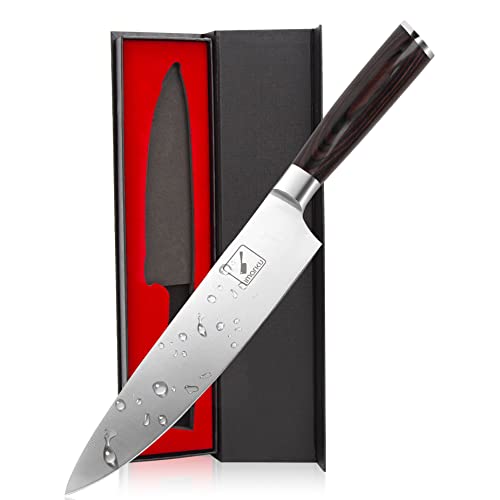
imarku Japanese Chef Knife - Sharp Kitchen Knife 8 Inch Chef's Knives HC Steel Paring Knife, Unique Gifts for Men and Women, Gifts for Mom or Dad, Kitchen Gadgets with Gift Box, Gyutou Knives
High-Carbon Stainless Steel Blade: It is manufactured from high-quality stainless steel that maintains its functionality for a long...
As an affiliate, we earn on qualifying purchases.
Conclusion
Now that you know about cladding and drag, you can choose your chef knife wisely and enjoy smoother cuts. Remember, even the sharpest blade can feel sticky if the layers aren’t right. It’s like wielding Excalibur—knowing its secrets makes all the difference. So, whether you’re slicing medieval roasts or modern veggies, understanding these factors helps you master your craft. Don’t let sticky knives shackle your culinary prowess—embrace the knowledge and conquer the kitchen!

HOSHANHO Kitchen Knife in Japanese High Carbon Steel, Professional High-Class Chef's Knife 8 inch, Non-slip Ultra Sharp Cooking Knives with Ergonomic Handle
【High-End Japanese Steel Chef's Knife】 HOSHANHO chef's knife is made of Japanese high carbon steel 10Cr15CoMoV, 2x of...
As an affiliate, we earn on qualifying purchases.

Japanese Chef Knife, 8 Inch Damascus Kitchen Knife with VG10 Steel, Handcrafted Sharp Knife with Ergonomic Handle, Cooking Knives for Home Chefs, Cooking Gifts for Men and Women
【Premium Damascus Chef Knife with VG-10 Steel Core】Our Japanese knives feature a VG-10 steel core (60 HRC) for...
As an affiliate, we earn on qualifying purchases.