
Putting your chef knife in the dishwasher can cause serious damage. The high heat, harsh detergents, and abrasive cycles weaken the blade, dull edges, and create microcracks. Moisture and chemicals promote rust and corrosion, especially on handles and metal parts. Over time, this diminishes performance and shortens your knife’s life. To protect your tools, understanding proper maintenance is key—stick around to learn how to keep your knives sharp and durable.
Key Takeaways
- Dishwasher heat accelerates metal fatigue, dulls blades, and increases the risk of chipping and microcracks.
- Harsh detergents cause corrosion, strip protective coatings, and weaken the knife’s overall durability.
- Abrasive cleaning damages the blade surface, leading to scratches and loss of sharpness.
- Moisture and chemicals promote rust and corrosion, compromising blade integrity and safety.
- Proper hand washing and storage extend knife lifespan, maintaining sharpness and structural strength.
The Damage Caused by Dishwasher Heat and Water
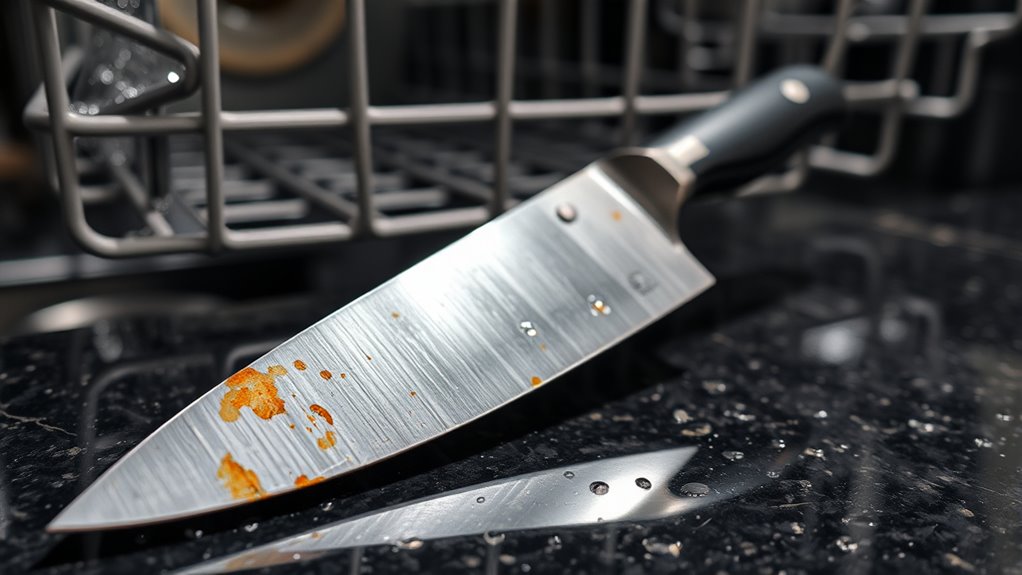
Dishwasher heat and water can considerably damage your chef knife over time. Dishwasher detergents often contain harsh chemicals that can corrode the blade’s metal, especially with repeated exposure. The high heat from the dishwasher’s drying cycle accelerates metal fatigue, weakening the blade’s structure. Heat exposure causes steel to expand and contract rapidly, which can lead to microcracks and dullness. Additionally, the combination of hot water and detergents strips away any protective coatings or honing layers, leaving your knife vulnerable. This process can also interfere with the metal composition of your knife, further reducing its durability. Proper maintenance and handling ensure the longevity of your kitchen tools, including avoiding abrasive cleaning methods. To further protect your knives, it’s essential to understand the effects of heat on metal. Repeated exposure to these conditions can significantly compromise the integrity of the blade, leading to potential breakage or permanent damage. Avoiding the dishwasher helps preserve your knife’s quality and longevity, ensuring it stays sharp and functional longer. Recognizing the importance of proper care can significantly extend the lifespan of your valuable knives.
How Dishwashing Harms Your Chef Knife’s Blade and Edge
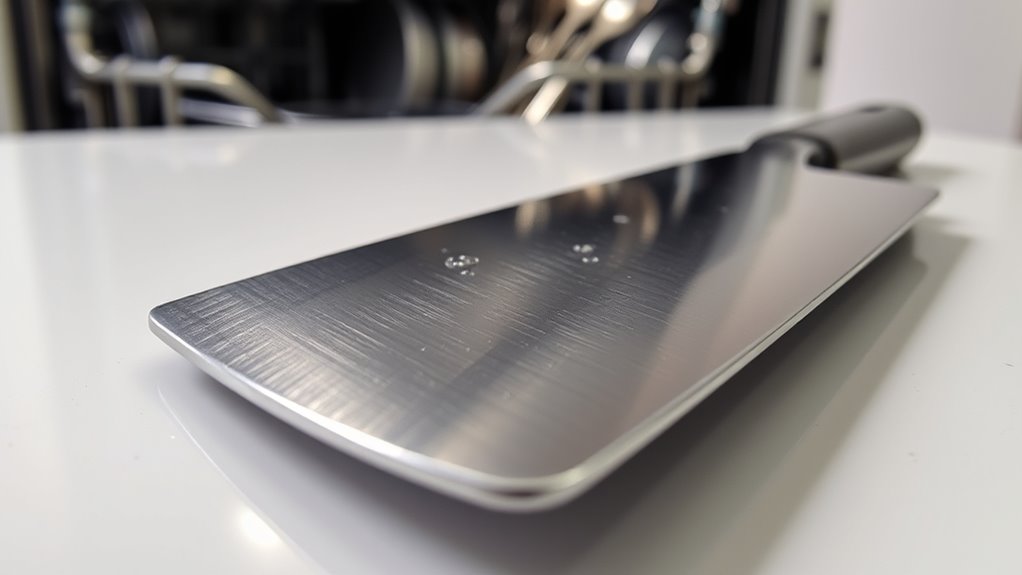
When you place your chef knife in the dishwasher, the high heat and aggressive detergents attack the metal’s surface, causing immediate and long-term damage. This harsh environment weakens the blade’s structure, making it more prone to chipping or dulling. Over time, the repeated exposure accelerates corrosion and erodes the metal, undermining blade preservation. The abrasive action of dishwasher detergents can also scratch the surface, dulling the edge and reducing your knife’s cutting efficiency. These effects compromise edge maintenance, forcing you to sharpen or replace your knife sooner. To keep your chef knife in top shape, hand wash it gently, avoid harsh chemicals, and store it properly. Proper care extends your knife’s lifespan, and incorporating proper cleaning techniques can further preserve the integrity of your blade and ensure your knife stays sharp, strong, and ready for precise cuts. Additionally, understanding the metal composition of your knife can help determine the best maintenance practices for its longevity.
The Risks of Corrosion and Rust Formation
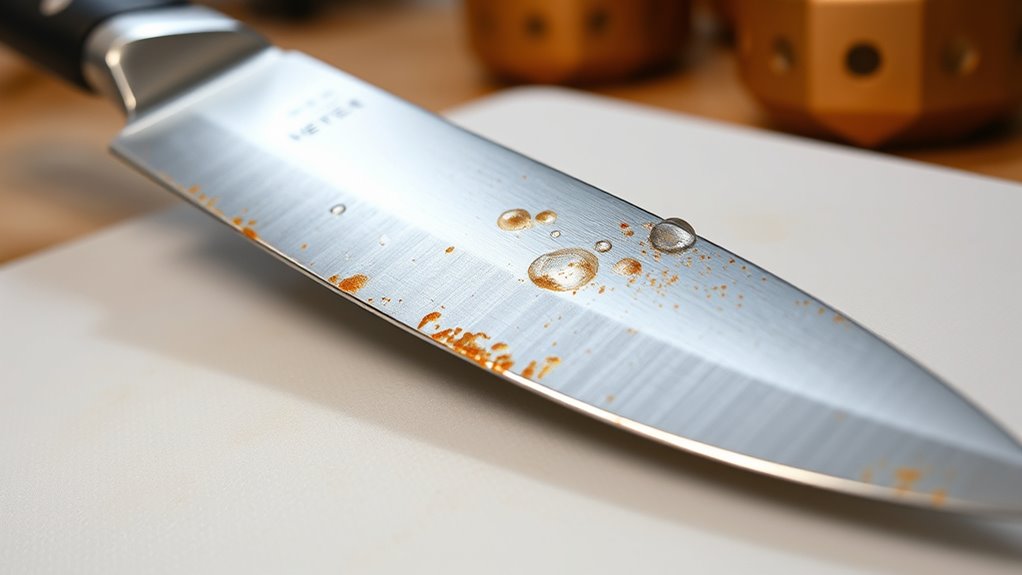
Corrosion and rust pose significant threats to your chef knife’s longevity and performance, especially if you neglect proper care. Exposure to moisture and improper cleaning methods increase corrosion risks and accelerate rust formation. When rust develops, it can weaken the blade’s structure, dull its edge, and tarnish its appearance. You might notice:
Neglecting proper care accelerates rust, weakening blades and diminishing performance.
- Discolored spots on the blade surface
- Pitting or rough patches where rust has eaten into the metal
- Reduced sharpness and cutting efficiency
- Increased difficulty in cleaning stubborn rust stains
If you ignore these signs, rust can spread, compromising the integrity of your knife. Preventing corrosion risks involves keeping your knife dry, avoiding prolonged moisture contact, and storing it properly. Rust formation is preventable with proper maintenance. Additionally, understanding Free Floating can help you optimize your backyard environment to reduce the likelihood of moisture buildup that accelerates rusting processes. Regular cleaning and oiling also create a protective barrier against metal deterioration, and using appropriate cleaning tools can further minimize damage. Incorporating proper storage techniques can significantly reduce exposure to moisture and humidity, preventing rust from forming in the first place. Maintaining a consistent air circulation around your knives and tools can also help reduce humidity levels and lessen rust risks.
Impact on the Handle and Overall Durability

The handle’s material can degrade over time if not properly cared for, affecting your knife’s comfort and safety. Sealant breakdown can lead to moisture penetration, weakening the overall structure. Ignoring these issues risks compromising the knife’s durability and structural integrity, making maintenance essential.
Handle Material Degradation
Handle material degradation can considerably weaken your chef knife over time, affecting both grip and safety. When exposed to dishwasher detergents and high heat, the handle material may break down, leading to cracks or looseness. This deterioration reduces handle durability, making the knife less stable and harder to control. You might notice the handle becoming sticky, discolored, or brittle. Over time, these issues compromise your grip, increasing the risk of slips or accidents. Proper care involves avoiding harsh cleaning methods to preserve your handle’s integrity. Understanding material science can help you choose the best maintenance practices for your knife handle, including selecting materials resistant to dishwasher damage. Being aware of material properties can further inform better care decisions, ensuring longevity and safety. Staying attentive to handle material condition helps prevent early replacement and keeps your cutting experience smooth and secure. Additionally, incorporating proper maintenance techniques can further extend the lifespan of your knife and maintain its performance.
Sealant Breakdown Risks
Sealant breakdown can considerably weaken your knife’s handle and compromise its overall durability. When the sealant deteriorates, it loses its protective barrier, exposing the handle materials to moisture and temperature fluctuations. This coating degradation accelerates corrosion and fosters mold growth, which can weaken the handle’s structure over time. As the sealant fails, you might notice increased looseness or even cracks forming in the handle, reducing your knife’s stability and safety. Continuous exposure to high heat and detergents in the dishwasher hastens the sealant’s deterioration, further undermining its protective role. Without a reliable sealant, your knife becomes more vulnerable to damage, diminishing its lifespan and risking handle failure during use. Proper care and avoiding dishwasher cleaning help preserve the sealant’s integrity.
Structural Integrity Loss
When the sealant on your knife begins to break down, the handle’s structural integrity can quickly weaken. Over time, exposure to harsh detergents and high heat in the dishwasher accelerates metal fatigue, making the handle more prone to cracks and breakage. You might notice the handle becoming loose or wobbly, reducing your control during use. Additionally, the blade itself can suffer from edge chipping, especially if it collides with other utensils or hard surfaces inside the dishwasher. The repetitive stress can also cause the connection between the blade and handle to weaken, risking complete detachment. To keep your knife durable and safe, avoid dishwasher cleaning, and inspect for signs of metal fatigue or chipping regularly. Proper cleaning techniques preserve blade sharpness and help extend the life of your kitchen tools.
Myths About Dishwasher Cleaning and Why They Persist
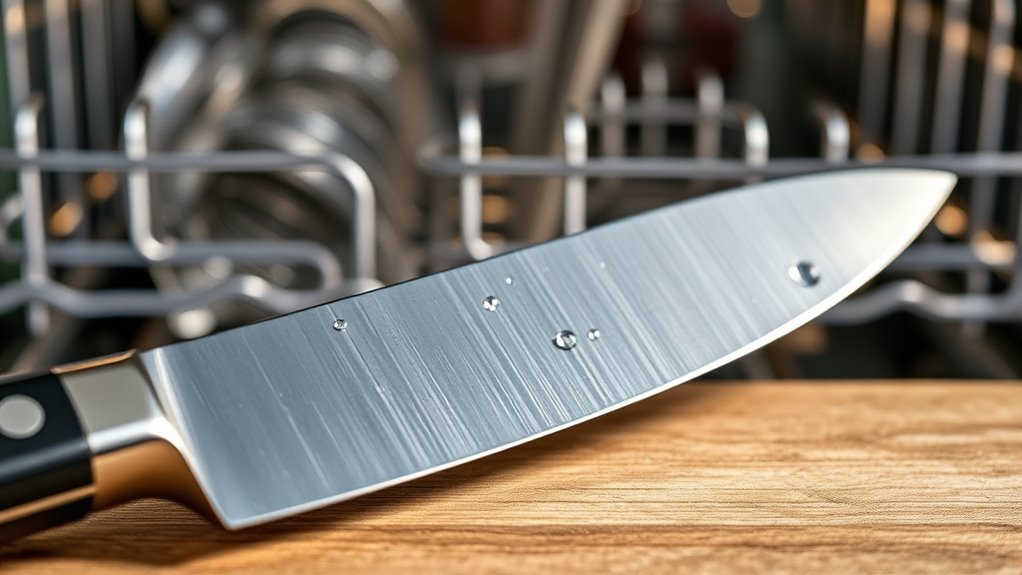
Many people believe that putting their chef knives in the dishwasher is perfectly safe, but this myth persists despite evidence to the contrary. Dishwasher myths about knife safety and durability spread easily because of convenience, but they’re based on cleaning misconceptions. Many think the high heat and harsh detergents won’t harm the blade or handle, yet repeated dishwasher exposure can dull edges, weaken steel, and damage handles. These myths cling because dishwashers seem to simplify cleaning, but they actually do more harm than good. The misconception that all kitchen tools can be cleaned this way ignores the delicate craftsmanship of quality chef knives. Understanding these cleaning misconceptions helps you avoid unnecessary damage and guarantees your knives stay sharp and safe for years.
Proper Ways to Clean and Maintain Your Chef Knife
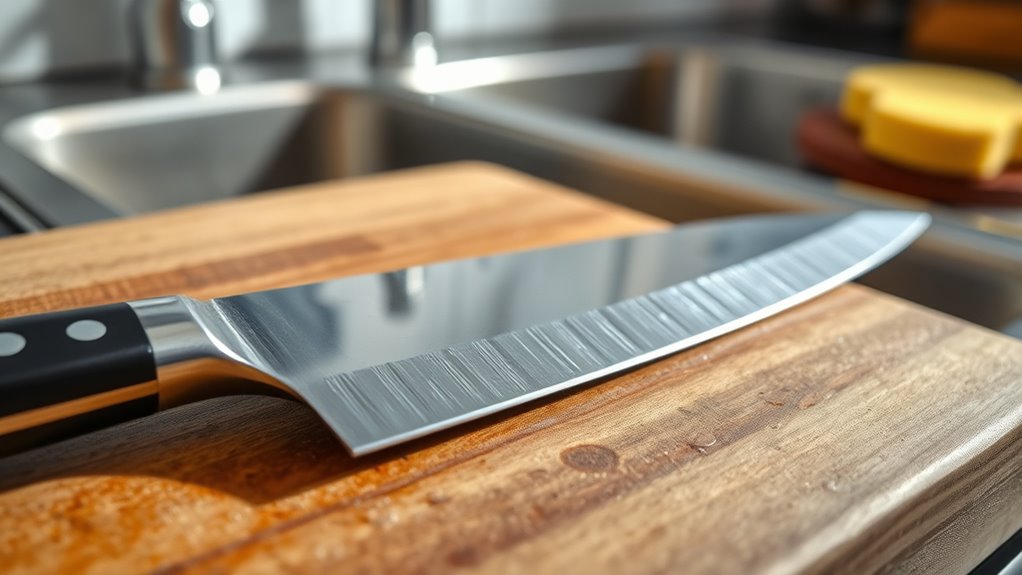
To keep your chef knife in top shape, you should always wash it gently by hand to prevent damage. Be sure to dry it immediately afterward to avoid rust and corrosion. When you’re done using it, store the knife properly to protect the blade and guarantee safety. Additionally, understanding proper maintenance techniques can help extend the lifespan of your knife and ensure consistent performance. Proper cleaning methods not only preserve the sharpness of the blade but also maintain a hygienic cooking environment. Incorporating smart storage solutions can further safeguard your knife and optimize your kitchen space. Using the right cleaning tools can also make a significant difference in maintaining the knife’s condition over time. Regularly inspecting your knife for signs of wear and performing proper sharpening techniques will keep it performing at its best and prevent the need for early replacement.
Hand Wash Gently
Properly hand washing your chef knife is essential for maintaining its sharpness and longevity. Use warm water and mild dish soap to gently clean the blade, avoiding abrasive scrubbers that can damage the edge. Focus on blade maintenance by carefully removing food particles and avoiding prolonged contact with harsh chemicals. When cleaning the handle, use a soft cloth to prevent moisture buildup that can cause handle care issues like cracking or warping. Keep your knife dry and store it properly after washing. Remember, gentle handling preserves the blade’s sharpness and prevents unnecessary wear. Proper hand washing techniques are crucial for maintaining the quality of your chef knife over time. Additionally, integrating smart home technology such as automated reminders or sensor-based cleaning alerts can help you develop consistent maintenance routines.
Dry Immediately After
Immediately drying your chef knife after washing is essential to prevent rust, corrosion, and handle damage. Dishwasher dangers, like prolonged moisture exposure and harsh detergents, can compromise your knife’s metal and handle integrity. By drying it promptly with a soft towel, you remove residual water that could lead to corrosion or pitting. Proper knife maintenance isn’t just about sharpening; it’s also about caring for the blade and handle. Neglecting this step accelerates deterioration and shortens your knife’s lifespan. Keep in mind that air-drying or leaving it wet increases the risk of rust formation, especially with high-carbon steels. Taking a few seconds to dry your knife thoroughly preserves its sharpness and appearance, ensuring it stays safe and effective for years to come.
Store Properly When Not in Use
After drying your chef knife thoroughly, storing it correctly helps maintain its sharpness and prevent damage. Proper knife storage ensures your blade stays in top condition and reduces safety risks. To achieve this, pay attention to proper placement. Use a knife block, magnetic strip, or a protective sheath to keep the edge protected. Avoid loose drawers or stacking knives, which can dull or chip the blade. Make sure the storage solution keeps the knife secure and easily accessible. Proper knife storage also prevents accidental cuts and preserves the integrity of the handle and blade. Remember, a well-stored chef knife stays sharp longer and is safer to use every day. Investing in good knife storage safeguards your investment and enhances your kitchen organization.
Frequently Asked Questions
Can Dishwasher Cleaning Void My Chef Knife’s Warranty?
Dishwasher cleaning can void your chef knife’s warranty because of potential dishwasher damage. Manufacturers often specify hand washing to maintain warranty coverage, as harsh detergents and high heat can damage the blade or handle. If your knife sustains damage from dishwasher use, it’s unlikely to be covered under warranty. To protect your investment, always follow the manufacturer’s care instructions and avoid dishwasher cleaning to guarantee warranty coverage remains intact.
Are Certain Knife Materials More Dishwasher-Safe Than Others?
Did you know that over 70% of professional chefs prefer hand-washing their knives? When it comes to dishwasher safety, ceramic blades are generally more resistant to damage than stainless steel, but neither is entirely dishwasher-safe. Dishwasher cleaning can cause chipping, corrosion, or dulling, especially for high-quality knives. So, even if your ceramic blade seems durable, it’s best to wash your knives by hand to preserve their sharpness and longevity.
How Often Should I Professionally Sharpen My Chef Knife?
You should schedule professional sharpening for your chef knife every 6 to 12 months, depending on how often you cook and the knife’s usage. A proper knife maintenance schedule helps keep it sharp and safe. Regular professional sharpening ensures your blade maintains its edge, making prep easier and safer. Don’t wait until it’s dull—invest in professional sharpening to prolong your knife’s lifespan and optimize your cooking experience.
What Are the Best Storage Options to Protect My Knife?
Forget the junk drawer—your best bet for knife storage is a magnetic strip or a wooden block, keeping your knife safe and sharp. These options prevent accidental cuts and protect the blade’s edge, ensuring knife safety and longevity. Avoid drawers or loose storage, which risk dulling or damaging your knife. So, hang it up or stash it securely, and enjoy both safety and a perfectly preserved blade every time.
Do Dishwasher Detergents Affect Different Knife Finishes Differently?
Dishwasher detergents can impact knife finishes differently, depending on their ingredients. Harsh detergents with strong chemicals may cause discoloration or corrosion on certain finishes like high-carbon steel or specialty coatings. You should avoid using aggressive dishwasher detergents on knives with delicate or specialty finishes, as they can dull or damage the surface over time. Always hand wash your knives to preserve their finish and overall quality.
Conclusion
So, next time you think about tossing your chef knife in the dishwasher, remember that over 70% of professional chefs recommend hand washing to maintain its sharpness and longevity. Dishwashers expose your knife to heat, water, and harsh detergents, accelerating damage and corrosion. By simply cleaning it with warm water and a gentle sponge, you’ll keep your knife in top shape and ensure it lasts for years to come. Your knives will thank you!