
To keep your knife handles from feeling slippery or grimy, regularly clean them with warm, soapy water using a soft cloth or brush, and dry thoroughly afterward. For wooden handles, avoid soaking and treat them periodically with mineral oil or a food-safe conditioner to prevent drying out and cracking. Keep handles dry and free of grime to improve grip and safety. Want to learn more tips to maintain your knives? Keep exploring for detailed advice.

Get kitchen gear delivered free with Prime
- Fast, free delivery on millions of items
- Prime Video, Amazon Music and more included
- Member-only deals all year
Key Takeaways
- Regularly clean handles with appropriate methods based on material to remove grime and prevent slipperiness.
- Dry handles thoroughly after cleaning to avoid moisture buildup and maintain grip.
- Treat wooden handles periodically with mineral oil or food-safe conditioner to prevent drying and cracking.
- Avoid soaking wooden handles; instead, wipe with a damp cloth and dry immediately.
- Use soft brushes or cloths and mild soap for cleaning, avoiding harsh abrasives that can damage handle surfaces.
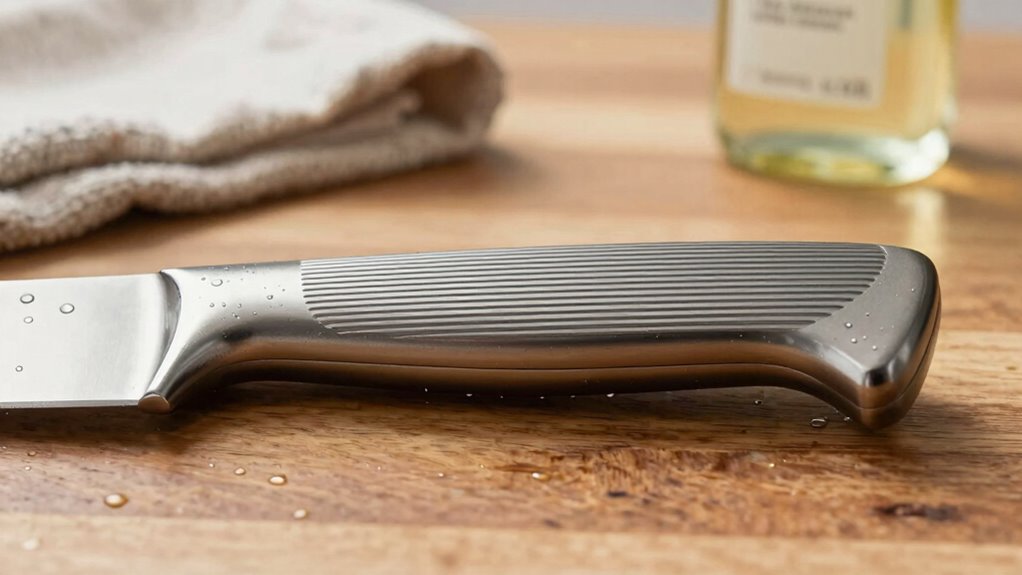
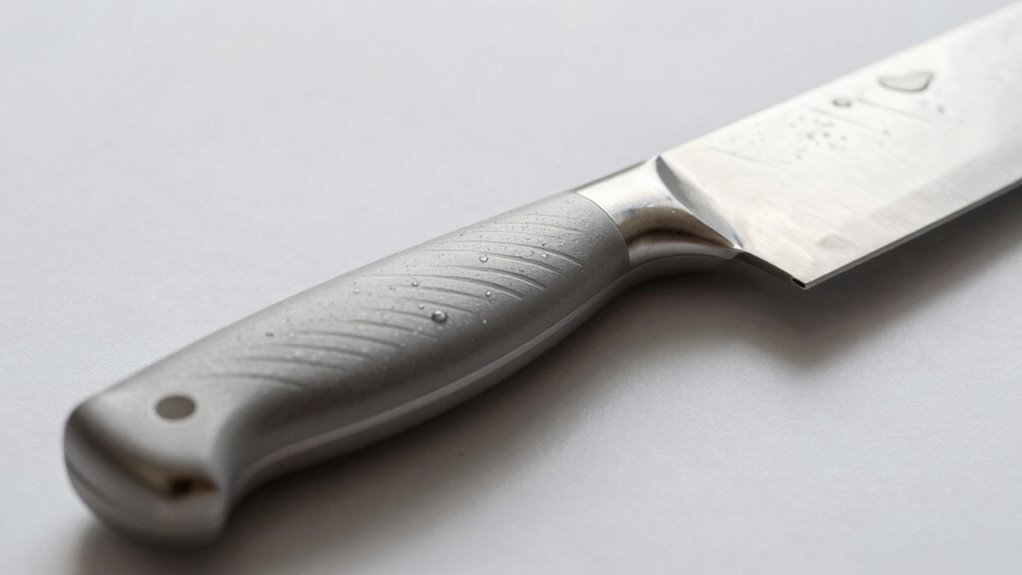
If your knife handles start feeling slippery or grimy, it can make cooking less safe and more frustrating. You rely on a firm grip to chop, slice, and dice efficiently. When handles become slick or sticky, your control diminishes, increasing the risk of accidents. Understanding different knife handle materials and how to maintain them can help you keep your knives safe and comfortable to use. Additionally, choosing appropriate cleaning tools can make a significant difference in maintaining grip and cleanliness. Regular cleaning and proper drying can also help prevent the accumulation of grime, which often contributes to slippery handles.
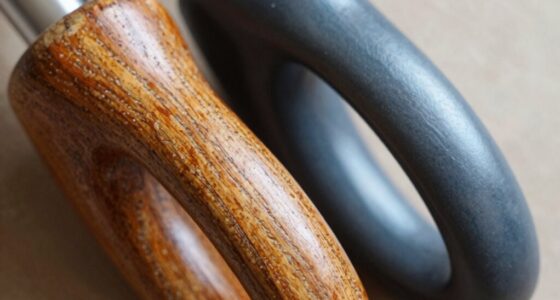
Cleaning and maintenance are key to preventing handles from feeling grimy or slippery. For wooden handles, avoid soaking in water—wipe them down with a damp cloth, then dry thoroughly. You can periodically treat wooden handles with mineral oil or a food-safe wood conditioner to maintain their integrity and prevent drying out or cracking. Plastic and rubber handles can be cleaned with warm, soapy water and a soft brush or cloth. Avoid harsh abrasives that could scratch or degrade the material. After washing, wipe the handle dry to prevent moisture from seeping in, which might cause slipping or damage over time. Regular inspections can also help catch early signs of damage before they become safety issues. Using proper cleaning routines and techniques can help extend the lifespan and safety of your knives.
As an affiliate, we earn on qualifying purchases.
Frequently Asked Questions
Can I Use Household Cleaners to Clean Knife Handles Safely?
You should avoid using household cleaners on knife handles unless they’re explicitly safe for that material. Many cleaners contain chemicals that can damage or degrade handles, especially if they’re wood or plastic. Always check safety precautions and manufacturer instructions first. If you must clean with household cleaners, dilute them properly and test in a small area. For best results, use mild soap and water, ensuring thorough rinsing and drying to keep handles clean and safe.
Are There Specific Materials That Resist Slipping Better Than Others?
Did you know that non-slip materials can improve grip by up to 50%? You should look for knife handles made from non-slip materials like rubber, textured plastic, or silicone, which resist slipping even when wet. Grip-enhancing coatings, such as rubberized or textured finishes, also boost safety by providing better traction. Choosing these options helps you handle knives securely, reducing accidents and making your prep work safer and more comfortable.
How Often Should I Replace a Knife Handle Due to Grip Issues?
You should replace your knife handle when it shows significant signs of wear affecting handle durability and grip enhancement. Typically, if the handle becomes cracked, loose, or loses its grip even after cleaning, it’s time for a replacement. Regularly inspect your knives, especially if you use them often, to guarantee safety and preserve ideal grip. Prompt replacement keeps your knives safe, functional, and comfortable for precise cutting tasks.
Can I Customize My Knife Handle for Better Grip?
Yes, you can customize your knife handle for better grip. Consider adding personalized grip modifications like textured grip tape or rubber overlays, which improve stability and comfort. You might also explore ergonomic handle designs or reshaping your existing handle with custom materials to fit your hand better. These modifications make your knife safer and more comfortable to use, especially during prolonged cooking or intricate tasks.
What Are the Signs of a Handle Needing Repair or Replacement?
Your knife handle’s telling you it’s time for repair if the handle material feels cracked, chipped, or loose—like a worn-out shoe losing its grip. Notice if the grip enhancement fades, making the knife harder to control. Slippery or grimy handles signal deterioration. When these signs appear, it’s best to replace or repair the handle to guarantee safety and preserve peak control during use.
As an affiliate, we earn on qualifying purchases.
Conclusion
To keep your knife handles from feeling slippery or grimy, regular cleaning and proper maintenance are key. Think of your knives as trusted allies—treat them with care, and they’ll serve you well. Applying a bit of mineral oil or grip-enhancing solution can transform a slick handle into a confident grip. Remember, a well-cared-for knife handle isn’t just a comfort—it’s the steady hand guiding your culinary creations, ensuring safety and precision every time.
As an affiliate, we earn on qualifying purchases.
As an affiliate, we earn on qualifying purchases.
Fall Picks
fall essentials
As an affiliate, we earn on qualifying purchases.