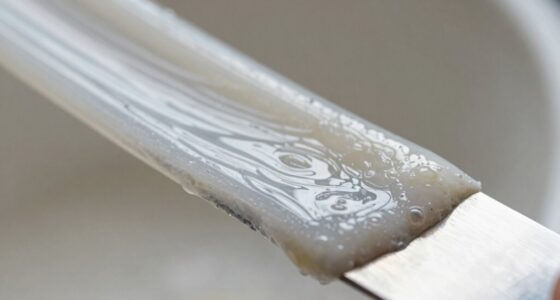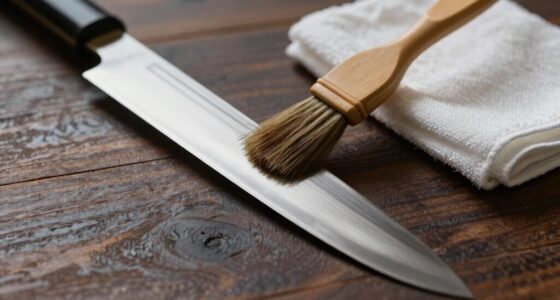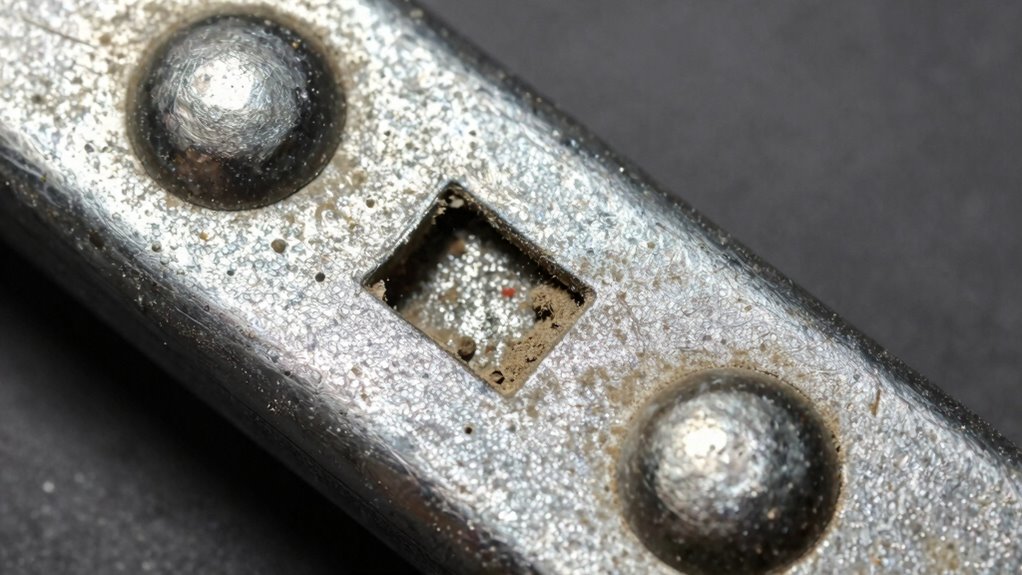

To keep rivets and handle gaps clean, use a soft brush or cotton swab dipped in mild soap or a gentle cleaner to remove dirt and grime regularly. Pay special attention to corners and crevices, wiping them dry afterward to prevent moisture buildup. Using targeted tools helps reach difficult spots, reducing bacteria and corrosion risks. Continuing with these tips guarantees your fixtures stay hygienic and in good shape for the long term.
Key Takeaways
- Use soft-bristled brushes and cotton swabs to gently remove dirt and grime from rivets and handle gaps.
- Apply mild soap solutions or specialized cleaners to disinfect and loosen debris without damaging surfaces.
- Avoid harsh chemicals that can cause corrosion; opt for gentle cleaning methods.
- Regularly dislodge debris from tight spaces and dry surfaces thoroughly to prevent bacterial buildup.
- Schedule routine cleanings to maintain hygiene, prevent long-term damage, and ensure a professional appearance.
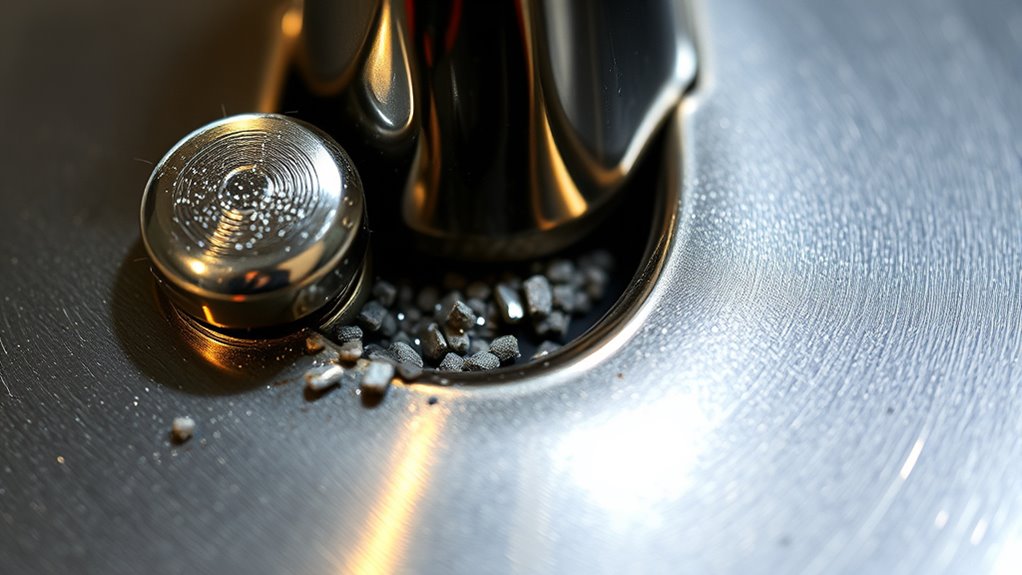
Keeping rivets and handle gaps clean is essential for ensuring a professional finish and preventing long-term damage. These small spaces often attract dirt, grime, and germs that can compromise the integrity of your work and pose health risks. To maintain a pristine appearance and ensure proper surface maintenance, you need the right cleaning tools and techniques. Start by selecting tools that are effective yet gentle enough not to scratch or damage the material. Soft-bristled brushes, cotton swabs, and microfiber cloths are ideal for reaching into tight spots without causing harm. Use these tools to dislodge dirt from around rivets and within handle gaps, paying careful attention to corners and crevices that tend to trap debris.
Keeping rivets and handle gaps clean prevents damage and maintains a professional, hygienic appearance.
When cleaning, avoid harsh chemicals that might corrode or stain the surfaces. Instead, opt for a mild soap solution or specialized surface cleaners designed for the material you’re working with. Dipping your cleaning tools into the solution and gently scrubbing ensures thorough removal of dirt while preserving the surface’s integrity. Remember, surface maintenance isn’t just about aesthetics; it’s about preventing buildup that can lead to rust, corrosion, or weakening of the rivets and handles over time. Regular cleaning prevents the accumulation of residues that can cause long-term damage, ensuring your fixtures stay secure and looking professional. Understanding cleaning techniques can help you achieve better results with less effort.
To reach into tight gaps effectively, consider using small, pointed tools like dental picks or precision brushes. These allow you to target hard-to-reach areas without disturbing surrounding components. After cleaning, wipe everything dry with a clean microfiber cloth to prevent moisture from lingering, which could cause rust or mold. Consistent maintenance is key—set a routine schedule for checking and cleaning these areas, especially if they’re exposed to moisture or heavy use. This proactive approach keeps your surfaces in top condition and reduces the need for extensive repairs later.
Finally, always remember that proper surface maintenance isn’t just about keeping things looking good; it’s about extending the lifespan of your hardware. Clean regularly, use the right tools, and apply gentle, effective cleaning solutions. By doing so, you’ll keep rivets and handle gaps free of grime and germs, maintain a professional appearance, and prevent issues that could compromise safety or functionality. Cleanliness in these small spaces might seem minor, but it plays a major role in the overall durability and hygiene of your equipment.

imarku Chef Knife 7 Inch Kitchen Knife Ultra Sharp Santoku Knife - High Carbon Japanese Chefs Knife, Kitchen Gadgets 2025, Apartment Essentials, Birthday Gifts for Him Her, Best Gifts for Women Men
Professional Santoku Knife: This imarku super sharp santoku knife is made of high carbon stainless steel that resists...
As an affiliate, we earn on qualifying purchases.
Frequently Asked Questions
What Are the Best Disinfectants for Rivets and Handle Gaps?
You should use EPA-registered disinfectant types like alcohol-based solutions (at least 70%), diluted bleach, or disinfectant wipes specifically designed for high-touch surfaces. Clean the rivets and handle gaps regularly—preferably daily or after each use—to prevent germ buildup. By maintaining a consistent cleaning frequency with effective disinfectants, you can minimize germs and keep these hidden spots hygienic and safe.
How Often Should I Clean Rivets and Handle Gaps?
You should clean rivets and handle gaps at least once a week to maintain hygiene. Regular cleaning prevents the buildup of dirt and germs. Follow simple maintenance tips like using disinfectants recommended for high-touch areas and paying attention to often-contacted spots. If you notice visible dirt or after heavy use, clean more frequently. Consistent cleaning keeps these hidden germ spots sanitized and safe for everyone.
Can I Use Household Cleaning Products on Rivets?
Yes, you can use household cleaning products on rivets, but choose DIY cleaning solutions carefully. Avoid harsh household chemicals that might corrode or damage the metal. Instead, opt for gentle cleaners like soap and water or a mixture of vinegar and water. Always test a small area first, and make sure to clean and dry the rivets thoroughly afterward to prevent rust and germs.
Are There Specific Tools Recommended for Cleaning Tight Gaps?
For cleaning tight gaps, you’ll want precision tools and soft brushes. Precision tools, like thin-tipped tweezers or dental picks, help reach into narrow nooks. Soft brushes, such as small paintbrushes or toothbrushes, gently dislodge debris without damage. Using these tools allows you to meticulously maintain cleanliness, minimizing germs and grime. Remember, careful, consistent cleaning keeps rivets and gaps hygienic, helping you handle hidden germs with confidence and clarity.
What Are the Health Risks of Neglecting Rivets and Handle Gaps?
Neglecting rivets and handle gaps can lead to germ buildup, increasing your risk of bacterial transfer. Bacteria thrive in hard-to-reach areas, making it easier for germs to spread and cause illnesses. If you ignore proper cleaning, you may experience infections or allergic reactions. Regularly cleaning these spots reduces bacteria, protects your health, and keeps your environment safer. Don’t overlook these tiny areas—they’re more important than they seem.

HOSHANHO Kitchen Knife in Japanese High Carbon Steel, Professional High-Class Chef's Knife 8 inch, Non-slip Ultra Sharp Cooking Knives with Ergonomic Handle
【High-End Japanese Steel Chef's Knife】 HOSHANHO chef's knife is made of Japanese high carbon steel 10Cr15CoMoV, 2x of...
As an affiliate, we earn on qualifying purchases.
Conclusion
Keeping rivets and handle gaps clean is essential for maintaining hygiene. Regular cleaning reduces bacteria buildup, which is vital since studies show that door handles can harbor 30 times more germs than a toilet seat. By paying attention to these hidden spots, you minimize health risks and keep your environment safer. So, make it a habit to clean these areas often—your health depends on it. Stay vigilant, and germs won’t stand a chance.

imarku Japanese Chef Knife - Sharp Kitchen Knife 8 Inch Chef's Knives HC Steel Paring Knife, Unique Gifts for Men and Women, Gifts for Mom or Dad, Kitchen Gadgets with Gift Box, Gyutou Knives
High-Carbon Stainless Steel Blade: It is manufactured from high-quality stainless steel that maintains its functionality for a long...
As an affiliate, we earn on qualifying purchases.

Japanese Chef Knife, 8 Inch Damascus Kitchen Knife with VG10 Steel, Handcrafted Sharp Knife with Ergonomic Handle, Cooking Knives for Home Chefs, Cooking Gifts for Men and Women
【Premium Damascus Chef Knife with VG-10 Steel Core】Our Japanese knives feature a VG-10 steel core (60 HRC) for...
As an affiliate, we earn on qualifying purchases.