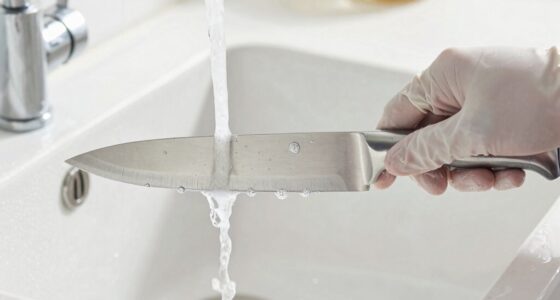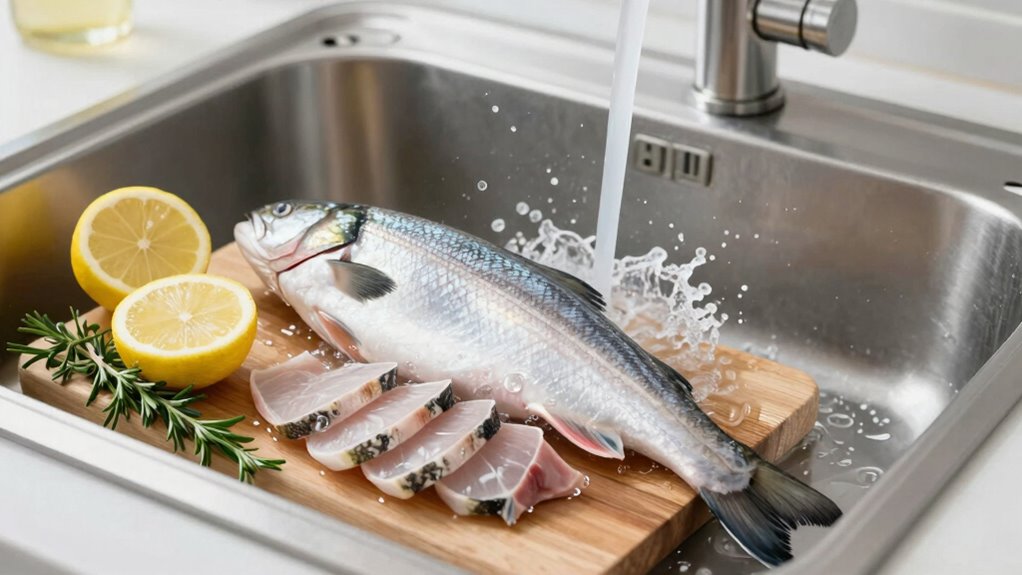

After cutting raw fish, start by rinsing all surfaces, utensils, and hands with hot water to remove residues and surface oils. Spray a mixture of equal parts white vinegar and water, letting it sit briefly before wiping clean. Sprinkle baking soda on surfaces or utensils, scrub with a damp sponge, then rinse thoroughly. For extra freshness, wipe with lemon juice or slices, and guarantee everything dries completely. Continue exploring methods to keep your space odor-free naturally.
Key Takeaways
- Rinse all tools and surfaces immediately with hot water to remove fish residues and oils.
- Spray surfaces with a mixture of equal parts white vinegar and water, then wipe clean.
- Sprinkle baking soda on surfaces, scrub with a damp sponge, then rinse thoroughly.
- Use lemon juice or lemon slices to neutralize odors naturally.
- Ensure proper ventilation and dry all surfaces completely to prevent odor recurrence.
After cutting raw fish, it’s essential to clean your workspace thoroughly to prevent cross-contamination and guarantee safety. Raw fish often leaves behind a persistent fish odor that can linger on surfaces and utensils if not addressed properly. To eliminate this smell without resorting to harsh chemicals, you need effective cleaning techniques that are both safe and eco-friendly. Start by removing any fish scraps or residues from your cutting board, knives, and counters. Rinse everything with hot water immediately after use to wash away surface oils and particles that contribute to the fish odor.
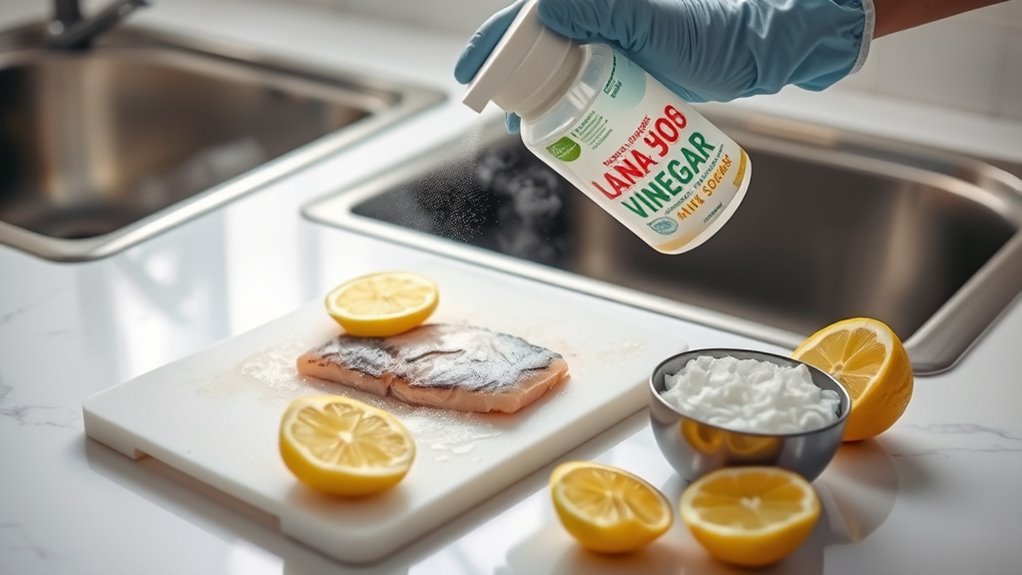
Once you’ve done that, a natural cleaning solution can be your best ally. A mixture of white vinegar and water works wonders for neutralizing fish smell. Fill a spray bottle with equal parts vinegar and water, then spray generously over your work surfaces, utensils, and even your hands. Let it sit for a few minutes before wiping clean with a damp cloth. Vinegar’s acidic properties help break down odor-causing compounds, leaving your workspace fresh without harsh chemicals. Alternatively, you can use lemon juice or lemon slices, which contain natural acids that cut through fish odors and leave your kitchen smelling citrusy and clean.
Use a vinegar-water spray or lemon slices to naturally eliminate fish odors and keep your kitchen fresh.
Another effective cleaning technique involves baking soda. After rinsing the surfaces, sprinkle baking soda over the area or directly onto your cutting board. Use a damp sponge or cloth to scrub thoroughly, then rinse with hot water. Baking soda absorbs odors and neutralizes them, making it an excellent choice for cleaning after handling raw fish. For utensils like knives and cutting boards, a paste of baking soda and water applied directly to the surface can be scrubbed off after a few minutes, resulting in a fresh, odor-free item.
To further combat lingering fish smells, consider wiping down with a mixture of hydrogen peroxide and water. This helps eliminate bacteria and reduces odor without the use of strong chemicals. Additionally, proper ventilation by opening windows or turning on a fan can significantly improve air quality and help dissipate any remaining odors quickly. Remember to always dry your surfaces completely after cleaning, as moisture can promote bacteria growth and cause smells to return.
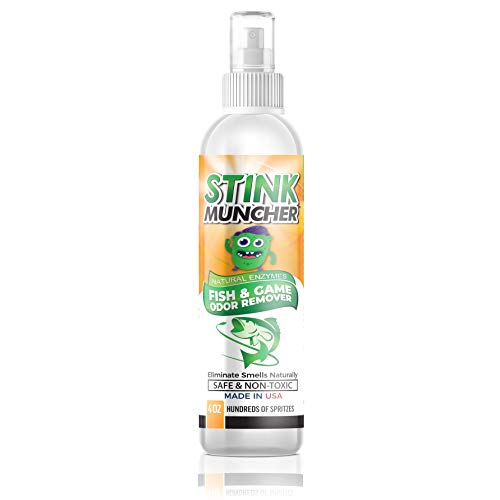
Stink Muncher Fish and Game Natural Enzyme Odor Eliminator and Remover Spray | Smell Proof Your Fishing, Hunting and Sports Clothing, Shoes and Equipment | Made In USA
Why Stink Muncher Is Different, and Why It Works So Amazing – Most hunting and fishing sport odor…
As an affiliate, we earn on qualifying purchases.
As an affiliate, we earn on qualifying purchases.
Frequently Asked Questions
Can I Use Vinegar Instead of Lemon to Neutralize Fish Odors?
Yes, you can use vinegar instead of lemon to neutralize fish odors. Vinegar substitution works well as a lemon alternative because it helps break down the smell-causing compounds. Simply rinse the cutting area with a mixture of vinegar and water or wipe it down with vinegar. This natural solution effectively removes fishy smells without harsh chemicals, leaving your tools and surfaces fresh and odor-free.
How Long Should I Leave Cleaning Solutions on Surfaces?
You should leave cleaning solutions on surfaces for at least 5 minutes to guarantee proper surface contact time. This cleaning duration helps break down bacteria and neutralize odors effectively. Make sure to evenly distribute the solution and allow it to sit without rinsing immediately. For tougher smells, extending the surface contact time up to 10 minutes can improve results. Always follow the manufacturer’s instructions for best practices.
Is It Safe to Use Essential Oils for Odor Removal?
Yes, you can use essential oils for odor removal, but be mindful of essential oil safety. Always dilute oils before applying or diffusing, as concentrated oils may cause skin irritation or allergic reactions. Avoid direct skin contact, and keep them out of reach of children. If you have sensitive skin or allergies, test a small amount first. Properly diluted essential oils are safe and effective for freshening your space after cutting raw fish.
Can I Use a Dishwasher to Clean Cutting Boards?
Yes, you can use a dishwasher to clean cutting boards, but only if they’re dishwasher-safe. Check for any manufacturer instructions to guarantee dishwasher safety and avoid warping or damage. Place your cutting boards on the top rack and run a hot cycle with a good detergent. This method helps with cutting board maintenance by effectively removing odors and bacteria, especially after handling raw fish.
What Are Natural Alternatives to Chemical Deodorizers?
You can use herbal sachets or baking soda sprays as natural deodorizers. Place herbal sachets in your fridge or closet to absorb odors naturally, and spray baking soda solutions on surfaces to neutralize smells without harsh chemicals. These options are eco-friendly, effective, and safe for your family. Regularly using herbal sachets and baking soda sprays helps keep your space smelling fresh without relying on synthetic deodorizers.
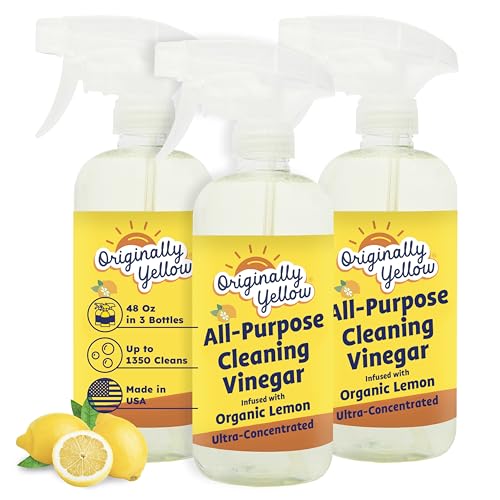
Originally Yellow Lemon Vinegar All Purpose Cleaning Spray | Distilled Cleaning Vinegar | Plant-Derived All Purpose Cleaner | Living Room, Bathroom, & Kitchen | 3 Pack
ALL-PURPOSE VINEGAR SPRAY – There’s nothing quite like a great all purpose cleaner spray for those quick cleanup…
As an affiliate, we earn on qualifying purchases.
As an affiliate, we earn on qualifying purchases.
Conclusion
After you finish cutting raw fish, think of your cleaning routine as the final brushstroke on a masterpiece. Rinse the surfaces thoroughly with warm water and a mild vinegar solution to banish lingering odors. Wipe everything down, ensuring no traces remain. This simple act transforms your space from a battlefield of smells into a fresh, inviting kitchen. With just a little effort, you’ll keep your kitchen as pristine as a clear blue sky after a storm.

MRS. MEYER'S CLEAN DAY Baking Soda Cream Cleaner, Cuts Grease, Scratch-Free Polish, Lemon Verbena, 16 Fl Oz, Pack of 1
Mrs. Meyer’s Baking Soda Cream Cleaner removes soap scum and grease build-up to make your kitchen sparkle
As an affiliate, we earn on qualifying purchases.
As an affiliate, we earn on qualifying purchases.

Nature's Air Sponge Odor Absorber and Eliminator Unscented Plastic Tub 1 Lb. 4-Pack
Superior Nature’s Air Sponge Odor Absorption: Our Air Sponge Odor Absorber is specifically designed to effectively eliminate odors,…
As an affiliate, we earn on qualifying purchases.
As an affiliate, we earn on qualifying purchases.