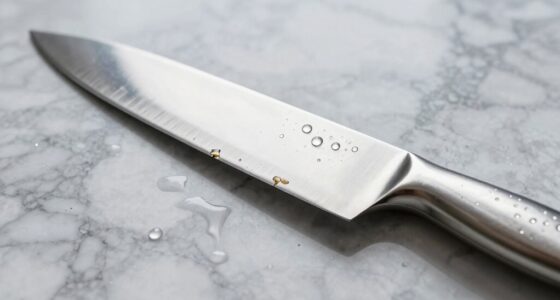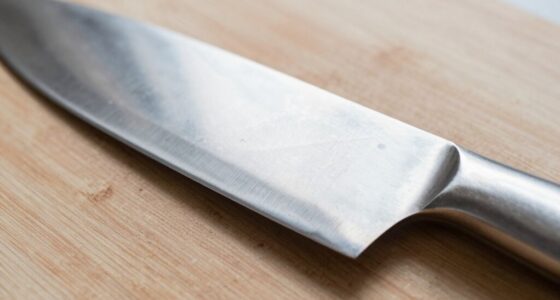
To prevent rust on your Japanese knife steel, clean it immediately after use with warm, soapy water and dry it thoroughly with a soft cloth. Apply a thin coat of food-grade oil regularly, store it in a dry environment, and handle acidic foods promptly. You can also develop a natural patina or apply protective coatings for extra durability. Keeping up these habits will help maintain both its appearance and performance; explore more to master long-term care.
Key Takeaways
- Immediately clean and thoroughly dry the knife after use to prevent rust formation.
- Regularly apply a thin coat of food-grade oil to protect the blade from moisture.
- Use acidic foods to develop a natural patina that shields against rust.
- Store the knife in a dry, well-ventilated area, preferably in a saya or with a protective cover.
- Remove rust gently with fine sandpaper and re-oil the blade promptly to maintain steel integrity.
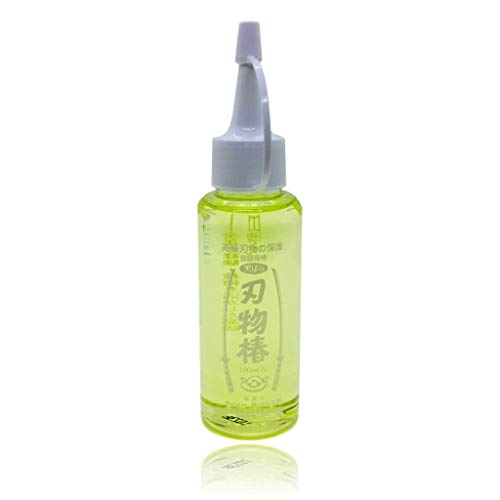
KUROBARA 100% Pure Tsubaki Japanese Knife Maintenance Camellia Oil (3.4 oz)
Prevents rust on various carbon steel products such as knives, scissors, sewing machines, gardening tools, etc.
As an affiliate, we earn on qualifying purchases.
As an affiliate, we earn on qualifying purchases.
Immediate Post-Use Cleaning Practices
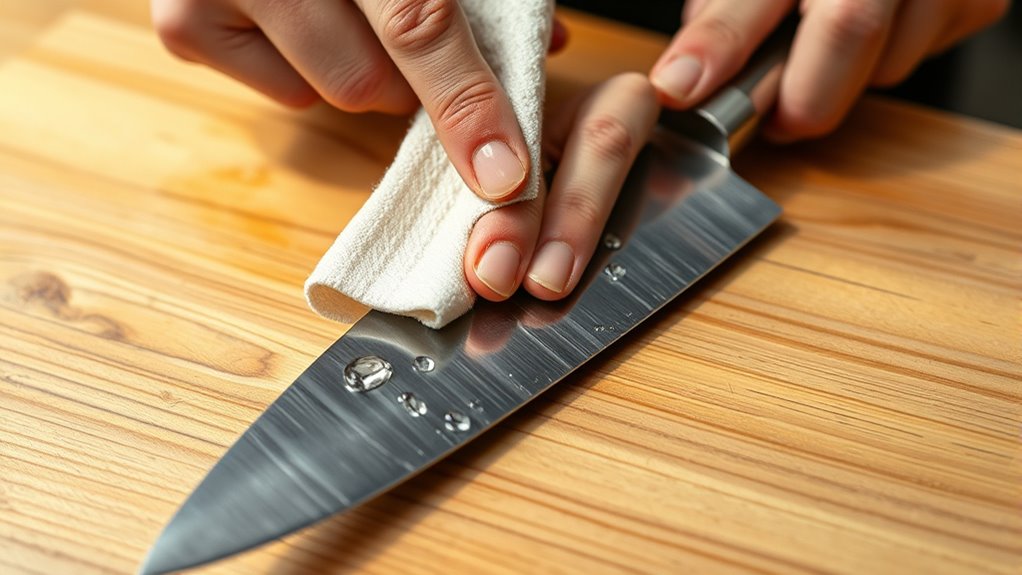
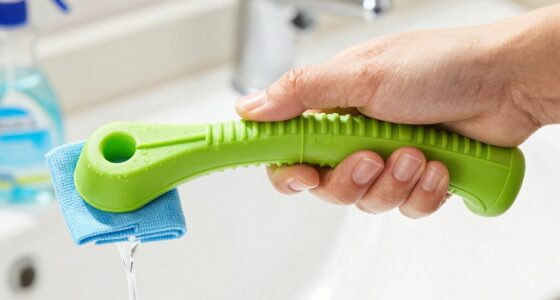
After using your Japanese knife, it’s essential to clean it immediately to prevent rust. Hand wash the blade with warm, soapy water right after use to remove food particles and acids that can cause corrosion. Never leave your knife soaking in a sink full of dishes, as prolonged moisture exposure can accelerate rust formation. Avoid using a dishwasher; the high heat and detergents damage the steel and promote rust. After washing, dry the blade thoroughly with a soft cloth to eliminate all ambient moisture. Wipe the blade carefully before putting it away, especially after cutting acidic foods, because rust can form in less than a minute. Quick, proper cleaning and drying are vital to maintaining your knife’s performance and appearance.

Thirteen Chefs Mineral Oil – 8 oz Food Grade Conditioner for Wood Cutting Board, Countertop & Butcher Block, Lubricant for Knife or Meat Grinder – Safe USP Finish on Marble, Soapstone
FOOD GRADE – This butcher block conditioner is lab tested to ensure that it meets food safety standards,…
As an affiliate, we earn on qualifying purchases.
As an affiliate, we earn on qualifying purchases.
Applying Protective Oils for Rust Prevention

Applying protective oils is a crucial step in maintaining your Japanese knife’s rust resistance, especially during periods of non-use. A thin layer of food-grade mineral oil or camellia oil creates a barrier that prevents moisture from reaching the steel surface. You should rub a few drops onto the blade once a week, using a cotton cloth to ensure even coverage. Before storing, apply a light coat to stave off ambient humidity and oxidation. This oil layer doesn’t affect your knife’s reactivity when cutting acidic foods. Regular application helps maintain a smooth, rust-free surface and prolongs the blade’s lifespan. Remember, the goal is to create a protective seal without excess buildup, so keep the coating thin and consistent. This simple habit considerably reduces rust formation over time. Additionally, understanding the contrast ratio of your projector can help optimize your home cinema environment for the best image quality. To further enhance your knife care routine, consider proper storage methods that prevent moisture accumulation and air exposure. Using climate-controlled storage can also provide an extra layer of protection against humidity and temperature fluctuations. Incorporating these preventative measures into your routine ensures your knife remains in optimal condition for years to come.
Japanese knife storage sheath
As an affiliate, we earn on qualifying purchases.
As an affiliate, we earn on qualifying purchases.
Encouraging Natural and Forced Patina Development
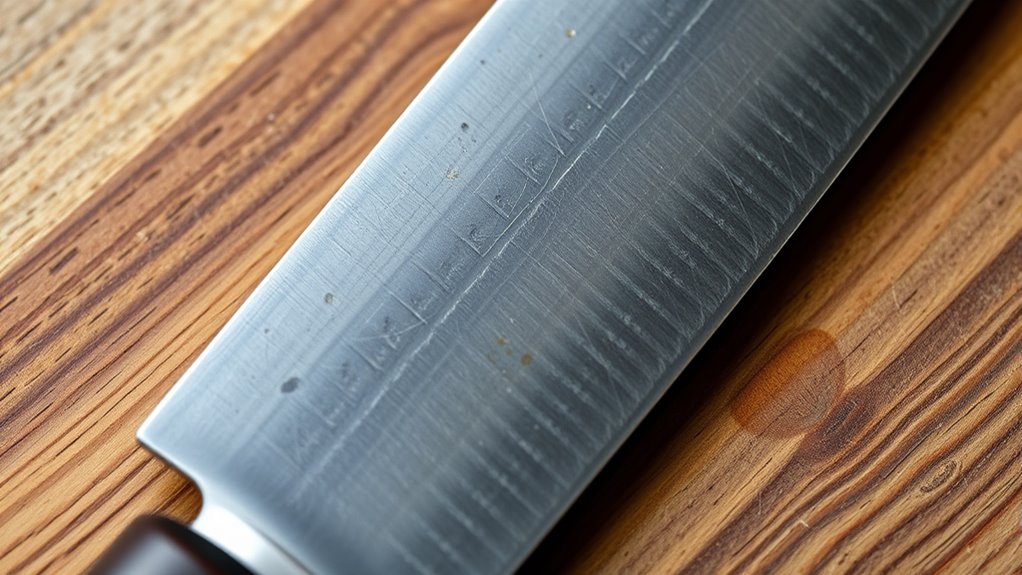
Developing a patina on your Japanese knife not only enhances its appearance but also provides a natural layer of rust protection. To encourage this, regularly use your knife on acidic foods like citrus, tomatoes, or vinegar-based dishes, which naturally accelerate patina formation. For faster results, you can try forced patina methods, such as submerging the blade in chilled coffee for 6-8 hours or overnight, creating a subtle, protective coloration. You might also experiment with vinegar, lemon juice, or potatoes for rapid patina development, but keep in mind these methods can permanently alter the knife’s look. Developing a patina reduces rust susceptibility by creating a stable, oxidized surface layer, helping your blade stay healthy and functional long-term while maintaining its unique character. Incorporating energy-efficient practices can further extend the longevity of your knife and reduce environmental impact. Additionally, maintaining proper storage and avoiding prolonged exposure to moisture are essential preventative measures to keep your knife in optimal condition.
Japanese knife cleaning kit
As an affiliate, we earn on qualifying purchases.
As an affiliate, we earn on qualifying purchases.
Effective Storage Methods and Environmental Control
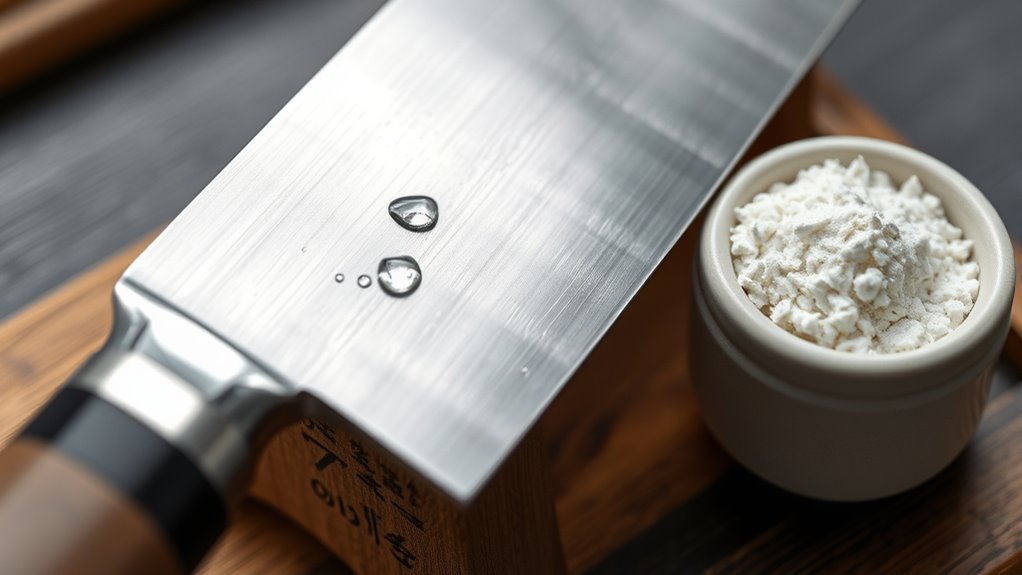
Proper storage is key to maintaining your Japanese knife’s condition and preventing rust. When you store your knife in a suitable environment, you reduce exposure to moisture and humidity that accelerate corrosion. Keep blades dry and avoid leaving them in damp areas. Use protective solutions to shield against moisture during long-term storage. Consider these effective methods:
- Store in a dry, low-humidity environment
- Use a saya (sheath) or knife protector to prevent scratches and moisture contact
- Keep knives in a knife roll or soft case for impact and environmental protection
- Hang on a magnetic strip or place in a knife block to promote airflow and dryness
- Apply a light coat of protective oil before extended storage to inhibit oxidation
Understanding Steel Composition and Reactivity
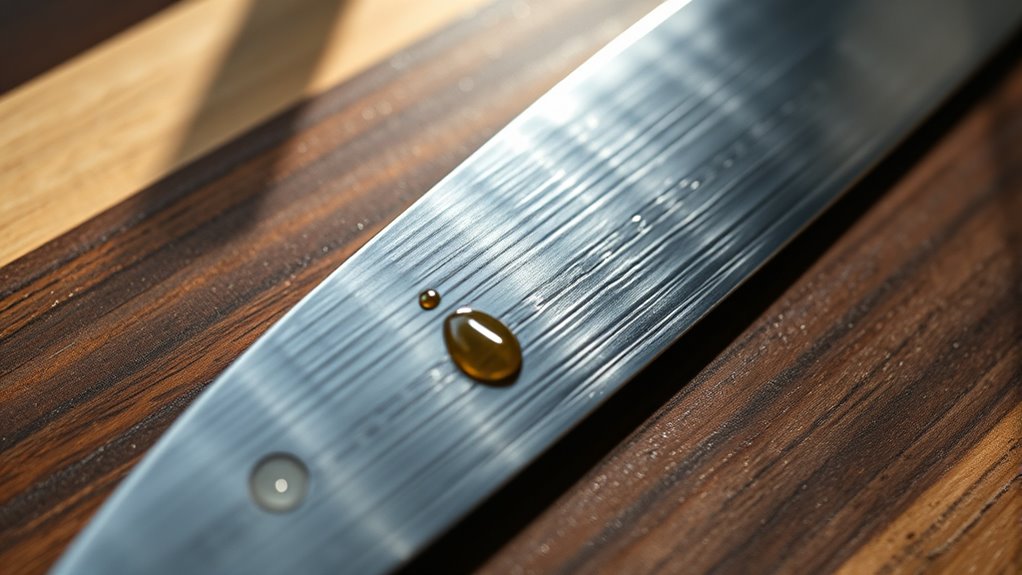
Understanding steel composition and reactivity is essential for caring for your Japanese knife because different steel types react to moisture and environmental factors in distinct ways. Carbon steel, especially high-carbon varieties, rusts quickly when exposed to water or humidity, sometimes within minutes. Japanese white steel (Shami) is particularly reactive, requiring prompt drying and oiling. The amount of chromium in the steel influences its corrosion resistance; steels with 4% chromium rust faster than those with 8% or more, which are closer to stainless steel. Blacksmith techniques like warikomi or scorched finishes add extra protection by creating oxidized layers. Knowing your steel’s specific reactive properties helps you develop appropriate maintenance routines, such as proper cleaning, quick drying, and applying protective oil, to keep your knife in ideal condition. Understanding steel’s reactivity allows you to tailor your care routine to prevent rust effectively.
Rust Removal Techniques and Maintenance Recovery
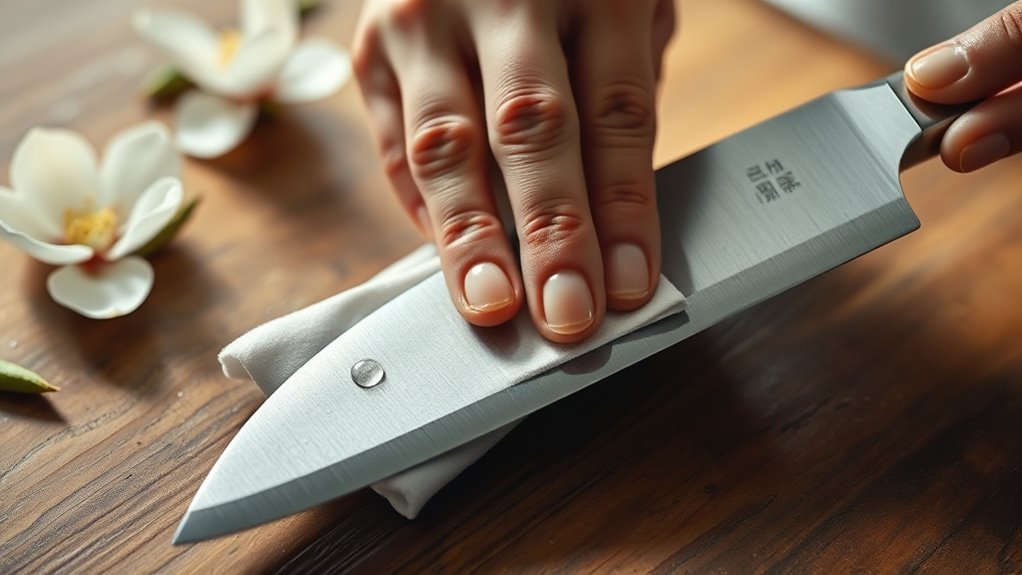
When rust appears on your Japanese knife, gentle buffing with rust erasers or wine corks can remove surface spots without damaging the patina. For more stubborn rust, products like Bar Keepers’ Friend or baking soda work well when applied carefully. Always follow up with honing and stropping to restore your blade’s sharpness and finish. Incorporating regular maintenance routines helps prevent rust from forming in the first place, ensuring your knife stays in optimal condition for years to come. Proper storage practices, such as keeping knives dry and avoiding humid environments, further protect the steel from corrosion. Additionally, understanding the 16PF traits can remind us of the importance of consistent care and attention to detail to preserve materials over time.
Gentle Rust Buffing
Gently buffing rust off your Japanese knife is essential to preserve its blade and patina while avoiding damage. Using careful techniques, you can remove rust without harming the delicate surface. Start by selecting soft tools like rust erasers or a cotton cloth. Lightly rub the rusty spots in a circular motion, focusing on the affected area. For stubborn rust, a fine 1000-grit sandpaper can help, but only with gentle pressure. Avoid aggressive scrubbing, which risks stripping the patina. After rust removal, hone and strop the blade to restore its polish. Keep your movements gentle and deliberate to maintain the knife’s integrity and beauty.
- Use rust erasers or soft cloths for delicate removal
- Light circular motions prevent surface damage
- Apply gentle pressure with fine sandpaper for stubborn rust
- Hone and strop after buffing for a polished edge
- Always prioritize care over force to protect your blade
Rust Removal Products
To effectively remove rust from your Japanese knife, selecting the right products and techniques is essential for maintaining the blade’s integrity and appearance. Start with rust erasers or a soft cloth with a small amount of baking soda or Bar Keepers’ Friend to gently buff away surface rust without damaging the patina. For more stubborn spots, use fine 1000-grit sandpaper cautiously, applying gentle pressure to avoid scratches. Wine corks can also help lift rust in tight corners. Avoid harsh abrasives or metal scrapers that could scratch the steel. After rust removal, thoroughly clean the blade with warm water and dry it immediately. Applying a light coat of food-grade mineral or camellia oil afterward helps prevent future rust, ensuring your knife remains sharp and protected. Regularly inspecting your knife and proper storage are key to preventing rust buildup over time.
Developing a Consistent Care Routine
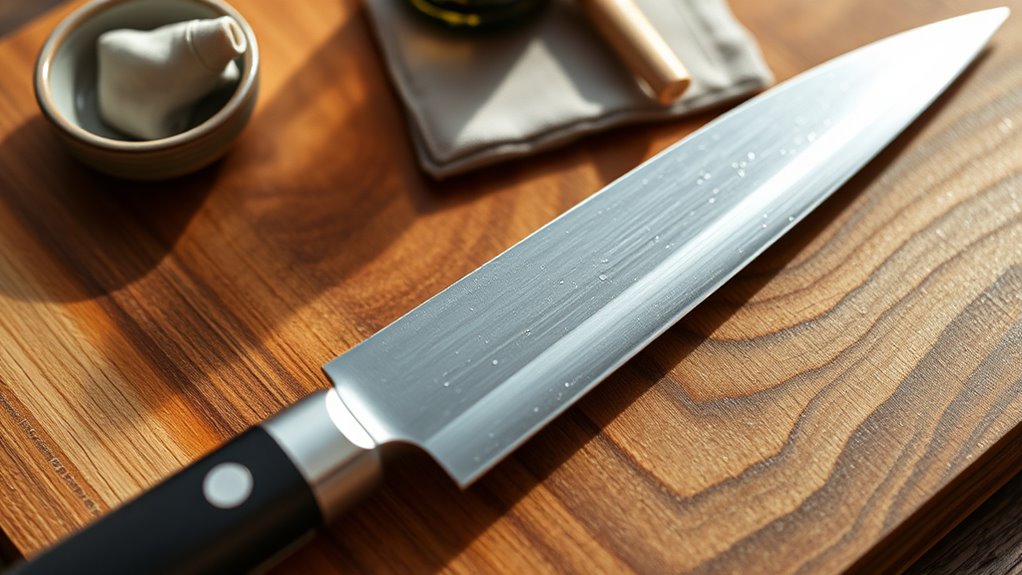
You need a simple, consistent routine to keep your knife in top shape. Regular cleaning after each use and applying oil weekly help prevent rust and damage. Storing your knife in a dry, well-ventilated place also reduces moisture exposure, which is essential for preventing corrosion. Ensuring proper airflow around your storage area is equally important, as air circulation helps keep humidity levels low. Incorporating proper storage techniques can further protect your knife from environmental factors. Additionally, utilizing rust-resistant coatings can provide an extra layer of protection against moisture and corrosion. Maintaining optimal environmental conditions in your storage space supports long-term preservation. Sticking to these practices guarantees your knife stays sharp, protected, and ready for your next task.
Daily Cleaning Practices
Establishing a daily cleaning routine is essential for maintaining the sharpness and rust resistance of your Japanese knife steel. After each use, hand wash your knife with warm, soapy water to remove food residues and prevent rust formation. Never leave it in the sink or in a dishwasher, as moisture and harsh detergents accelerate corrosion. Immediately dry the blade with a soft cloth to eliminate surface moisture that causes oxidation. Wipe the entire blade, paying special attention to the edge and any crevices. To keep your knife in prime condition, consider these practices:
- Wash immediately after use
- Avoid soaking or dishwasher cleaning
- Dry thoroughly with a soft cloth
- Wipe the blade before storage
- Handle acidic foods quickly and carefully
- Regularly inspect your knife for signs of oxidation and address issues promptly
- Using proper storage techniques can also significantly reduce exposure to moisture and prevent rust formation. Additionally, applying a light oil coating on the blade after cleaning creates a protective barrier against humidity. Consistency is key to preserving your knife’s performance and appearance.
Regular Oil Application
In addition to daily cleaning, applying a protective coat of oil regularly forms an essential part of maintaining your Japanese knife’s steel. You should use a food-grade mineral oil or camellia oil, especially designed for high-carbon steel. Apply a few drops of oil onto a cotton cloth and wipe the blade evenly once a week, especially during the first few months. This creates a barrier that prevents moisture from contacting the steel and reduces rust formation. Before storing the knife for an extended period, reapply oil to ensure continuous protection. Keep in mind that oiling does not affect the knife’s cutting ability or reactivity with acidic foods. Developing this routine helps preserve the blade’s appearance and functionality over time. Additionally, understanding metal oxidation can help you better grasp how protective oils prevent rusting and extend your knife’s lifespan.
Frequently Asked Questions
How Often Should I Reapply Protective Oil to My Japanese Knife?
You should reapply protective oil to your Japanese knife weekly during the first few months of use. After that, monthly oiling often suffices, especially if you store it in a dry environment. If you notice any dullness or signs of rust, reapply immediately. Regular oiling creates a strong barrier against moisture, preventing rust and maintaining your knife’s performance. Always wipe the blade thoroughly before storage to maximize protection.
Can I Use Household Items to Clean Rust Spots on My Blade?
Yes, you can use household items to clean rust spots on your blade. Gently rub rust with a soft cloth dampened with baking soda or a mixture of baking soda and water. For stubborn rust, try using a wine cork or a rust eraser to buff it away carefully. Avoid harsh abrasives like steel wool, which can scratch the patina. Finish by wiping the blade clean and applying a light coating of protective oil.
What Are the Signs That My Knife Needs Professional Sharpening After Rust Removal?
You’ll notice your knife struggles to slice effortlessly again, even after rust removal, like it’s lost its edge in a fog of corrosion. If rust spots linger or the blade feels dull despite cleaning, it’s time for professional sharpening. Tiny chips, a rough feel, or uneven cutting are signs your blade’s edge has been compromised—meaning a skilled sharpener needs to revive its razor-sharp precision, restoring both function and beauty.
Is It Safe to Use Natural Ingredients Like Lemon Juice Regularly on the Blade?
Yes, it’s safe to use natural ingredients like lemon juice regularly on your knife, but do so carefully. Lemon juice’s acidity can help develop a patina and remove minor rust spots. However, avoid prolonged exposure or frequent use that might damage the blade’s protective layer. Always rinse thoroughly afterward, dry immediately, and consider applying a thin coat of protective oil to maintain rust resistance and preserve the knife’s sharpness.
How Does Humidity Affect the Longevity of a Carbon Steel Knife?
Humidity is like an army of tiny rust monsters attacking your knife’s lifespan. Higher moisture levels accelerate oxidation, causing rust to form in minutes, not hours. You’ll notice your carbon steel knife deteriorates faster in humid environments, losing sharpness and beauty. To keep it pristine, store your knife in a dry place, use protective oils, and avoid humid areas, transforming your knife care routine into a fortress against rust’s relentless assault.
Conclusion
By following these simple habits, you’ll keep your traditional Japanese knife steel sharp and rust-free, much like a samurai’s blade kept pristine for battle. Regular cleaning, oiling, proper storage, and understanding your steel’s nature are your best defenses against corrosion. Think of it as your personal quest—maintaining your knife’s honor and legacy. With consistent care, your blade will serve you faithfully, proving that even in a world of modernity, the timeless art of knife care endures.