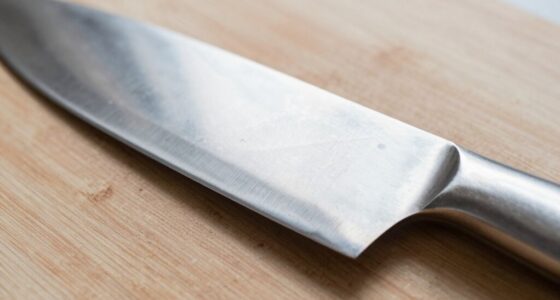

To prevent rust on your Japanese knife steel, clean it immediately after use with a soft sponge and mild detergent, avoiding soaking or dishwasher cleaning. Always dry the blade thoroughly and apply a light coat of food-grade oil to create a moisture barrier. Developing a natural patina can help, as can storing it in a dry place with proper covers. By following these daily habits, you’ll maintain its sharpness and protection—discover more tips to keep your knife in top condition.
Key Takeaways
- Wash the knife immediately after use with a soft sponge and mild detergent, avoiding soaking and dishwasher cleaning.
- Dry the blade thoroughly with a clean cloth and apply a thin layer of food-grade mineral or Camellia oil weekly.
- Develop a protective patina by submerging in chilled coffee or lightly coating with vinegar or lemon juice regularly.
- Store in a dry, well-ventilated area using a sheath or soft cover to prevent moisture contact and scratches.
- Gently remove rust with steel wool or mild abrasives when needed, then reapply oil to maintain a rust-resistant surface.
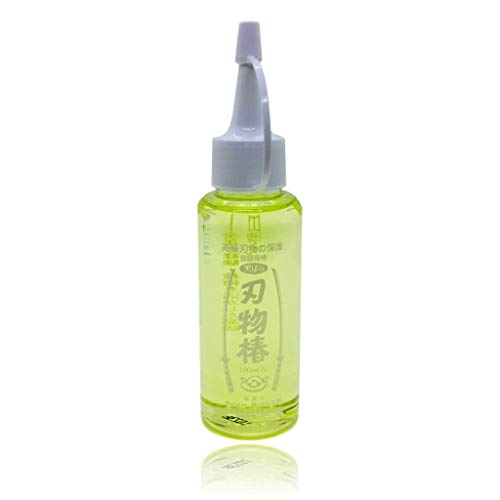
KUROBARA 100% Pure Tsubaki Japanese Knife Maintenance Camellia Oil (3.4 oz)
Prevents rust on various carbon steel products such as knives, scissors, sewing machines, gardening tools, etc.
As an affiliate, we earn on qualifying purchases.
As an affiliate, we earn on qualifying purchases.
Immediate Washing and Gentle Cleaning Practices
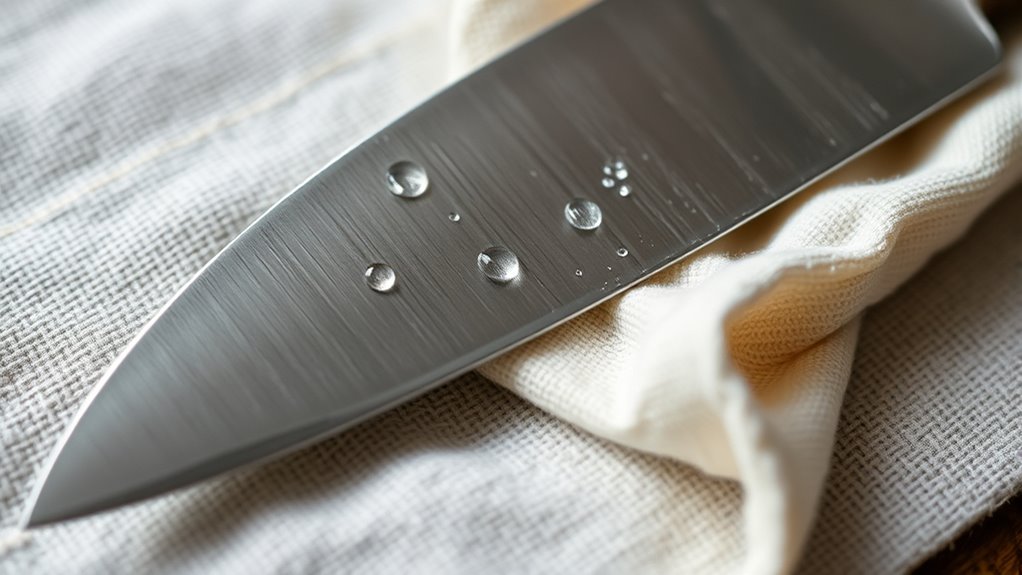
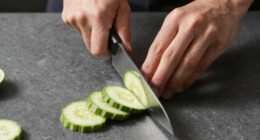
To keep your Japanese knife in ideal condition, it’s essential to wash it immediately after each use. Use a soft sponge and mild detergent, gently cleaning the blade to remove any food particles or residue. Avoid soaking the knife for long periods or overnight, as prolonged exposure to moisture promotes rust. For carbon steel blades, wash with warm, soapy water to help prevent corrosion. Never put your knife in the dishwasher; high heat and harsh detergents damage the steel and can cause rust. Promptly washing your knife helps prevent moisture from lingering, which is the primary cause of rust formation. Establishing this quick cleaning habit also supports maintaining the correct color temperature, which is crucial for preserving the blade’s appearance and performance. This practice also minimizes the risk of oxidation, which can compromise the metal’s integrity over time. By establishing this quick cleaning habit, you protect the blade’s sharpness and longevity, ensuring it stays in top condition.
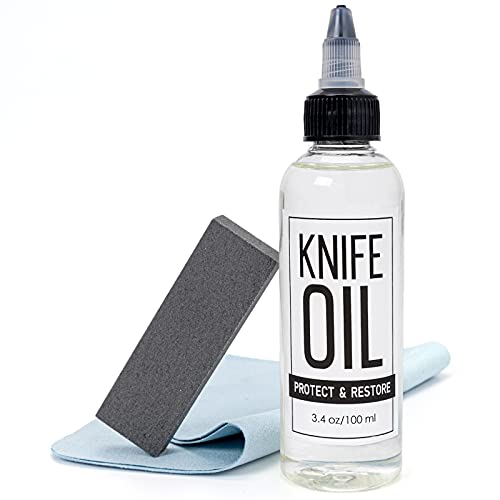
PuGez Knife Oil Rust Eraser Kit, Extra Large Rust Remover for Knives, Sword Maintenance Oil (3.4 oz) for Carbon Steel Blade, Cleaning, Protection And Lubricant Care Set
Professional Maintenance Oil: Specifically designed to maintain steel and carbon steel kitchen knives from rust and wear. Our…
As an affiliate, we earn on qualifying purchases.
As an affiliate, we earn on qualifying purchases.
The Importance of Thorough Drying and Proper Oiling
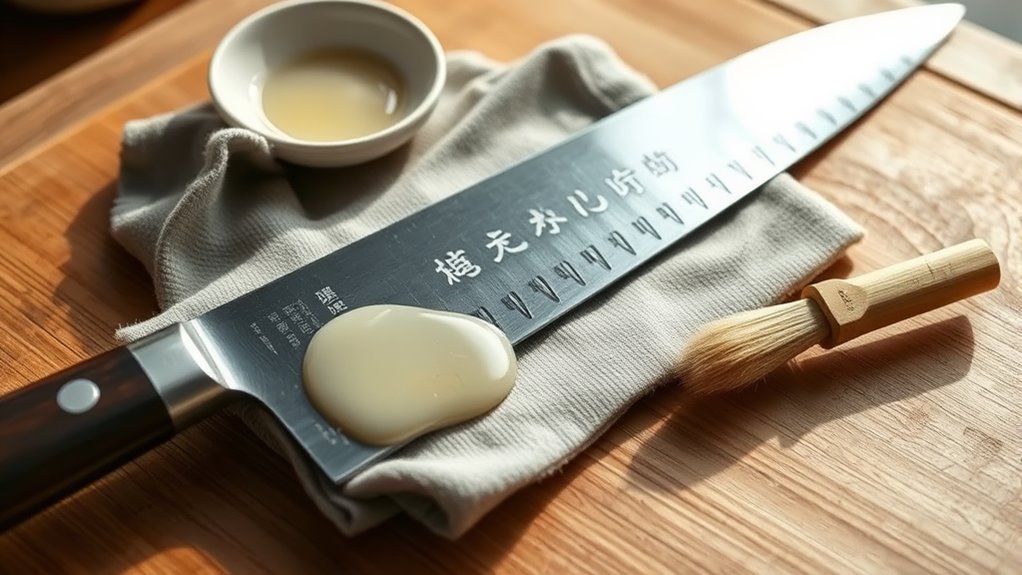
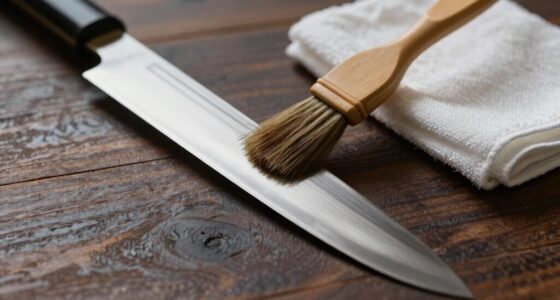
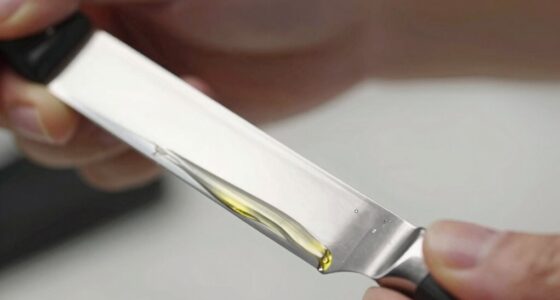
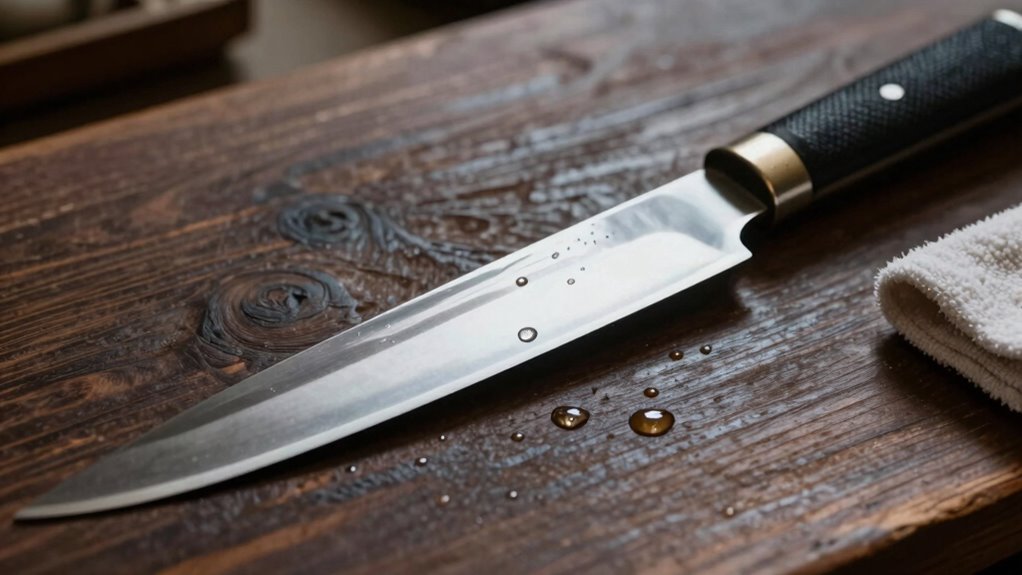
Ensuring your knife is thoroughly dried and properly oiled is essential for preventing rust and maintaining its sharpness. After washing, use a clean cloth to wipe the blade completely dry, paying attention to the edge and handle. Applying a thin layer of food-grade mineral or Camellia oil creates a protective barrier against moisture. Regular oiling prevents oxidation and preserves the steel’s natural qualities. To help you remember, here’s a simple overview:
| Step | Action |
|---|---|
| Immediate Drying | Wipe the blade immediately after washing. |
| Complete Drying | Ensure no moisture remains before storage. |
| Oiling Routine | Apply a light coat of oil weekly or before storage. |
| Oil Type | Use mineral or Camellia oil for best results. |
| Storage Tips | Keep in a dry place, away from humidity. |
Proper maintenance, including preventing rust, is key to preserving your traditional Japanese knives. Consistent drying and oiling keep your knife rust-free and sharp. Additionally, storing your knife in a dry environment helps to further protect it from moisture and corrosion.

Matsato Kitchen Knife Leather Sheath, Japanese Steel Chef's Knife Holder Perfect for Cutting and Chopping, 6.3 Inch Knives holder
High Quality Material | The sheath is made of high quality leather with a classical look, which is…
As an affiliate, we earn on qualifying purchases.
As an affiliate, we earn on qualifying purchases.
Developing a Patina to Naturally Protect the Steel
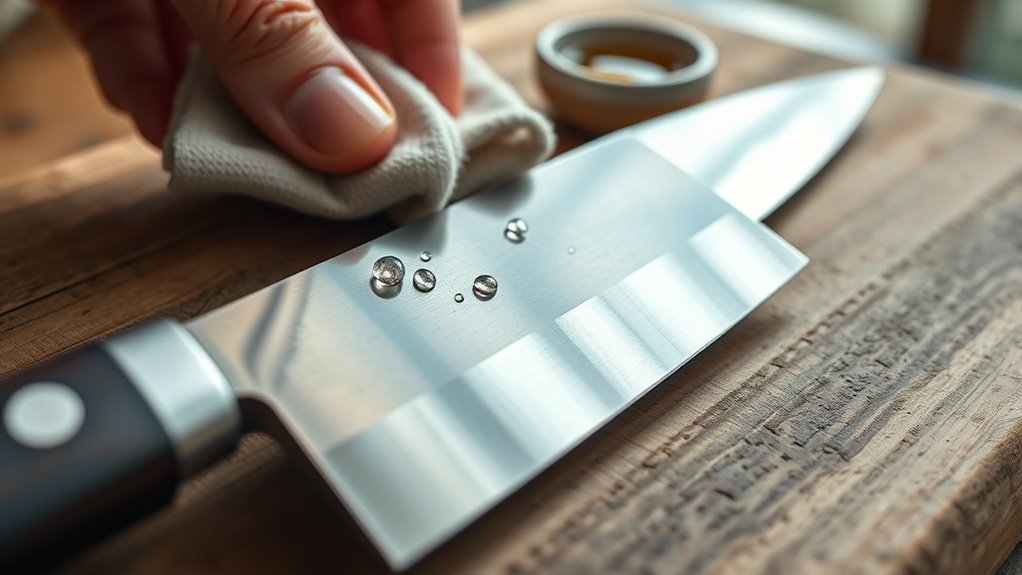
Developing a patina on your knife is a natural way to protect the steel from rust and corrosion. This thin layer of oxidation acts as a barrier, preventing moisture from reaching the metal. To accelerate patina formation, you can intentionally expose your blade to certain acidic items. Here are three effective methods:
- Submerge the blade in chilled coffee for 6-8 hours, creating a controlled patina.
- Use vinegar or lemon juice to lightly coat the surface, then wipe off excess.
- Rub slices of potato or apple onto the blade to induce a subtle, protective layer.
These techniques alter the appearance permanently, giving your knife a unique, rust-resistant finish. Developing a patina regularly can extend your knife’s lifespan while maintaining its traditional character.

Steel Wool Grade 0000 – Finest Grade – 16 Steel Wool Pads – Steel Wool Scrubber for Cleaning & Rust Removal, Glass & Wood Buffing, Steel Scratch Remover, Mice & Rodents
𝗦𝗨𝗣𝗘𝗥 𝗙𝗜𝗡𝗘 𝗖𝗟𝗘𝗔𝗡𝗜𝗡𝗚 𝗣𝗢𝗪𝗘𝗥: Achieve flawless cleaning and buffing results with SIMBA Steel Wool Grade #0000. As the…
As an affiliate, we earn on qualifying purchases.
As an affiliate, we earn on qualifying purchases.
Optimal Storage Solutions for Rust Prevention

Proper storage is essential for keeping your Japanese knife rust-free and in top condition. Always store your knife in a cool, dry place, away from humidity and moisture. Use a knife sheath, saya, or a soft fabric cover to prevent scratches and steel contact that can promote rust. Avoid tossing your knife into drawers with other metal objects, as this increases exposure to moisture and potential rust spots. For added protection, consider applying a light coat of food-grade mineral oil or Camellia oil before storing, especially if you won’t use the knife for a while. Laminated or blackened steels naturally resist rust, but high-carbon steels require extra care. Proper storage not only prevents rust but also maintains your knife’s sharpness and overall quality over time. Additionally, air circulation around stored knives can help reduce moisture buildup and further minimize rust risk. Regularly inspecting your knife and practicing proper daily habits can further extend its lifespan and performance. Incorporating environmental control to regulate humidity in your storage area can significantly enhance rust prevention efforts.
Effective Methods for Rust Removal and Maintenance
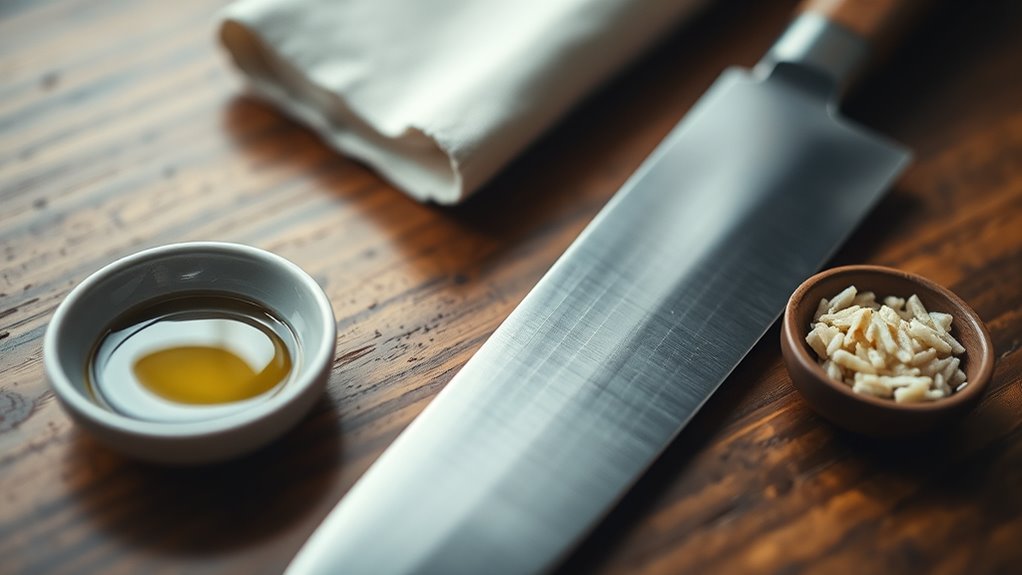
When rust begins to form on your Japanese knife, quick and effective intervention can prevent permanent damage. To remove rust efficiently, follow these steps:
- Gently scrub the affected area with steel wool or a rust eraser, applying some oil beforehand to ease removal.
- For stubborn spots, use a mild abrasive like baking soda mixed with water or a 1000-grit sandpaper, rubbing carefully to avoid damaging the blade.
- After rust removal, thoroughly clean the blade and apply a thin coat of food-grade mineral or Camellia oil to protect it moving forward. Regular maintenance with proper blade care practices can significantly extend the lifespan of your knife.
- Maintaining a proper affiliate disclosure when purchasing maintenance supplies ensures transparency and supports the continued availability of quality products. Additionally, storing your knife in a dry environment with good ventilation can help prevent future rust formation. Using a humidifier in your storage area can further reduce moisture and protect your tools. Proper humidity control is essential for preventing rust and preserving your knife’s integrity.
Always maintain the patina during cleaning to preserve the natural rust-resistant layer. Regular upkeep prevents rust from reappearing and keeps your knife in top condition.
Frequently Asked Questions
Can I Use Vinegar to Remove Rust Without Damaging the Patina?
Yes, you can use vinegar to remove rust without damaging the patina if you act carefully. Dilute vinegar with water and soak a soft cloth or sponge in the solution. Gently apply it to the rust spots, avoiding the patina areas. Let it sit briefly, then scrub gently with a non-abrasive pad. Rinse thoroughly and dry immediately to prevent new rust. Always test on a small area first.
How Often Should I Reapply Oil During Heavy Use Periods?
You should oil your knife more often during heavy use—think of it as giving your blade a regular spa day. Reapply mineral or Camellia oil after each use, especially if you notice any moisture or after washing. If you’re chopping acidic ingredients or working in humid conditions, oil more frequently, ideally daily, to keep rust at bay. Staying proactive helps your knife stay sharp and rust-free longer.
Is It Safe to Store Knives in a Humid Environment?
Yes, it’s unsafe to store knives in a humid environment because moisture promotes rust. You should keep your knives in a cool, dry place, away from dampness, and use proper storage like a saya or knife roll. After use, always dry and oil the blades thoroughly. Avoid storing in drawers or areas with high humidity, as consistent moisture exposure accelerates rust formation and damages the steel over time.
What Are the Signs That Rust Has Penetrated the Blade Deeply?
Did you know rust can penetrate up to 0.1mm into steel within just a few hours? If you notice reddish-brown spots that spread or deepen, it’s a sign rust has gone beyond the surface. You might also see a rough or pitted texture, darker discoloration, or blades feeling duller. These signs indicate rust has penetrated deeply, requiring prompt removal to prevent further damage and maintain your knife’s sharpness.
Can I Sharpen a Rusty Knife Without Removing the Rust First?
You can sharpen a rusty knife without removing all the rust first, but it’s not ideal. The rust can cause uneven sharpening and damage your honing tools. Rust particles can also get embedded in the edge, reducing sharpness. To get the best results and prolong your knife’s life, it’s better to eliminate the rust thoroughly before sharpening. This ensures a smooth, clean edge and prevents further corrosion.
Conclusion
By following these simple habits, you can keep your traditional Japanese knife steel in perfect condition. Think of your knife as a trusted ally in the kitchen—treat it with care, and it’ll reward you with sharpness and beauty for years to come. Even if rust seems inevitable at times, daily cleaning and proper storage make it easy to prevent. With just a little effort, your knife stays pristine, ready to craft culinary masterpieces whenever you need.