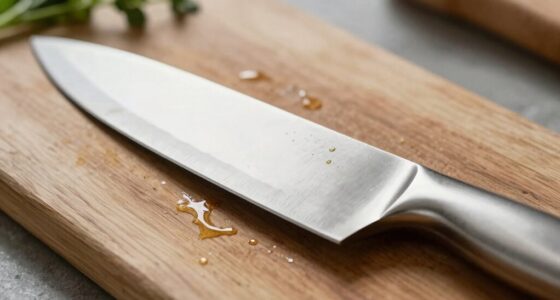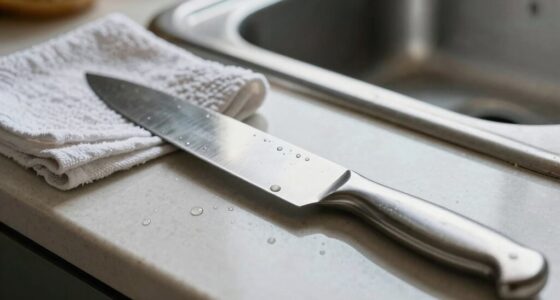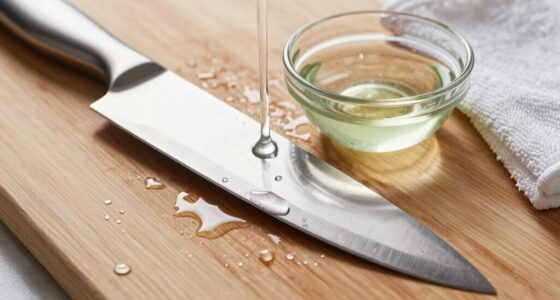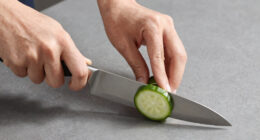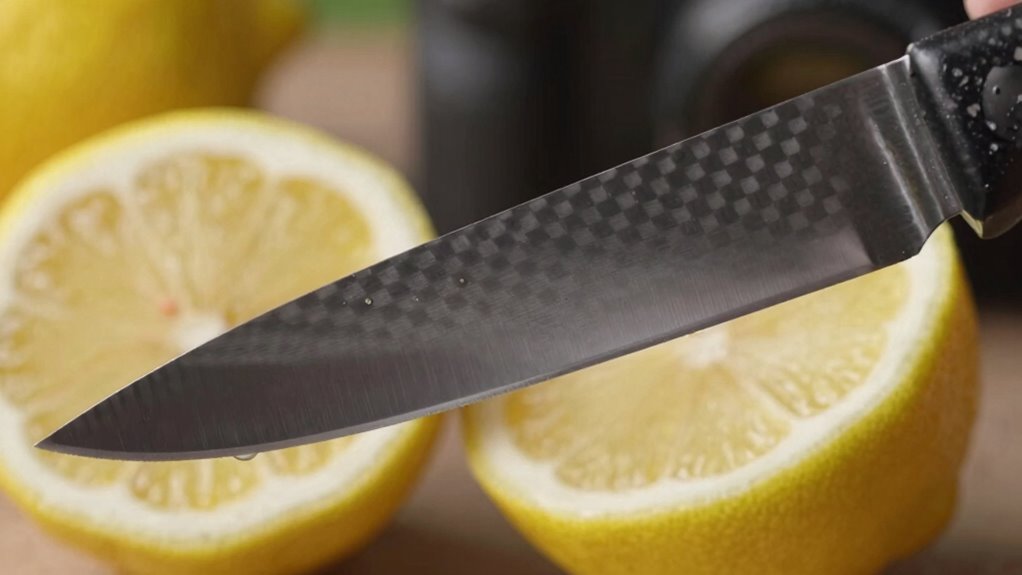

Cutting lemons on carbon steel causes tarnishing and corrosion because the citric acid reacts with the metal surface, creating stains and weakening the protective layer. Over time, this can lead to dullness, discoloration, and even pitting. If you keep using your steel tools with acidic ingredients, the damage worsens. To protect your utensils, it’s best to avoid direct contact with lemon juice, clean immediately after use, and consider proper coatings—more tips await to help your tools stay pristine.
Key Takeaways
- Lemon’s citric acid reacts with iron in carbon steel, forming stains and weakening the protective oxide layer.
- Direct cutting on steel exposes it to acids that cause tarnishing, discoloration, and potential pitting over time.
- Repeated lemon contact accelerates corrosion, leading to dull surfaces and reduced utensil lifespan.
- Proper maintenance, like cleaning promptly and drying thoroughly, prevents acid-induced damage.
- Using non-reactive cutting surfaces and applying protective oils can help preserve steel tools from tarnish.
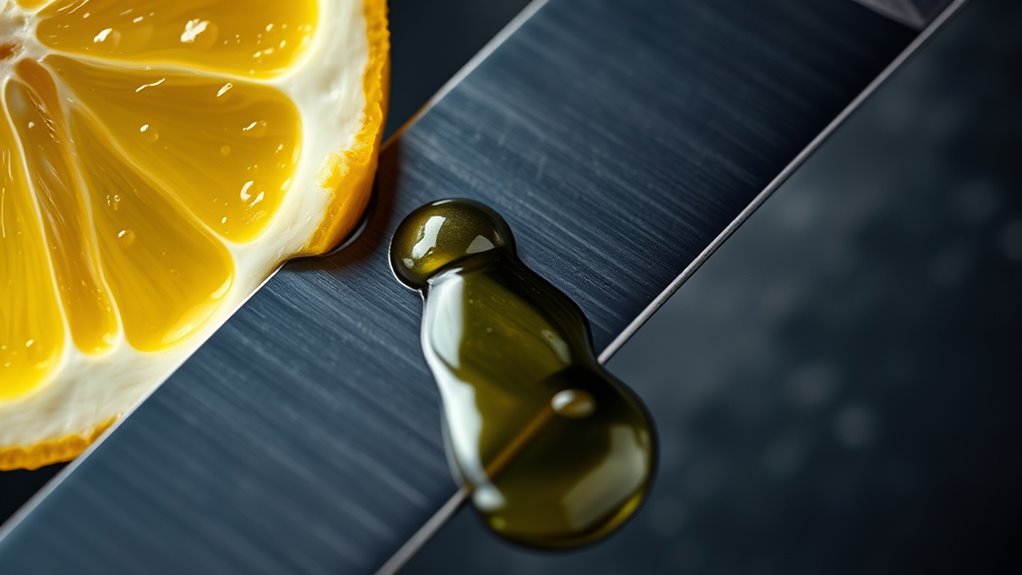
Cutting lemons on carbon steel can quickly tarnish its surface because the acidity in lemon juice reacts with the metal. This reaction is primarily an example of acidic reactions, where the citric acid in lemons interacts with the iron and carbon compounds in the steel. When you cut or squeeze lemons directly onto a carbon steel knife, pan, or utensil, the acidity accelerates the process of metal corrosion. Over time, this corrosion manifests as discoloration, dullness, or even pitting on the steel’s surface, compromising both its appearance and functionality.
Cutting lemons on carbon steel causes tarnishing due to acid-metal reactions, leading to corrosion and surface damage.
Understanding how acidic reactions cause metal corrosion helps you grasp why this tarnishing occurs. The citric acid reacts with the iron in the steel, forming iron citrate compounds that can stain the surface. These reactions weaken the protective oxide layer that normally shields the steel from further corrosion. Once compromised, the surface becomes more susceptible to rust and tarnish, especially if exposed repeatedly or left uncleaned. This process isn’t just superficial; it can lead to deeper structural damage over extended periods, reducing the utensil’s lifespan and effectiveness.
You might notice that the tarnish appears as dark spots, discoloration, or a dull finish on your carbon steel items. It’s tempting to think that just washing off the lemon juice will prevent damage, but the acidic reactions may have already started altering the metal at a microscopic level. The risk increases if you use lemon on your steel regularly or leave the acid on the surface for an extended period. The key is to understand that the acidity accelerates metal corrosion, which is why prompt cleaning and proper maintenance are essential.
Additionally, choosing corrosion-resistant materials for your kitchen tools can help mitigate this issue and prolong the life of your utensils. To prevent tarnishing, you should avoid cutting lemons directly on your carbon steel tools. Instead, use a cutting board or other non-reactive surface, and only use your steel utensils for tasks that don’t involve highly acidic ingredients. After handling lemons, wash your steel items thoroughly with warm water and a gentle detergent to remove any residual acid. Dry them immediately to prevent moisture from lingering, as moisture can further promote corrosion. Applying a thin layer of oil afterward can also help protect the surface from future acidic reactions and metal corrosion.
imarku Chef Knife 7 Inch Kitchen Knife Ultra Sharp Santoku Knife - High Carbon Japanese Chefs Knife, Kitchen Gadgets 2025, Apartment Essentials, Birthday Gifts for Him Her, Best Gifts for Women Men
Professional Santoku Knife: This imarku super sharp santoku knife is made of high carbon stainless steel that resists...
As an affiliate, we earn on qualifying purchases.
Frequently Asked Questions
Can Lemon Juice Damage Other Types of Cookware?
Lemon juice can damage other types of cookware because its acidity can cause corrosion or discoloration, especially with materials like aluminum or uncoated metals. You should be cautious when using lemon in cooking or cleaning, as prolonged exposure can lead to cookware damage. To prevent this, rinse your cookware promptly after using lemon or avoid leaving lemon juice on sensitive surfaces for too long.
Is Tarnish on Carbon Steel Cookware Harmful to Health?
Tarnish on carbon steel cookware isn’t harmful to your health; it’s like a weathered patina telling stories of your cooking adventures. While it might look unappealing, it doesn’t pose chemical safety risks or threaten your well-being. However, keeping your cookware clean and seasoned helps prevent buildup. Focus on maintaining its natural non-stick surface, so you can cook confidently without worrying about health implications from tarnish.
How Long Does It Take for Tarnish to Develop?
Tarnish on carbon steel can develop in just a few days or weeks, especially if you cut acidic foods like lemons regularly. To prevent or slow it, you should maintain your seasoning and avoid prolonged contact with acids. Unlike stainless steel, carbon steel needs more attentive seasoning maintenance. Regularly wipe your cookware with oil after cleaning and avoid leaving lemons or other acids on the surface for too long.
Can Tarnish Be Removed From Carbon Steel?
Tarnish on your carbon steel can usually be reversed with simple restoration techniques like gentle scrubbing with a mixture of baking soda and water, or using a bit of vinegar. To prevent future tarnishing, you should regularly dry your tools thoroughly and apply a light coating of mineral oil. Taking these preventive measures and knowing effective restoration techniques will keep your carbon steel looking sharp and functioning perfectly.
Are There Safe Cleaning Methods for Lemon Stains?
Yes, there are safe cleaning methods for lemon stains on carbon steel. You should stick to natural cleaning techniques like rubbing the stain with a mixture of baking soda and water or using lemon juice itself, which can help break down the stain without damaging the metal. Avoid harsh chemical solutions, as they might cause further corrosion. Always rinse thoroughly and dry your pan to prevent future tarnishing.

HOSHANHO Kitchen Knife in Japanese High Carbon Steel, Professional High-Class Chef's Knife 8 inch, Non-slip Ultra Sharp Cooking Knives with Ergonomic Handle
【High-End Japanese Steel Chef's Knife】 HOSHANHO chef's knife is made of Japanese high carbon steel 10Cr15CoMoV, 2x of...
As an affiliate, we earn on qualifying purchases.
Conclusion
So, next time you cut lemons on your carbon steel, remember that the acidity can tarnish its surface, much like a stain on a polished jewel. While the lemon’s zest promises freshness, it secretly risks dulling your cookware’s shine. With a simple rinse and proper maintenance, you can enjoy vibrant citrus flavors without sacrificing your pan’s beauty. After all, a little care keeps your kitchen tools as lively as the lemons you love.
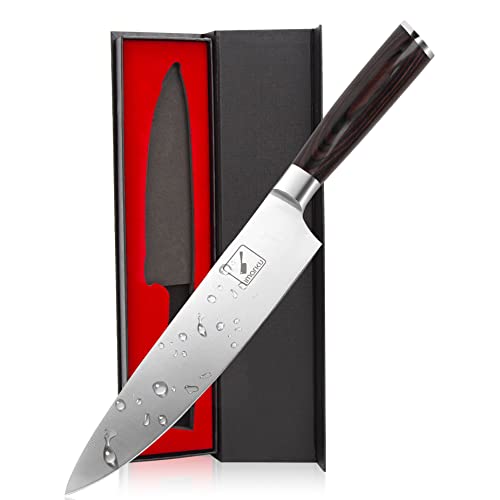
imarku Japanese Chef Knife - Sharp Kitchen Knife 8 Inch Chef's Knives HC Steel Paring Knife, Unique Gifts for Men and Women, Gifts for Mom or Dad, Kitchen Gadgets with Gift Box, Gyutou Knives
High-Carbon Stainless Steel Blade: It is manufactured from high-quality stainless steel that maintains its functionality for a long...
As an affiliate, we earn on qualifying purchases.

Japanese Chef Knife, 8 Inch Damascus Kitchen Knife with VG10 Steel, Handcrafted Sharp Knife with Ergonomic Handle, Cooking Knives for Home Chefs, Cooking Gifts for Men and Women
【Premium Damascus Chef Knife with VG-10 Steel Core】Our Japanese knives feature a VG-10 steel core (60 HRC) for...
As an affiliate, we earn on qualifying purchases.