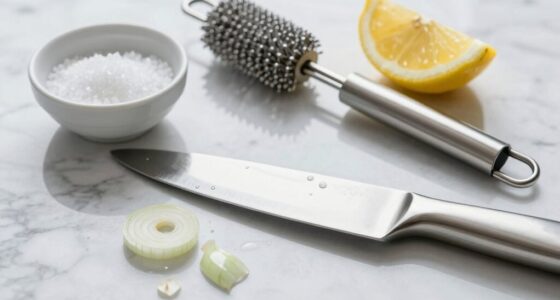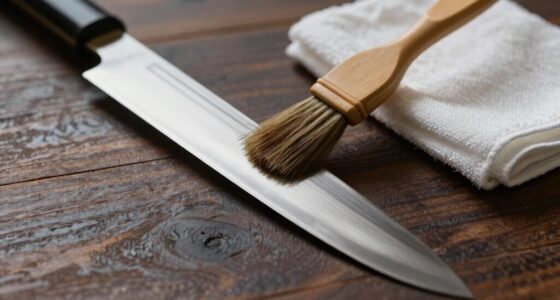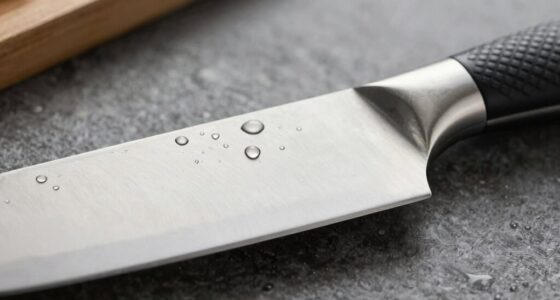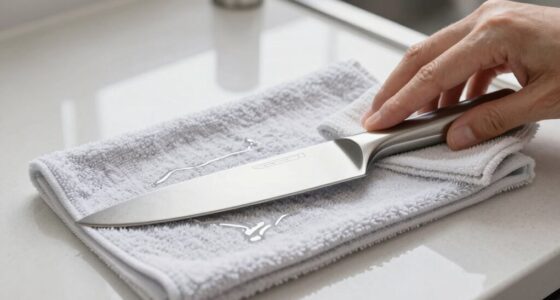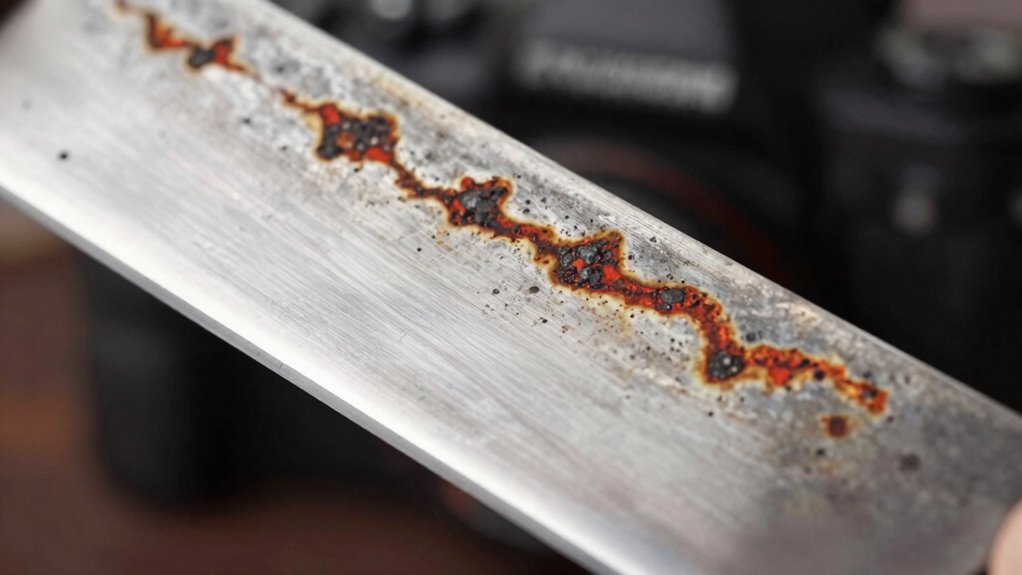
Acidic foods can cause visible damage and discoloration on your knife blades by speeding up the oxidation process. When acids contact the metal, they penetrate surface imperfections, leading to staining, dullness, and even corrosion over time. If the blade isn’t properly cared for, these reactions weaken the metal’s structure. Want to find out how to prevent this damage and keep your knives looking their best? Keep exploring to learn more.

Get kitchen gear delivered free — and shop member deals
- Fast, free delivery on millions of items
- Access to Prime Big Deal Days deals on October 6–7
- Prime Video, Amazon Music and more included
Key Takeaways
- Acidic foods cause chemical reactions that lead to oxidation on blade surfaces.
- Contact with acids can penetrate surface imperfections, causing staining and discoloration.
- Acid exposure weakens the metal structure, resulting in dullness and corrosion over time.
- Lack of protective layers in cheaper blades makes them more susceptible to acid-induced damage.
- Proper cleaning and maintenance help prevent acid-related corrosion and preserve blade appearance.
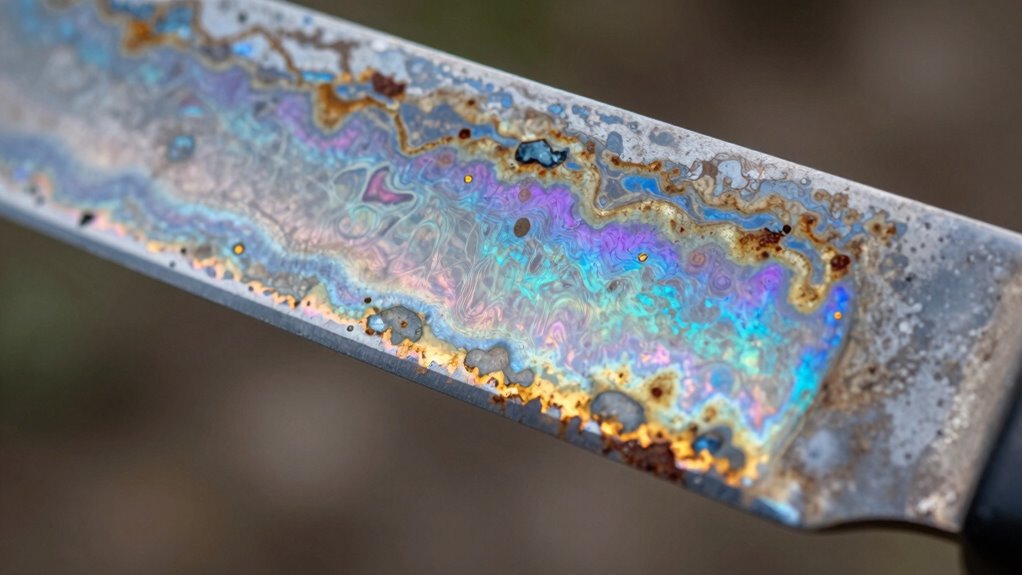
Have you ever noticed how certain blades develop a dull, discolored appearance after contact with acidic foods? This change isn’t just cosmetic—it’s a sign that the metal is undergoing a chemical reaction, specifically metal oxidation. When you cut or prepare foods like citrus fruits, tomatoes, or vinegar-based dishes, the acids in these foods interact with the blade’s surface. This interaction can compromise the metal’s corrosion resistance, causing it to oxidize more quickly and visibly. Over time, this oxidation manifests as staining, discoloration, or a dull finish that diminishes the blade’s sharpness and overall appearance.
You might wonder why some blades are more prone to this than others. The answer lies in the metal composition and the treatment it has received. High-quality knives often incorporate stainless steel, which is designed to resist corrosion through the addition of chromium. Chromium forms a thin, protective oxide layer on the surface of the metal, preventing further oxidation and maintaining the blade’s shine. This layer acts as a barrier, markedly enhancing corrosion resistance. Conversely, cheaper or less treated blades lack this protective layer, making them more vulnerable to metal oxidation caused by acidic foods.
The effect of acids on blades isn’t limited to superficial staining. Continuous exposure can weaken the metal’s structure over time, especially if the blade isn’t properly cleaned and dried after use. Acidic compounds can penetrate tiny imperfections or micro-cracks on the surface, accelerating corrosion and leading to pitting or more severe deterioration. Regular maintenance, like cleaning and drying, can significantly reduce the risk of damage and extend the lifespan of your blades. Proper care is especially important because metal composition influences how well a blade withstands acidic contact. That’s why maintaining proper care—cleaning and drying your blades thoroughly—is essential for preserving their appearance and performance. Additionally, understanding the corrosion process helps you select the most suitable knives for your needs, ensuring longevity and durability.
Understanding how acids interact with different metals helps you choose the right tools for your kitchen. High corrosion resistance in a knife means it can withstand frequent exposure to acidic foods without discoloration or damage. Keep in mind that even the best blades aren’t completely immune to metal oxidation if not cared for properly. Regular maintenance, like sharpening and cleaning, can help preserve their protective layer, preventing the acids from causing lasting harm. Recognizing these processes allows you to extend the life of your blades and keep them looking sharp and new despite regular contact with acidic ingredients. Proper storage and proper maintenance techniques can further help prevent unwanted corrosion, preserving both the look and the performance of your blades. Knowing about corrosion resistance and how it varies among different blades enables you to make informed decisions and better care for your kitchen tools.
As an affiliate, we earn on qualifying purchases.
Frequently Asked Questions
Do All Blades React to Acidic Foods the Same Way?
Not all blades react the same way to acidic foods because of differences in blade material and acid resistance. Some metals, like stainless steel, resist corrosion better and won’t change appearance as quickly. Others, such as carbon steel, are more vulnerable to acid damage, leading to discoloration or pitting. So, your experience depends on the blade’s material and its ability to withstand acids, making some blades more prone to visual changes than others.
How Can I Prevent Blades From Changing Color?
To prevent blades from changing color, you should practice proper blade maintenance and focus on corrosion prevention. Regularly clean your blades with mild soap and dry them thoroughly after each use, especially when handling acidic foods. Apply a thin layer of food-safe oil to protect against moisture and corrosion. Store blades in a dry, safe place, and avoid prolonged contact with acidic substances to keep their appearance intact.
Are There Specific Acids More Harmful to Blade Surfaces?
A stitch in time saves nine, and knowing which acids are more harmful helps you avoid damage. Strong acids like citric, vinegar, or citrus fruits cause more chemical reactions, especially at lower pH levels, leading to corrosion or discoloration on blade surfaces. Weaker acids have less impact. Keep blades dry and avoid prolonged contact with highly acidic foods to preserve their look and longevity.
Can Acid Exposure Weaken the Blade’s Structure?
Yes, acid exposure can weaken a blade’s structure by promoting corrosion patterns that compromise its material resilience. When acids contact the blade, they initiate chemical reactions that break down metal surfaces, leading to pitting and rust. Over time, this deterioration reduces the blade’s strength and sharpness, making it more prone to damage. To preserve your blade, avoid prolonged contact with acidic substances and clean it thoroughly after exposure.
How Long Does It Take for Acids to Cause Visible Changes?
Acids begin causing visible changes within minutes to hours, depending on the food’s pH and the metal’s susceptibility. When you expose a blade to highly acidic foods, food pH and metal corrosion accelerate, leading to discoloration, pitting, or rust spots. You’ll notice these effects faster with lower pH foods, like citrus, compared to milder acids. The more acidic the environment, the quicker you see corrosion and surface deterioration.
knife blade cleaning and maintenance kit
As an affiliate, we earn on qualifying purchases.
As an affiliate, we earn on qualifying purchases.
Conclusion
So, next time you notice your blades looking different after chopping those acidic foods, don’t dismiss it as just a stain or a flaw. There’s a hidden story happening right under your nose—one that could affect your blades’ performance in ways you never expected. Keep an eye on those changes, because understanding this subtle transformation might just save your blades—and your next meal. The real surprise is just around the corner. Are you ready to uncover it?
As an affiliate, we earn on qualifying purchases.
As an affiliate, we earn on qualifying purchases.
Fall Picks
fall essentials
As an affiliate, we earn on qualifying purchases.