To teach knife safety to new home cooks without overwhelming them, start with the basics, like how to hold the knife securely and use a proper grip. Emphasize the importance of sharpening knives regularly and cutting away from the body on a stable surface. Keep instructions simple, focus on safe habits, and encourage patience. As they become more confident, you can introduce additional tips. Keep exploring for more techniques that make cooking safer and more enjoyable.
Key Takeaways
- Introduce safety basics gradually, focusing on essential skills like proper grip and cutting techniques first.
- Demonstrate correct knife sharpening and storage to build confidence in maintenance.
- Use simple, clear instructions and avoid overwhelming with too many safety tips at once.
- Encourage attentive, deliberate movements and emphasize safety as an ongoing practice.
- Reinforce learning with hands-on practice and positive feedback to foster safe habits.
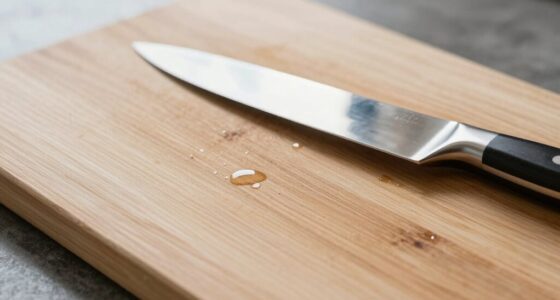
Have you ever wondered how to handle knives safely in your kitchen? Teaching new home cooks proper knife safety can seem overwhelming, but it’s all about breaking down the basics into manageable steps. One of the most important skills to start with is understanding knife sharpening. A dull knife is more dangerous than a sharp one because it requires more force to cut, increasing the risk of slipping and injury. Show them how to sharpen their knives regularly using a whetstone or a honing steel, emphasizing that a well-maintained blade is safer and more effective. Demonstrate the correct angle for sharpening and remind them to always focus on their grip and control. Reinforcing the importance of keeping knives sharp helps build confidence and safety in their everyday cooking routines. Remember that a sharp knife not only improves safety but also makes food preparation more enjoyable and efficient.
Sharpen your knives regularly to ensure safety, control, and confidence in every cut.
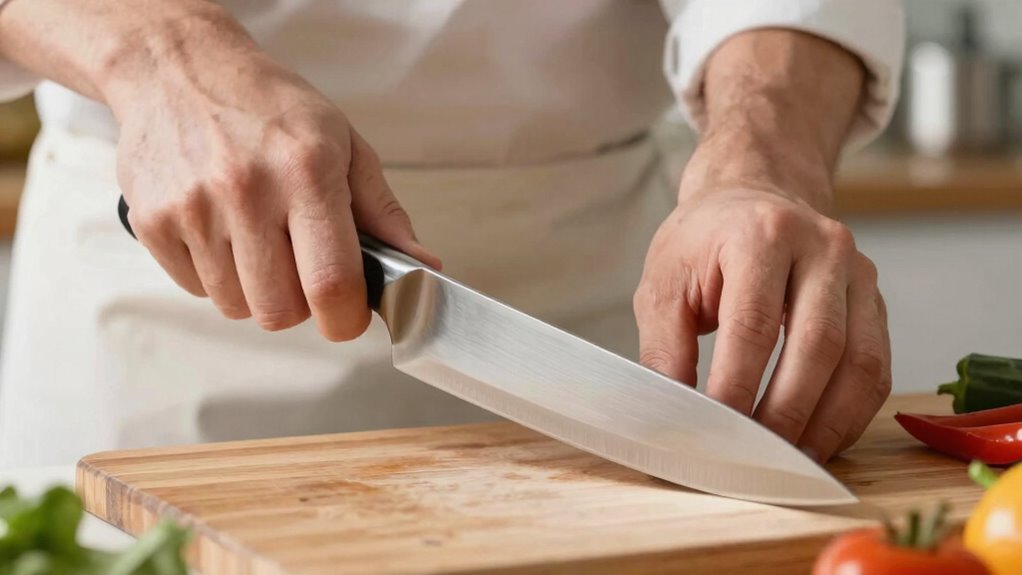
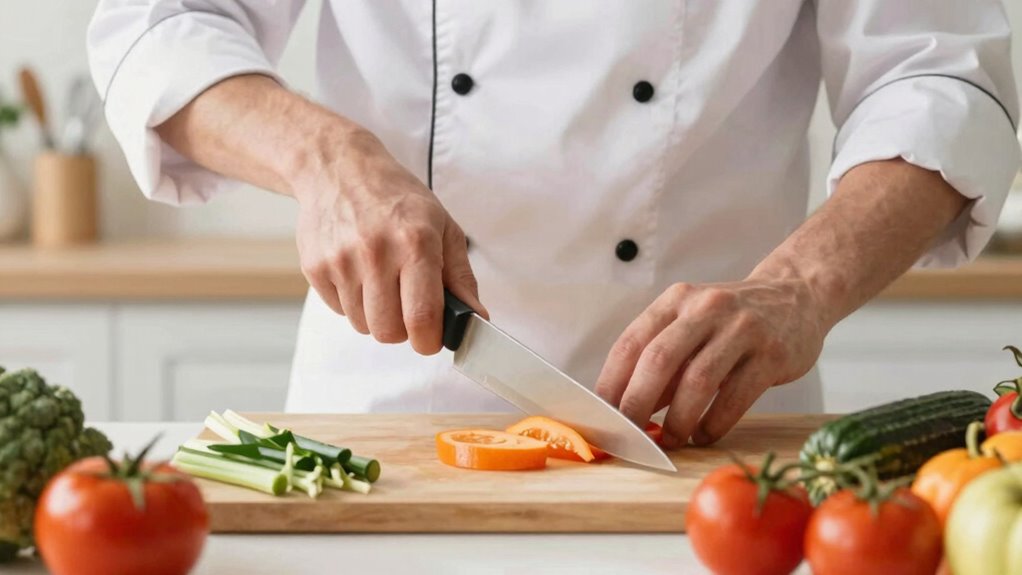
Next, focus on the fundamentals of proper grip and cutting technique. Encourage them to hold the knife securely with their dominant hand, wrapping their fingers around the handle and gripping it firmly but comfortably. Their other hand should hold the food with a claw-like grip, tucking fingertips inward to avoid accidental cuts. Emphasize that they should make controlled, deliberate cuts rather than rushing through tasks. Once they’re comfortable with basic cuts, introduce the concept of kitchen ergonomics—how to position their body and workspace to minimize strain and maximize safety. For example, adjusting the height of the cutting board or their stance can prevent fatigue and give better control over the knife. Additionally, understanding kitchen ergonomics can help prevent repetitive strain injuries over time. Incorporating proper knife handling techniques into their routine can further reduce the risk of accidents and injuries. It’s also helpful to educate them on the importance of proper knife storage to keep blades protected and easily accessible.
You should also teach them to pay attention to their environment. Clear the workspace of clutter, keep the knife and cutting area dry, and always cut away from the body. Encourage them to use a stable, non-slip surface and to pay attention to their grip, ensuring that the handle doesn’t slip from sweaty or greasy hands. Reinforce the importance of storing knives properly, whether in a knife block, on a magnetic strip, or with blade guards, to prevent accidental cuts when reaching for them. Remember that proper knife maintenance, including regular cleaning and checking for damage, is crucial for safety.
Finally, remind them that safety is a continuous process. Encourage them to practice patience, stay attentive, and never rush through chopping or slicing. By focusing on knife sharpening, proper grip, and ergonomic setup, you help build a solid foundation of safe cooking habits. Over time, these skills will become second nature, making their kitchen experience more enjoyable and injury-free. Teaching safety step-by-step ensures that new cooks gain confidence without feeling overwhelmed, fostering a love for cooking that’s rooted in safety and skill.
knife sharpening kit for home cooks
As an affiliate, we earn on qualifying purchases.
As an affiliate, we earn on qualifying purchases.
Frequently Asked Questions
What Types of Knives Are Safest for Beginners?
As a beginner, start with a chef’s knife or a paring knife, which are safer due to their manageable size and weight. Focus on a proper knife grip, like the pinch grip, and learn basic cutting techniques to prevent accidents. These knives give you control, making it easier to develop safe habits and confidence in the kitchen without feeling overwhelmed.
How Often Should I Replace My Kitchen Knives?
Like a trusted sword, your kitchen knives need proper care to stay sharp and effective. Guarantee them when they become chipped or lose their edge, usually after several years of good use. Regular knife maintenance, including honing and sharpening techniques, keeps them slicing smoothly. If you notice frequent dullness despite sharpening, it might be time to replace your blades. Proper care ensures safety and efficiency in your kitchen adventures.
Can I Teach Knife Safety to Children?
Yes, you can teach knife safety to children by ensuring constant child supervision and tailoring lessons to their age. Start with basic skills and clear, simple instructions, emphasizing the importance of careful handling. Use age-appropriate lessons to build confidence and understanding gradually. Always supervise closely, especially when they’re practicing, and reinforce safety rules consistently to help them develop responsible habits early on.
What’s the Best Way to Store Knives Safely?
Did you know that improper knife storage causes many kitchen injuries? To store knives safely, use a knife block, magnetic strip, or sturdy drawer insert designed for blades. Always keep knives out of reach of children and avoid storing them loose in drawers. Adding safety labels on knife drawers or blocks reminds everyone of proper handling, reducing accidents. Proper knife storage keeps your kitchen safe and your blades in good condition.
Are There Specific Techniques for Cutting Different Foods?
Yes, there are specific techniques for cutting different foods. You should use a proper grip, holding the knife firmly with your fingers wrapped around the handle and your thumb resting on the side. For slicing, use smooth, even cutting motions, and adjust your technique based on the food—rocking for herbs, slicing for tomatoes, and julienning for vegetables. Practice these cutting techniques gradually to build confidence and safety.

Wruhamd 2 Pcs Meat Cleaver Knife Set, Effort Saving Meat Cleaver for Cutting Meat Vegetable, Sharp Carbon Steel Cooking Viking Knife with Leather Sheath for Kitchen, Camping, Outdoor Cooking, BBQ Gift
- High-Quality Forged Blades: Crafted with hand-forging and high-temp treatment
- Two Specialized Blades: Effort-saving cleaver and boning knives included
- Sharp, Precise Edges: 15° V-edge and narrow blade for detailed cuts
As an affiliate, we earn on qualifying purchases.
As an affiliate, we earn on qualifying purchases.
Conclusion
Remember, mastering knife safety is like tending a delicate garden—you nurture awareness with patience, keeping your fingers close and your focus sharp. Each cut becomes a gentle dance, a rhythm that builds confidence and skill. With careful attention, your kitchen transforms into a sanctuary where precision blossoms, and accidents fade into distant memories. Embrace the process, and soon you’ll create culinary art with the grace of a seasoned chef, guided by safety and confidence.
knife storage block or magnetic strip
As an affiliate, we earn on qualifying purchases.
As an affiliate, we earn on qualifying purchases.
As an affiliate, we earn on qualifying purchases.