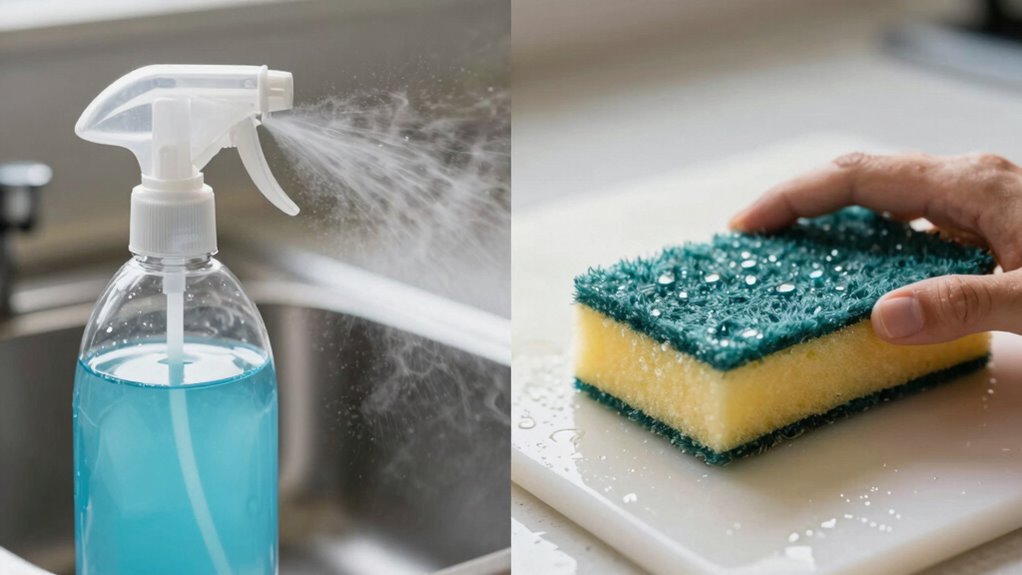

Many home cooks confuse cleaning with sanitizing, but they serve different purposes. Cleaning removes visible dirt and crumbs with soap and water, making surfaces look tidy. Sanitizing, on the other hand, actively reduces bacteria and germs to safer levels using special disinfectants or solutions like diluted bleach. While cleaning is essential, sanitizing provides an extra layer of protection against germs that cleaning alone might miss. Keep going to discover how mastering both keeps your kitchen safer and cleaner.

Get kitchen gear delivered free — and shop member deals
- Fast, free delivery on millions of items
- Access to Prime Big Deal Days deals on October 6–7
- Prime Video, Amazon Music and more included
Key Takeaways
- Cleaning removes visible dirt and stains but doesn’t necessarily eliminate bacteria, while sanitizing actively reduces microbial presence.
- Many home cooks mistakenly believe cleaning alone is sufficient for food safety, overlooking the importance of sanitizing.
- Sanitizing involves using specific disinfectants or solutions, like diluted bleach, to kill germs that cleaning may miss.
- Proper sanitization requires following contact time and dilution instructions to ensure effective germ reduction.
- Regularly sanitizing kitchen surfaces minimizes bacteria buildup and helps prevent cross-contamination during food prep.

Have you ever wondered what truly sets sanitizing apart from cleaning? Many home cooks think both involve removing dirt or messes, but there’s a vital difference rooted in germ elimination and surface maintenance. Cleaning typically involves removing dirt, crumbs, and stains from surfaces using soap or detergent and water. It makes your kitchen look tidy and helps prevent buildup, but it doesn’t necessarily kill germs. Sanitizing, on the other hand, focuses on reducing the number of bacteria and other microbes to safe levels. When you sanitize, you’re not just cleaning the surface—you’re actively lowering the risk of foodborne illnesses and cross-contamination.
Understanding this distinction is key to maintaining a safe cooking environment. If you only clean your countertops, you might see visible grime disappear, but germs could still be lurking behind. Sanitizing ensures that those microscopic threats are eliminated or minimized, which is especially important when handling raw meat or producing ready-to-eat dishes. It’s not enough to wipe down surfaces with a damp cloth; you need to use a sanitizer or an appropriate disinfectant to achieve germ elimination. This is where surface maintenance becomes vital. Regularly sanitizing your kitchen surfaces, cutting boards, and utensils helps prevent bacteria from multiplying and spreading.
Many home cooks overlook the importance of sanitizing, assuming that cleaning alone is sufficient. However, bacteria like Salmonella or E. coli can survive on surfaces even after a thorough wipe-down. That’s why incorporating a sanitizing step after cleaning is a smart practice. You can use commercial sanitizers, diluted bleach solutions, or even some natural alternatives approved for kitchen use. The key is to follow the instructions for contact time and proper dilution to guarantee germ elimination. Remember, surface maintenance isn’t a one-time task; it’s an ongoing process that keeps your kitchen safe and hygienic over time. Additionally, modern kitchen technology offers innovative solutions like automated sanitizing devices that help maintain consistent hygiene standards effortlessly.
As an affiliate, we earn on qualifying purchases.
Frequently Asked Questions
Can You Sanitize Without Cleaning First?
You shouldn’t sanitize without cleaning first because cleaning removes dirt and debris, allowing sterilization protocols to be effective. If you skip cleaning, microbial elimination may be incomplete, leaving bacteria and germs behind. Proper sanitizing requires a clean surface to guarantee the process effectively reduces pathogens. Always clean thoroughly before you sanitize to maximize safety and achieve true microbial elimination, especially in food preparation areas.
How Long Does Sanitizing Last on Surfaces?
You might be surprised, but sanitizing durability on surfaces doesn’t last forever. Typically, surface longevity of sanitizers ranges from a few minutes to several hours, depending on factors like touch frequency and surface type. While sanitizing provides a temporary shield, it’s wise to reapply regularly for continuous protection. This way, you guarantee your surfaces stay as safe as possible, maintaining effective sanitizing durability amid daily activities.
Is Natural Cleaning Effective for Sanitizing?
Natural cleaning can be effective for sanitizing if you use natural disinfectants like vinegar, lemon juice, or tea tree oil, which have antimicrobial properties. However, they might not be as reliable as chemical sanitizers for killing all germs. For high-risk surfaces, it’s best to combine natural disinfectants with chemical sanitizers or follow proper sanitizing guidelines. This way, you guarantee your surfaces are genuinely sanitized and safe.
Do All Cleaning Products Sanitize Effectively?
Think of cleaning products like soldiers on a mission; not all are equipped for the same battles. Not all cleaning products disinfect effectively. While some natural options offer cleaning power, chemical sanitizers and disinfectants are your best bet for truly killing germs. Always check for EPA-registered disinfectants, as their disinfectant effectiveness is proven, ensuring your kitchen stays safe and germ-free.
How Often Should I Sanitize Kitchen Tools?
You should disinfect kitchen tools after each use, especially when handling raw meat, seafood, or eggs, to reduce germ transmission and ensure food safety. Regular sanitizing helps eliminate bacteria that cleaning alone might miss. For items like cutting boards and knives, do it daily or after any contamination. This routine minimizes the risk of cross-contamination and keeps your kitchen safe and hygienic for every meal you prepare.
disinfectant for kitchen countertops
As an affiliate, we earn on qualifying purchases.
As an affiliate, we earn on qualifying purchases.
Conclusion
So, remember: sanitizing and cleaning are simply not the same. Cleaning clears away dirt and debris, while sanitizing silences germs and bacteria. By balancing both, you build a safer, sparkling space where spills are swept away and surfaces are sanitized swiftly. Stay sharp, stay safe, and succeed in your kitchen routine with this simple, strategic switch—saving yourself stress and safeguarding your space. Keep your countertops clean, your conscience clear, and your cooking carefree.
As an affiliate, we earn on qualifying purchases.
automatic kitchen sanitizer device
As an affiliate, we earn on qualifying purchases.
As an affiliate, we earn on qualifying purchases.
Fall Picks
fall essentials
As an affiliate, we earn on qualifying purchases.