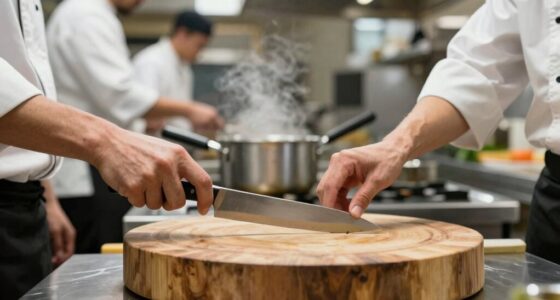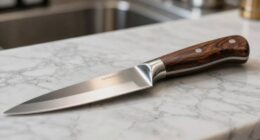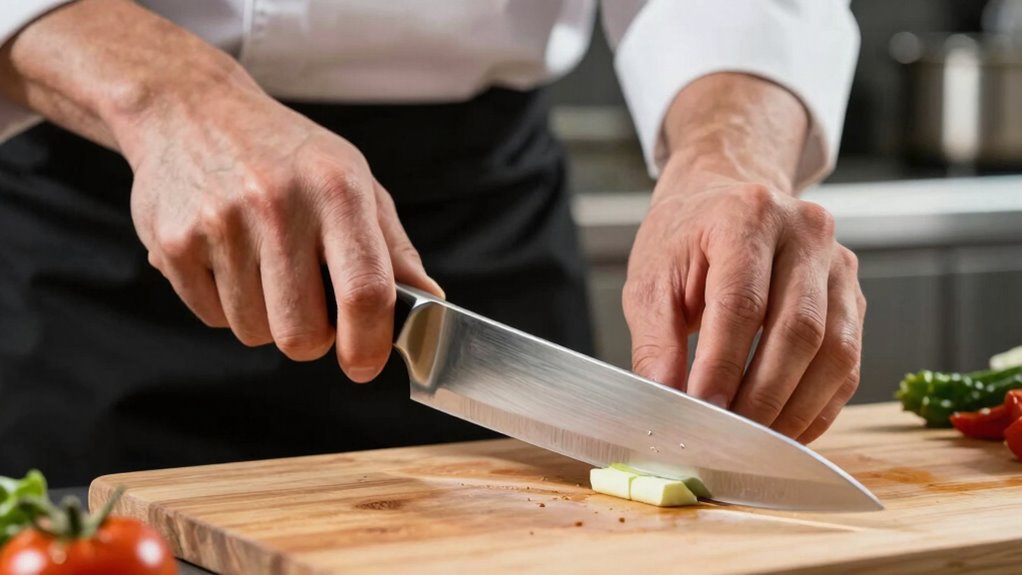
Your ‘idle hand’ should stay curled inward in a claw shape, with fingertips tucked safely away from the knife blade. Keep your fingers out of the slicing path by guiding the knife with knuckles facing outward, acting as a barrier. This position helps prevent accidental cuts and gives you better control. Mastering this technique makes your cutting safer and more precise—stay with us to find even more helpful tips for kitchen safety.
Key Takeaways
- Curl your fingers inward into a claw shape, tucking fingertips away from the blade’s path.
- Keep your ‘idle hand’ close to the knife but not directly beneath the blade to maintain control.
- Use your knuckles as a guide, ensuring they face outward and protect your fingertips.
- Position the ‘idle hand’ slightly behind the cutting line to prevent accidental cuts.
- Maintain steady, controlled movements, keeping the ‘idle hand’ secure and out of the knife’s reach.
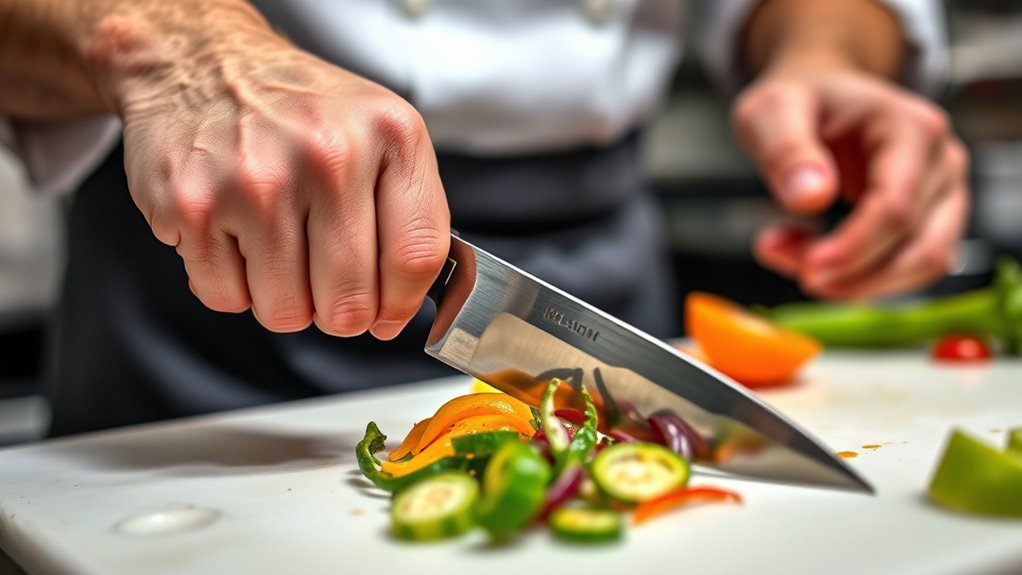
Practicing proper knife safety habits is essential to prevent accidents and injuries in the kitchen. One of the most important habits is knowing where to keep your “idle hand” during cutting. Your non-dominant hand plays a critical role in maintaining control and safety, so it’s vital to position it correctly. The way you hold your knife, especially your knife grip, directly influences your cutting precision and safety. A secure, comfortable grip ensures better control, which helps you execute accurate cuts and reduces the risk of slipping.
Proper knife safety starts with correct hand positioning and grip to prevent accidents and ensure control.
When it comes to your “idle hand,” your fingers should be curled inward, forming a claw-like shape. This position keeps your fingertips tucked away from the blade’s path and provides a natural barrier to accidental cuts. Your knuckles should be facing outward, guiding the knife along your cutting surface. This technique, often called the “claw grip,” allows your knuckles to act as a guide for your knife, helping you maintain consistent cutting angles and preventing your fingers from drifting into the blade. Proper hand positioning is a fundamental aspect of safe knife handling that supports this technique.
Proper cutting angles are also essential in knife safety. You want to angle your knife slightly downward, slicing through ingredients with controlled, deliberate motions. Maintaining a consistent angle, usually around 20 to 30 degrees depending on the knife and task, allows for smoother cuts and reduces the likelihood of slipping. When your knife is at the right angle, you exert less force and have more control, which translates into safer cuts. Your “idle hand” should be positioned so that its fingertips stay ahead of the blade at all times, with your knuckles serving as a physical guide along which the knife glides. This setup ensures that your fingers are always protected and that your cuts are precise.
You should also pay attention to your cutting surface and your hand placement relative to it. Keep your cutting board stable and your “idle hand” comfortably close to the food, but not so close that there’s a risk of slicing your fingers. Instead of reaching over your ingredients, bring them toward you, so your hand remains in a secure position. As you work, focus on maintaining a steady, controlled motion, adjusting your cutting angles as needed to achieve the desired slice or dice. By consistently practicing these techniques—correct knife grip, safe hand positioning, and mindful cutting angles—you create a safer, more efficient kitchen environment. Remember, the safety of your “idle hand” is the cornerstone of safe knife handling, and mastering its placement keeps you protected from preventable injuries.

NoCry Premium Cut Resistant Gloves Food Grade — 100% Food Safe — Level 5 Meat Cutting Glove for Chefs & Butchers — Perfect Mandoline Glove or Oyster Shucking Gloves with Superior Comfort & Dexterity
4X MORE CUT-RESISTANT THAN LEATHER — Safety gloves made from the highest level of cut resistant material on…
As an affiliate, we earn on qualifying purchases.
As an affiliate, we earn on qualifying purchases.
Frequently Asked Questions
How Can I Tell if My Knife Is Dull or Sharp?
You can tell if your knife is dull or sharp by testing its edge with a simple cut. If it struggles to slice through paper or tomato smoothly, your knife is dull. A sharp knife glides effortlessly with proper cutting technique, creating a clean cut. Feel the resistance during slicing—less resistance indicates a sharp edge, while more suggests dullness. Always maintain your knife’s edge for safety and efficiency.
What Are Common Mistakes Beginners Make With Knife Safety?
Like a novice sailor at the wheel, you might grip the knife too tight or hold it improperly. Beginners often neglect a proper stance, making cuts unstable and risky. They also forget the importance of a secure knife grip, which can lead to slips. To stay safe, keep a relaxed grip, use a stable stance, and always focus on control. These habits help prevent accidents and improve your cutting precision.
Should I Use a Cutting Board for All Types of Food?
Yes, you should use a cutting board for all types of food to maintain safety and hygiene. Proper knife storage and a well-organized kitchen layout help prevent accidents and keep your knives in good condition. Using a cutting board provides a stable surface, reducing slips and injuries. Always choose the right cutting board material for different foods, and keep your workspace clean to guarantee safe and efficient food prep.
How Do I Safely Handle a Knife With a Damaged Blade?
Imagine a sword with a jagged edge—handling a damaged knife is risky. You should stop using it immediately, as continued use can cause injury. Carefully inspect the blade for damage and avoid applying force. For safety, practice proper knife maintenance and keep damaged knives out of use. If an accident occurs, follow emergency procedures—apply pressure and seek medical help. Replace or repair the knife before resuming use.
What Safety Gear Is Recommended Besides Proper Hand Placement?
You should wear safety gloves to protect your hands from accidental cuts and splinters. In addition, consider using personal protective equipment like cut-resistant sleeves or eye protection if there’s a risk of debris or splashes. Always guarantee your workspace is well-lit and stable. These precautions help minimize injury risk, especially when handling sharp or damaged knives, keeping you safe and confident during your tasks.

DMI Steak Knife, Rocker, Curved, Verti Grip Kitchen and Dinner Steak Knife for Ease of Chopping or Limited Hand Strength, Dishwasher Safe, Stainless Steel Blade
STEAK KNIFE CUTS EASILY THROUGH MOST FOODS with an effortless rocking motion. Cutting cake, vegetables or meat is…
As an affiliate, we earn on qualifying purchases.
As an affiliate, we earn on qualifying purchases.
Conclusion
Remember, your most important safety habit isn’t just about where your ‘idle hand’ should go—it’s about the peace of mind that comes with it. While a sharp knife can carve perfectly, a careless hand can cause irreparable harm. The quiet safety of a steady, out-of-the-way hand is the silent protector in your kitchen. Stay vigilant, keep your hands safe, and let your cautious habits be the sharpest tool in your safety arsenal.

Plastic Cutting Board, Set of 4 with Storage Stand, Color Box Packed, BPA-Free, Preventing Cross-contamination of Different Food Types, Dishwasher Safe
COLOR CODED INDEX PLASTIC CUTTING BOARD set of 4 – RED cutting board with ham icon for cutting…
As an affiliate, we earn on qualifying purchases.
As an affiliate, we earn on qualifying purchases.

HOSHANHO Kitchen Knife in Japanese High Carbon Steel, Professional High-Class Chef's Knife 8 inch, Non-slip Ultra Sharp Cooking Knives with Ergonomic Handle
【High-End Japanese Steel Chef's Knife】 HOSHANHO chef's knife is made of Japanese high carbon steel 10Cr15CoMoV, 2x of…
As an affiliate, we earn on qualifying purchases.
As an affiliate, we earn on qualifying purchases.