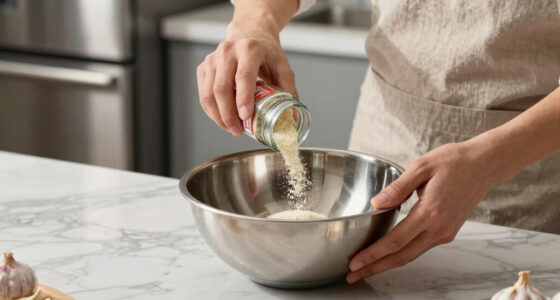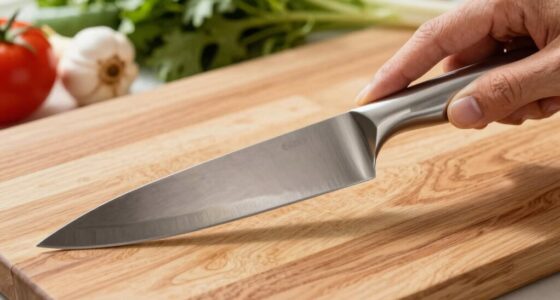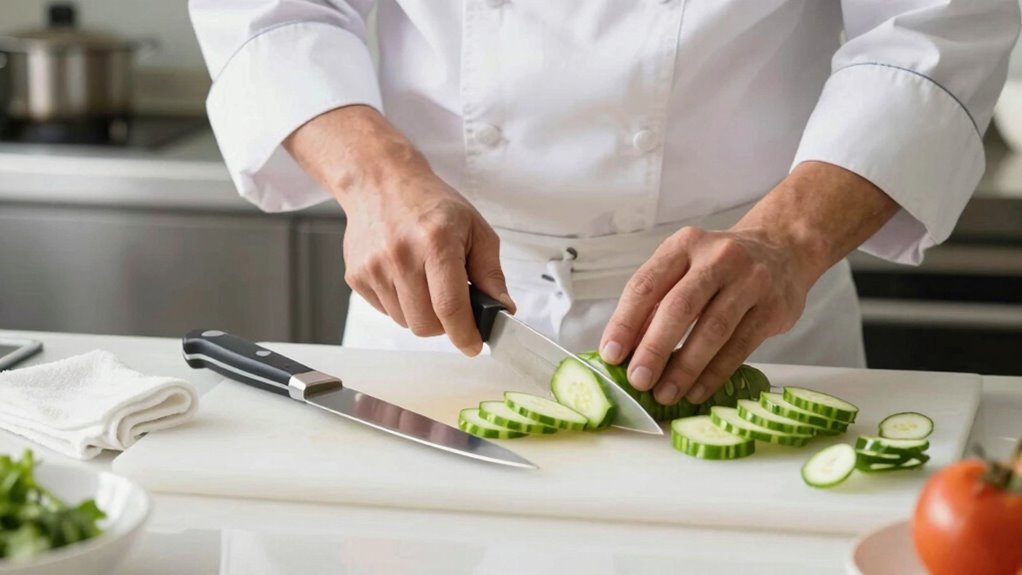

To build a clean-as-you-go routine that supports safer knife work, keep your workspace tidy by clearing scraps and ingredients immediately after use. Wipe down surfaces regularly and organize your tools and ingredients before chopping. Sharpen your knives at the start of each session to improve control and reduce slips. Always handle knives carefully, with proper techniques, and maintain a consistent routine for cleaning, sharpening, and organizing. Staying mindful of these habits will help you enhance safety and efficiency—discover more ways to improve your kitchen safety below.

Get kitchen gear delivered free — and shop member deals
- Fast, free delivery on millions of items
- Access to Prime Big Deal Days deals on October 6–7
- Prime Video, Amazon Music and more included
Key Takeaways
- Wipe down the cutting surface and clear scraps immediately after each ingredient to prevent clutter and slips.
- Develop a habit of cleaning knives and tools right after use to maintain hygiene and safety.
- Organize tools and ingredients beforehand to streamline workflow and reduce unnecessary movement.
- Incorporate routine sharpening of knives at the start of each session to ensure control and safety.
- Maintain a tidy workspace by regularly tidying and disinfecting to promote a safer, more efficient environment.

Learning to handle knives safely is essential for anyone who cooks regularly or works with blades. Developing a clean-as-you-go routine not only keeps your workspace organized but also significantly reduces the risk of accidents. When you keep your area tidy, you minimize the chances of knocking over knives or slipping on stray vegetable scraps. This approach supports safer knife work by encouraging mindful habits that promote control and precision.
One of the most important steps in building this routine is to prioritize knife sharpening regularly. A dull knife requires more force to cut through ingredients, increasing the likelihood of slips and uneven cuts. Sharp knives cut smoothly and precisely, giving you better control over your cutting techniques. By sharpening your knives frequently, you not only improve safety but also make your prep work more efficient. Keep a sharpening stone or a honing rod nearby and make it a habit to sharpen your blades at the start of each cooking session. This small step ensures your knives perform optimally and reduces frustration, so you’re less tempted to use unsafe, forceful cutting methods.
In addition to maintaining sharp blades, focus on your cutting techniques. Proper grip and slicing motions improve safety and efficiency. Hold the handle firmly but comfortably, and curl your fingertips inward to protect your fingertips from the blade. Use controlled, deliberate cuts rather than rushing through ingredients. As you work, incorporate a clean-as-you-go attitude by immediately clearing away scraps and excess ingredients. This prevents clutter from piling up on your cutting board or workspace, which could cause slips or accidents. Wiping the board periodically with a damp cloth also helps keep your surface free of slippery debris. Incorporating proper knife handling habits further enhances safety and control during your prep. Developing a knife safety mindset is crucial for long-term safety and skill development. Establishing good kitchen safety habits is fundamental to maintaining a secure cooking environment. Building awareness of food safety principles helps prevent cross-contamination and foodborne illnesses, contributing to overall kitchen safety.
Furthermore, develop a habit of organizing your tools and ingredients before you start chopping. Place knives in a designated area, and keep your cutting board stable by placing a damp towel underneath if needed. When you finish cutting, clean your knives and wipe down the workspace right away. This not only maintains hygiene but also prevents buildup of food remnants that could cause accidents later. By integrating these simple habits into your routine, you foster a safer environment that encourages mindful, precise cutting.
Building a safe knife routine takes consistency. When you prioritize knife sharpening, refine your cutting techniques, and maintain an organized workspace, you create a safer, more efficient cooking environment. This approach not only protects you from potential injuries but also enhances the quality of your prep work, making cooking more enjoyable and less stressful.
As an affiliate, we earn on qualifying purchases.
Frequently Asked Questions
How Often Should I Clean My Knives During Cooking?
You should clean your knives after every use to maintain proper knife maintenance and guarantee safety. For tasks involving raw meat, seafood, or sticky ingredients, clean them immediately to prevent cross-contamination. Regular cleaning frequency keeps blades sharp and hygienic, reducing the risk of accidents. Even if you’re switching between different ingredients, a quick wash between tasks helps keep your knives in top condition and supports safer, more efficient cooking.
What Tools Help Maintain a Clean Workspace?
Think of your workspace as a well-tended garden; tools keep everything in order. Use a knife storage solution like a magnetic strip or knife block to keep your blades safe and accessible. A designated cleaning schedule, including a damp cloth and cutting board scrubber, helps remove debris promptly. Keep a trash bin nearby to dispose of waste swiftly. These tools help you maintain a clean workspace, making your knife work safer and more efficient.
How Do I Dispose of Knife Shavings Safely?
To dispose of knife shavings safely, first collect them in a sturdy, puncture-proof container—preferably a designated shaving disposal bin or a metal container. Avoid sweeping shavings onto the floor to prevent slips. Afterward, store your knives properly in a knife storage block or sheath to minimize accidents. Always wash your hands afterward and guarantee the disposal container is sealed and out of children’s reach, maintaining a safe, clean workspace.
Can a Clean Routine Prevent Knife Accidents?
Yes, a clean routine can greatly prevent knife accidents by promoting better knife safety and hygiene practices. When you regularly clean your knives and workspace, you reduce the risk of slips or cross-contamination, keeping your tools sharp and safe to use. Establishing a habit of cleaning as you go helps maintain focus, minimizes clutter, and guarantees you handle knives more confidently, ultimately creating a safer cooking environment.
What Are Quick Cleaning Tips for Busy Cooks?
Like a knight in shining armor, quick cleaning tips save your busy day. Keep a damp cloth handy for wiping surfaces between tasks, ensuring food safety and kitchen organization. Use a scraper or brush to quickly clear crumbs or spills from cutting boards and counters. Wash your knives and utensils during downtime, and always dry them immediately. These simple steps keep your workspace safe, organized, and ready for the next culinary adventure.
As an affiliate, we earn on qualifying purchases.
Conclusion
By weaving these habits into your daily cooking, you create a ballet of precision and safety. Picture your knife moving effortlessly, each slice clean and controlled, with a clear workspace that gleams like polished glass. As you cultivate this routine, safety becomes second nature—your hands steady, your mind focused. This mindful rhythm transforms your kitchen into a sanctuary of skill, where every cut is a confident stroke, and safety flows seamlessly with your culinary artistry.
As an affiliate, we earn on qualifying purchases.
As an affiliate, we earn on qualifying purchases.
Fall Picks
fall essentials
As an affiliate, we earn on qualifying purchases.